1 peso 1943
Market Prices
9 salesAbout This Note
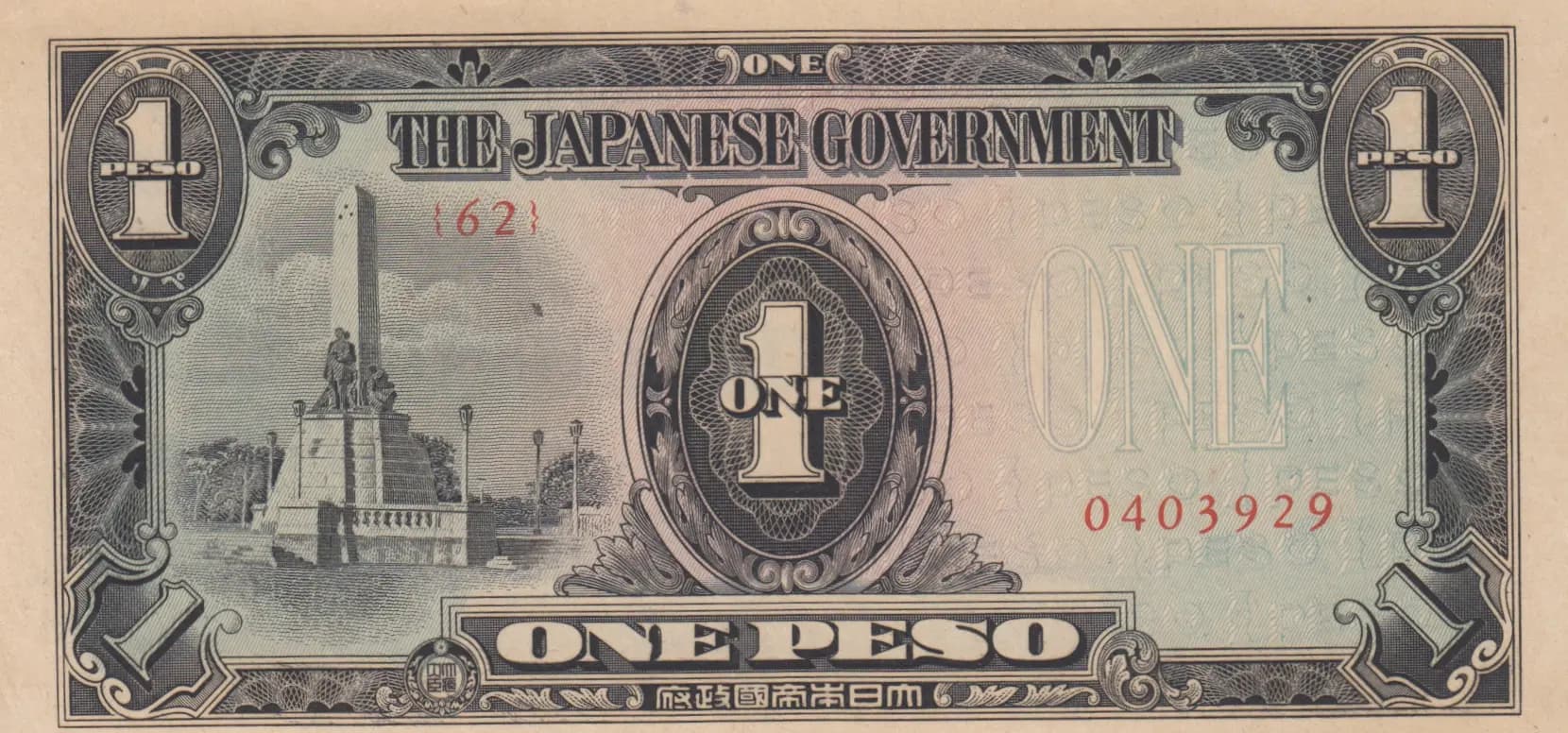
This is a Philippine 1 Peso note issued by the Japanese Government in 1943, graded AU (Almost Uncirculated). The obverse features an ornate engraved design with the José Rizal Monument prominently displayed at left within decorative baroque-style borders. The note exhibits sharp, clear printing with intricate line work and exhibits only minor age-related foxing typical of 80+ year-old currency, making it an exceptionally well-preserved example of this Japanese occupation-era currency.
Common. eBay market data shows consistent sales in the $0.98–$3.58 range across multiple condition grades (F through EF) over the past decade, with 2016 catalog values listing UNC examples at only $1.25. The AU example here sold historically for approximately $3.25 in comparable condition (AUNC). The modest pricing and consistent availability in the secondary market indicate this is a common issue with no scarcity premium, despite its historical significance.
This note was issued during the Japanese occupation of the Philippines in World War II (1942-1945), when the Japanese Government administered the territory and issued its own currency. The prominent placement of the José Rizal Monument—honoring the Philippine national hero and symbol of independence—on currency issued by the occupying Japanese government represents a deliberate strategy to present occupation rule as respectful of Philippine heritage. The bilingual English and Japanese inscriptions reflect the dual-language policy of the occupation administration.
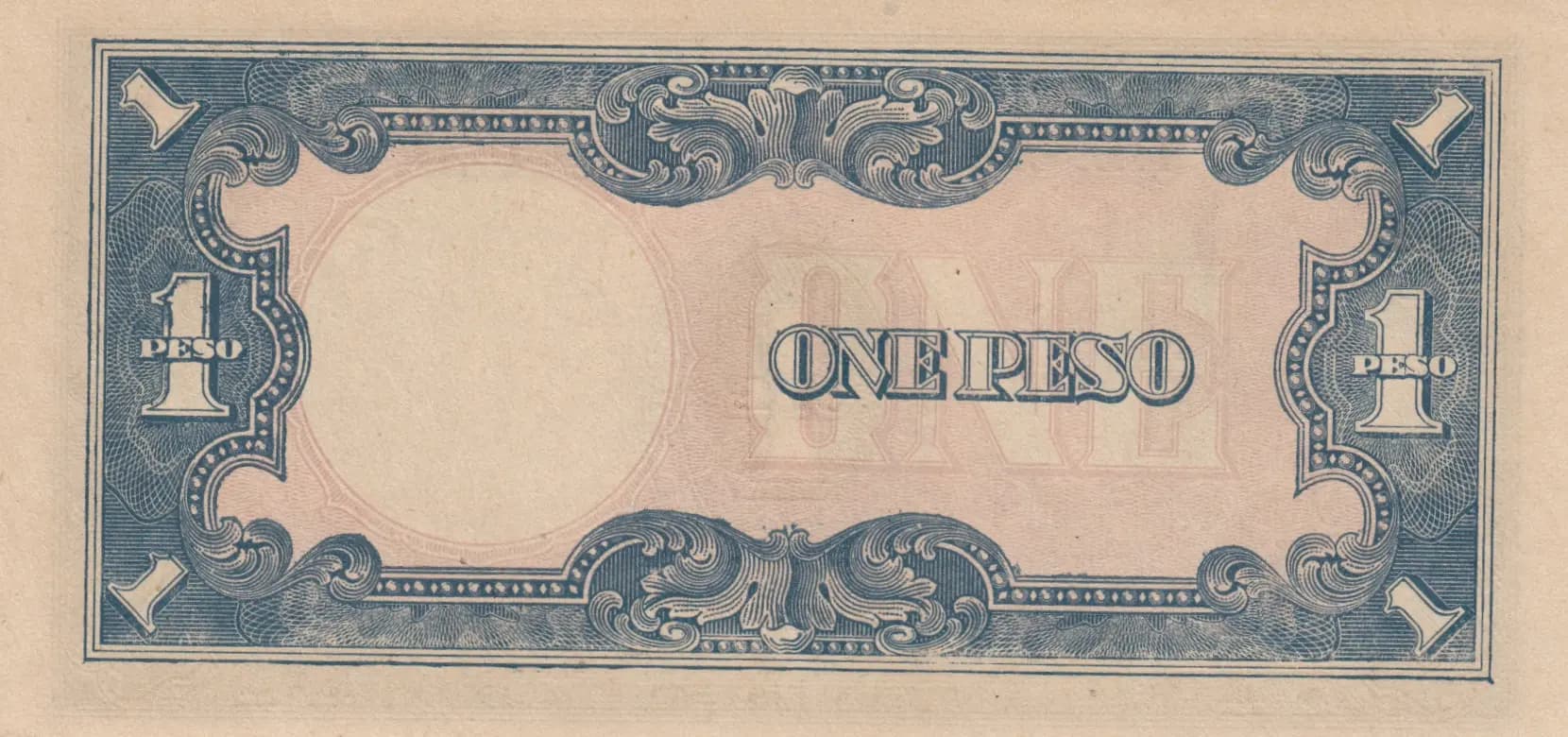
The 1 Peso note features a classical engraved design with ornate baroque-style scrollwork and flourishes throughout. The obverse displays the José Rizal Monument at left—a commemorative obelisk with statue on pedestal, a recognized landmark honoring the Philippine national hero. The denomination '1' appears prominently in decorative oval frames in the upper corners and within a central oval medallion. The reverse maintains the ornamental border design in blue tones with symmetrical flourishes and corner denomination elements, featuring a central circular watermark area. The note employs black printing on light green and pink underprint for the obverse and blue printing on pink underprint for the reverse, with security features including intricate engraved line work and multiple denomination identifiers.
Front side: 'THE JAPANESE GOVERNMENT' (English) / '大日本帝國政府' (Japanese, translates to 'The Japanese Government'), 'ONE PESO' (English denomination), 'ONE' (English), Serial number '0403929', Reference mark '162' (in red). Back side: 'ONE PESO' (English denomination), '1' (denomination numeral, appears in multiple corner locations), 'PESO' (English).
Intaglio (engraved line) printing process, characteristic of high-security banknote production of the 1940s. The sharp, crisp line work and detailed ornamental design visible throughout indicate professional security printer production. The Japanese Government's occupation-era Philippine currency typically employed government printing facilities with intaglio capabilities.
This note is cataloged as Pick P-109a, with PMG records identifying two variants for this base Pick number: P-109a* and P-109s (specimen). The observed note with serial number 0403929 and red block number 162 appears to be a standard circulation variety (P-109a). No overprints or unusual signature varieties are evident in the visual analysis. The banana tree watermark and red serial number/block number system are standard features of this issue.