500 francs 1970
About This Note
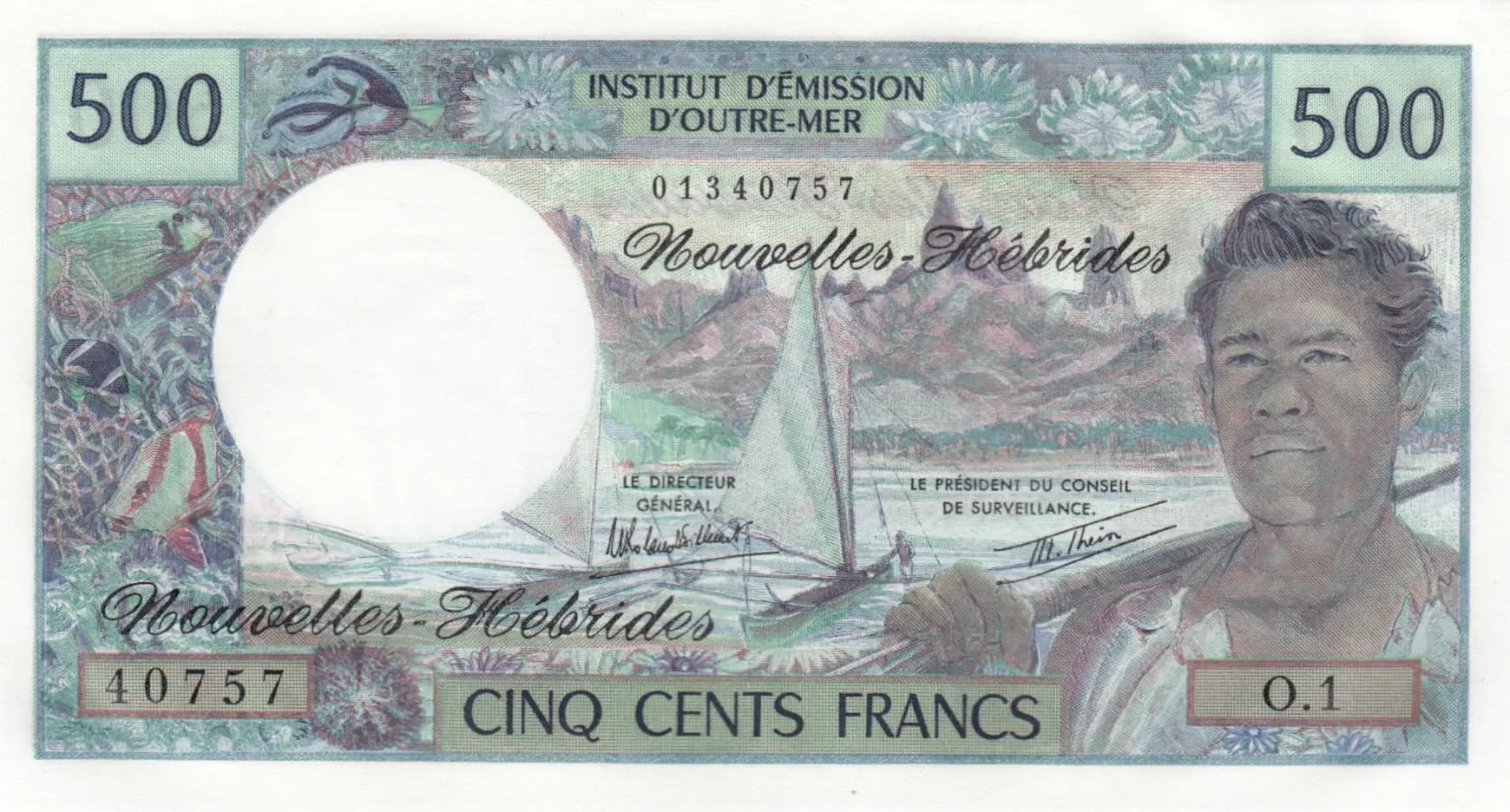
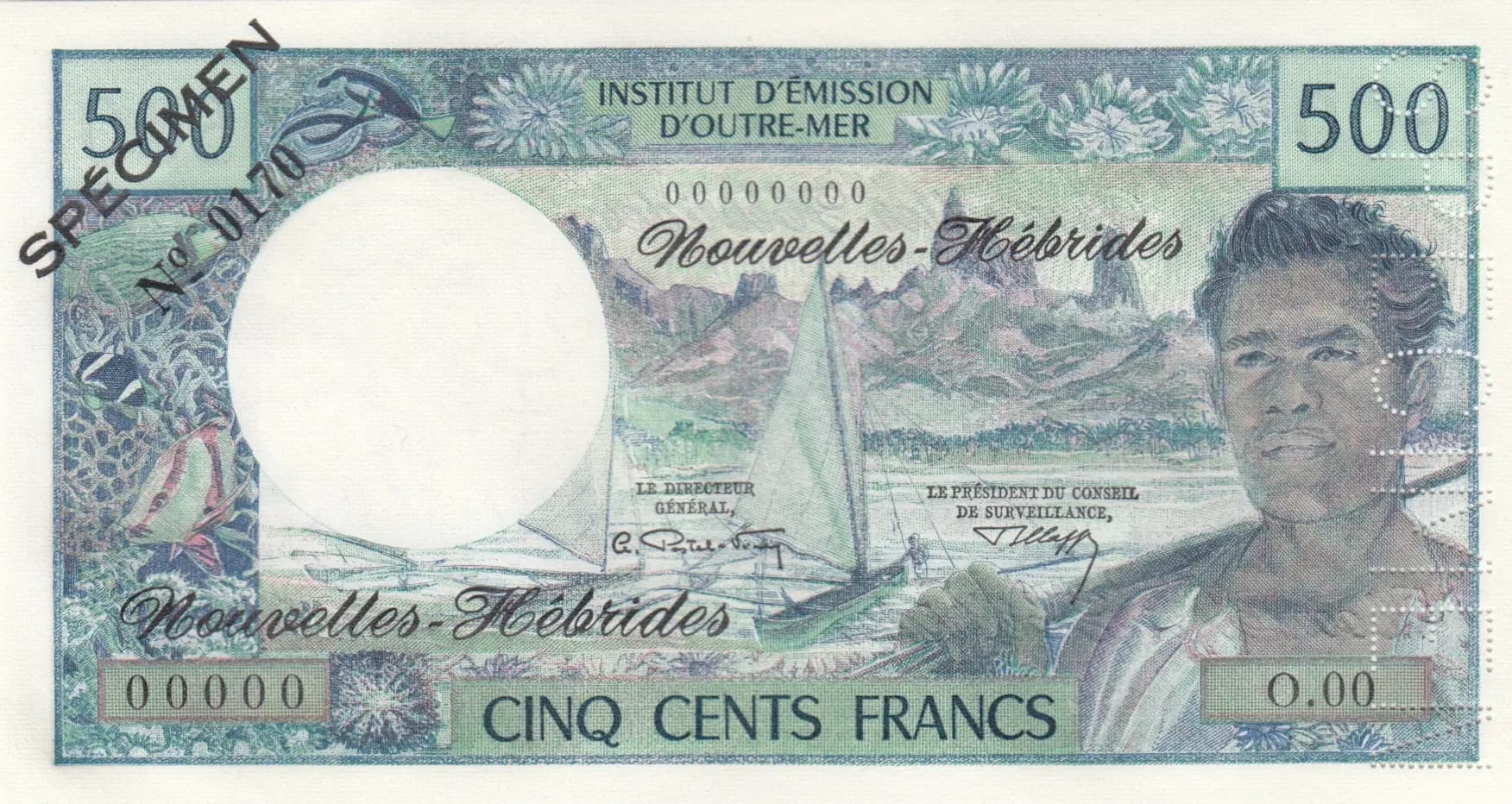
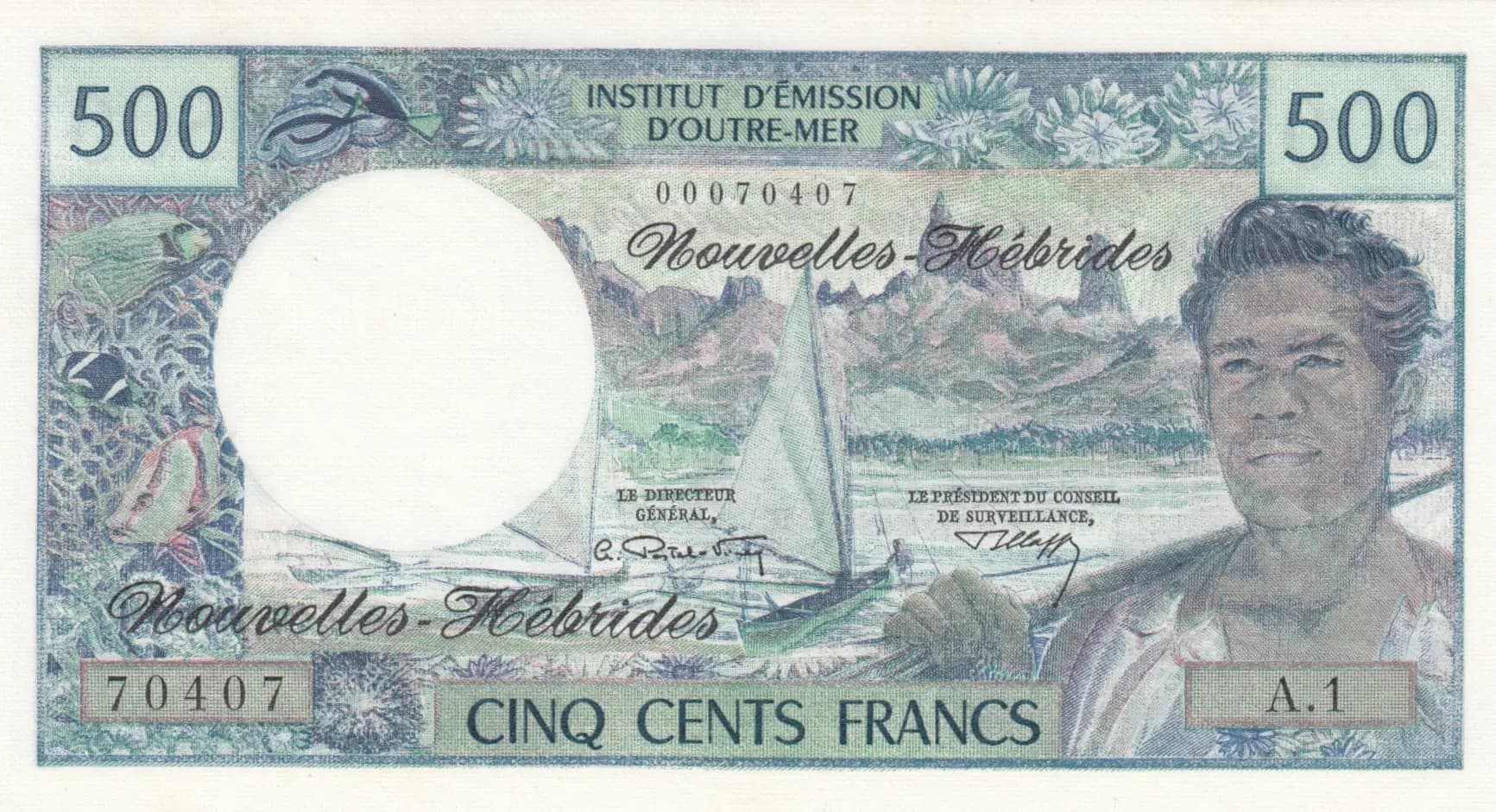
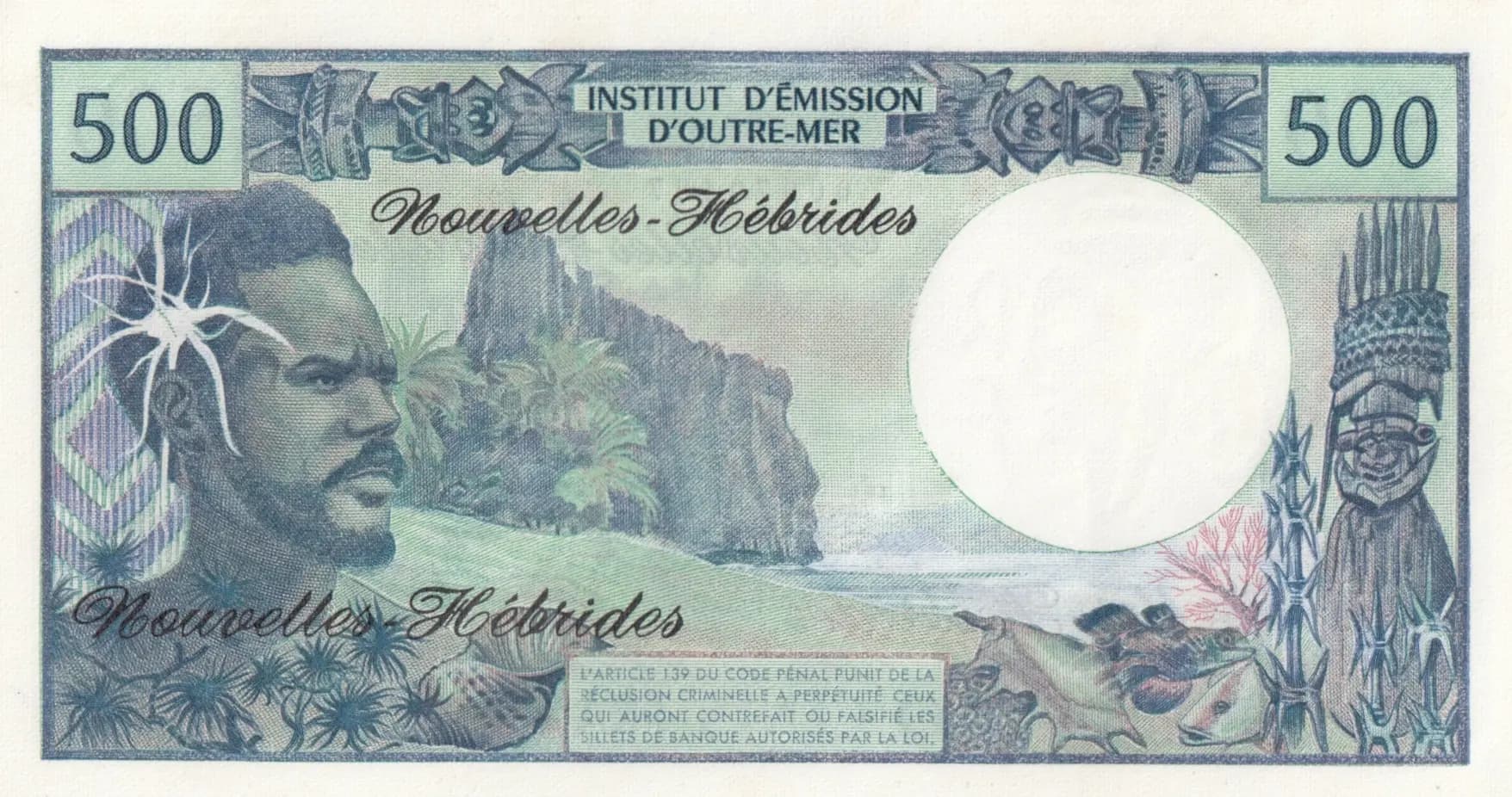
This is a stunning uncirculated example of the 1970 New Hebrides 500 Francs (Pick-19a), issued by the Institut d'Emission d'Outre-Mer. The note exhibits exceptional condition with crisp paper, vibrant multi-color printing featuring blue-grey, green, pink, and beige tones, and displays intricate ornamental designs reflecting the colonial French aesthetic. The obverse features a distinguished male portrait on the right side with a prominent circular security element, while the reverse showcases indigenous cultural imagery including tribal mask designs and island landscape elements, making this a visually compelling example of late-colonial Pacific currency.
Common. The New Hebrides 500 Francs Pick-19a from 1970 was part of a standard currency issue with substantial circulation during the final decade of the Condominium period. No evidence suggests limited print runs, special recall status, or extreme scarcity. The note remains available in the collector market at modest valuations typical of post-colonial Pacific currency from stable, well-documented issues. UNC examples command modest premiums over circulated specimens but are not significantly scarce.
This note was issued during the final years of the Anglo-French Condominium of the New Hebrides (1906-1980), when the Institut d'Emission d'Outre-Mer maintained monetary authority over French overseas territories. The design incorporates both European artistic traditions and indigenous Melanesian cultural motifs—evident in the tribal mask designs and island cliff imagery—reflecting the complex cultural dynamic of the territory during this transitional period. The 1970 issue represents the mature monetary series before the archipelago's independence as Vanuatu in 1980.
The obverse features a formally attired male portrait (likely a French colonial official or administrator) positioned on the right side in three-quarter view, with wavy hair and dignified bearing characteristic of mid-twentieth-century currency portraiture. A large circular element serves as both security feature and compositional anchor in the center-left. The background depicts a mountainous tropical landscape with seascape elements, establishing the geographic context of the New Hebrides. The left margin incorporates elaborate decorative floral and geometric ornamental patterns in the European classical tradition. The reverse presents a profile male portrait on the left side with an even more prominent circular security element at center-right. The central composition showcases island cliff formations rising from ocean waters, emphasizing the archipelago's dramatic topography. The right and left margins are adorned with indigenous Melanesian artistic elements—stylized tribal masks and carved figures—demonstrating intentional integration of Pacific cultural iconography. Color palette transitions between cool blue-greys and greens in landscape elements with warmer pink, mauve, and beige accents in ornamental areas.
OBVERSE: Institut d'Emission d'Outre-Mer (Institute of Overseas Emission); Nouvelles-Hébrides (New Hebrides); 500 and Cinq Cents Francs (500 and Five Hundred Francs in numerals and words); Le Directeur Général (The General Director); Le Président du Conseil de Surveillance (The President of the Supervisory Board); Serial number: 00070407, Series: A.1. REVERSE: Institut d'Emission d'Outre-Mer; Nouvelles-Hébrides (appears twice); L'Article 139 du Code Pénal punit de la réclusion criminelle à perpétuité quiconque auront contrefait ou falsifié les billets de banque autorisés par la loi (Article 139 of the Penal Code punishes with life imprisonment whoever shall have counterfeited or forged banknotes authorized by law).
Intaglio engraving, the standard security printing method for French colonial currency during this period. The intricate fine-line work visible in the ornamental borders, facial details in both portraits, and landscape shading are consistent with Bureau of Engraving and Printing or Banque de France security printer specifications. The color separation and precise registration of the multi-color design indicate professional offset or intaglio combination printing. Security features including the circular watermark/guilloché elements and fine-detail ornamental patterns were produced using advanced engraving plates typical of mid-century French banknote production standards.
This note is catalogued as Pick-19a, identified by Signature Variety #1. According to PMG population data, five distinct signature varieties exist for this base Pick number: P-19a (Sign. #1), P-19b (Sign. #3), P-19c (Sign. #3A), P-19cs (Sign. #3A Specimen), and P-19s (Specimen). The signature positions correspond to 'Le Directeur Général' and 'Le Président du Conseil de Surveillance' as noted in the inscriptions. The serial number prefix 'A.1' and the series designation are consistent with early printings of the 1970 issue. Collectors should verify signature positions under magnification to confirm the specific variety.