20 francs 1941
About This Note
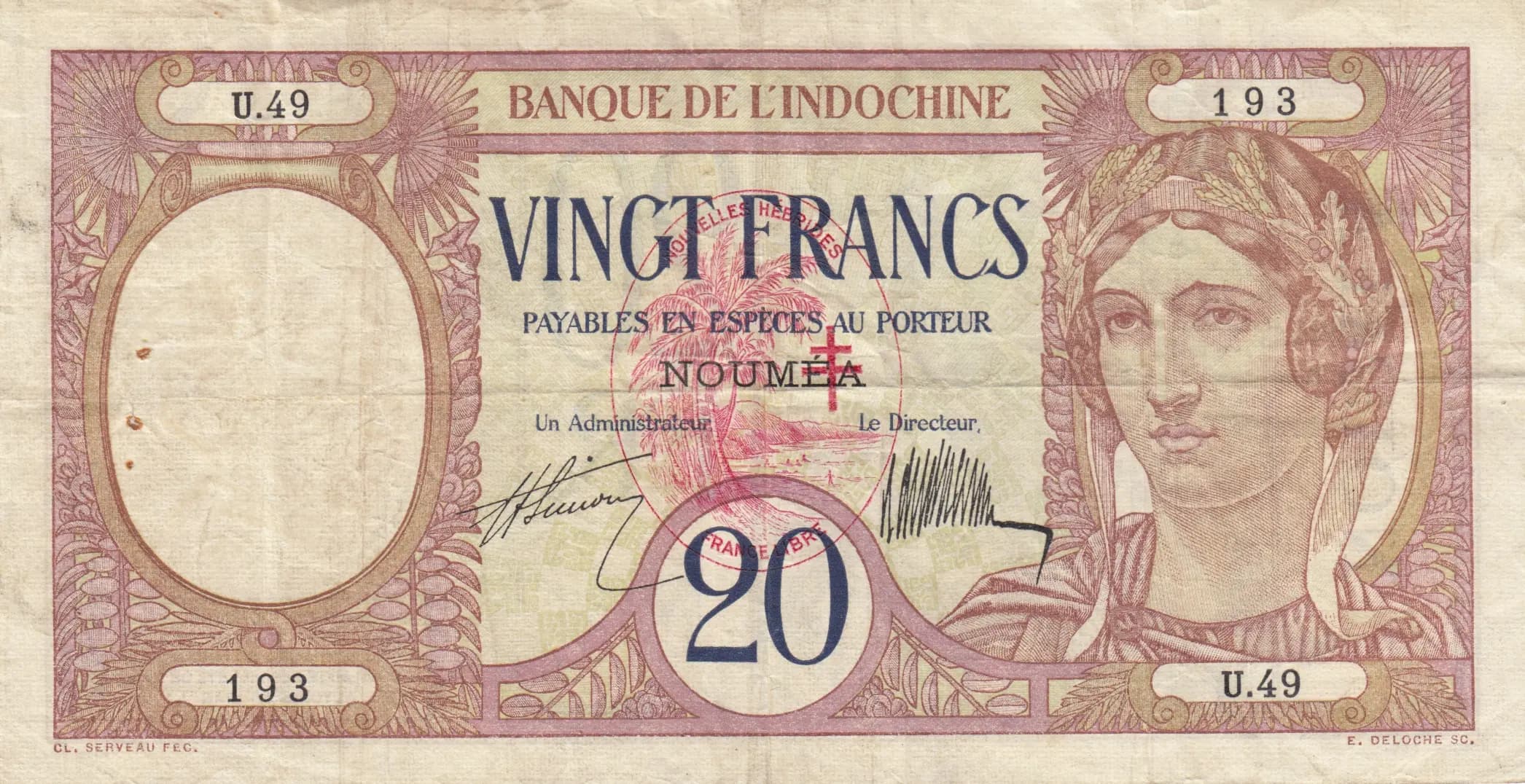
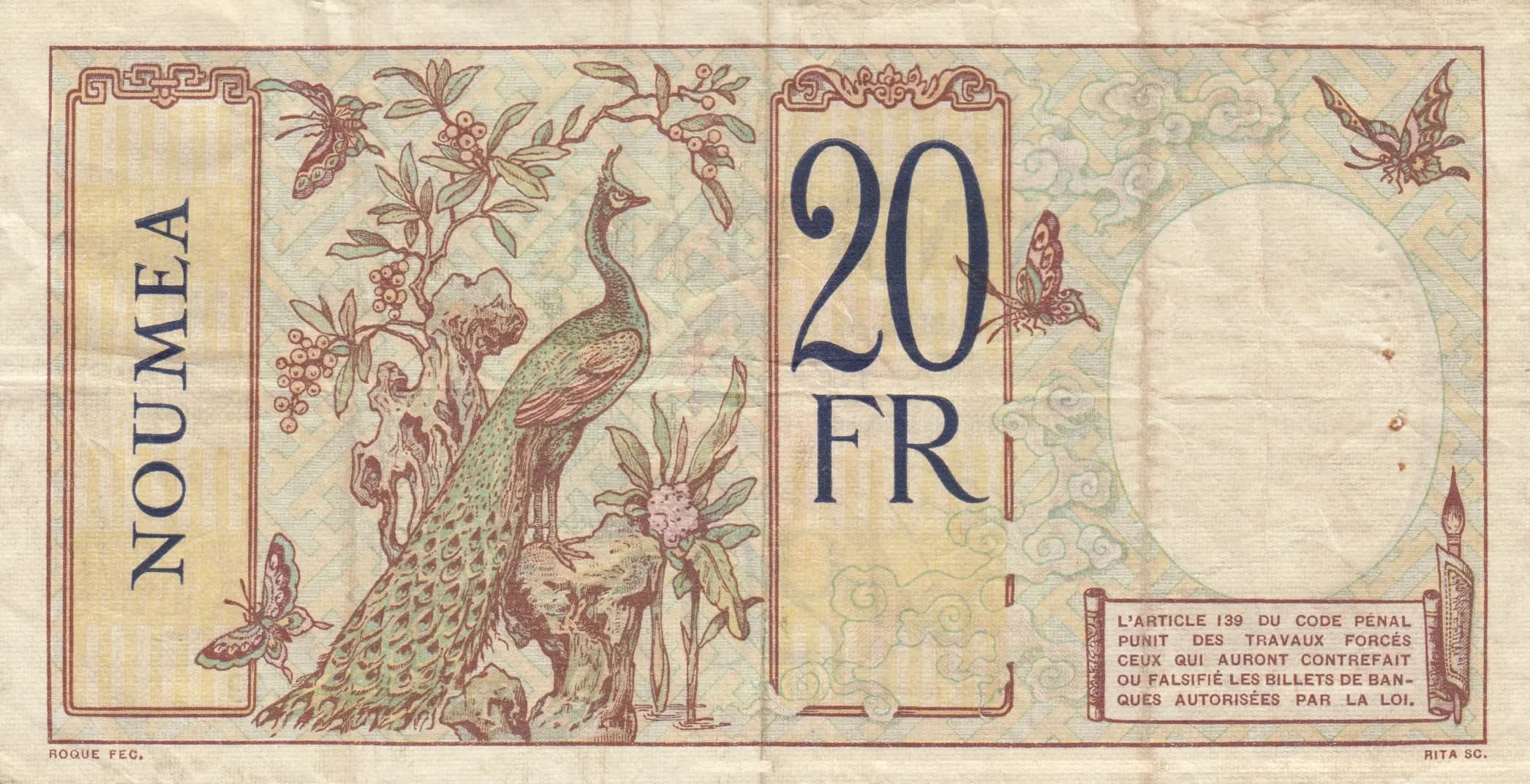
This is a VF-graded 20 Francs banknote from Banque de l'Indochine, issued for New Hebrides in 1941 (Pick-6). The note displays classic Art Deco styling with mauve and cream coloring, featuring an elegant profile portrait of a young woman on the obverse and an intricate peacock amid flowering vines on the reverse. Despite visible signs of age including creasing, foxing, and brown spotting consistent with vintage circulation, the note remains well-preserved with clear legible text and detailed engraving work intact.
Common. The 1941 20 Francs New Hebrides note (Pick-6) was issued in substantial quantities to serve the regular monetary needs of the New Hebrides condominium. No evidence exists of limited print runs, short-lived issuing authority, or recall situations that would classify this as scarce or rare. The relatively straightforward condition observations (standard wear from circulation) and lack of exceptional varieties indicate this was a regular production note. VF-graded examples like this one remain readily available to collectors at modest prices, typical of colonial-era French banknotes from this denomination and period.
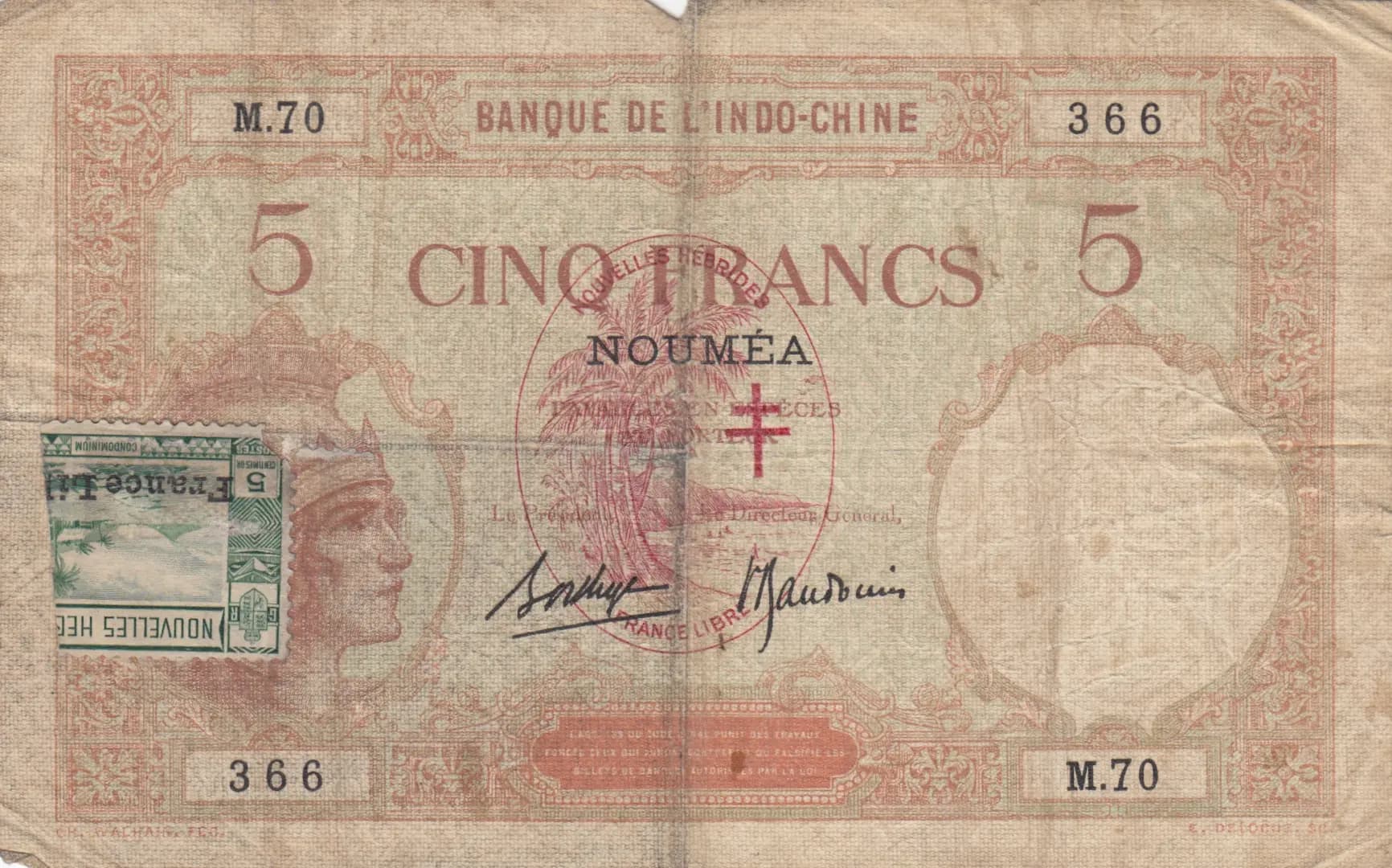
This banknote was issued during World War II by the Banque de l'Indochine for use in the New Hebrides (now Vanuatu), a French-British condominium in the South Pacific. The prominent 'NOUMEA' overprint indicates connection to New Caledonia, the administrative center for French colonial currency operations in the region during wartime. The classical feminine portrait and peacock imagery reflect the French aesthetic traditions of interwar and wartime colonial banking, while the forceful counterfeiting penalties inscribed on the reverse underscore the security concerns of the era.
The obverse features a neoclassical design with an ornate mauve and beige border incorporating fan-pattern scrollwork and botanical elements. The central design displays a large circular denomination frame with '20' and 'FRANCS,' flanked on the right by a profile portrait of an idealized young woman with long wavy hair facing left, rendered in classical style typical of 1930s-40s French banknote design. On the left is an empty oval cartouche, likely intended for a landscape vignette or seal. The reverse presents an elaborate peacock display in full plumage amid flowering vines and botanical garden scenery, enclosed in an ornate rectangular frame. This design choice reflects French colonial tropical imagery and the natural wealth narrative of overseas territories. The 'NOUMEA' overprint with red cross appears on both sides, identifying this as currency authorized for circulation in the New Hebrides condominium through the New Caledonian administrative center.
FRONT SIDE: 'BANQUE DE L'INDOCHINE' (Bank of Indochina) | 'VINGT FRANCS' (Twenty Francs) | 'PAYABLES EN ESPECES AU PORTEUR' (Payable in specie to bearer) | 'NOUMEA' (Noumea, with red cross overprint) | 'Un Administrateur' (An Administrator) | 'Le Directeur' (The Director) | 'CL. SERVEAU FEC.' (engraver Cl. Serveau made it) | 'E. DELOCHE SC.' (engraver E. Deloche engraved it) | Reference codes 'U.49' and '193'. BACK SIDE: 'NOUMEA' (printed vertically) | '20 FR' (Twenty Francs) | 'L'ARTICLE 139 DU CODE PENAL D'UNION DES TRAVAUX FORCÉS CEUX QUI AURAIENT CONTREFAIT OU FALSIFIÉ LES BILLETS DE BANQUES AUTORISÉES PAR LA LOI.' (Article 139 of the Penal Code provides forced labor punishment for those who would counterfeit or falsify banknotes authorized by law) | 'ROQUE FEC.' (engraver Roque made it) | 'RITA SC.' (engraver Rita engraved it).
Intaglio engraving (steel plate engraving), the standard security printing method for banknotes of this era. The visual analysis confirms the presence of fine line crosshatching, intricate scrollwork, and detailed botanical and figurative vignettes characteristic of intaglio production. The multiple engraver credits (Serveau, Deloche on obverse; Roque, Rita on reverse) indicate the specialized division of labor typical of high-security banknote engraving. The Banque de l'Indochine contracted with European security printers for colonial banknote production during this period.
The primary identified variety for Pick-6 involves the watermark type (Man's Head watermark noted in PMG population data). This example displays reference codes 'U.49' and '193' in the corners, typical of Banque de l'Indochine's standard numbering and control systems for colonial issues. The 'NOUMEA' overprint with red cross is a constant feature required for New Hebrides circulation and represents the territorial authorization mark rather than a variety marker. No exceptional date, signature, or serial number variations are apparent from the visual analysis.