100 francs 1977
About This Note
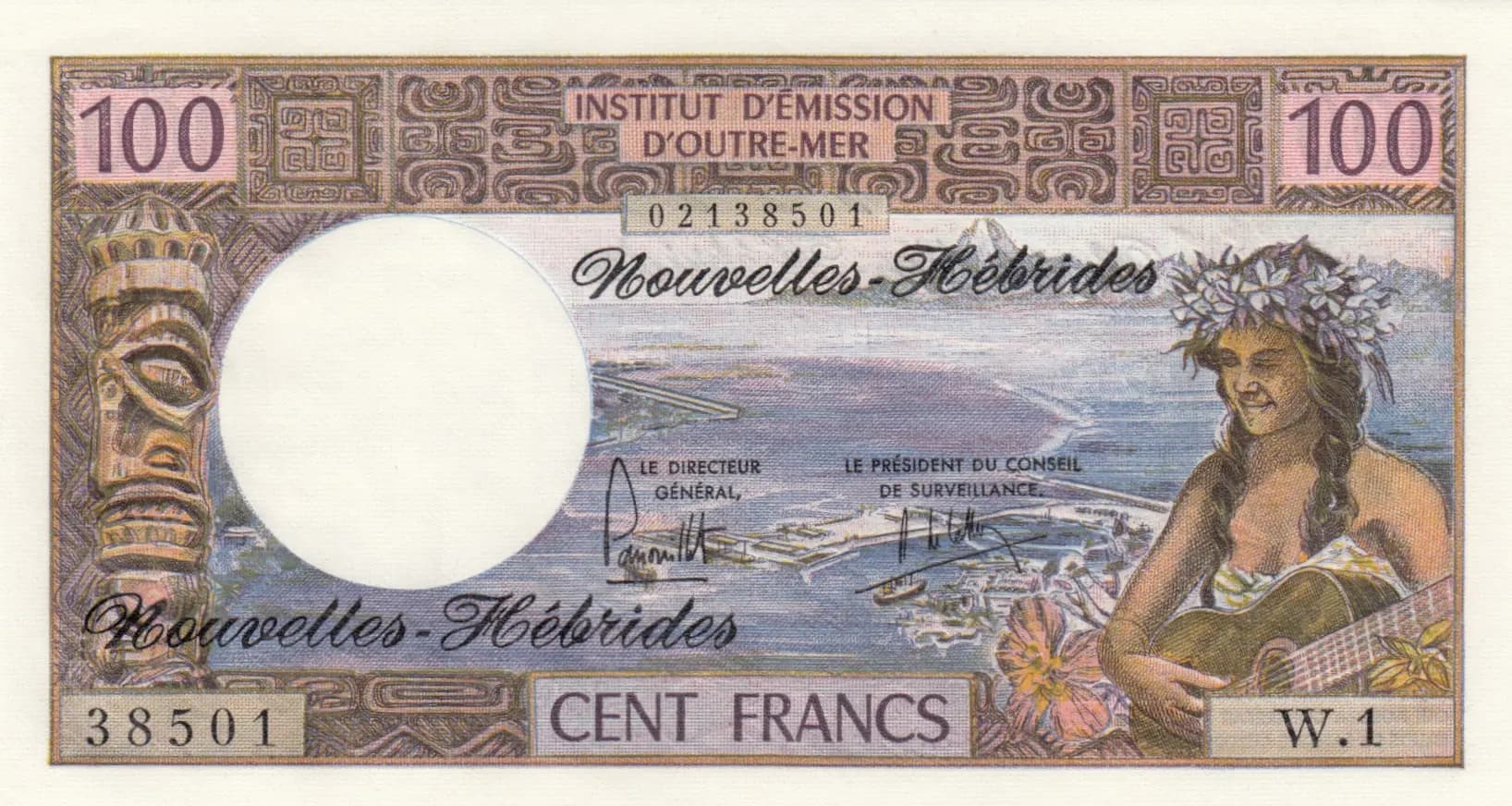
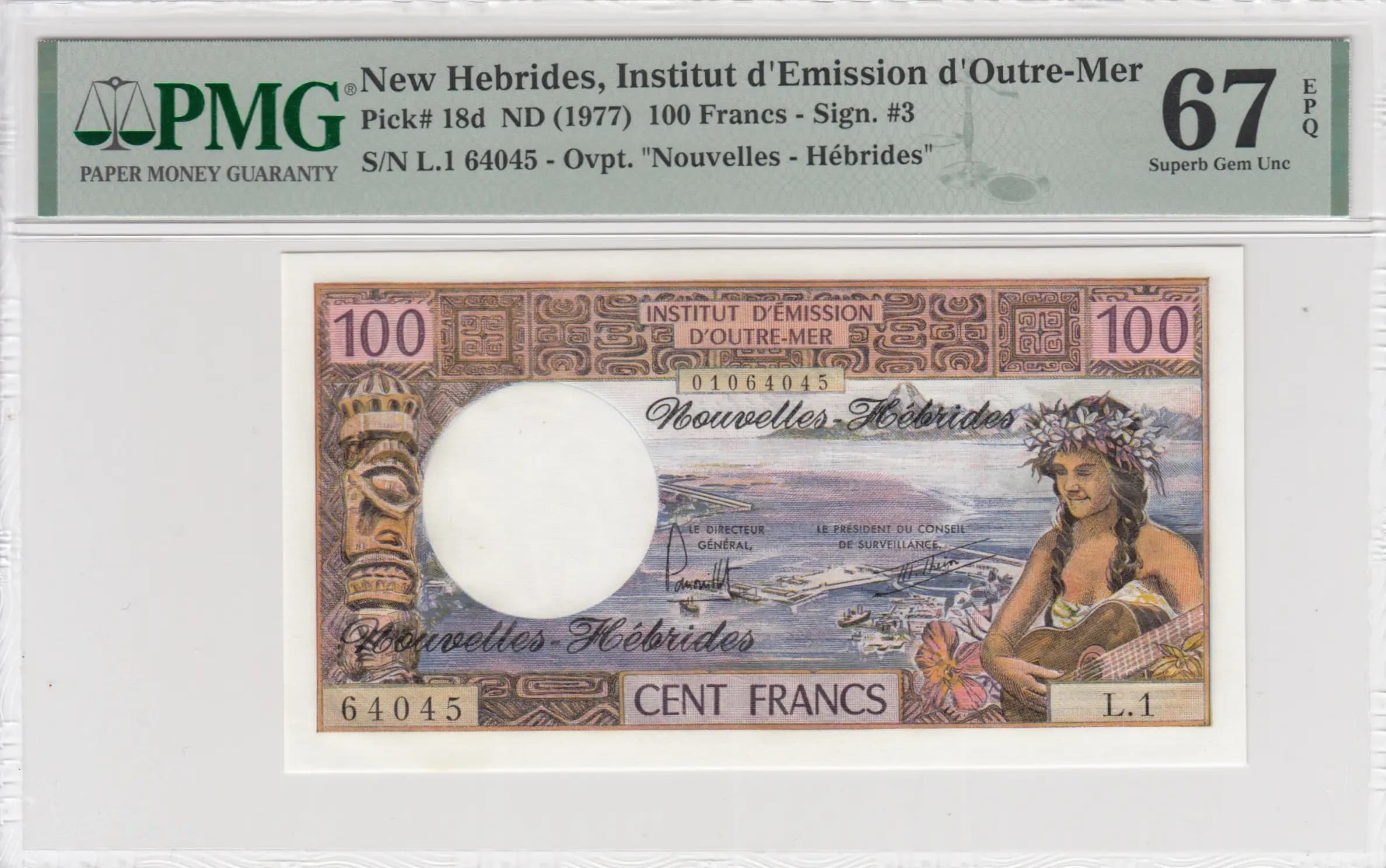
This is a PMG 67 EPQ graded 100 Francs banknote from New Hebrides, issued in 1977 by the Institut d'Emission d'Outre-Mer, representing signature variety #3 (P-18d). The note displays pristine uncirculated condition with exceptional eye appeal, featuring vibrant brown, cream, pink, and blue tones depicting indigenous Oceanic cultural elements including carved totem masks and a woman adorned with tropical flowers and produce.
Common. While the New Hebrides ceased issuing its own currency upon independence in 1980, the 100 Francs denomination from 1977 was produced in typical circulation quantities for the time. Even in PMG 67 EPQ condition, this note does not command premium prices significantly above face value on the secondary market, indicating substantial survival numbers. The note's accessibility in high grades reflects adequate original print runs and the collectibility of late-period colonial Pacific currency rather than scarcity.
This banknote was issued during the New Hebrides' final years before independence in 1980, when the territory remained under joint French-British condominium administration. The imagery reflects the islands' distinctive Melanesian cultural heritage, with the prominent totem masks and lei-adorned woman representing the indigenous Vanuatu people and their traditional customs. The Institut d'Emission d'Outre-Mer's issuance underscores France's continued monetary control during this transitional colonial period.
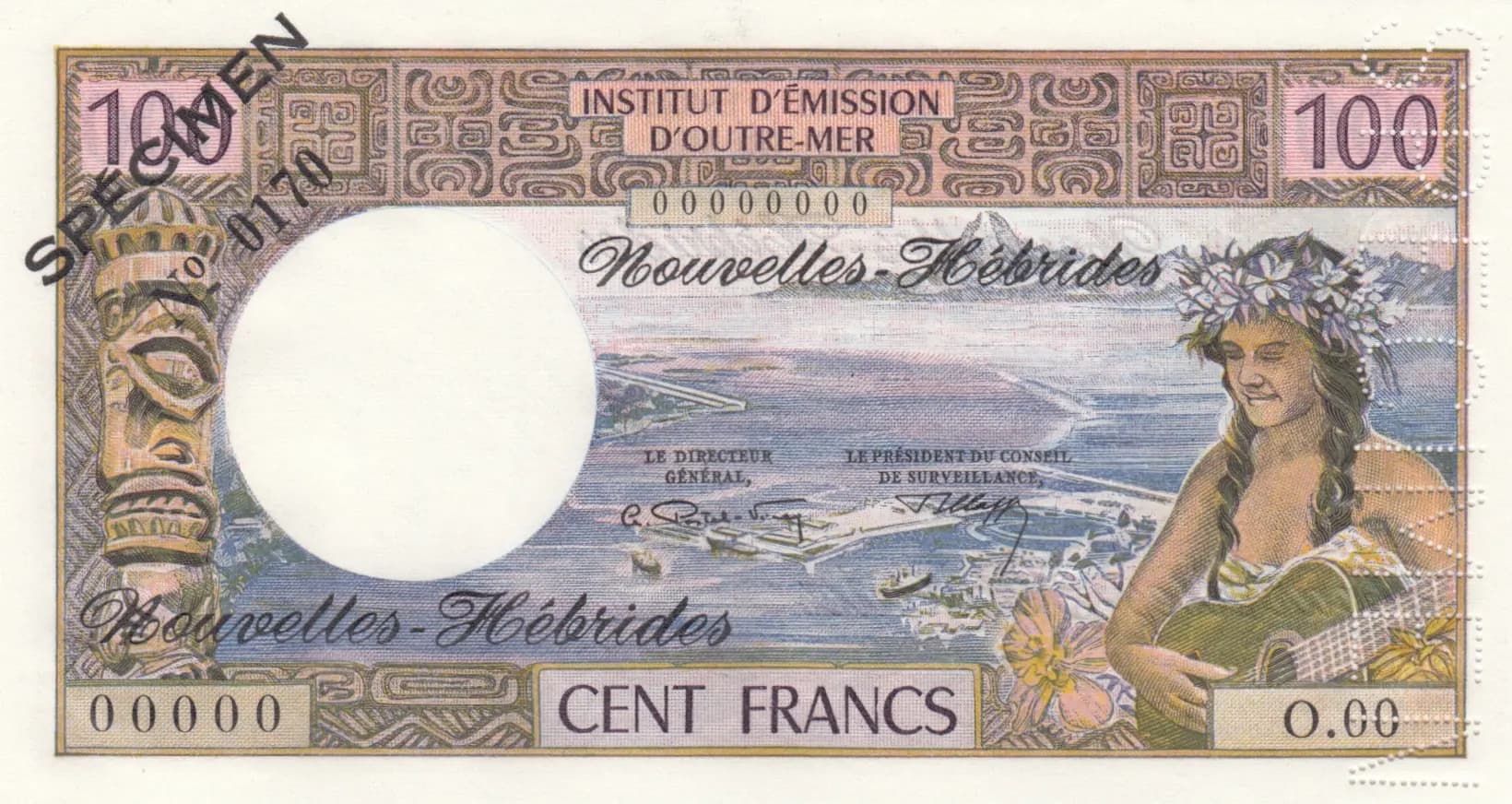
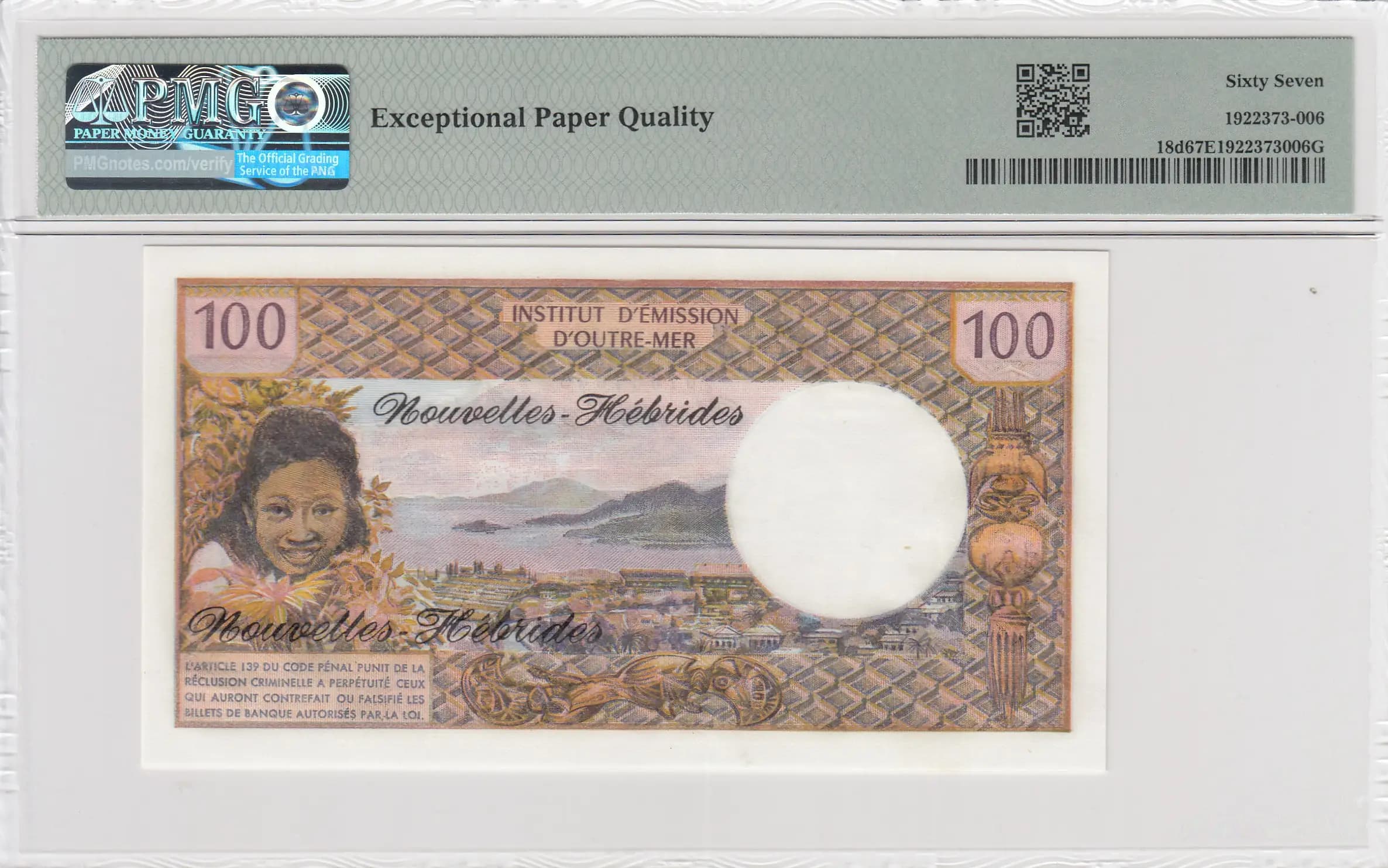
The note's obverse features a carved wooden totem or mask face with geometric patterns on the left border, symbolizing Melanesian artistic traditions. The right side depicts a woman with braided hair wearing a traditional lei (flower garland) and holding tropical fruits or produce, representing the islands' cultural identity and natural abundance. A large white circular watermark occupies the central area. The reverse displays a mountainous coastal landscape with settlement in the background on the left, a smiling young woman with flowers in her hair on the left portion, and another carved wooden totem mask on the right side. Both sides utilize fine guilloche patterns and ornamental Oceanic-style borders as security elements. The color palette of browns, creams, pinks, blues, and gold/tan tones creates a warm, distinctly tropical aesthetic appropriate to the island nation.
Front Side: Institut d'Emission d'Outre-Mer (Overseas Emission Institute), Nouvelles-Hébrides (New Hebrides), 100 / Cent Francs (One Hundred Francs), L.1 (designation), Directeur Général (Director General), Le Président du Conseil de Surveillance (The President of the Board of Surveillance). Back Side: Institut d'Emission d'Outre-Mer (Overseas Emission Institute), Nouvelles-Hébrides (New Hebrides), 100, Article 139 du Code Pénal legal warning: 'Article 139 of the Penal Code punishes with life imprisonment those who would have counterfeited or falsified banknotes authorized by law.'
The note employs intaglio engraving combined with fine line guilloche work for security purposes, characteristic of French-backed colonial currency of this era. The detailed ornamentation, fine patterns, and multi-color security features indicate production by a European security printer contracted by the Institut d'Emission d'Outre-Mer. The P-18d variety represents signature variety #3, distinguishing it from earlier engraved (P-18a) and lithographic (P-18b) variants.
This note is specifically catalogued as P-18d, representing Signature Variety #3. According to the PMG population report, the 100 Francs 1977 Pick listing includes five documented variants: P-18a (Engraved, Signature #1), P-18b (Lithographic, Signature #1), P-18c (Signature #2), P-18d (Signature #3), and P-18s (unlisted variant). The serial number visible on this specimen (0106404 5 / 64045) and the designation 'L.1' are consistent with standard issue parameters. The signature variety distinguishes this from earlier printings and reflects administrative changes during the colonial administration's final operational years.