500 francs 1969 specimen
Market Prices
4 salesAbout This Note
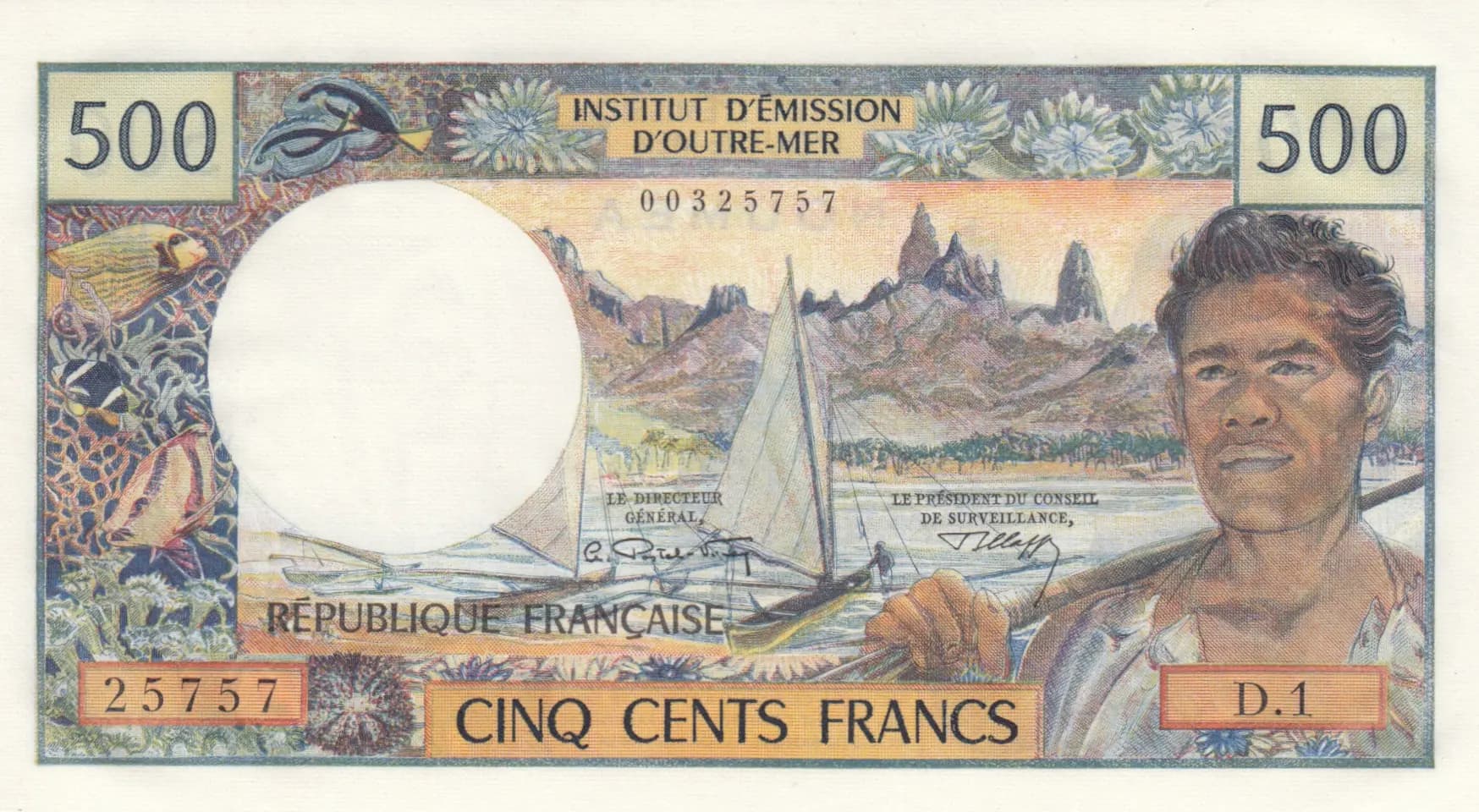
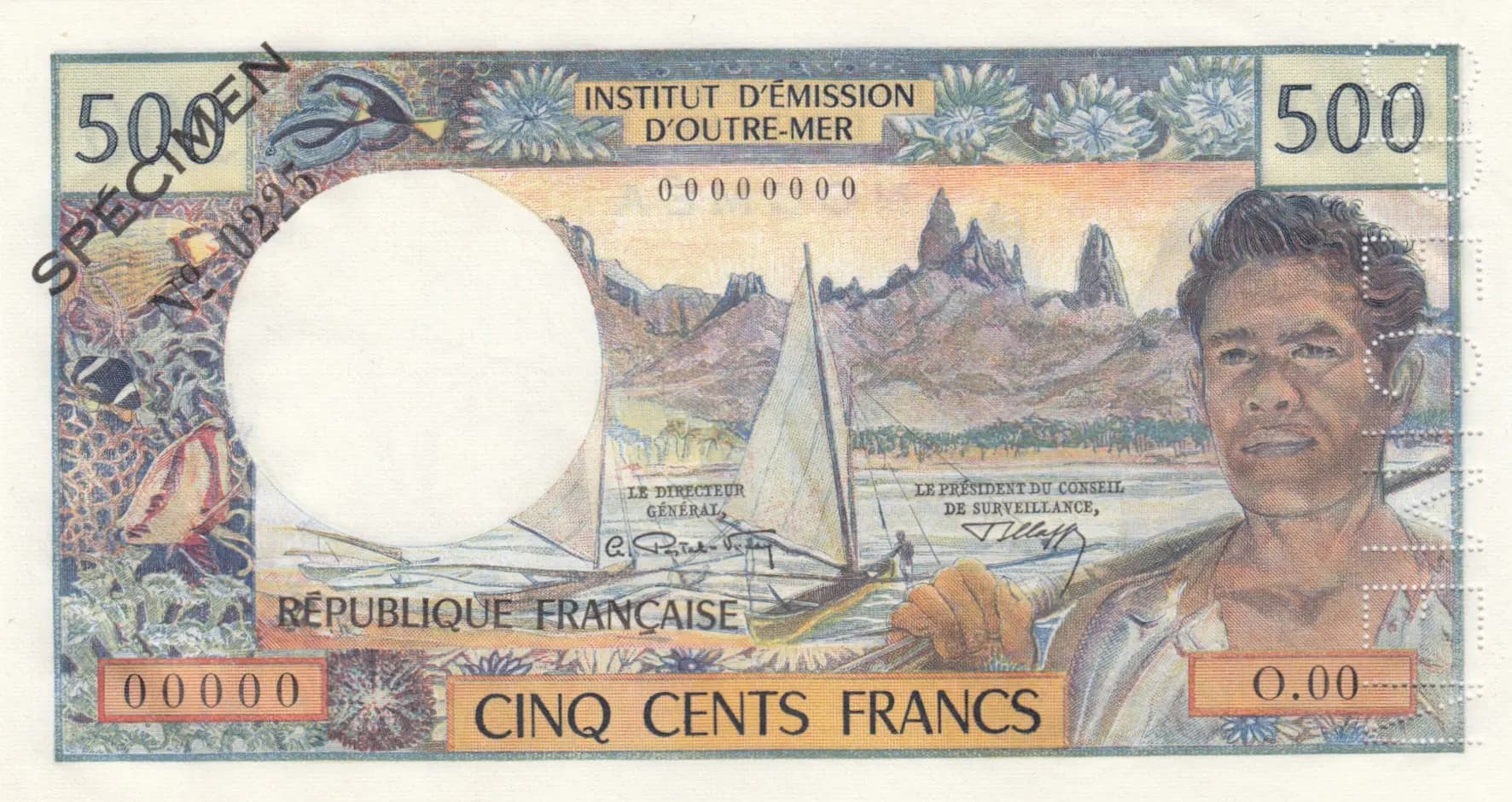
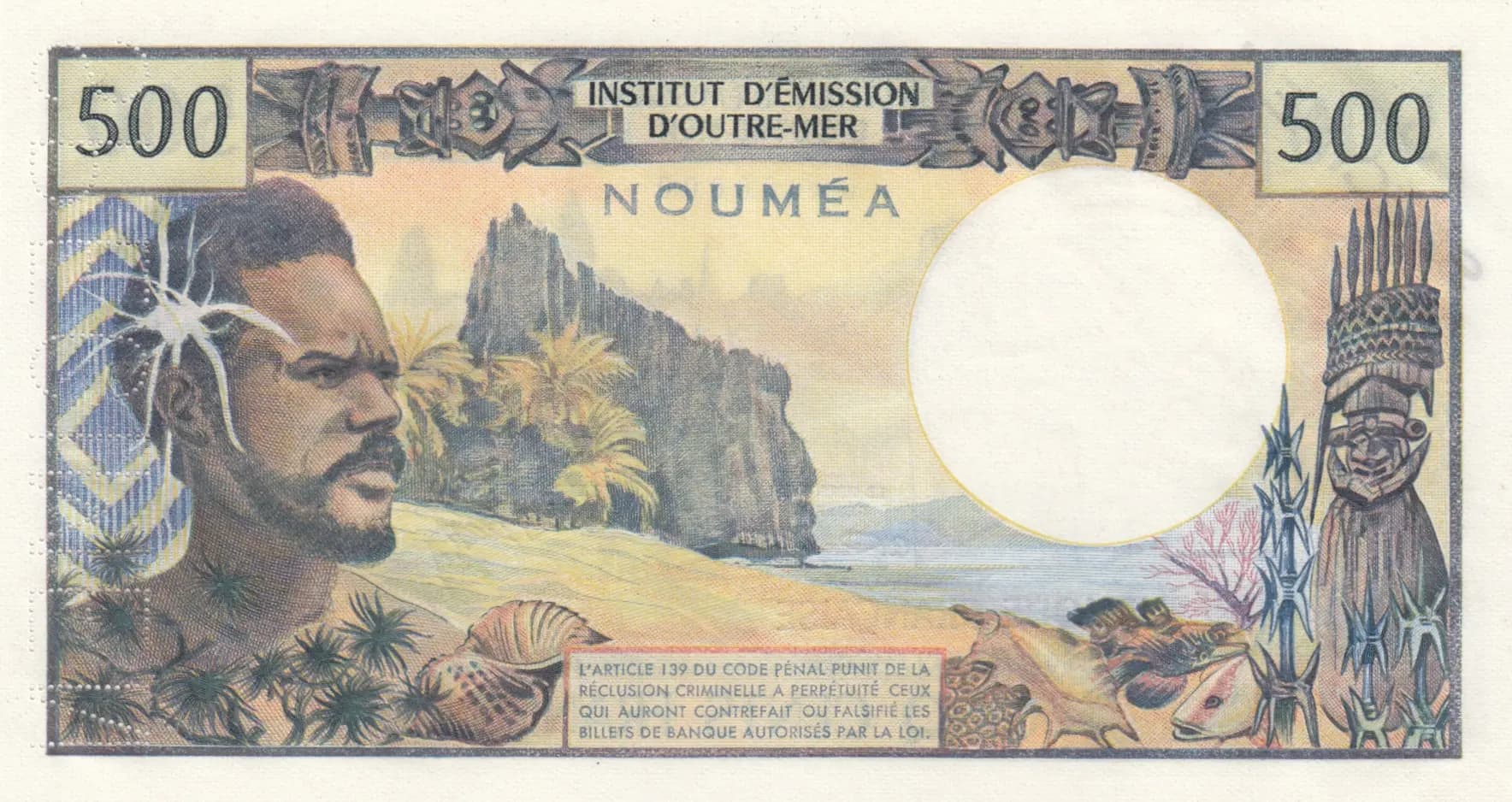
This is an exceptional specimen note of the New Caledonian 500 francs from 1969, issued by the Institut d'Emission d'Outre-Mer and bearing the diagonal 'SPECIMEN' overprint characteristic of bank distribution samples. The note exhibits pristine uncirculated condition with vibrant multi-colored engraving in blues, greens, oranges, and earth tones, featuring indigenous Melanesian cultural imagery on both sides—a woman in traditional attire with pearl headdress on the obverse and a male portrait with coastal landscape on the reverse. Specimen notes of this denomination are particularly desirable to collectors as they represent the issuing bank's authorized distribution samples and are typically produced in limited quantities.
Common. Despite being a specimen note (which are typically produced in smaller quantities than regular circulation issues), the 1969 500 francs has relatively modest market values. eBay pricing data shows PMG-graded examples trading in the $30-$50 range for circulated specimens (PMG 55-66), with uncirculated catalogue valuations at approximately $125 as of 2019. The existence of multiple signature varieties (P-60a, P-60c, P-60d, P-60e catalogued separately) and the long circulation period (1969-1989 per external references) suggest adequate production runs. Specimen notes command modest premiums over regular circulation issues but are not inherently scarce within the collecting market.
This note reflects New Caledonia's status as a French overseas territory in 1969, with the Institut d'Emission d'Outre-Mer (Institute of Overseas Emission) responsible for currency issuance across French Pacific possessions. The imagery celebrating indigenous Melanesian culture—the traditionally dressed woman with shell ornaments and the male portrait—alongside the rocky coastal cliffs and tropical landscape underscores the note's role in circulating identity and economic sovereignty within the territory during the post-colonial period when French Pacific currency remained tied to metropolitan authority.
The obverse features a Melanesian woman in right profile, adorned with traditional pearl headdress and shell ornaments, positioned on the right portion of the note. The central composition displays a traditional sailing vessel with white sail set against a mountainous landscape with coastal background. Ornate decorative borders with floral and geometric patterns frame the left side, incorporating shell and marine motifs reflecting New Caledonian maritime heritage. The reverse presents a male figure of apparent Melanesian descent in left profile with facial hair, anchoring the left side of the composition. The center-right features indigenous sculptural/totem elements and tropical vegetation including palm fronds. Rocky coastal cliffs and ocean water dominate the landscape elements, with the issuing city 'NOUMEA' prominently displayed at top center. Both sides incorporate large circular watermark areas and complex fine-line engraving work. The color palette of blues, greens, oranges, creams, and browns creates a cohesive representation of the territory's natural and cultural identity.
FRONT: '500' (denomination), 'CINQ CENTS FRANCS' (Five Hundred Francs), 'INSTITUT D'EMISSION D'OUTRE-MER' (Institute of Overseas Emission), 'RÉPUBLIQUE FRANÇAISE' (French Republic), 'LE DIRECTEUR GÉNÉRAL' (The General Director), 'LE PRÉSIDENT DU CONSEIL DE SURVEILLANCE' (The President of the Supervisory Board), 'SPECIMEN' (Specimen), '00000000' (Serial number placeholder). BACK: '500' (denomination), 'INSTITUT D'EMISSION D'OUTRE-MER' (Institute of Overseas Emission), 'NOUMEA' (Nouméa, capital city), 'L'ARTICLE 139 DU CODE PÉNAL PUNIT DE LA RÉCLUSION CRIMINELLE À PERPÉTUITÉ CEUX QUI AURONT CONTREFAIT OU FALSIFIÉ LES BILLETS DE BANQUE AUTORISÉS PAR LA LOI' (Article 139 of the Penal Code punishes with life imprisonment those who counterfeit or falsify banknotes authorized by law).
Intaglio engraving (line engraving), evidenced by the fine detailed decorative borders, intricate background patterns, and precise portraiture visible throughout. The complexity of the ornamental designs and the clarity of the security features indicate professional bank note production by a specialized security printer. The specimen marking was applied as an overprint during the distribution process to denote this as an authorized sample.
This note is catalogued as Pick P-60s, the specimen variant of the 500 francs base design. The PMG population report identifies five distinct varieties of this base Pick number differentiated by signature combinations: P-60a (Signature #1), P-60c (Signature #3), P-60d (Signature #4), and P-60e (Signature #5). The 'P-60s' designation indicates this is the specimen overprint version, which would have been produced for official distribution to banks and institutions. The specimen marking and serial number placeholder ('00000000') are definitive characteristics of this variety.