20 francs 1963
Market Prices
9 salesAbout This Note
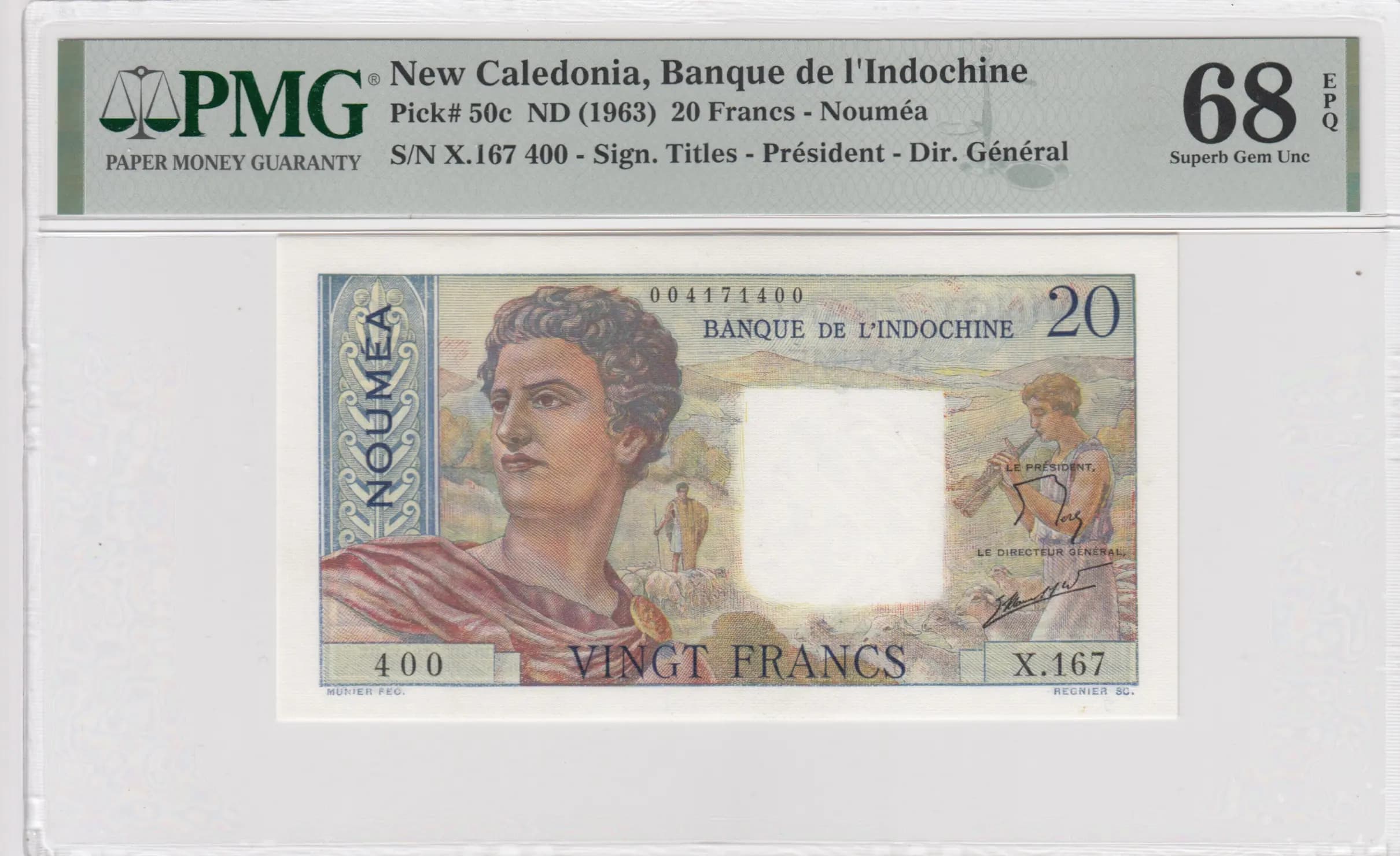
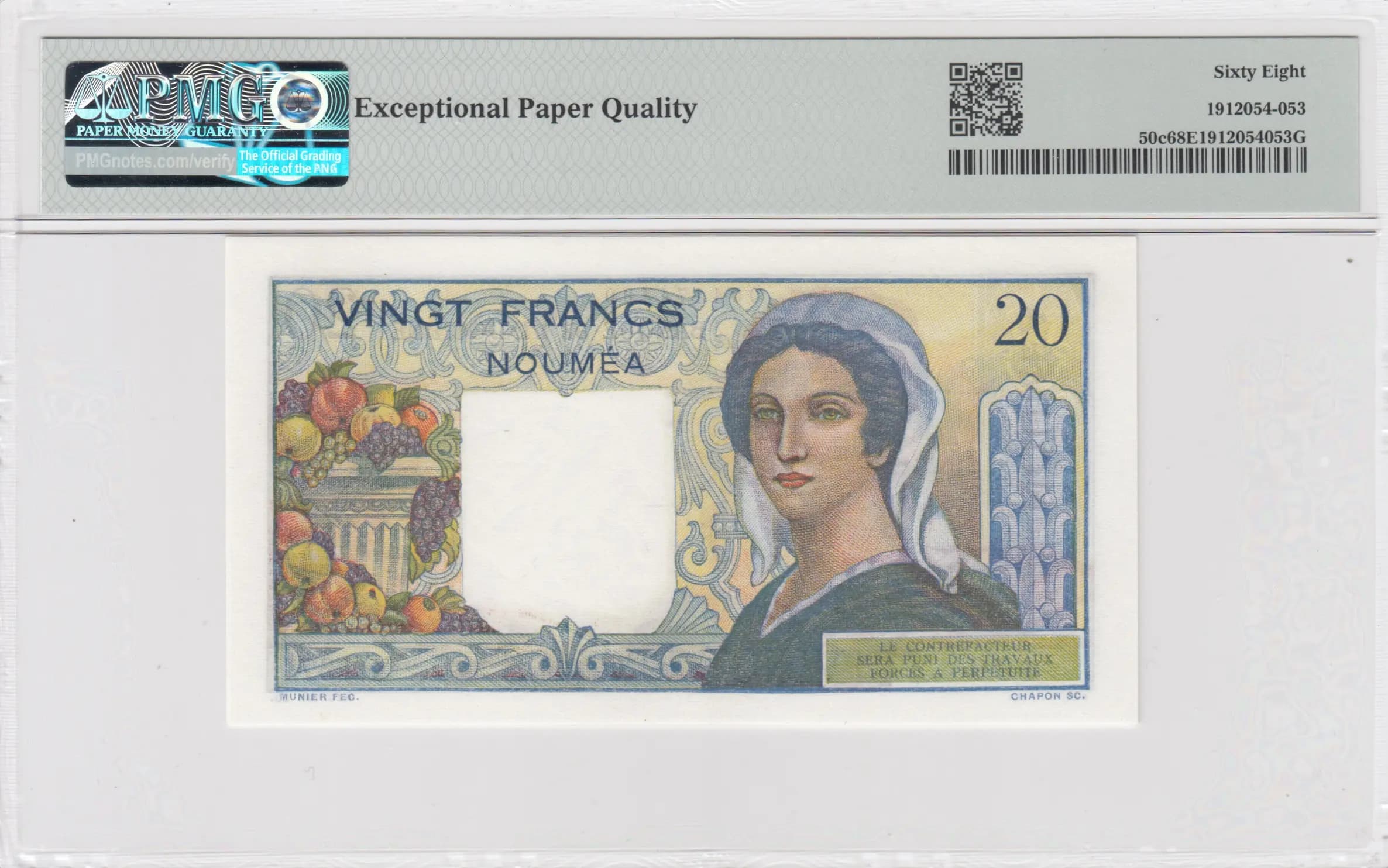
This PMG 68 EPQ example of the 1963 Banque de l'Indochine 20 Francs from New Caledonia presents an exceptional near-gem uncirculated specimen with vibrant, well-preserved colors and sharp engraving throughout. The note features a striking classical design with a male profile portrait on the obverse and an allegorical female figure with cornucopia on the reverse, both rendered in fine line engraving with intricate security features including a central white window. This high-grade example represents the pinnacle of preservation for this issue, with auction data confirming strong collector demand for PMG-graded specimens in the 66-67 range commanding $100+.
Common. Despite the PMG 68 EPQ grade representing exceptional preservation, the base note P-50c is a common issue from a 13-year production run (1951-1963) with substantial circulation. eBay market data confirms this: even PMG 67 examples sell for approximately $200, PMG 66 examples for $110-130, and lower grades (VF) for under $20. The population report shows multiple cataloged variants (P-50a through P-50cs), indicating these were produced in reasonable quantities. High-grade examples command premiums typical of well-preserved notes, but the underlying issue itself remains common in the broader numismatic market.
Issued by the Banque de l'Indochine's Nouméa branch during the twilight of the French colonial period in New Caledonia, this 1963 note reflects the classical artistic traditions of French-influenced Pacific banking currency. The obverse portrait and the reverse allegorical imagery of abundance (depicted through the elaborate fruit and floral cornucopia) symbolize the economic order and prosperity narrative promoted by the colonial administration. The series represents a transitional period before New Caledonia's monetary independence, making these notes historically significant artifacts of French colonial financial policy in the Pacific.
The obverse features a classical male profile portrait positioned on the left side, depicted in classical or military dress with burgundy draped garment, facing left with curled dark hair—this represents a symbolic figure of authority of the colonial era. To the right are two smaller oval portraits labeled 'LE PRÉSIDENT' and 'LE DIRECTEUR GÉNÉRAL,' representing the institutional authority structure of the Banque de l'Indochine. A distinctive white rectangular security window occupies the center. The left margin contains an ornamental vertical caduceus-like pattern with geometric designs. The reverse showcases an allegorical female figure wearing classical white head covering/veil positioned on the right, symbolizing prosperity or abundance. The left side displays an elaborate decorative cornucopia overflowing with fruits and vegetables (grapes, apples, and other produce), representing economic fertility. Classical architectural elements appear in the background. Both sides feature ornamental scrollwork borders and elaborate decorative elements in earth tones of brown, gold, and blue on the obverse, with vibrant greens, yellows, reds, and blues on the reverse.
FRONT: 'BANQUE DE L'INDOCHINE' (Bank of Indochina) / 'VINGT FRANCS' (Twenty Francs) / '20' (denomination) / 'LE PRÉSIDENT' (The President) / 'LE DIRECTEUR GÉNÉRAL' (The Director General) / 'FORTIER FEC' (Fortier engraved it) / 'RÉGNIER SC' (Régnier engraved it) / Serial number and control marks 'X.167' and '400'. BACK: 'VINGT FRANCS' (Twenty Francs) / '20' (denomination) / 'NOUMÉA' (city of issue) / 'LA CONTREFACTEUR SERA PUNI DES TRAVAUX FORCÉS À PERPÉTUITÉ' (The counterfeiter will be punished with forced labor for life) / 'BURNIER FEC' (Burnier engraved it) / 'CHAPON SC' (Chapon engraved it).
This note was produced using fine line engraving, a sophisticated intaglio printing method that creates the distinctive raised-line aesthetic visible throughout the design. The engraver credits 'FORTIER FEC' and 'RÉGNIER SC' on the obverse, and 'BURNIER FEC' and 'CHAPON SC' on the reverse, indicate the master engravers responsible for the plate work. The complex background patterns, intricate portrait rendering, and security features (including the central white window security element) are hallmarks of professional security printing from this era. The Banque de l'Indochine employed established French security printing facilities, consistent with French colonial banking standards.
This specimen represents the P-50c variety as specified in the Pick catalog. The PMG population report identifies seven variants for this base Pick number (P-50a, P-50b, P-50bs, P-50c, P-50cs, P-50p1, P-50s), all from Nouméa except P-50p1. The specific designation P-50c indicates this is a standard Nouméa issue from the 1963 period. Observable control markings include 'X.167' and the serial number prefix visible in the design, which may help distinguish it from earlier varieties (P-50a, P-50b) within the same denominational series. The engraver signatures (Fortier, Régnier, Burnier, Chapon) are consistent across the main varieties of this issue.