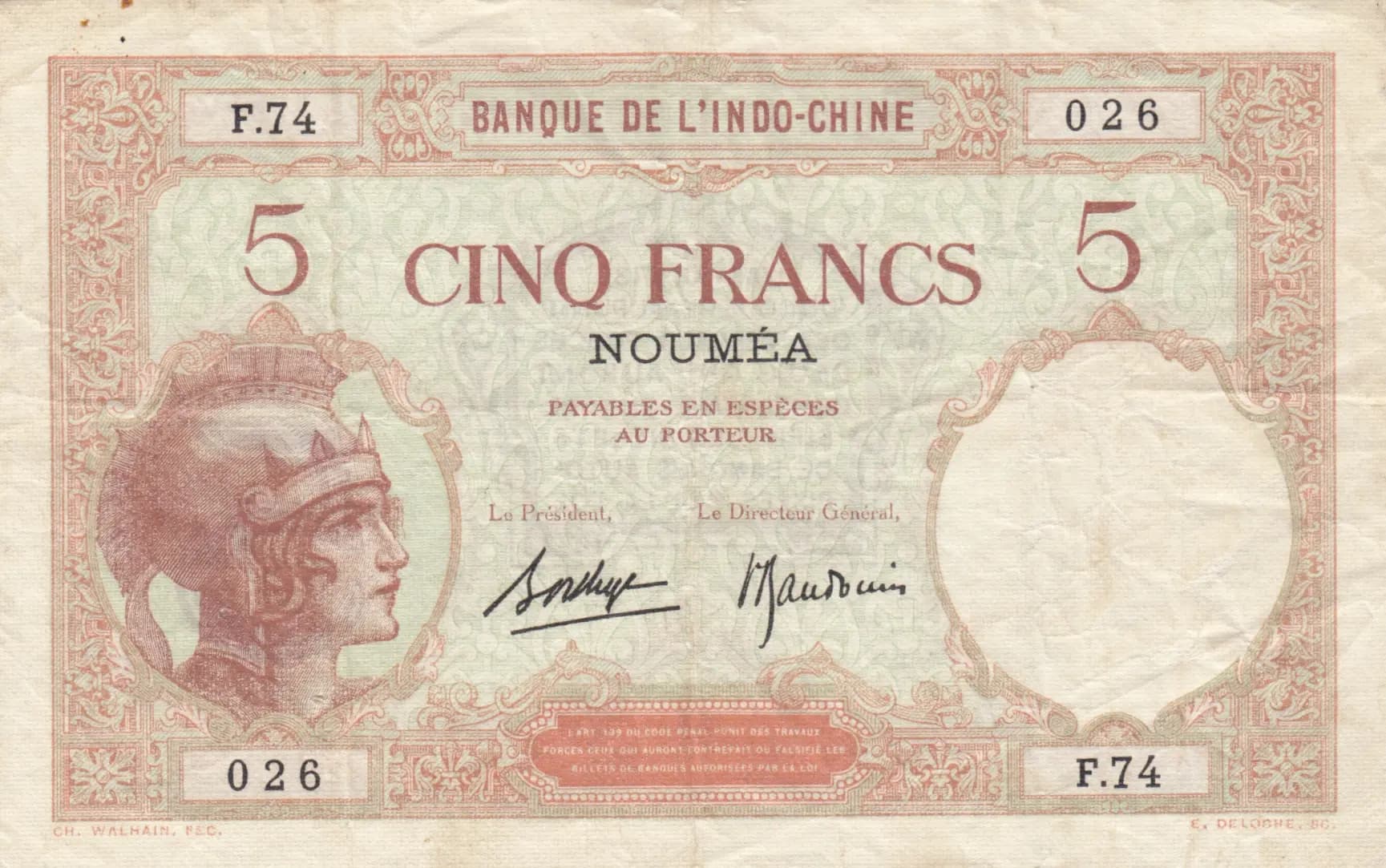
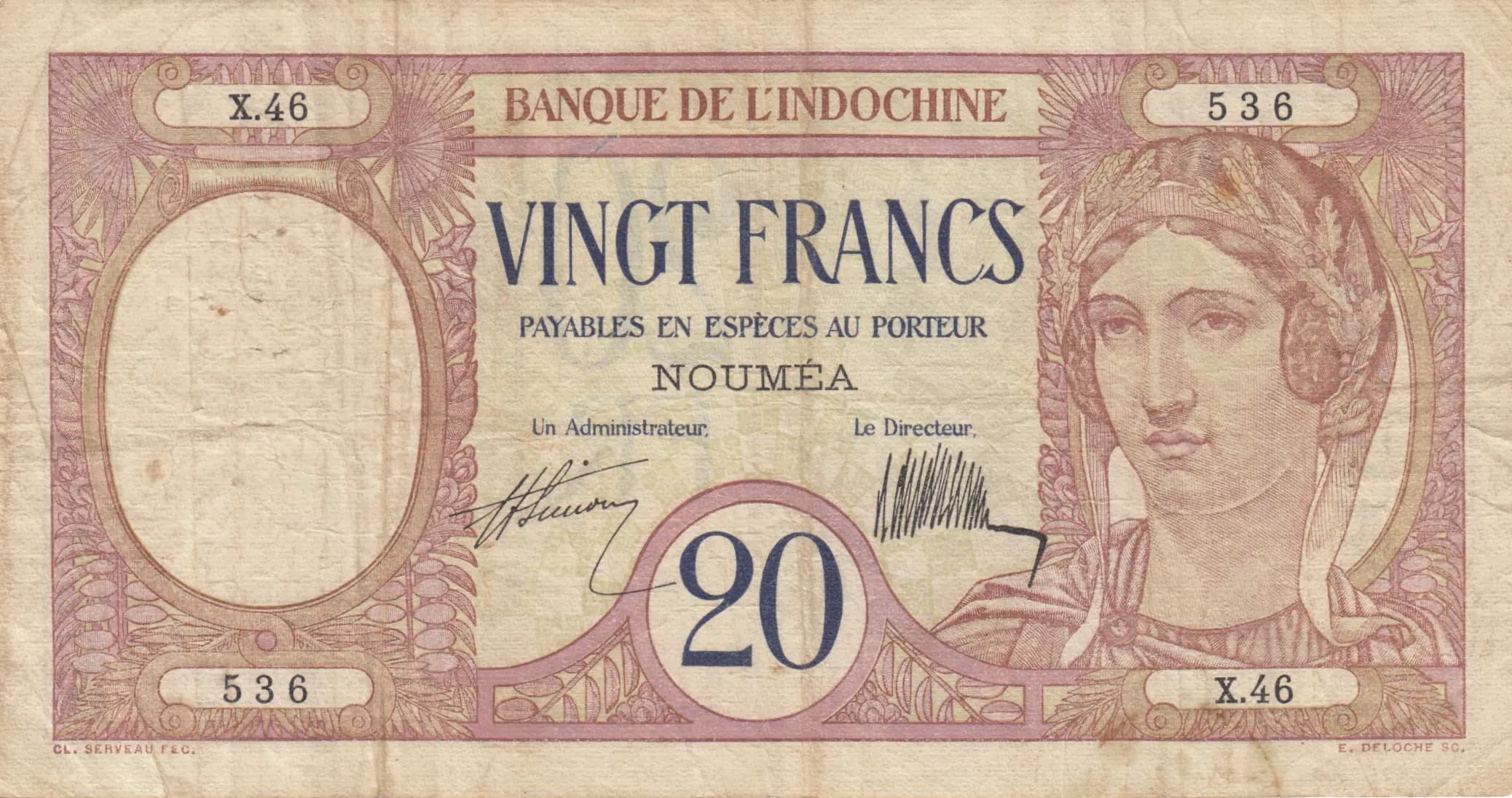
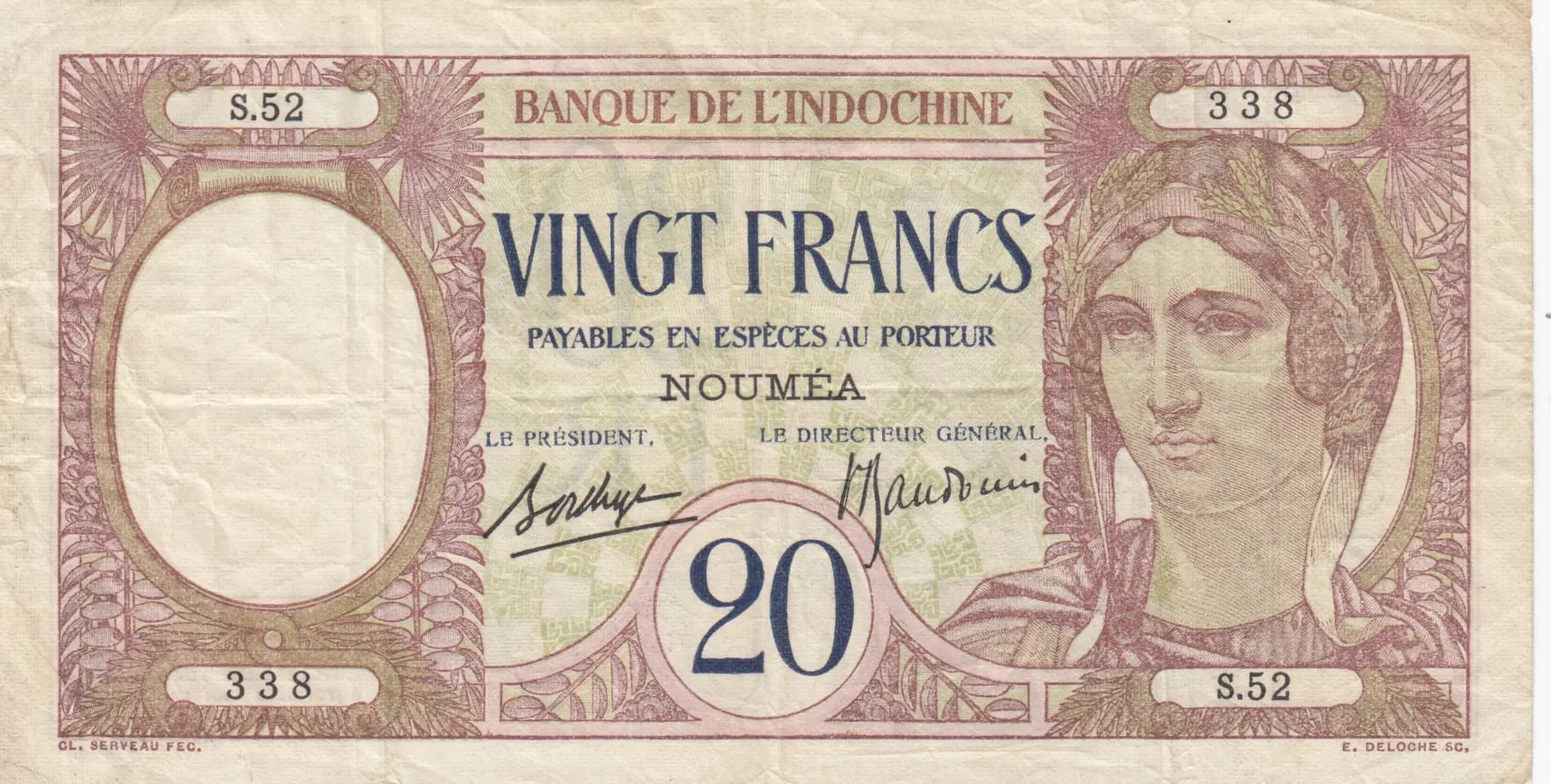
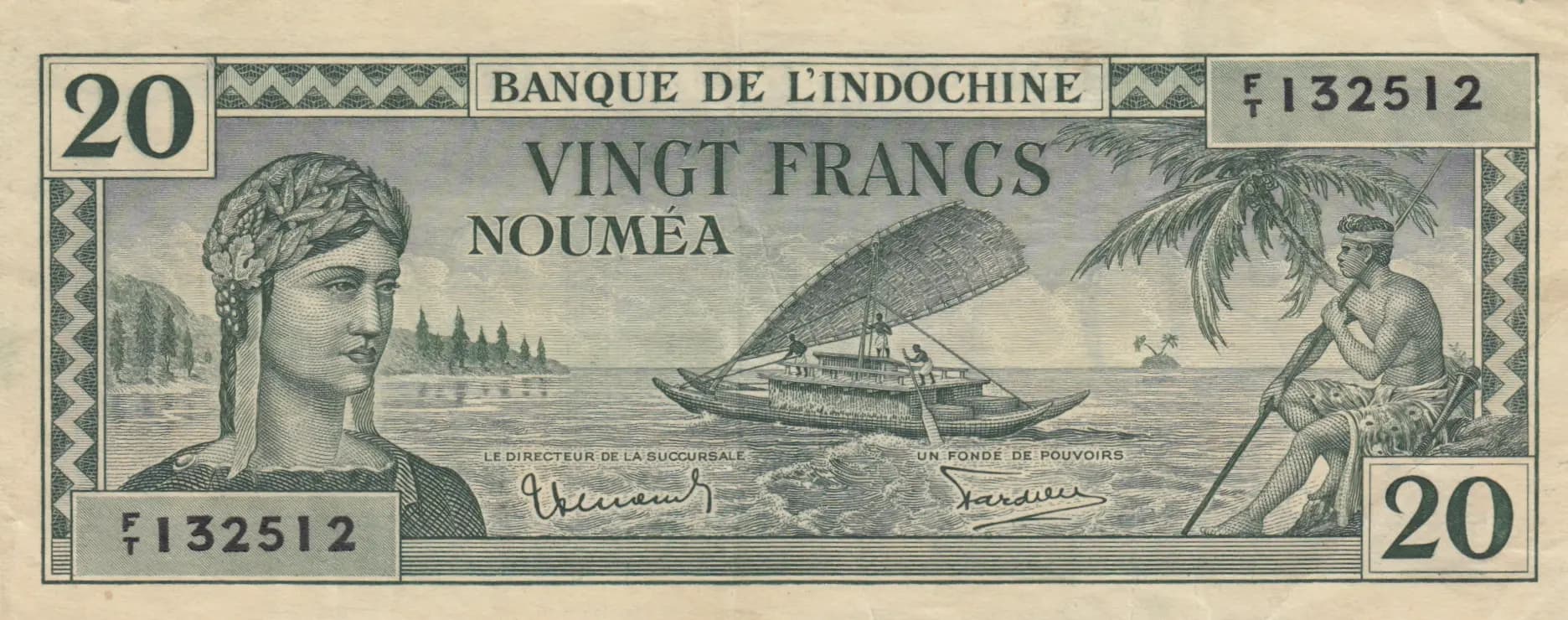
100 francs 1937
Market Prices
11 salesAbout This Note
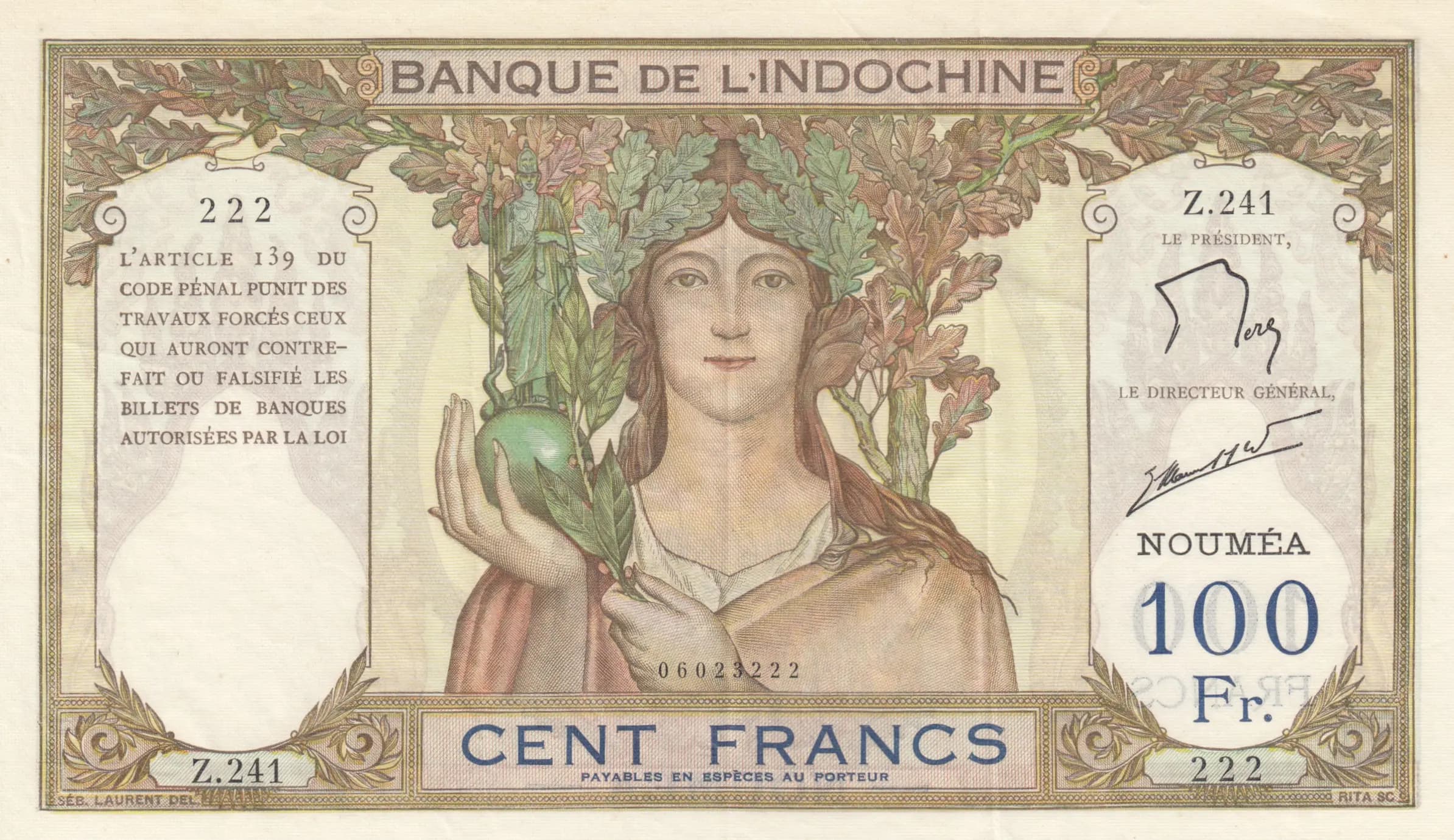
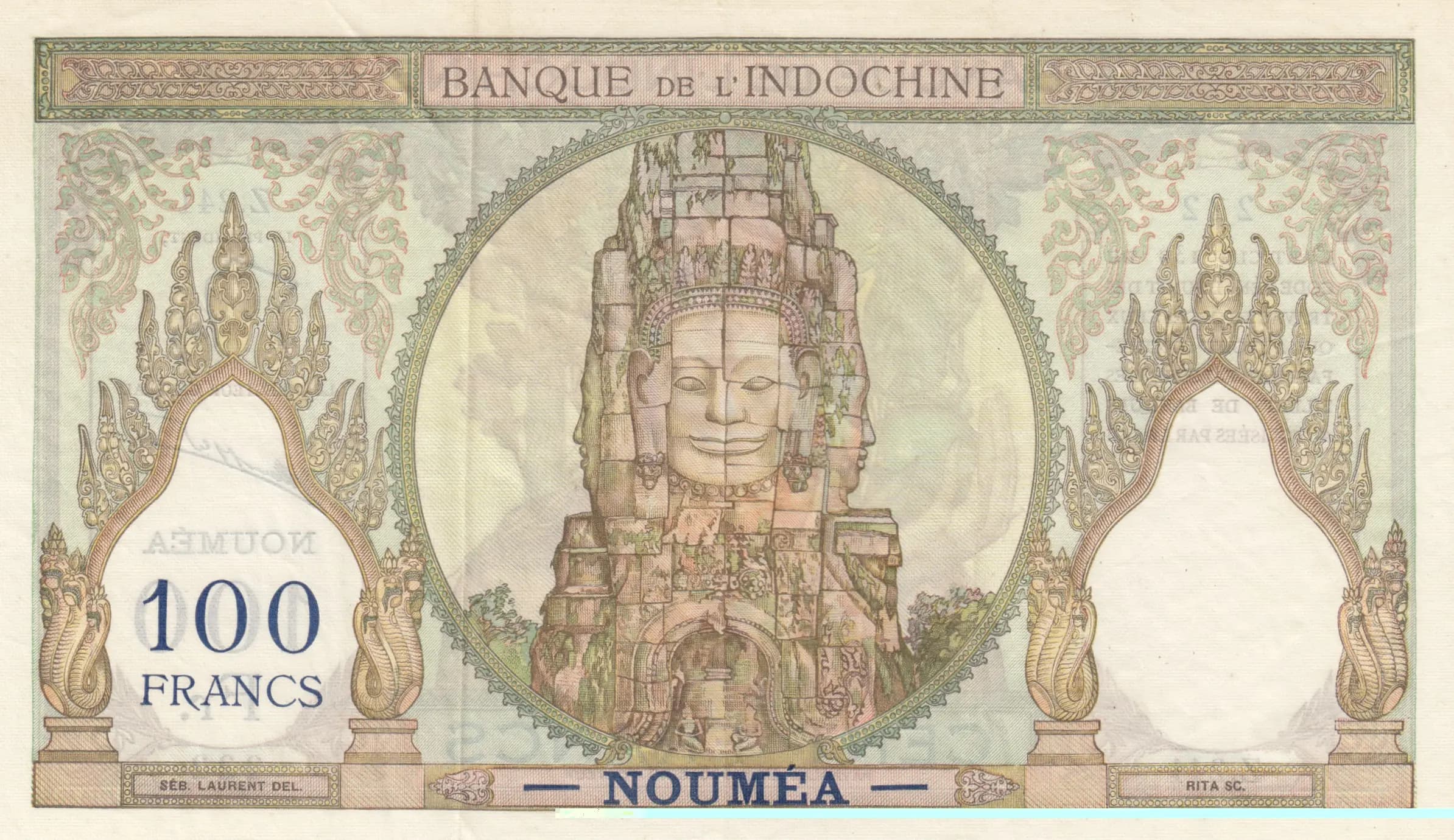
This is a VF-grade 100 Francs banknote issued by Banque de l'Indochine, Pick P-42e (Nouméa), from the 1937-1967 series. The note displays exceptional condition with no visible wear, creases, or tears, featuring a beautifully engraved classical allegorical female figure crowned with laurels on the obverse and an ornate Khmer temple structure on the reverse. The detailed engraving work by Laurent and crisp color palette of beige, green, and brown tones exemplify the high-quality craftsmanship typical of Indochinese colonial currency.
Common. This is a widely-circulated colonial banknote with large print runs spanning three decades (1937-1967). eBay market data shows VF-grade notes consistently selling in the $30-65 range with multiple sales annually, indicating robust supply in the collector market. Catalog values from 2016 list VF at $10 and UNC at $50, further confirming this as an accessible, common note even in higher grades. The existence of at least 10 documented varieties (P-42a through P-42es) across PMG's population report suggests high production volume across variant types. Only professionally-graded high-end specimens (PMG 64+) command significantly higher prices ($500+), which is typical for common notes in exceptional grades.
This banknote represents the colonial monetary system of French Indochina, specifically issued through Banque de l'Indochine's Nouméa branch for circulation in New Caledonia. The front's classical allegorical female figure symbolizes authority and prosperity under French colonial administration, while the reverse prominently features Angkorian Khmer architecture—the temple of Bayon at Angkor, Cambodia—with its characteristic pointed spires and intricate carved details, reflecting the cultural heritage and reach of French Indochina across Southeast Asia. The use of French legal language (Article 139 of the Penal Code) underscores the note's status as official colonial currency backed by French legal authority.
The obverse features a classical allegorical female figure representing Liberty, Authority, or Abundance, depicted with a laurel wreath crown and holding botanical vegetation (oak and laurel leaves), symbolizing French colonial prosperity and order. She is centrally positioned and framed by ornate decorative borders with scrollwork and floral patterns rendered in muted green, brown, and rose tones. The reverse showcases the Bayon Temple from the Angkorian complex at Angkor, Cambodia—a masterpiece of Khmer architecture recognizable by its distinctive multiple pointed stone towers (prasats) and intricate carved relief work. The temple is rendered within a circular frame and flanked by decorative Thai/Cambodian architectural motifs (prangs or stupas with characteristic upturned finials), emphasizing the cultural and geographical reach of French Indochina. Both sides maintain the colonial aesthetic with symmetrical compositions and detailed engraved ornamentation.
FRONT: 'BANQUE DE L'INDOCHINE' (Bank of Indochina); '100 Fr.' and 'CENT FRANCS' (One Hundred Francs); 'NOUMÉA' (issuing city); 'PAYABLES EN ESPÈCES AU PORTEUR' (Payable in specie to bearer); 'LE PRÉSIDENT' and 'LE DIRECTEUR GÉNÉRAL' (The President and The General Director—signature lines); 'SER. LAURENT DEL.' (Engraver/Designer: Laurent); 'RITA SC.' (Engraver mark); 'L'ARTICLE 139 DU CODE PÉNAL PUNIT DES TRAVAUX FORCÉS CEUX QUI AURONT CONTREFAIT OU FALSIFIÉ LES BILLETS DE BANQUES AUTORISÉES PAR LA LOI' (Article 139 of the Penal Code punishes with forced labor those who have counterfeited or falsified banknotes authorized by law). BACK: 'BANQUE DE L'INDOCHINE' (Bank of Indochina); '100 FRANCS' (One Hundred Francs); 'NOUMÉA' (issuing city); 'SER. LAURENT DEL.' (Engraver: Laurent); 'RITA SC.' (Engraver mark). Technical reference codes: Z.241 and 222 appear on both sides.
This note was produced using fine-line intaglio engraving (recess printing), evidenced by the crisp, detailed relief work visible throughout both sides, particularly in the architectural rendering of the Bayon Temple and the allegorical figure's facial features and drapery. The complex engraving by engraver Laurent and the notation 'RITA SC.' (likely a secondary engraver/finisher mark) indicate work by skilled European engravers typical of Banque de l'Indochine's security printing standards. The precise line work, subtle color gradations, and the depth of detail in the ornamental borders are characteristic of early 20th-century intaglio bank note production, likely executed by a European security printer such as Banque de France's printing works or a similar contract printer.
This note is specifically identified as Pick P-42e, the Nouméa variant (as indicated by 'NOUMÉA' printed on the note). The PMG population report documents multiple varieties for this base Pick number: P-42a (base type), P-42b, P-42c, P-42cs (specimen), P-42d, P-42ds (specimen), P-42e, P-42ep (pack), P-42es (specimen), and P-42s (specimen). Variants likely differ by date of issue within the 1937-1967 window, signature combinations of bank officials, and minor design refinements. The observed serial number 0602322 and reference codes Z.241/222 are consistent with Nouméa branch production. This P-42e represents the standard circulation variety from Nouméa without specimen or special pack markings.