10 gulden 1944
“22.02.44”
Market Prices
74 salesAbout This Note
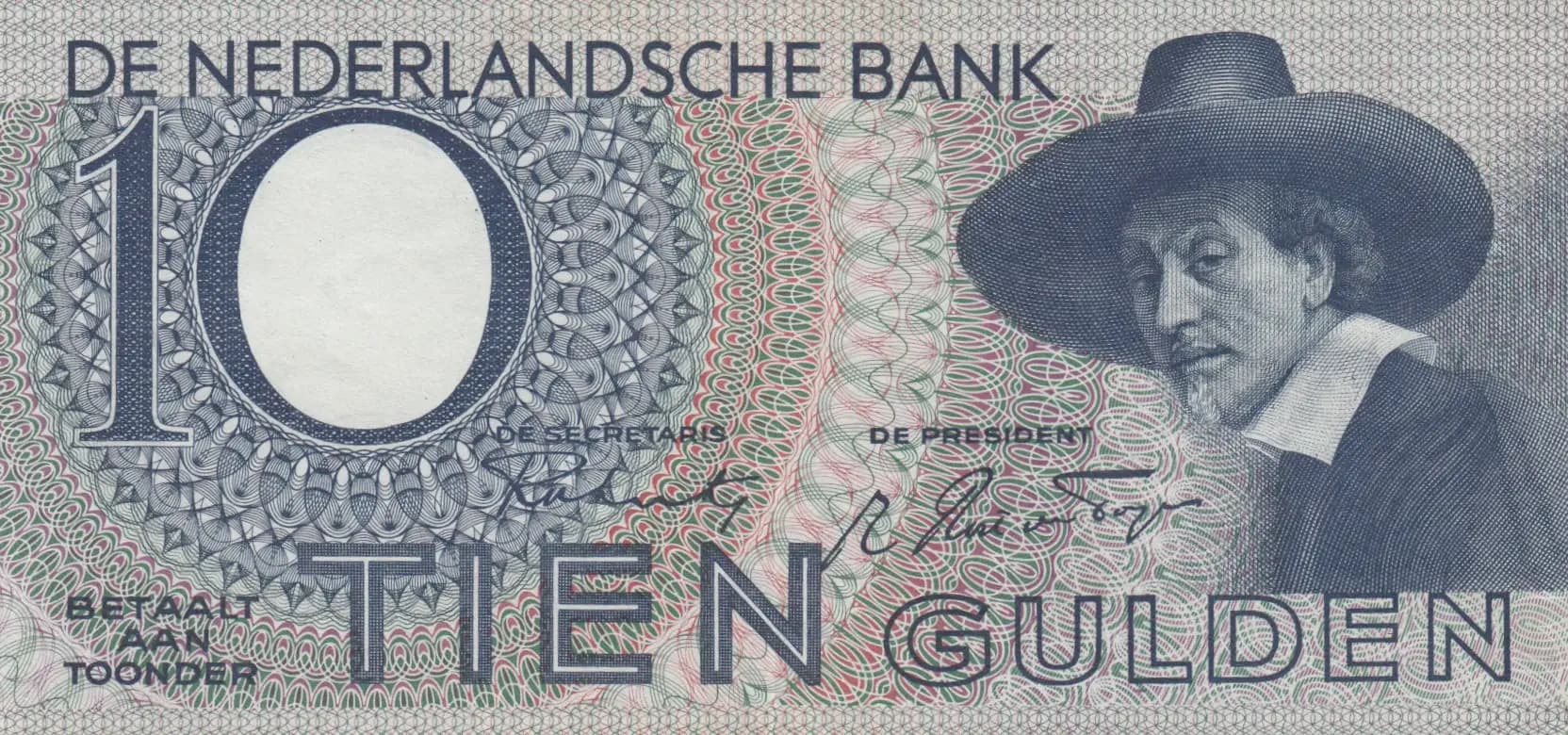
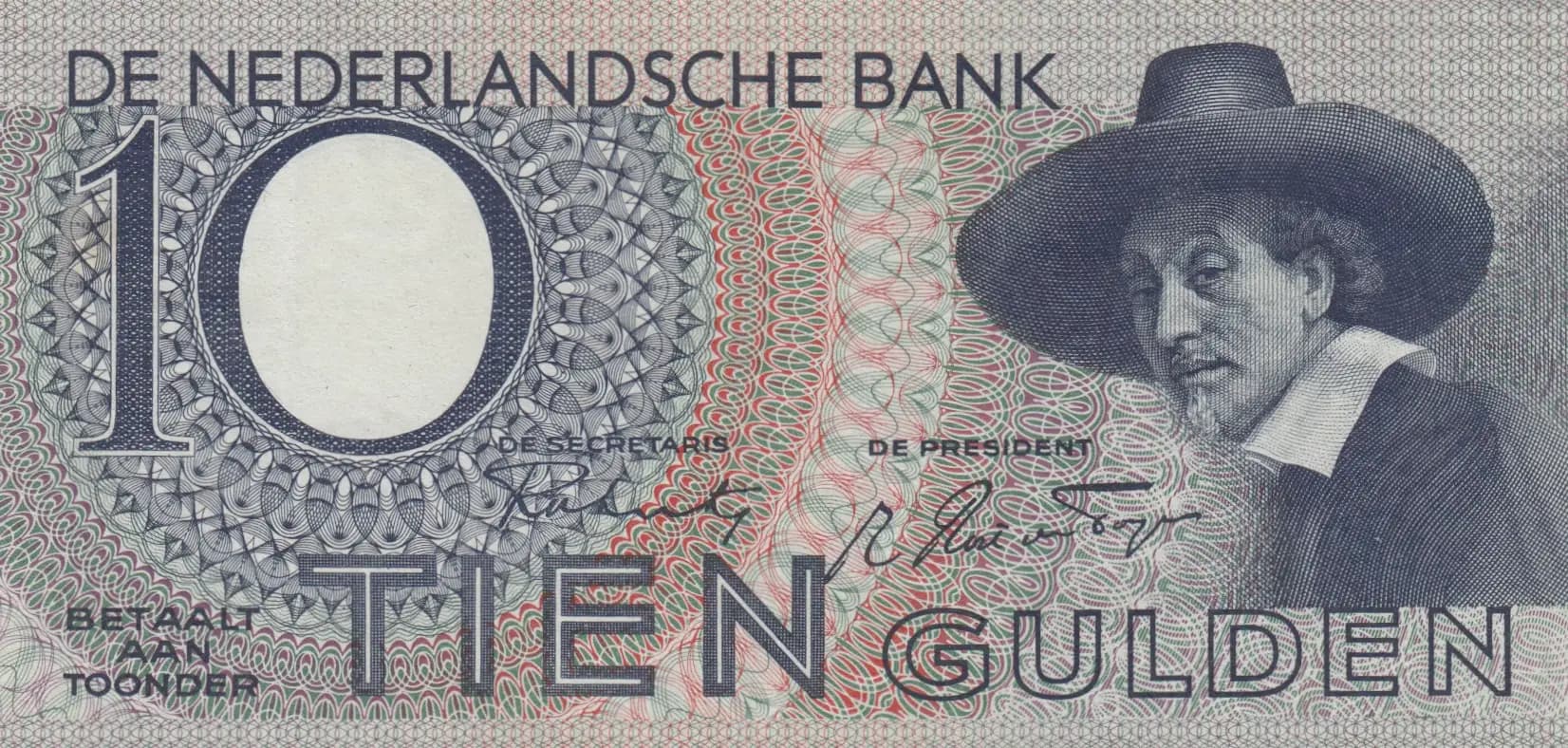
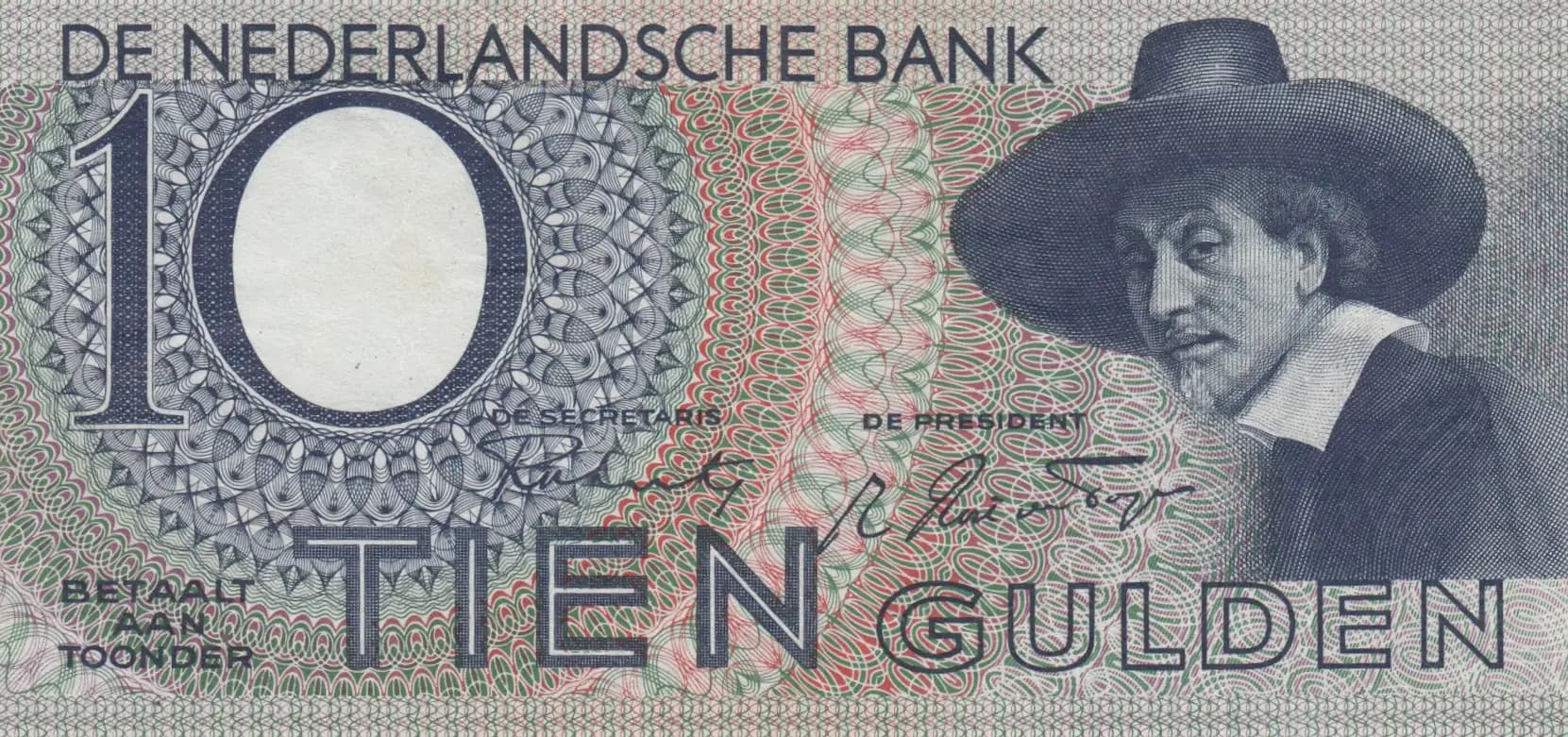
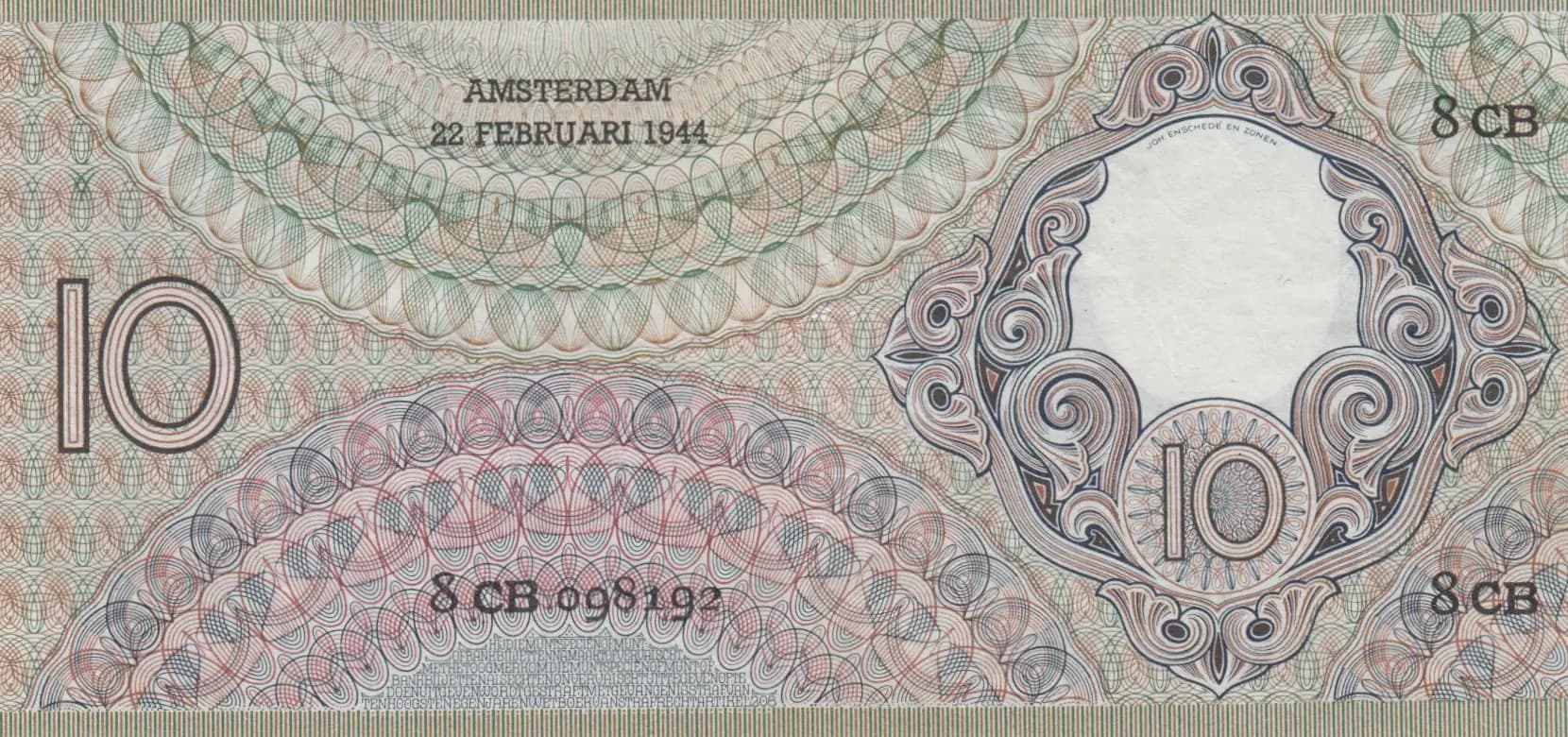
This is a handsome example of the Netherlands 10 Gulden note from 1944 (Pick-59), graded AU and dated 22 February 1944. The note displays the characteristic high-quality engraving typical of Joh. Enschede's work, featuring rich multi-color printing with intricate guilloche patterns in green, red, blue, and beige tones. The obverse presents a profile portrait in a wide-brimmed hat characteristic of 17th-century Dutch dress, while the reverse showcases ornamental baroque-style framing with clear denomination markings and the Amsterdam date inscription.
Common. The eBay price data shows consistent sales ranging from $3 to $32 for ungraded examples in various conditions (F through EF), with professional grading (PMG) examples in the $32-$220 range depending on grade. This represents typical circulation values for a standard issue banknote from a major European nation. The 1943-1944 issue run was substantial, and examples survive in reasonable quantity on the modern collector market.
Issued during the German occupation of the Netherlands in World War II, this note represents the Nederlandsche Bank's continuation of currency production under constrained circumstances. The 1943-1944 dating window reflects a critical period in the war, with this specific February 1944 example predating the nation's liberation by several months. The classical Dutch portraiture and refined engraving aesthetic maintained national identity and banking continuity despite the occupation.
The obverse features a classical portrait identified as Volckert Jansz, derived from a detail in Rembrandt's famous painting 'The Syndics of the Drapers' Guild' (1662). The figure wears authentic 17th-century Dutch attire with a characteristic wide-brimmed hat and white collar, positioned in profile within an elegant oval cartouche on the right side of the note. The left side carries a large oval denomination numeral '10'. The reverse is dominated by symmetrical baroque-style ornamental designs with two prominent '10' denomination numerals—one positioned left and one within an elaborate cartouche frame on the right. Throughout both sides, complex geometric guilloche patterns and decorative scrollwork in multiple colors provide security and aesthetic refinement.
Front: 'DE NEDERLANDSCHE BANK' (The Dutch Bank), 'TEN GULDEN' (Ten Gulden). Back: 'AMSTERDAM' (Amsterdam), '22 FEBRUARI 1944' (22 February 1944), '8CB' (likely a printer or series designation), '8CB.008192' (serial number).
Engraved intaglio printing, executed by Joh. Enschede, the renowned Dutch security printer. The elaborate multi-color guilloche patterns, fine line work, and dimensional depth characteristic of the design are achieved through traditional steel plate engraving and sequential color printing. The intricacy of the background geometric designs and the precision of the portrait engraving are hallmarks of intaglio security printing.
Serial number prefix '8CB' with serial 008192. The specific date of 22 February 1944 is noted on the reverse. This represents a variant within the broader 1943-1944 series issue window (04.01.1943 - 21.04.1944 per external reference), with the February 1944 dating placing it in the later portion of the series. Signatures and printer codes are consistent with standard Nederlandsche Bank authorization and Enschede production protocols of the period.