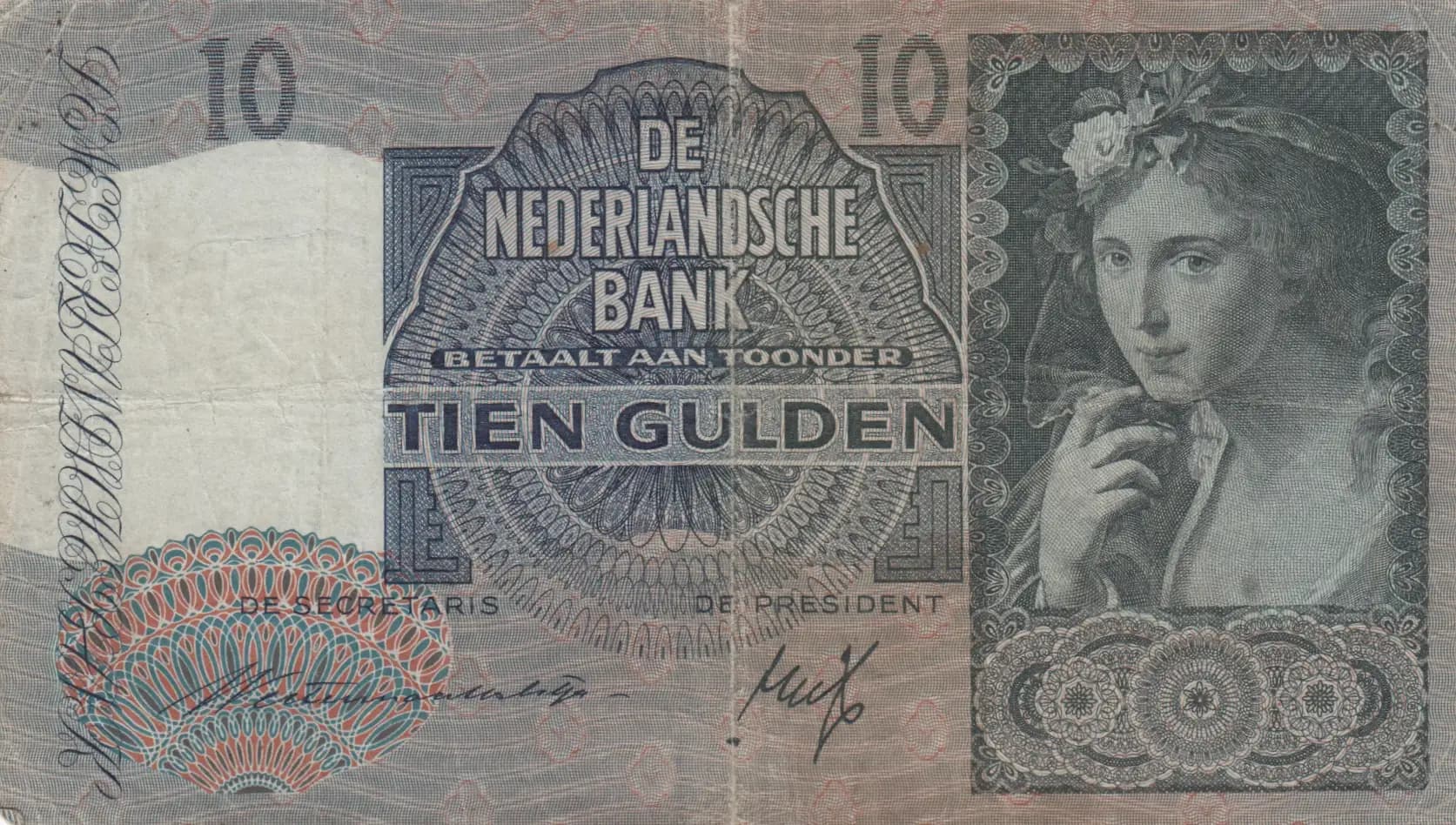
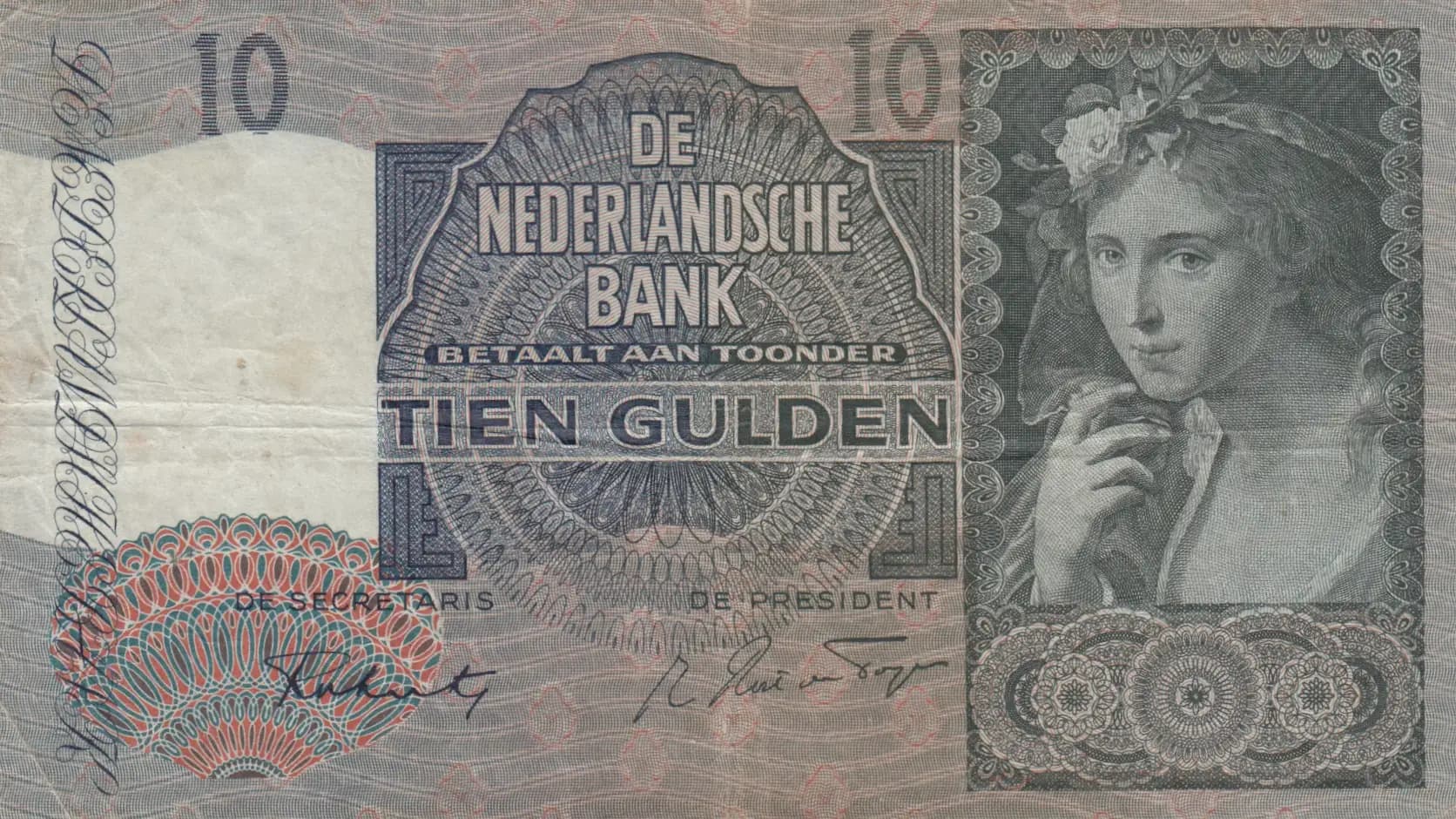
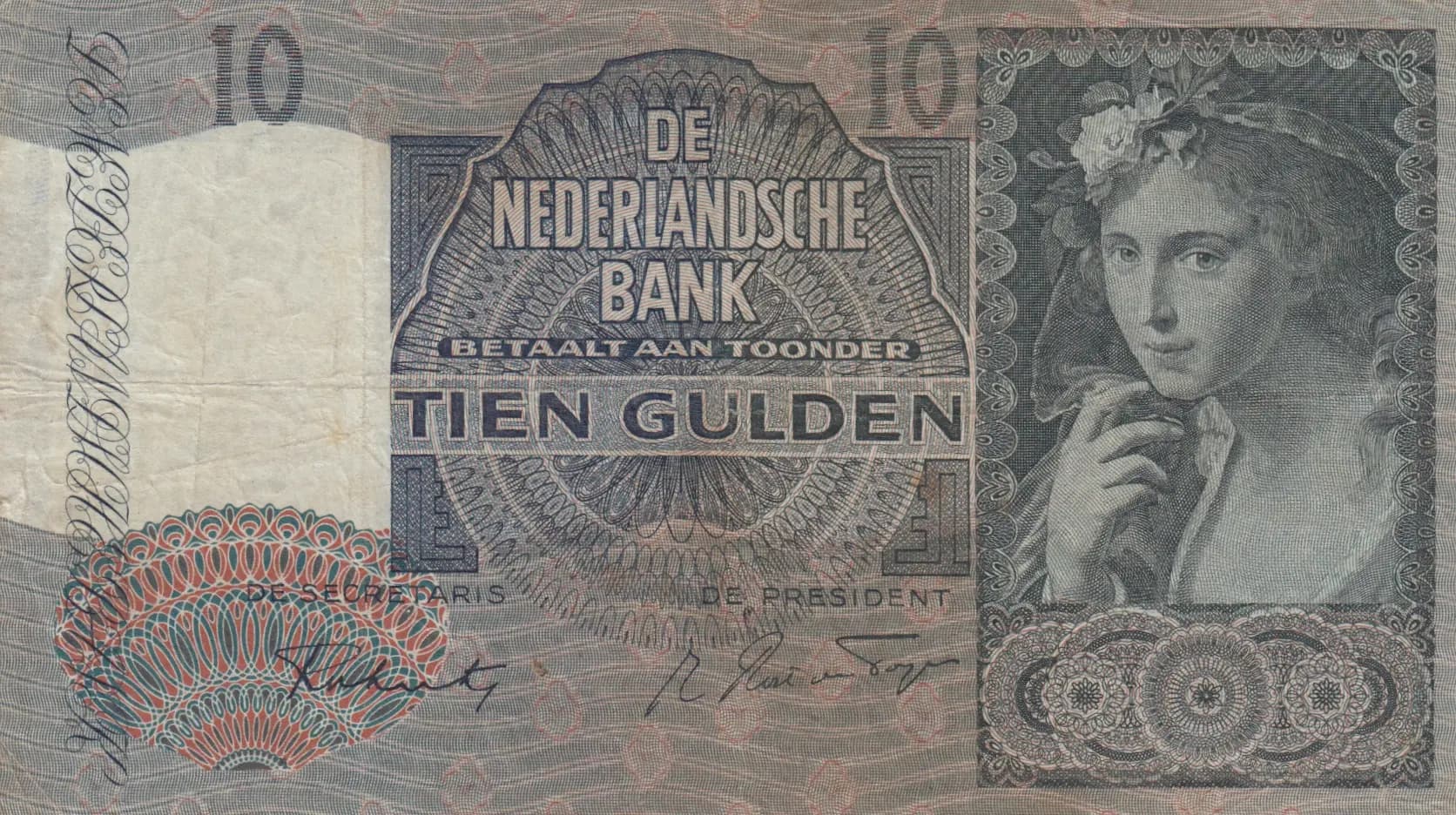
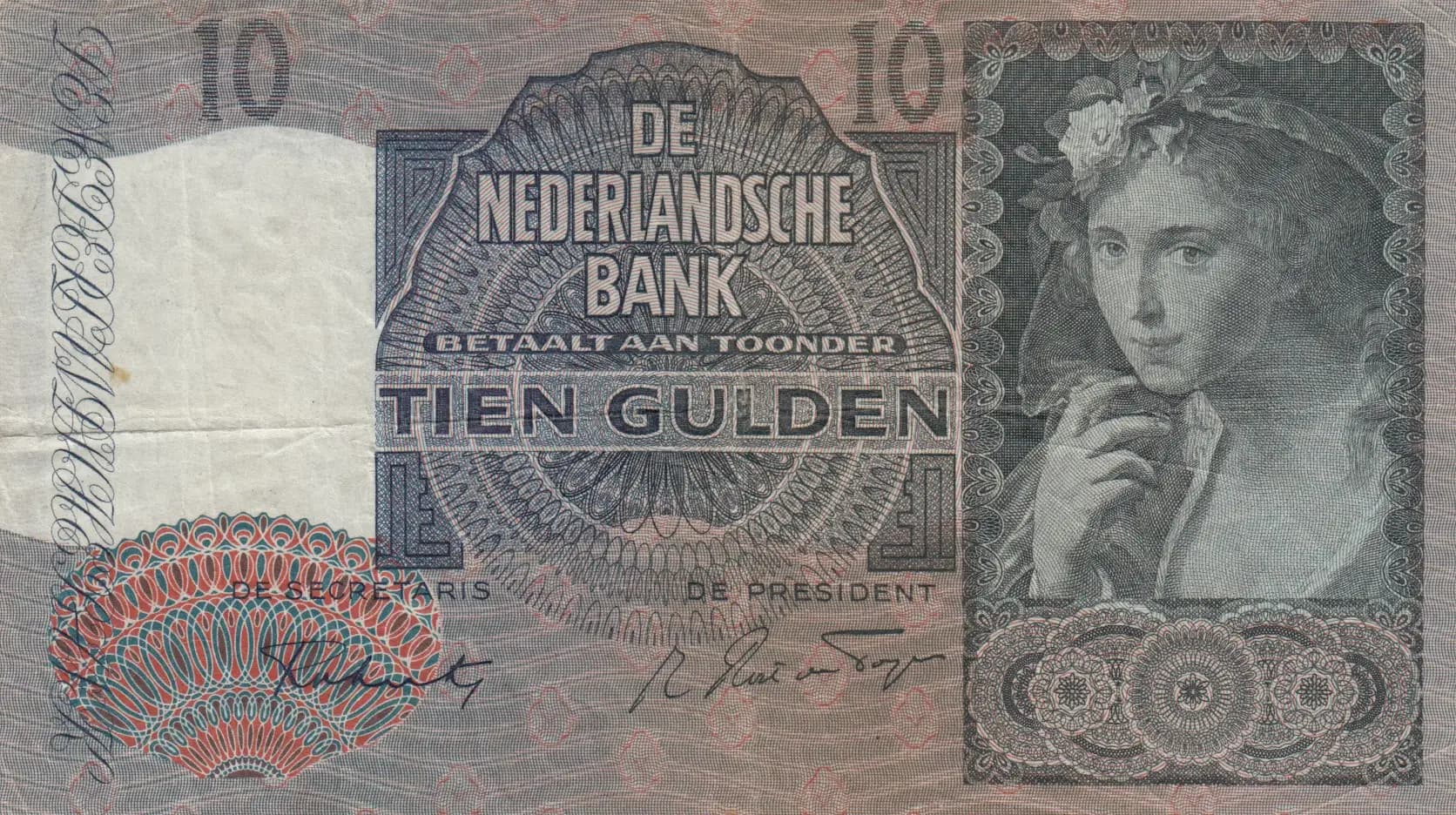
10 gulden 1941
“11.06.42”
Market Prices
60 salesAbout This Note
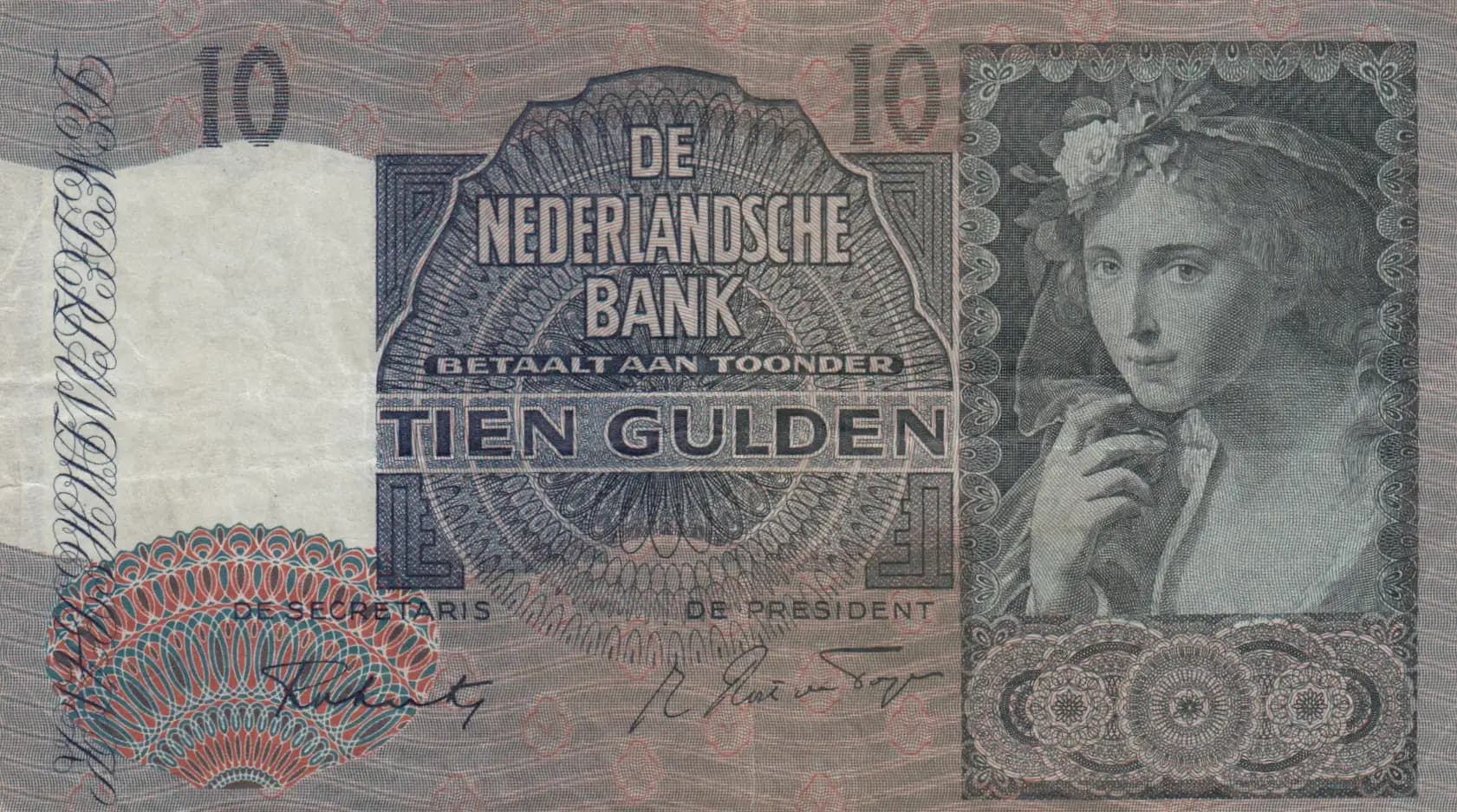
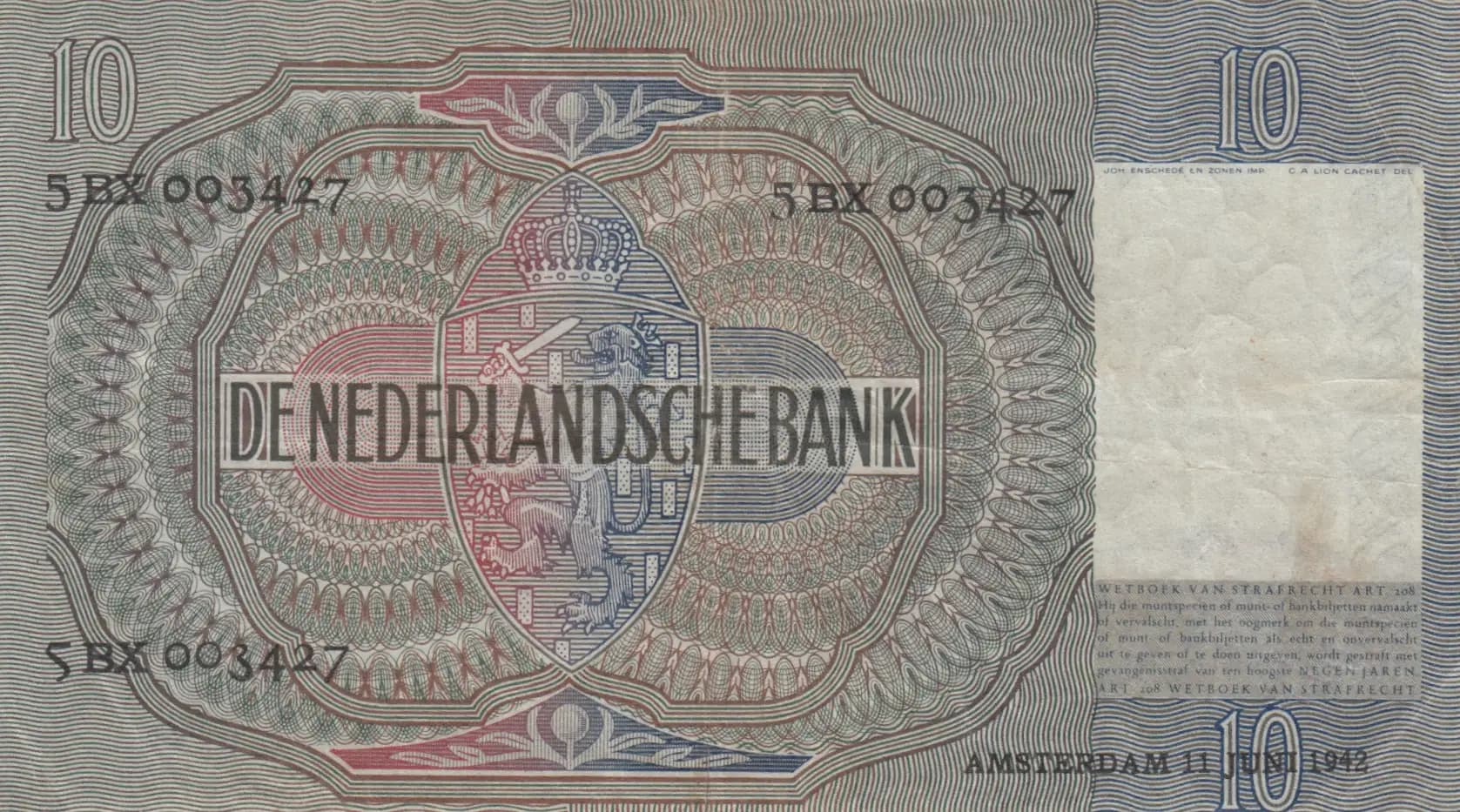
This is a VF-grade 10 gulden banknote from 1941, issued by Nederlandsche Bank during World War II. The note features exceptional engraving quality with a striking portrait of a woman on the obverse and an ornate Dutch coat of arms on the reverse, rendered in a sophisticated color palette of brown, pink, blue, and gray. The condition is notably well-preserved with no visible creases, tears, or stains, making this an attractive example for collectors interested in Dutch currency from the occupation period.
Common. The 10 gulden denomination of 1941 (Pick-56b) was produced in substantial quantities by Nederlandsche Bank and remains readily available in the collector market. While notes from the WWII occupation period hold historical interest, this particular denomination and type do not command premium prices and examples in VF condition are regularly encountered by collectors. No print run restrictions, recall status, or supply constraints make this scarce or rare.
This 10 gulden note was issued in 1941, during Nazi occupation of the Netherlands in World War II. The design incorporates traditional Dutch heraldry, including the national coat of arms with its characteristic lion and crown motifs on the reverse, affirming national identity during a period of foreign control. The note's 'Payable to Bearer' inscription reflects the standard currency practices of the era, before post-war monetary reforms would reshape Dutch financial instruments.
The obverse features a classical female portrait in three-quarter profile on the right side, depicted with elegantly styled hair and a hand positioned near the face, rendered in fine engraving. The portrait is framed by an ornate central cartouche containing text, with decorative fan or sunburst patterns in red and blue radiating from the left side of the composition. The reverse presents the grand coat of arms of the Netherlands—featuring the crowned lion passant guardant—centered within an elaborate shield cartouche, surrounded by intricate scrollwork and botanical ornamental elements. Fine-line guilloche patterns and geometric designs fill the background throughout both sides, creating sophisticated security patterns characteristic of high-quality currency engraving of the period.
FRONT SIDE: 'DE NEDERLANDSCHE BANK' (The Nederlandsche Bank), 'BETAALT AAN TOONDER' (Payable to Bearer), 'TIEN GULDEN' (Ten Guilders), 'DE PRESIDENT' (The President), denomination markings '10'. REVERSE SIDE: 'DE NEDERLANDSCHE BANK' (The Nederlandsche Bank), 'WETBOEK VAN STRAFRECHT ART. 188' (Criminal Code Article 188 - counterfeiting prohibition), 'VAN ESCUDE EN ZONEN 1945' (Van Escude and Sons 1945 - printer attribution), 'C.A. LION CACHET DEL' (C.A. Lion Cachet, designer/engraver), 'AMSTERDAM' (location), denomination markings '10'.
This note was produced using intaglio engraving (line engraving), evidenced by the extremely fine parallel lines, intricate guilloche patterns with concentric designs, and the exceptional detail visible throughout both obverse and reverse. The printer was Van Escude en Zonen of Amsterdam, as credited on the reverse. The designer/engraver was C.A. Lion Cachet. The multi-color printing involved sophisticated registration of brown, pink, blue, gray, black, and cream inks, achieved through traditional banknote security printing methods of the 1940s era.
This specific note is cataloged as Pick-56b (variant b of the 1941 10 gulden type). The collector notation '11.06.42' on the catalog entry may indicate a cataloging or acquisition date rather than a serial number detail. Varieties within this Pick number may be distinguished by signature combinations of bank officials or serial number prefixes, though these details would require examination of the actual serial number and signatures visible on the physical specimen.