50 escudos 1938
Market Prices
1 saleAbout This Note
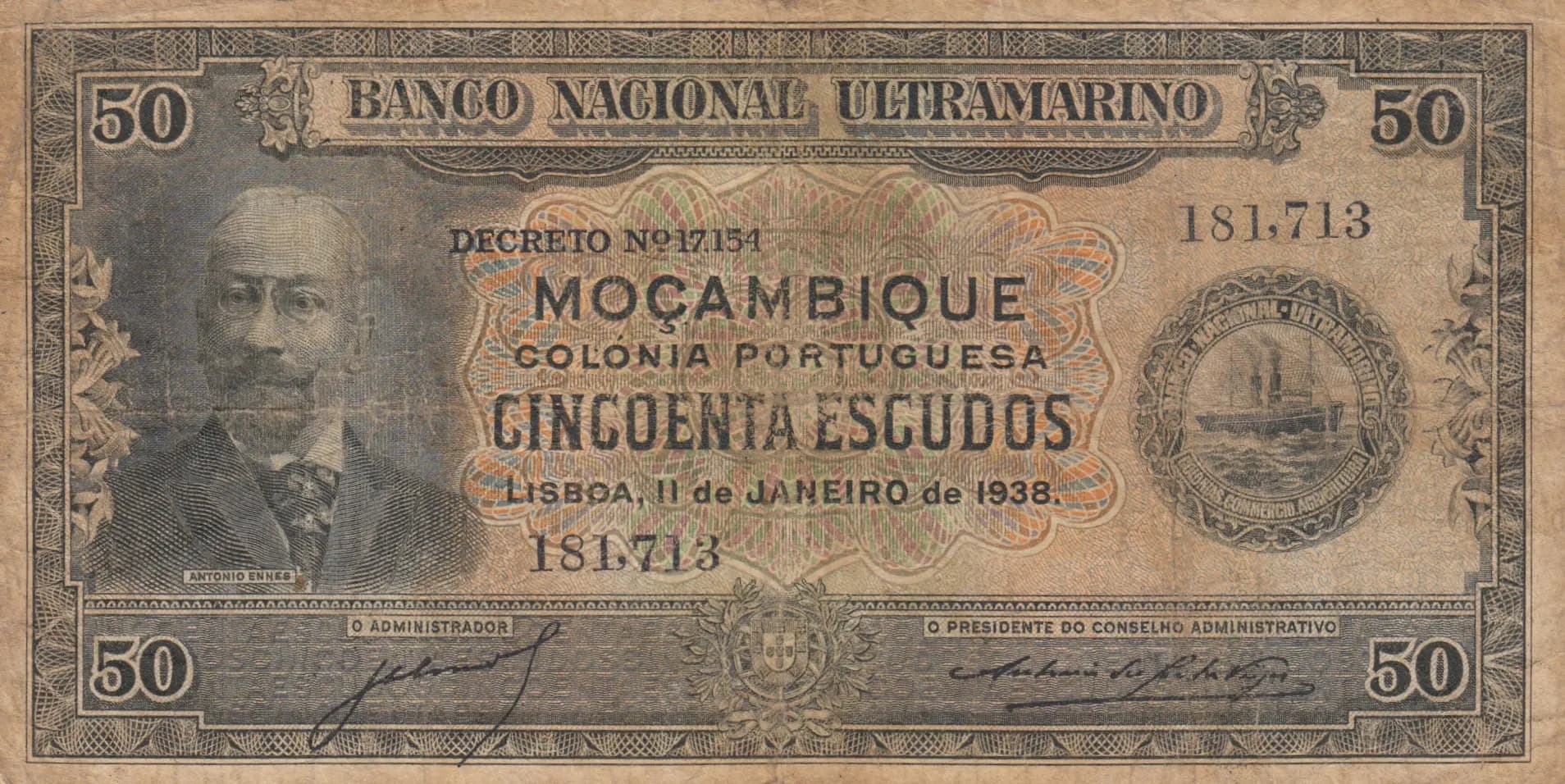
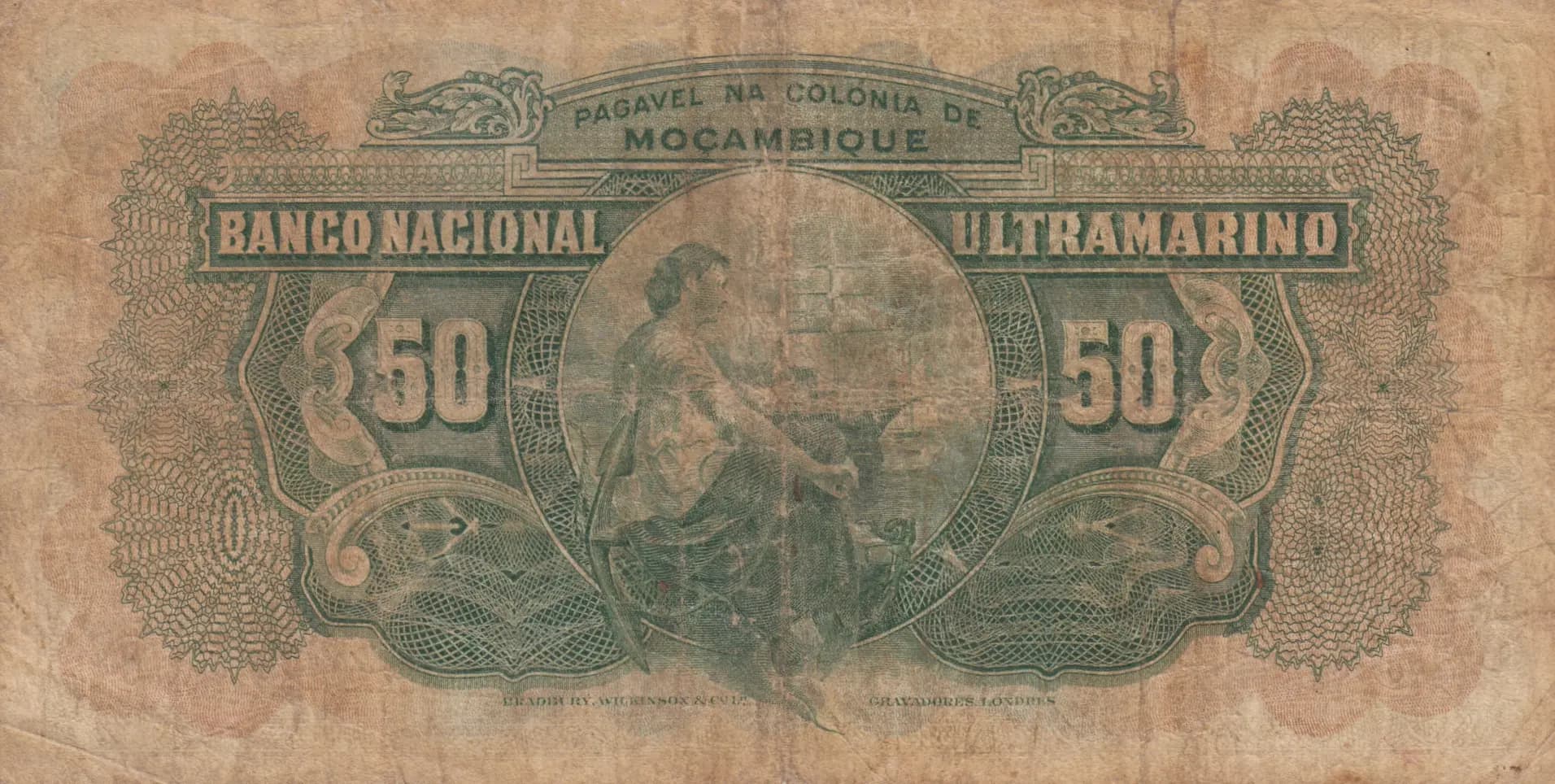
This 50 Escudos note from Mozambique (Pick P-75, 1938) represents a classic example of Portuguese colonial currency during the Estado Novo period. The note displays the characteristic fine engraving typical of Bradbury Wilkinson production, featuring António Ennes in profile on the obverse and an allegorical female figure on the reverse. In VG condition, the note shows honest circulation wear with multiple creases, foxing, and browning consistent with its 85+ year age, making it an authentic artifact of Portuguese colonial numismatics.
Common. The 1938 50 Escudos Mozambique (Pick P-75) is a standard regular issue from the Banco Nacional Ultramarino. The catalog values provided ($12.50 in Good condition, $75 in Fine condition as of 2016) and eBay transaction data ($55 for a Fine grade example in 2021) indicate a note that circulates regularly in the collector market without premium scarcity pricing. This note represents a typical Portuguese colonial issue with substantial print runs; notes commanding hundreds of dollars in Fine condition are generally reserved for much scarcer denominations or varieties within this series.
Issued on January 11, 1938, this note emerges from the early Estado Novo period under Salazar's authoritarian regime in Portugal. The inscription 'COLONIA PORTUGUESA' and 'MOÇAMBIQUE' reflect Portugal's colonial administration of Mozambique, while the Decreto Nº17154 reference indicates official governmental sanction. The classical allegorical female figure on the reverse and the steamship vignette on the obverse symbolize Portugal's maritime heritage and colonial economic interests in Africa during this era.
The obverse features a formal portrait of António Ennes (Portuguese colonial administrator and statesman) in left profile, rendered in fine engraving with careful attention to facial detail and formal attire. A circular vignette on the right depicts a steamship, symbolizing maritime commerce and Portugal's naval power in its overseas colonies. The reverse showcases a classical allegorical female figure in a central circular medallion, executed in the neoclassical style typical of European currency design of the 1930s. Both sides employ elaborate guilloche patterns, floral borders, and ornamental cartouches characteristic of security printing. The coat of arms or national emblem appears at the bottom center of the obverse. The color scheme of brown, tan, green, and gray creates a sophisticated, austere aesthetic consistent with Portuguese official currency of the period.
FRONT SIDE: '50' (denomination numerals in all four corners), 'BANCO NACIONAL ULTRAMARINO' (National Overseas Bank), 'DECRETO Nº17154' (Decree No. 17154), 'MOÇAMBIQUE' (Mozambique), 'COLONIA PORTUGUESA' (Portuguese Colony), 'CINQUENTA ESCUDOS' (Fifty Escudos), 'LISBOA, 11 de JANEIRO de 1938' (Lisbon, January 11, 1938), 'O ADMINISTRADOR' (The Administrator), 'O PRESIDENTE DO CONSELHO ADMINISTRATIVO' (The President of the Administrative Council), 'ANTONIO ENNES' (António Ennes — historical figure honored on the note). BACK SIDE: '50' (denomination), 'PAGAVEL NA COLONIA DE MOÇAMBIQUE' (Payable in the Colony of Mozambique), 'BANCO NACIONAL ULTRAMARINO' (National Overseas Bank), 'CREDITO BY WATERLOW & CO.' (Credit by Waterlow & Co.), 'GRAVADORES LONDRES' (Engravers London).
Intaglio (engraving) printing, executed by Bradbury Wilkinson of London (as credited on the front) and Waterlow & Co. (as credited on the back), both premier security printers of the era. The fine line engraving, intricate guilloche patterns, and multi-layered decorative elements visible throughout the note are characteristic of high-security intaglio production. The precision of the portrait rendering and the complexity of the geometric and floral border patterns would have required multiple engraved plates and careful registration during printing.
The visual analysis documents serial number 181.713 on this specific example. PMG records indicate one variant catalogued for Pick P-75, though the nature of that variant is not specified in the provided data. The consistent date of January 11, 1938 (as printed on all notes of this issue) and the standard Bradbury Wilkinson/Waterlow & Co. printer attribution indicate this is the primary variety. No overprints, color variations, or signature varieties are apparent in the visual analysis of this example.