5 escudos 1943
Market Prices
2 salesAbout This Note
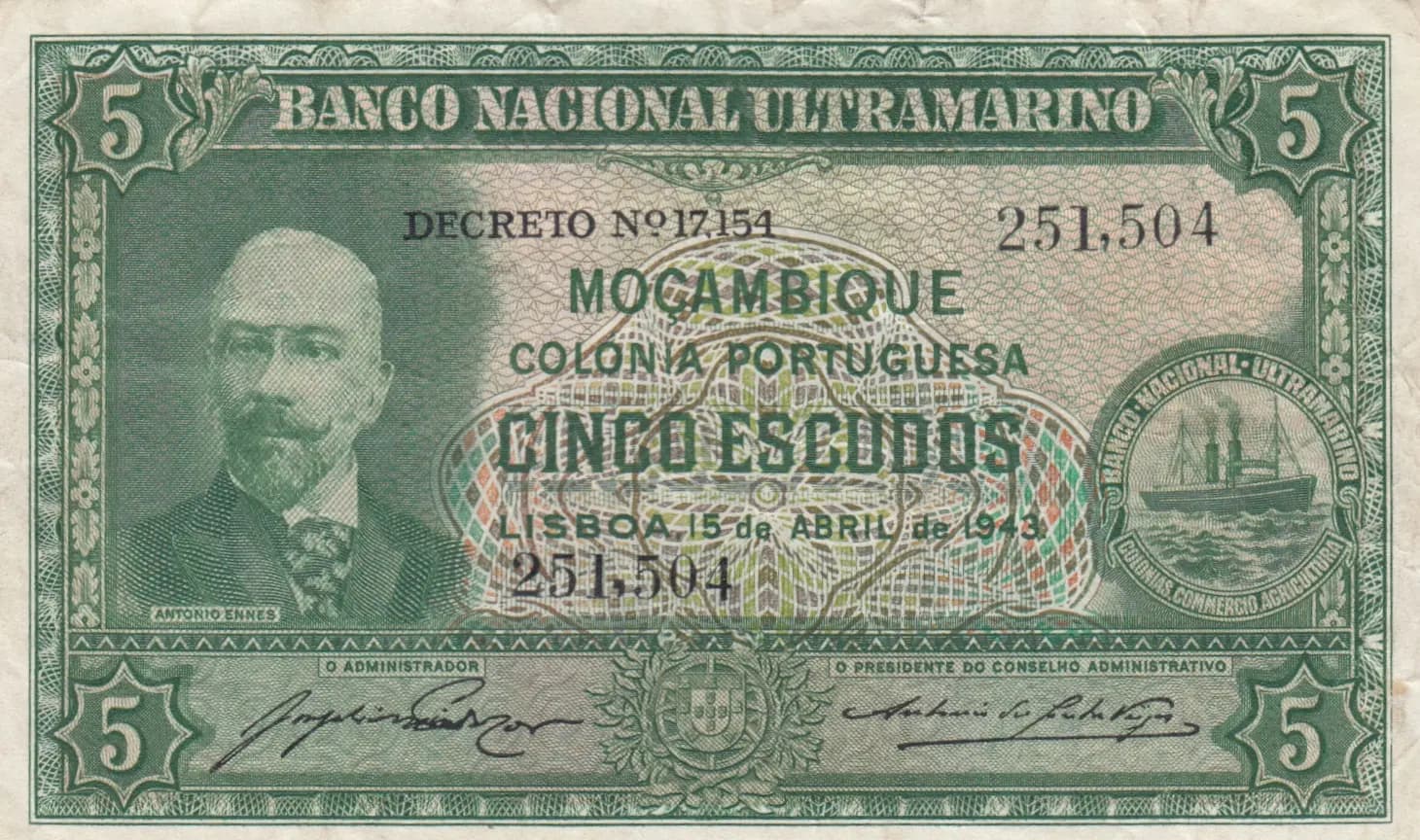
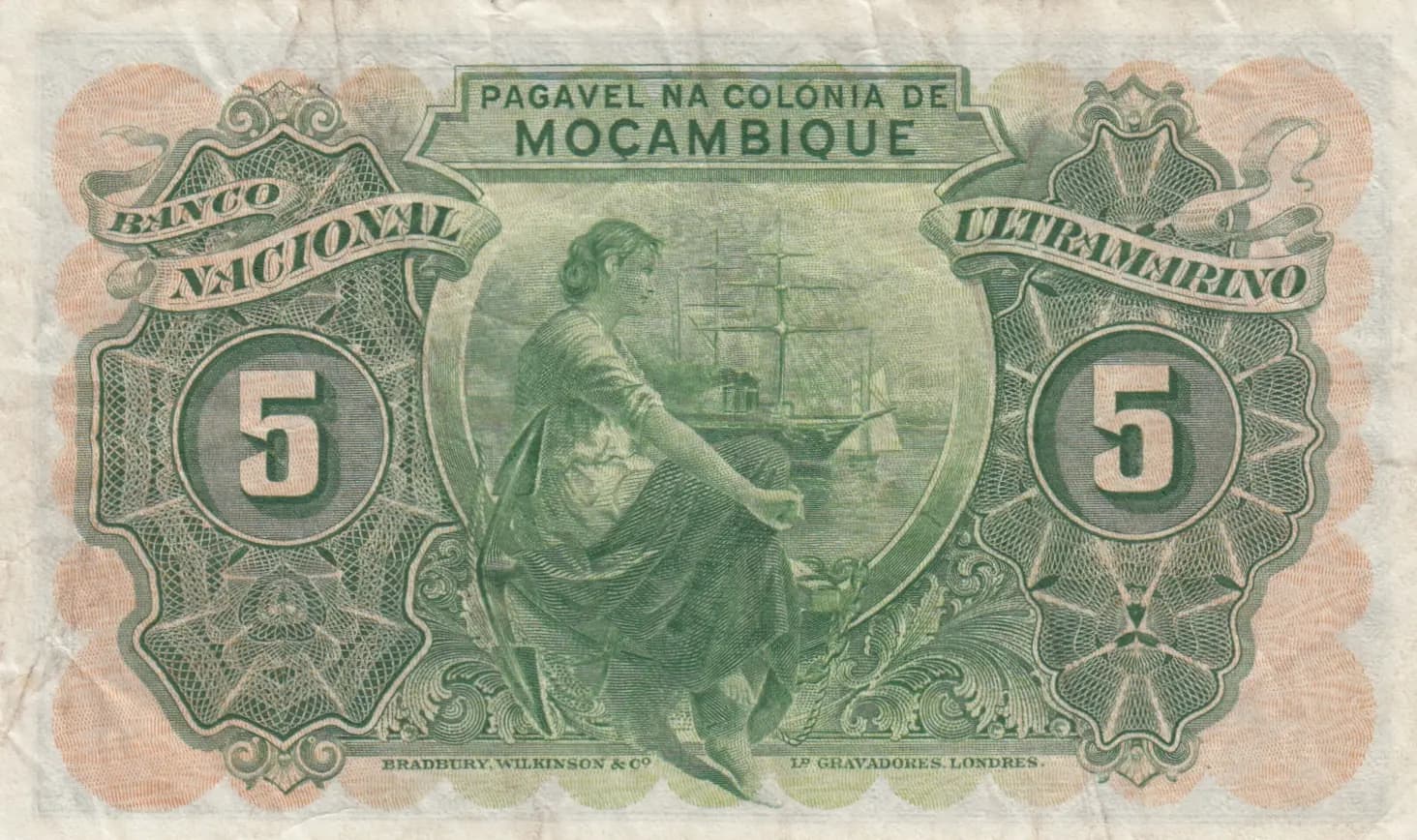
This 1943 Mozambique 5 escudos note (Pick P-89) presents a handsome example of Portuguese colonial-era currency in VF condition. The obverse features a fine portrait of António Ennes on the left with an ornate green and multicolor design, while the reverse displays an allegorical female figure engaged in labor—likely representing industry or commerce. Despite visible creasing and aging consistent with VF grade, the note retains good clarity in its intricate engraved details and strong color definition, making it a desirable specimen for collectors of Portuguese African colonial currency.
common. This is a regular-issue banknote from the Banco Nacional Ultramarino with substantial circulation in Mozambique. The catalog pricing from 2016 (VF: $20) and eBay sales data showing VG specimens selling for $5–$7 indicate steady but modest collector demand. Large print runs were typical for denominations of this value, and no evidence suggests this particular issue was recalled or had limited production. VF examples like the present specimen are neither scarce nor particularly sought-after.
Issued during World War II by the Banco Nacional Ultramarino on April 15, 1943, this note reflects Portugal's administration of Mozambique as a Portuguese colony. The allegorical imagery on the reverse—depicting a woman at work with industrial structures in the background—symbolizes the colonial economic agenda and the labor-intensive nature of the colonial enterprise. The maritime motifs (ship emblem) and administrative seals underscore Portugal's maritime imperial heritage and centralized control over overseas territories from Lisbon.
The obverse features a right-facing profile portrait of António Ennes, a prominent Portuguese colonial administrator, positioned on the left side in formal attire. The center contains an oval administrative seal identifying the note as issued for the Portuguese colony of Mozambique. A circular maritime emblem on the right depicts a sailing ship, symbolizing Portugal's naval and commercial dominance. The reverse showcases an allegorical female figure in classical dress seated at what appears to be a loom or industrial apparatus, with architectural and industrial structures visible in the background—a common motif on colonial currency representing 'civilizing' labor and commerce. Both sides feature ornate heraldic coat-of-arms designs in the corners and elaborate guilloche work throughout.
FRONT: 'BANCO NACIONAL ULTRAMARINO' (National Overseas Bank); 'DECRETO Nº17,154' (Decree No. 17,154); 'MOÇAMBIQUE' (Mozambique); 'COLONIA PORTUGUESA' (Portuguese Colony); 'CINCO ESCUDOS' (Five Escudos); 'LISBOA 15 de ABRIL de 1943' (Lisbon April 15, 1943); 'O ADMINISTRADOR' (The Administrator); 'O PRESIDENTE DO CONSELHO ADMINISTRATIVO' (The President of the Administrative Council). BACK: 'PAGAVEL NA COLONIA DE MOÇAMBIQUE' (Payable in the Colony of Mozambique); 'BANCO NACIONAL ULTRAMARINO' (National Overseas Bank); 'BRADBURY, WILKINSON & CO / LP GRAVADORES LONDRES' (Bradbury, Wilkinson & Co, London Engravers—printer identification).
This note was produced using intaglio (engraved) printing by Bradbury, Wilkinson & Co of London, a renowned security printer. The production method is evidenced by the fine line patterns, intricate guilloche background work, and detailed portrait and allegorical engraving visible throughout both sides. The precision of the decorative borders and the depth of the engraved lines are characteristic of high-quality intaglio security printing of the era.
This note is dated 15 April 1943 and bears the inscription 'DECRETO Nº17,154,' which defines this particular series. The serial number prefix visible (251,504) may indicate a specific printing batch, though without access to comprehensive registry data, discrete variety classification cannot be confirmed. No signature varieties or major overprint varieties are apparent in the visual analysis provided. The note represents the standard 1943 issue of this denomination and catalog number.