20 centavos 1933
Market Prices
35 salesAbout This Note
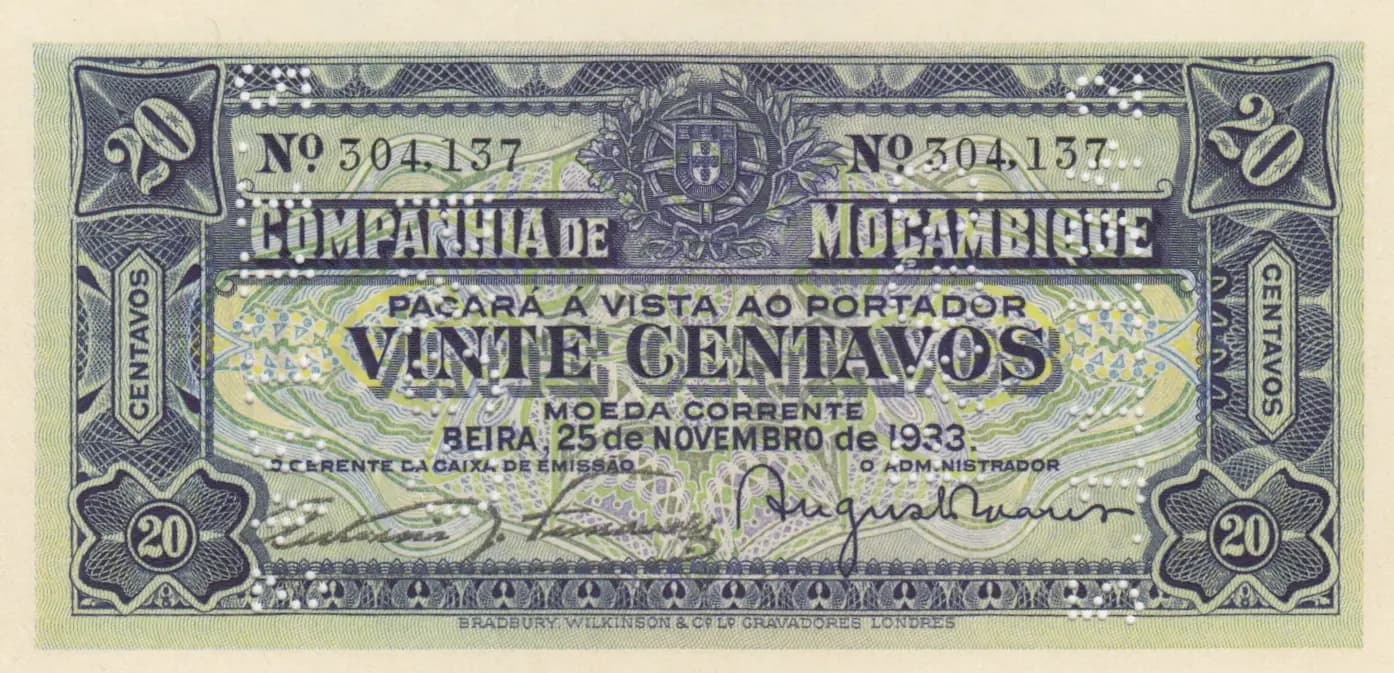
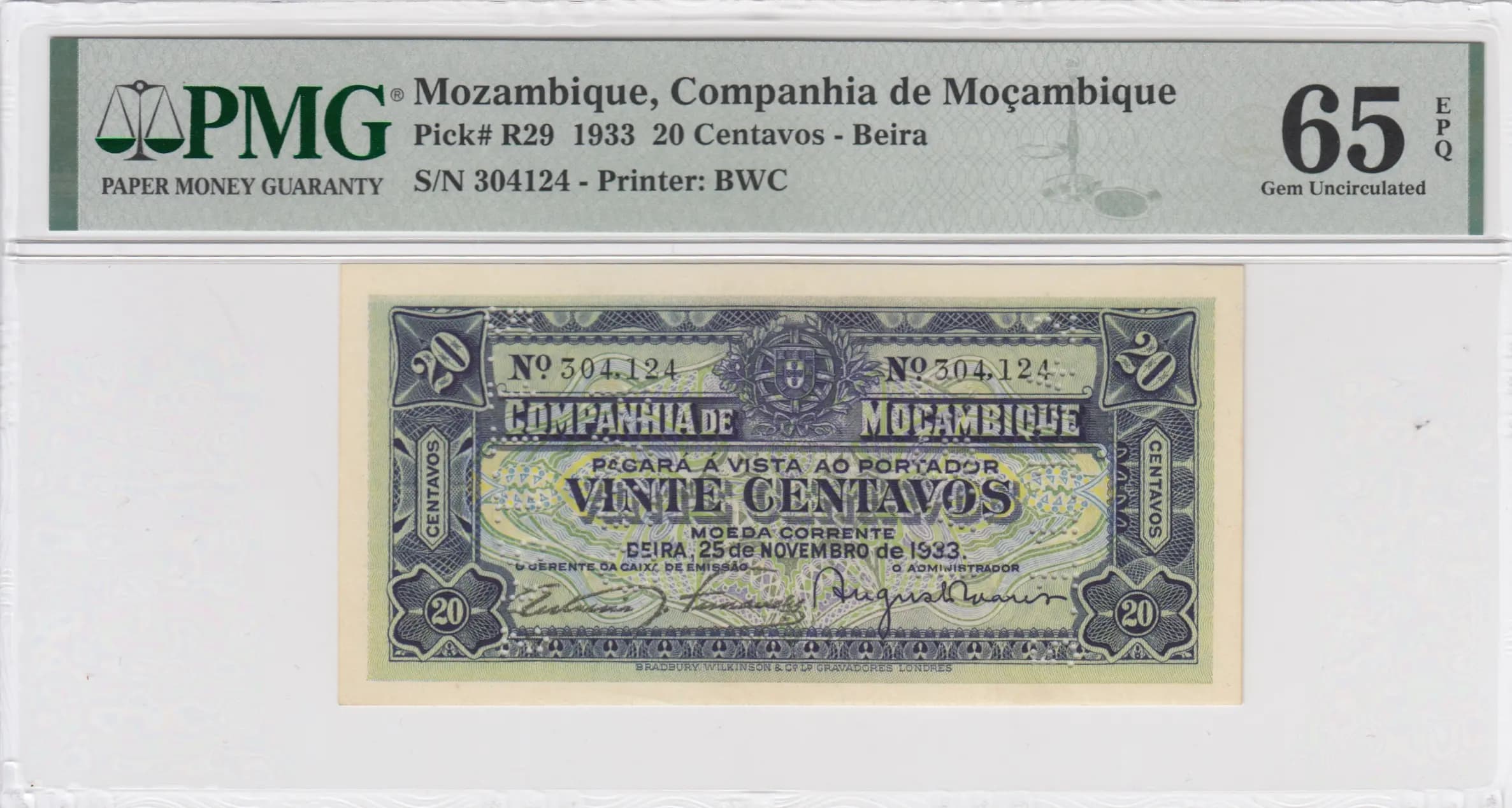
This is a PMG 65 EPQ example of the 1933 Mozambique 20 Centavos issued by the Companhia de Moçambique, a regional private company that operated under Portuguese colonial authority. The note is in exceptional near-gem uncirculated condition with pristine paper quality, displaying crisp ornamental engraving with geometric and floral border patterns in cream and dark blue-gray tones. This specific grade represents a high-quality specimen of an early 20th-century colonial regional issue, with market evidence suggesting PMG 65 examples typically realize $25–$36 at auction.
Common. While this note is over 90 years old and from a regional issuer, eBay market data shows consistent availability across multiple condition grades over the past 15 years, with numerous sales in both raw and PMG-graded examples. Uncirculated examples regularly sell for $1.81–$6.75, while PMG 65 examples have sold for $22.50–$35.96 since 2018. The consistent supply and moderate pricing indicate the note was produced in sufficient quantity and has survived in enough examples to remain accessible to collectors. The PMG 65 EPQ grade is desirable but not exceptionally scarce within the population of this issue.
The Companhia de Moçambique was a chartered trading company granted monopoly rights over portions of Mozambique during the Portuguese colonial period, and this 20 Centavos note represents one of its currency issues authorized under Portuguese authority. The note is dated 25 November 1933 and issued from Beira, the company's major commercial center, reflecting the company's role as both a commercial enterprise and de facto currency issuer in its concessionary territory. The Portuguese coat of arms prominently displayed on the obverse symbolizes the colonial framework within which the company operated, while the 'MOEDA CORRENTE' (legal tender) designation emphasizes its official monetary status.
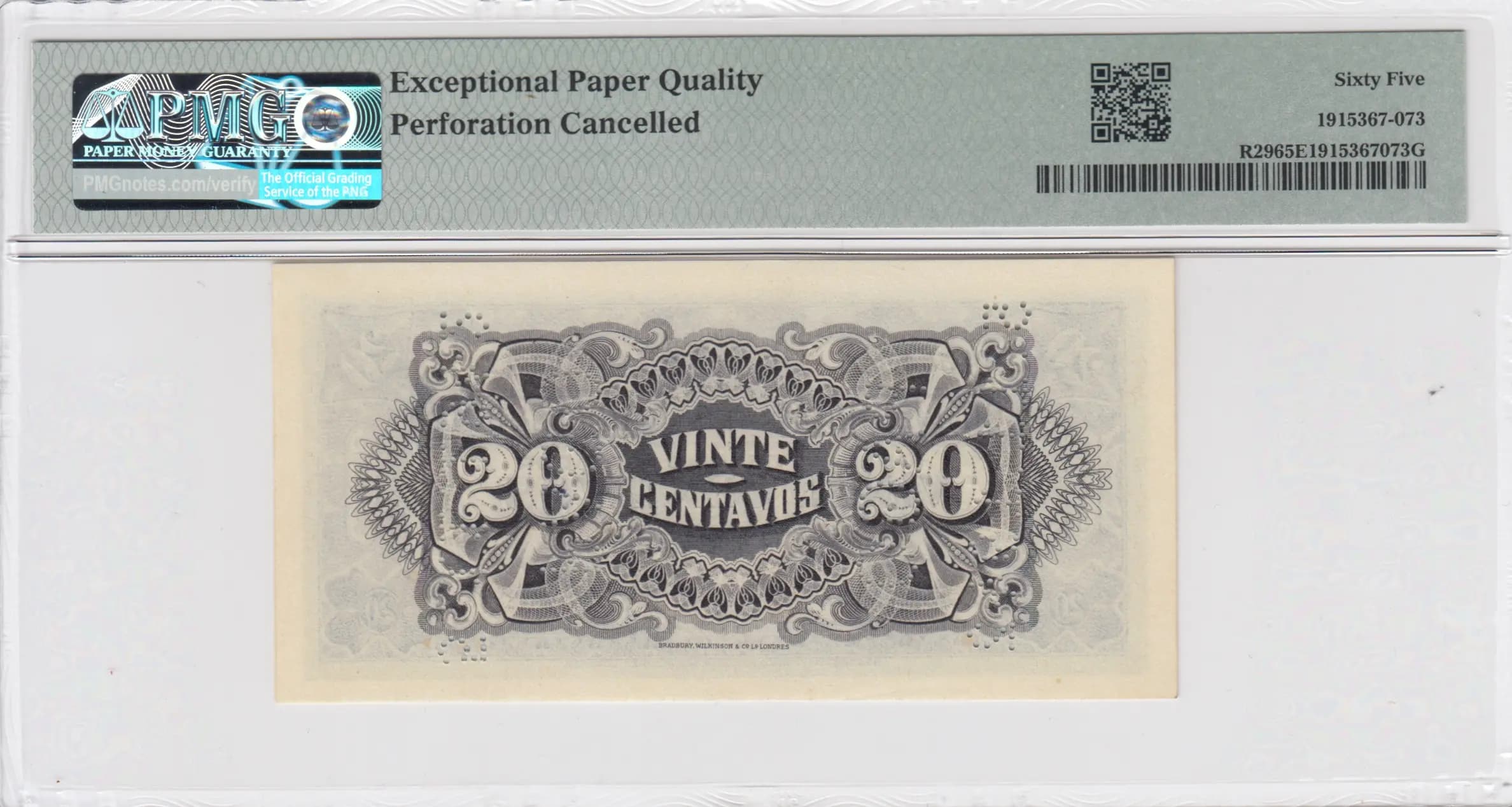
The note features a classical colonial-era design with ornamental borders and no portrait subjects. The obverse displays the Portuguese coat of arms or heraldic shield in the upper center, flanked by decorative corner ornaments containing the numeral '20' in ornate boxes. The center field carries the large Portuguese-language denomination text 'VINTE CENTAVOS' with 'MOEDA CORRENTE' subtitle, surrounded by geometric and floral scrollwork patterns. The reverse presents a symmetrical composition with a central ornamental wreath design containing 'VINTE CENTAVOS' text, with matching decorative corner flourishes and fine line engraving throughout. The color scheme uses cream/beige stock with dark blue-gray and light green overprinting, creating an elegant, formal appearance typical of early 20th-century chartered company currency.
FRONT SIDE: 'COMPANHIA DE MOÇAMBIQUE' (Company of Mozambique) | 'Nº 304,124' (Serial number 304,124) | 'PÉGARÁ À VISTA AO PORTADOR' (Will pay at sight to bearer) | 'VINTE CENTAVOS' (Twenty Centavos) | 'MOEDA CORRENTE' (Current money/Legal tender) | 'BEIRA, 25 de NOVEMBRO de 1933' (Beira, November 25, 1933) | 'GERENTE DA CAIXA DE EMISSÃO' (Manager of the Issuing Box) | 'O ADMINISTRADOR' (The Administrator) | '20' (denomination numeral). BACK SIDE: 'VINTE CENTAVOS' (Twenty Centavos) | '20' (denomination numeral) [Note: Back side also bears PMG certification markings 'Exceptional Paper Quality' and 'Perforation Cancelled' as part of the professional grading process].
Intaglio (engraved) printing method, evidenced by the fine, precise line work visible in the ornamental borders, corner designs, and denomination text. The sharp definition of the geometric and floral patterns, combined with the complexity of the multi-color overprinting (cream/beige base with dark blue-gray and light green elements), indicates professional security engraving typical of Portuguese-authorized colonial currency. The specific printer is not definitively identified in the available catalog data, but such notes were typically produced by established European security printers authorized by the Portuguese government.
This is the standard P-R29 variety (20 Centavos - Beira), with the Pick catalog noting only one catalogued variant for this base Pick number. The specific variety is identifiable by: Issue location 'BEIRA' on the obverse, date '25 de NOVEMBRO de 1933', and serial number 304,124 visible on this specimen. The 'Perforation Cancelled' notation observed in the PMG holder indicates this note has been cancelled with perforations—a common preservation technique used by banks and monetary authorities to prevent reissuance. No signature varieties or overprint varieties are apparent from the visual analysis; this represents the standard printing of the series.