100 escudos 1972
Market Prices
6 salesAbout This Note
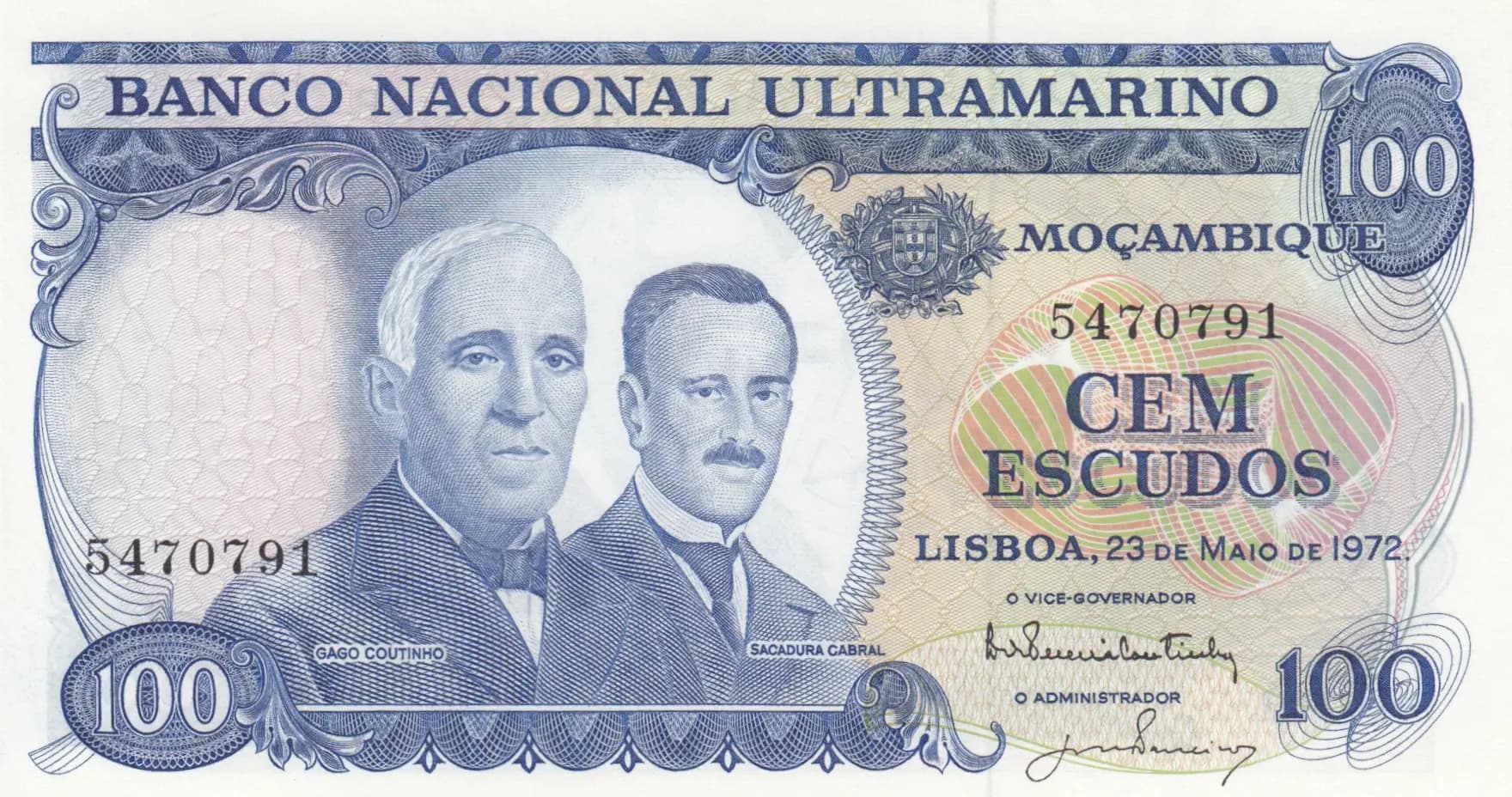
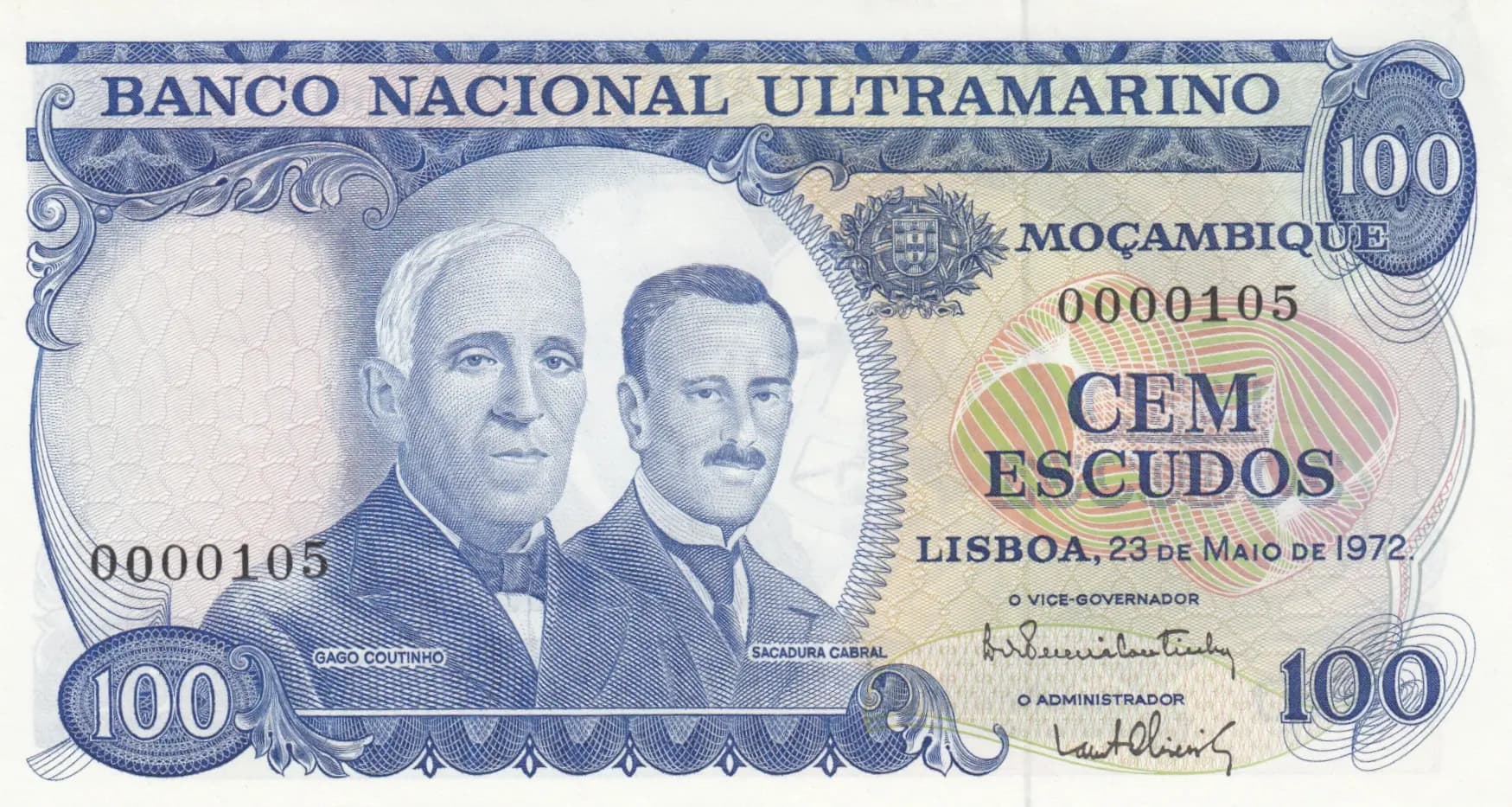
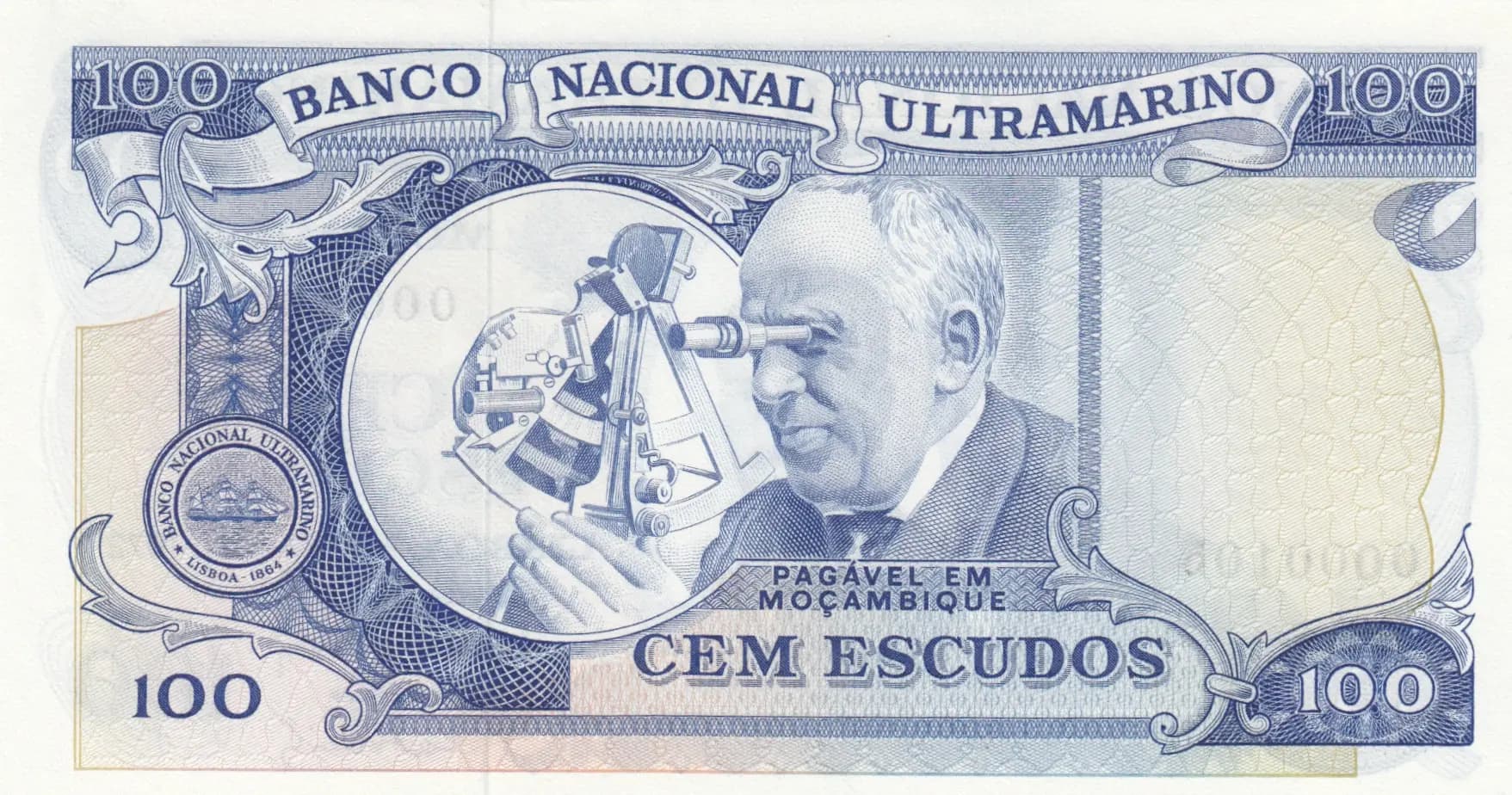
A pristine example of the Mozambique 100 Escudos issued May 23, 1972 by Banco Nacional Ultramarino. The obverse features dual portraits of aviation pioneers Gago Coutinho and Sacadura Cabral in an elegant oval frame, while the reverse depicts a surveyor with astronomical equipment, reflecting Portugal's maritime and scientific heritage. In uncirculated condition with crisp printing, fine engraving detail, and no signs of wear or handling.
Common. The eBay market data provided shows recent sales of higher-graded examples (PMG 66 at $64.23, PMG 67 at $107) and lower grades averaging $7-16, with 2019 catalogue values placing UNC specimens at $50. The consistent market activity across multiple years, range of grades in circulation, and catalog valuation of $50 UNC indicate this is a regularly encountered note among collectors of Portuguese colonial currency. The denomination (100 escudos) and issue date (1972, near the end of Portuguese colonial rule) suggest a substantial print run for a major denomination during the final colonial period.
This note commemorates two significant Portuguese explorers: Gago Coutinho and Sacadura Cabral, pioneers of long-distance air navigation who completed the first air journey from Europe to Asia in 1921-1922. Issued during the final years of Portuguese colonial rule in Mozambique (independence came in 1975), the note reflects the colonial-era Banco Nacional Ultramarino's continued use of Portuguese and imperial imagery, with the reverse's surveying instrument symbolizing the exploration and scientific advancement associated with Portuguese maritime tradition.
The obverse showcases dual portraits of Gago Coutinho (left, unbearded) and Sacadura Cabral (right, with distinctive mustache) arranged within an ornate oval frame with scrollwork borders. The denomination appears in all four corners (numerically as '100' and textually as 'Cem Escudos'). The Portuguese coat of arms or national emblem is positioned in the upper right. The reverse features a man in profile operating a theodolite or similar astronomical/surveying instrument, positioned toward the right side of the note. A bank seal featuring a ship design and dated 1864 appears on the left, emphasizing the Ultramarine Bank's institutional heritage. The color scheme throughout employs blue as the dominant hue with cream and beige accents, creating a sophisticated, formal appearance typical of high-denomination colonial-era banknotes.
FRONT: 'Banco Nacional Ultramarino' (Ultramarime National Bank) | 'Moçambique' (Mozambique) | 'Cem Escudos' (One Hundred Escudos) | 'Lisboa, 23 de Maio de 1972' (Lisbon, May 23rd, 1972) | 'Gago Coutinho' and 'Sacadura Cabral' (portrait identifications) | 'O Vice-Governador' (The Vice-Governor) | 'O Administrador' (The Administrator) | Serial number: 0000105 | Denomination: 100. BACK: 'Banco Nacional Ultramarino' (Ultramarime National Bank) | 'Cem Escudos' (One Hundred Escudos) | 'Pagável em Moçambique' (Payable in Mozambique) | 'Lisboa - 1864' (Lisbon - 1864, bank seal date) | Denomination: 100.
Intaglio engraving (recess/relief printing), evidenced by the fine line detail visible throughout the portrait areas, intricate decorative scrollwork, and complex background patterns. The ornate corner designs with spiral motifs and the delicate facial features of both portraits demonstrate the high-quality copperplate engraving characteristic of Banco Nacional Ultramarino's security printing. The printer for this series is consistent with Ultramarine Bank issues of the early 1970s, likely produced by a specialized security printer contracted by the Portuguese central banking authority.
This example exhibits the standard P-113 variety. The serial number visible (0000105) indicates an early printing from the series. PMG catalogs two variants for Pick 113 (P-113 and P-113s), though the distinction between standard and specimen notes is typical for colonial issues. The visual analysis does not reveal overprints or significant variations that would distinguish this as a specimen note, indicating this is the regular circulation variety P-113.