1 escudo 1937
Market Prices
2 salesAbout This Note
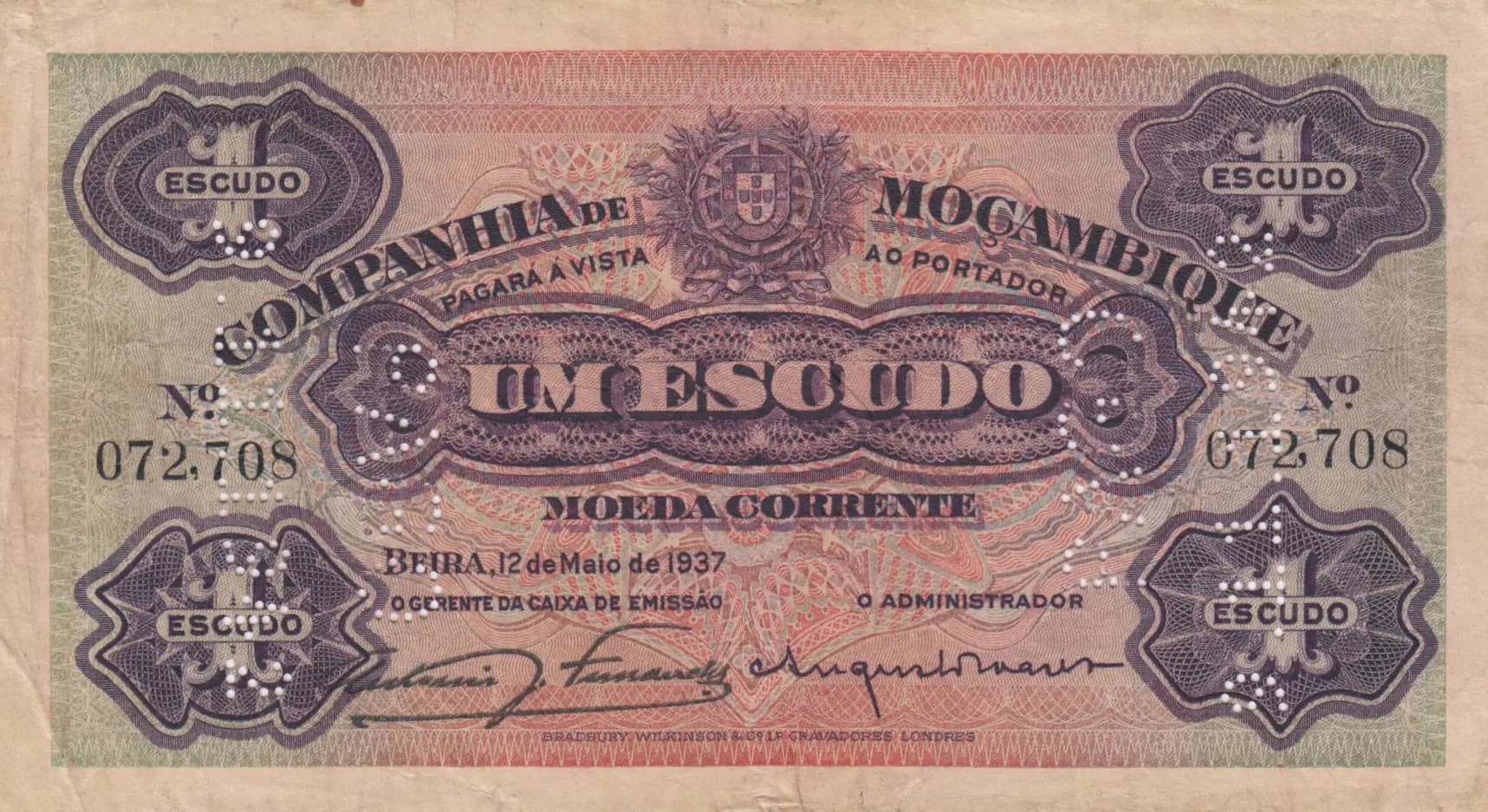
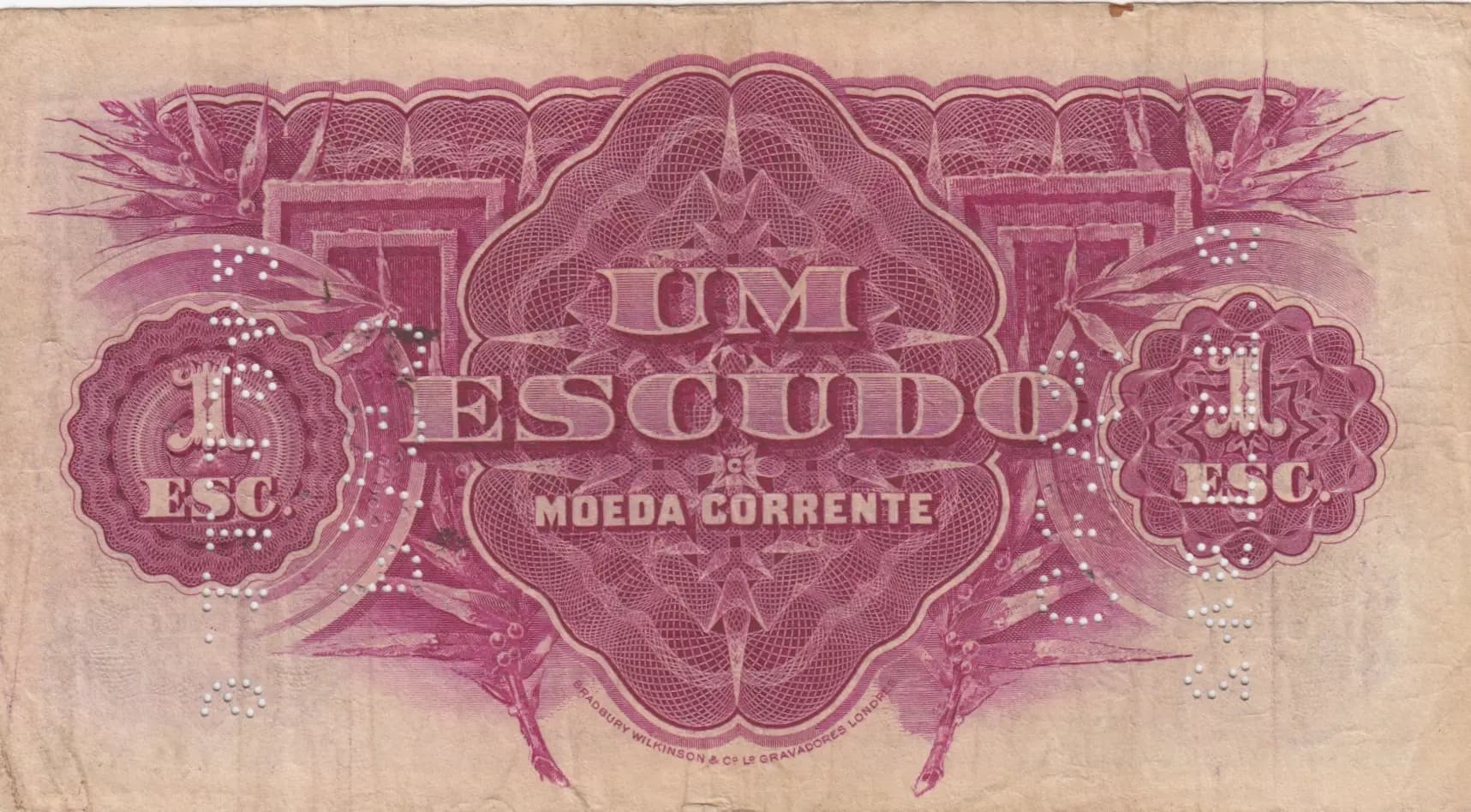
This 1937 Mozambique 1 escudo note from the Companhia de Moçambique is a beautiful example of early 20th-century Portuguese colonial currency, printed by the renowned London security printer Bradbury Wilkinson & Co. In Fine condition, it displays the characteristic ornate engraving with green, pink, and purple color work on the obverse and magenta/maroon tones on the reverse, though age-related creasing, foxing, and surface wear are evident consistent with nearly 90 years of circulation. The note features intricate security engraving throughout and bears the Beira date of 12 May 1937, making it a collectible regional note from Portugal's African colonial period.
Common. This note, although from a regional colonial issuer, was part of the regular currency circulation of Mozambique in 1937 and subsequent decades. The eBay market data provided shows specimens in Fine condition selling for $15.50–$29 over the past decade, with catalog values (as of 2008) listing Fine at $6 and EF at $15. These modest prices and moderate bidding activity indicate steady but not strong collector demand, confirming common status. The Companhia de Moçambique issued banknotes over several decades, and while regional notes have some collector appeal, this denomination and date do not appear to have been subject to limited print runs or early recall.
Issued by the Companhia de Moçambique (Mozambique Company), a chartered commercial enterprise that administered portions of Mozambique under Portuguese colonial rule, this 1937 escudo represents the private banknote-issuing authority during the later years of colonial Portuguese Africa. The Portuguese coat of arms (shield with cross and spheres) prominently displayed on the obverse reinforces Portuguese sovereignty, while the decorative grain stalks and fortification imagery on the reverse evoke the economic and military infrastructure of the colonial enterprise. This note was issued during the authoritarian Estado Novo regime in Portugal, a period when colonial currency served as a tool of economic control and colonial identity.
The obverse features an ornate, symmetrical design dominated by a large central oval medallion containing the denomination and issuing institution text, surrounded by elaborate decorative borders with scrollwork and flourishes. The Portuguese coat of arms—a shield bearing a cross with five spheres (representing the five wounds of Christ and Portugal's overseas territories)—is positioned at the top center as a symbol of Portuguese sovereignty. Decorative escudo emblems appear in all four corners, while ornamental rosettes with grape cluster motifs enhance the festive, prosperity-suggesting aesthetic. The reverse displays a complementary design with a fortified structure or gateway visible behind the central medallion, flanked by stylized grain stalks and botanical elements symbolizing agricultural wealth and colonial development. The overall design emphasizes both the authority of the issuing institution and the economic vitality of Portuguese colonial Mozambique.
FRONT SIDE: 'Companhia de Moçambique' (Mozambique Company) — issuing authority; 'Sagaravista ao Portador' (Bearer note/Payable to Bearer); 'Um Escudo' (One Escudo); 'Moça Corrente' (Current Currency/Legal Tender); 'Beira, 12 de Maio de 1937' (Beira, 12 May 1937); 'O Gerente da Caixa de Emissão' (The Manager of the Emission Box); 'O Administrador' (The Administrator); Serial numbers '072.708' and '672.708'; 'Bradbury Wilkinson & Co Ltd Gravadores Londres' (Bradbury Wilkinson & Co Ltd Engravers London). REVERSE SIDE: 'Um Escudo' (One Escudo); 'Moeda Corrente' (Current Currency); 'Esc.' (Escudo abbreviation); 'Bradbury Wilkinson & Co Ltd Gravadores Londres' (Bradbury Wilkinson & Co Ltd Engravers London).
Intaglio engraving (steel plate engraving), the standard security printing method for high-value banknotes of the era. Executed by Bradbury Wilkinson & Co Ltd, one of the world's preeminent security printers headquartered in London, known for their mastery of fine line work, cross-hatching, and complex geometric patterns. The visual analysis confirms the presence of intricate engraved patterns with fine line work, detailed cross-hatching, stippling, and microprint elements in decorative areas—all hallmarks of intaglio technique designed to prevent counterfeiting.
This note is identified as Pick P-R33 (Regional Banknote catalog). The serial numbers visible in the visual analysis are '072.708' and '672.708', which may indicate a specific printing run or series. The date '12 de Maio de 1937' (12 May 1937) is consistent with the cataloged year of issue. No known overprints or significant varieties are apparent from the visual analysis. The signatures of the Gerente da Caixa de Emissão (Emission Manager) and Administrador (Administrator) are present but not clearly legible in the images, which is typical for notes of this age and condition grade; specialists may identify specific signature varieties by examining high-resolution images or consulting signature records if available for the Companhia de Moçambique.