1 escudo 1919
Market Prices
3 salesAbout This Note
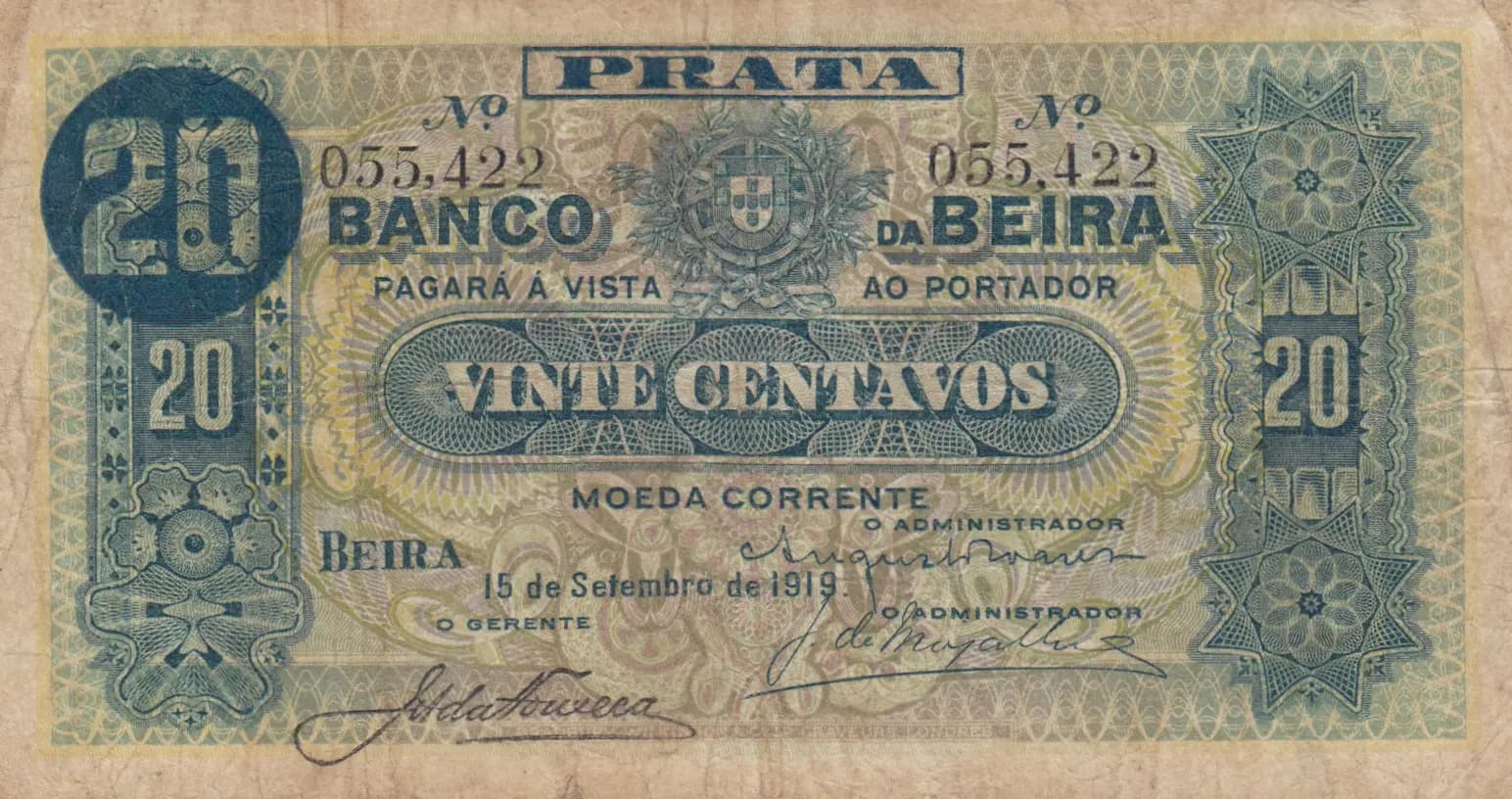
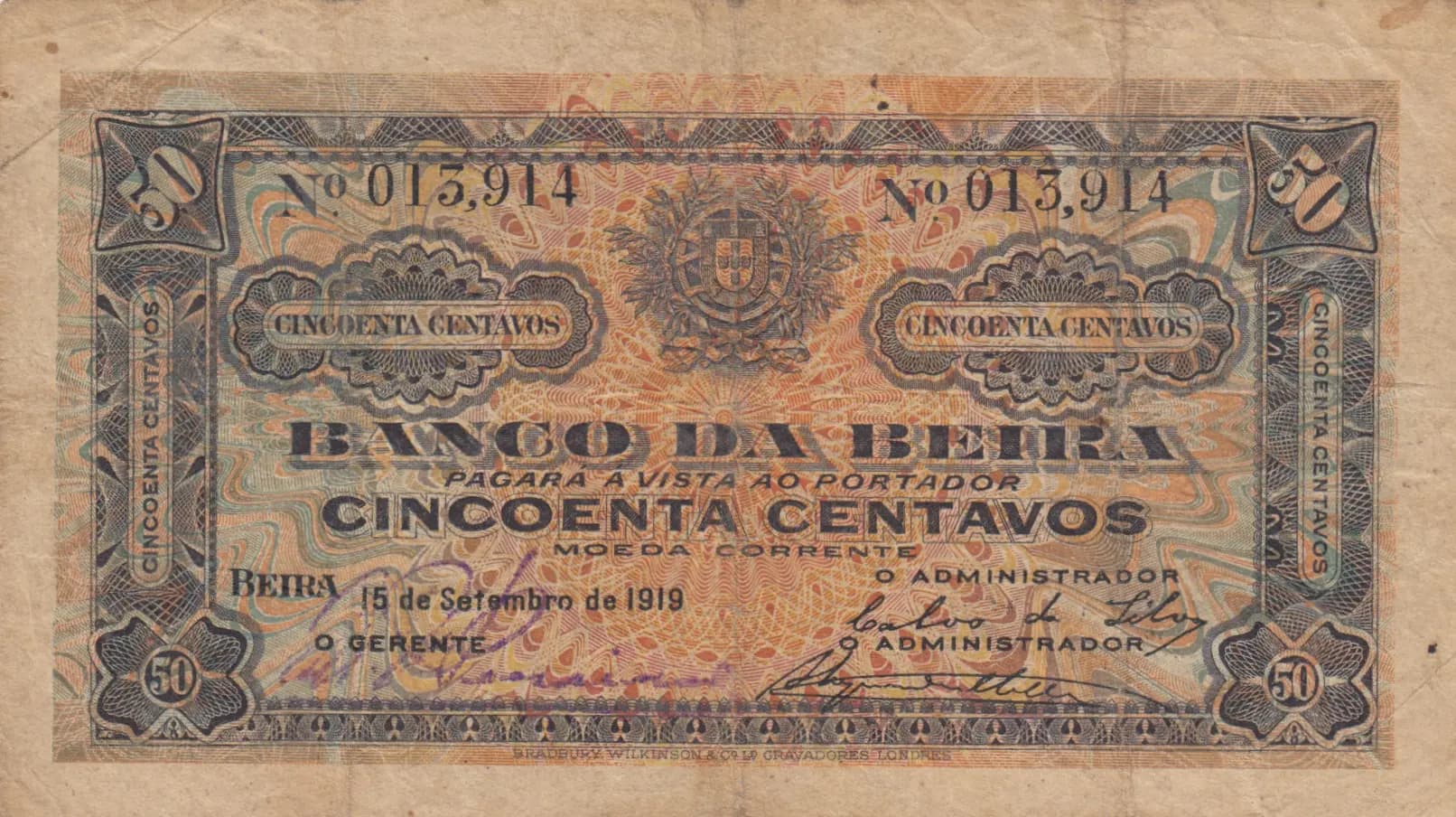
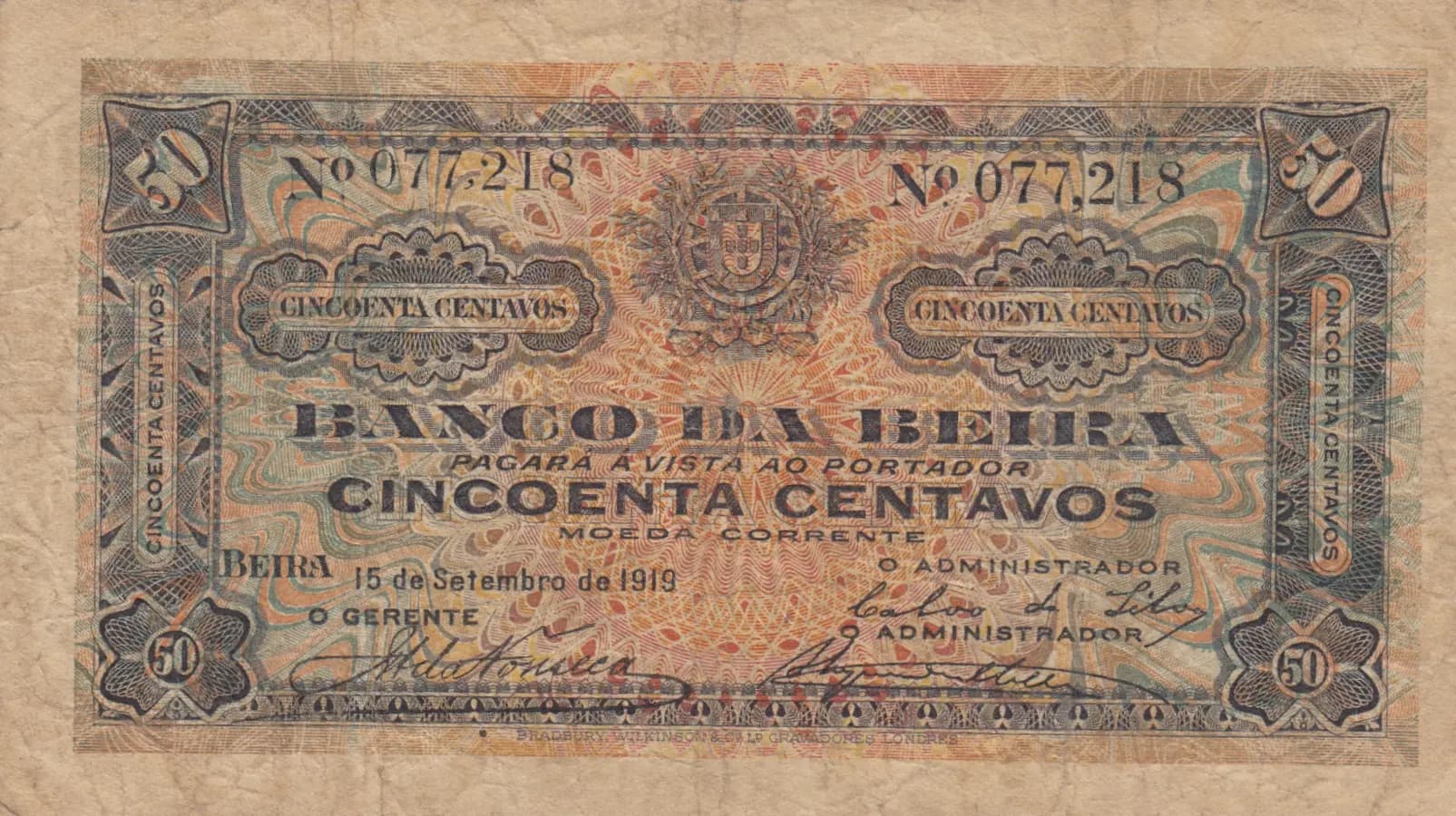
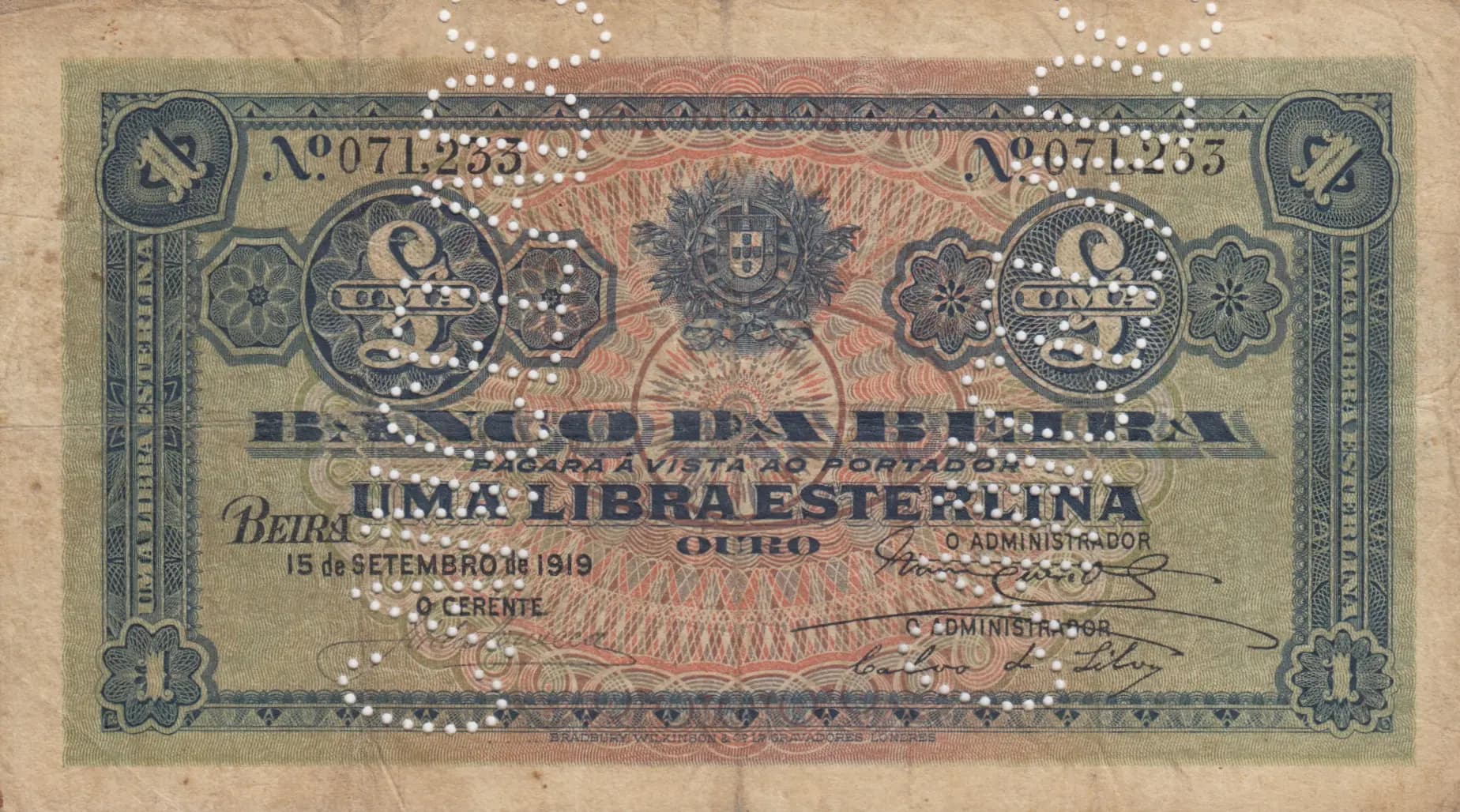
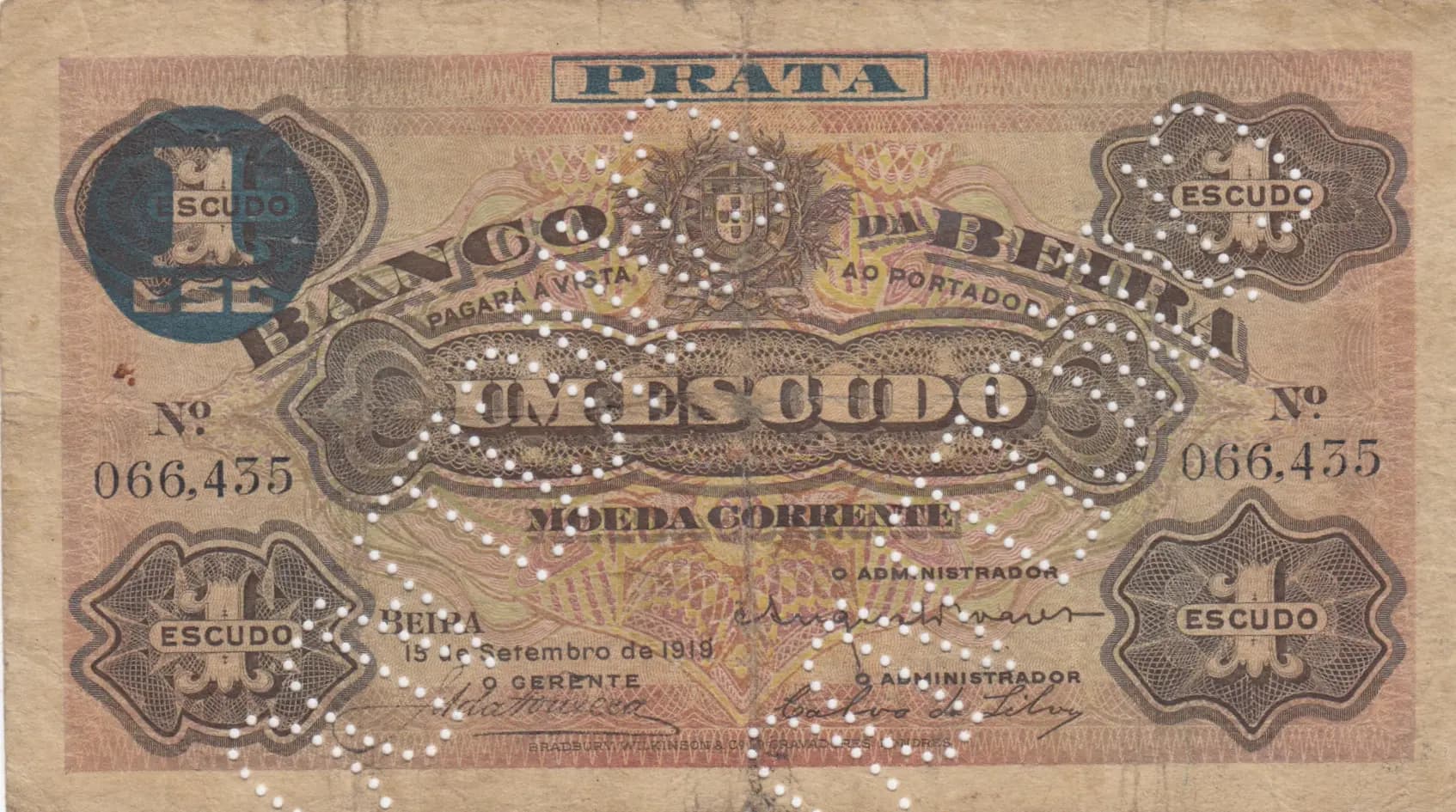
This is a 1919 Banco da Beira 1 Escudo note from Mozambique, a regional banknote issued during Portuguese colonial period. The note displays the ornate baroque aesthetic characteristic of early 20th-century Portuguese colonial currency, featuring a Portuguese coat of arms, elaborate scrollwork, and four corner denomination medallions. In Fine (F) condition, it shows visible aging with creasing and surface wear consistent with circulation, typical for nearly century-old banknotes of this type.
Common. eBay market data from realbanknotes.com shows multiple sales of this denomination in various grades between 2011 and 2016, with Fine condition examples selling for $4.38 to $17 USD. The existence of multiple sales records and the catalog values (F: $12 in 2008) indicate adequate supply in the collector market. Banco da Beira, while a regional issuer, produced sufficient quantities of this 1 Escudo note that it remains readily available to collectors. No evidence suggests a limited print run or extraordinary scarcity.
Issued on 15 September 1919 by Banco da Beira, this note represents a regional currency from Portuguese East Africa during the late colonial period. The prominent Portuguese coat of arms and the designation 'MOEDA CORRENTE' (Current Currency) reflect Portugal's assertion of monetary sovereignty in Mozambique during the early post-WWI era. The 'PAGÁVEL À VISTA AO PORTADOR' (Payable on Demand to Bearer) inscription was standard for bearer instruments of this period, which would be replaced by more centralized currency systems as colonial administration evolved.
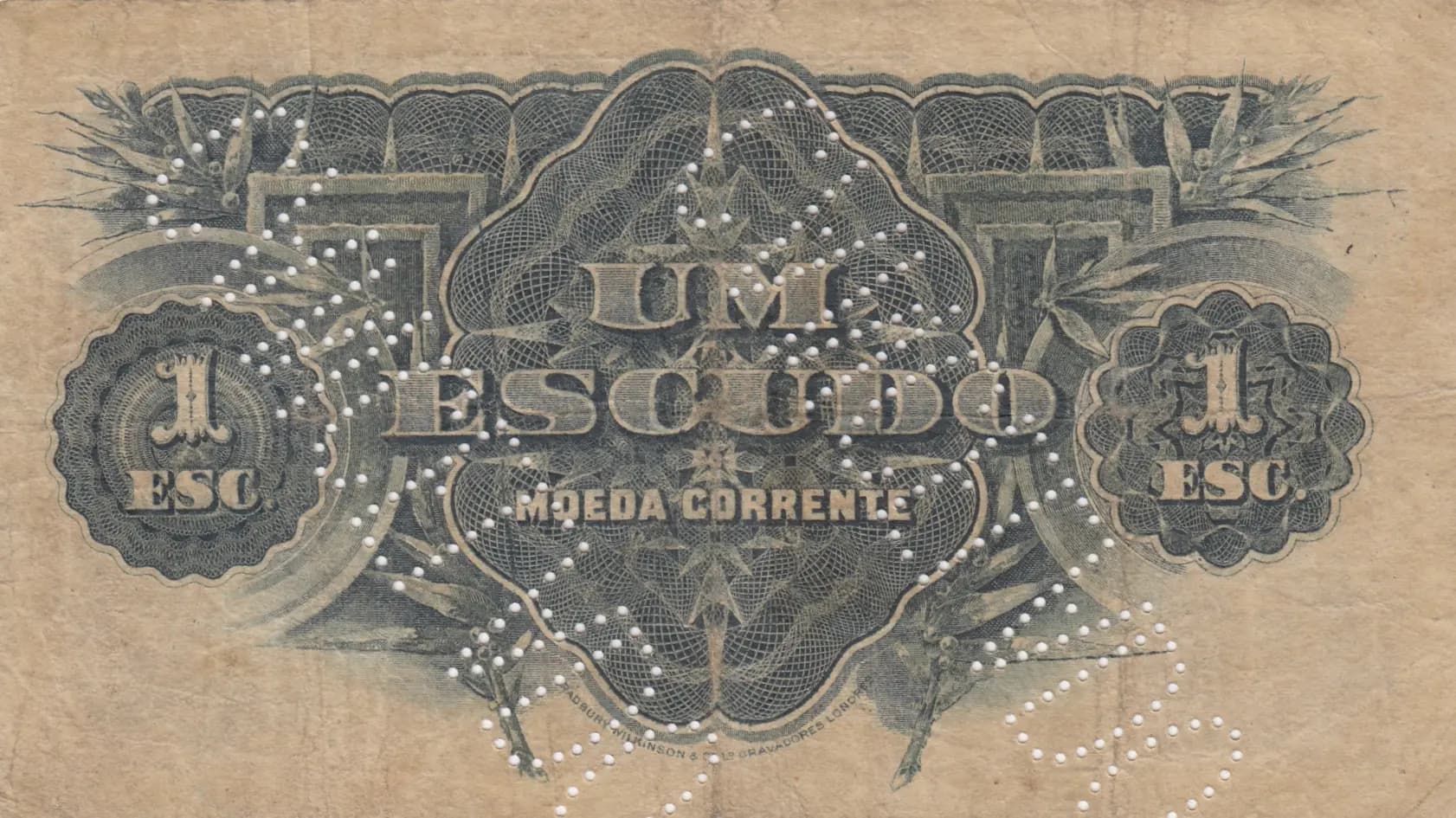
The note features a symmetrical baroque-influenced design centered on the Portuguese royal coat of arms, which consists of a shield with a castle at the top center and the characteristic Portuguese heraldic elements. Four corner medallions frame the denomination in lozenges with ornamental floral designs. The front displays elaborate scrollwork and flourishes throughout, with a pearl or dot-pattern overlay that forms part of the original engraved security design. The reverse side employs a simpler, more elegant composition with a central ornamental cartouche containing the denomination, flanked by stylized palm fronds — a colonial-era symbol suggesting the tropical location of Mozambique. The color scheme of beige/tan, dark blue, brown, and cream creates visual hierarchy and was typical of Portuguese colonial banknotes of this era.
FRONT SIDE: 'PRATA' (Silver) — at top, likely indicating silver backing or reference; '1 ESCUDO' — denomination markers in four corner medallions; 'BANCO DE MOÇAMBIQUE' (Bank of Mozambique); 'MOEDA CORRENTE' (Current Currency); 'PAGÁVEL À VISTA AO PORTADOR' (Payable on Demand to Bearer); 'O ADMINISTRADOR' (The Administrator); 'O GERENTE' (The Manager); 'BEIRA' (city of issue); '15 de Setembro de 1919' (15 September 1919); Serial number '066,455'. BACK SIDE: '1 ESCUDO' and 'UM ESCUDO' (One Escudo) — within central cartouche; '1 ESC.' — in four corner medallions; 'MOEDA CORRENTE' (Current Currency).
Intaglio (steel/copper plate engraving), the standard security printing method for high-value banknotes of this period. The intricate engraved linework, multiple decorative layers, and the complexity of the baroque ornamentation are characteristic of late 19th and early 20th-century intaglio work by European security printers. For this specific Pick number (P-R11A), the printer is likely to have been a Portuguese government printer or a specialized European security printing firm such as Bradbury, Wilkinson & Co. or similar firms that worked for Portuguese colonial issues. The pearl/dot overlay pattern would have been created through the engraving process itself.
This example is Pick number P-R11A, the standard 1 Escudo from Banco da Beira dated 15 September 1919, with serial number 066,455. Varieties for this Pick would be distinguished by different signatures of the bank officials (Administrator, Manager/Gerente) and potentially by serial number prefixes or ranges. The observed signatures appear to show '2 ADMINISTRADOR' and '9 ADMINISTRADOR,' which may relate to multiple signers or administrative positions. Further research into signature varieties would be needed to determine if this represents a specific known variety within the P-R11A designation, though the standard cataloging typically treats this as a single main type.