50 centavos 1914
About This Note
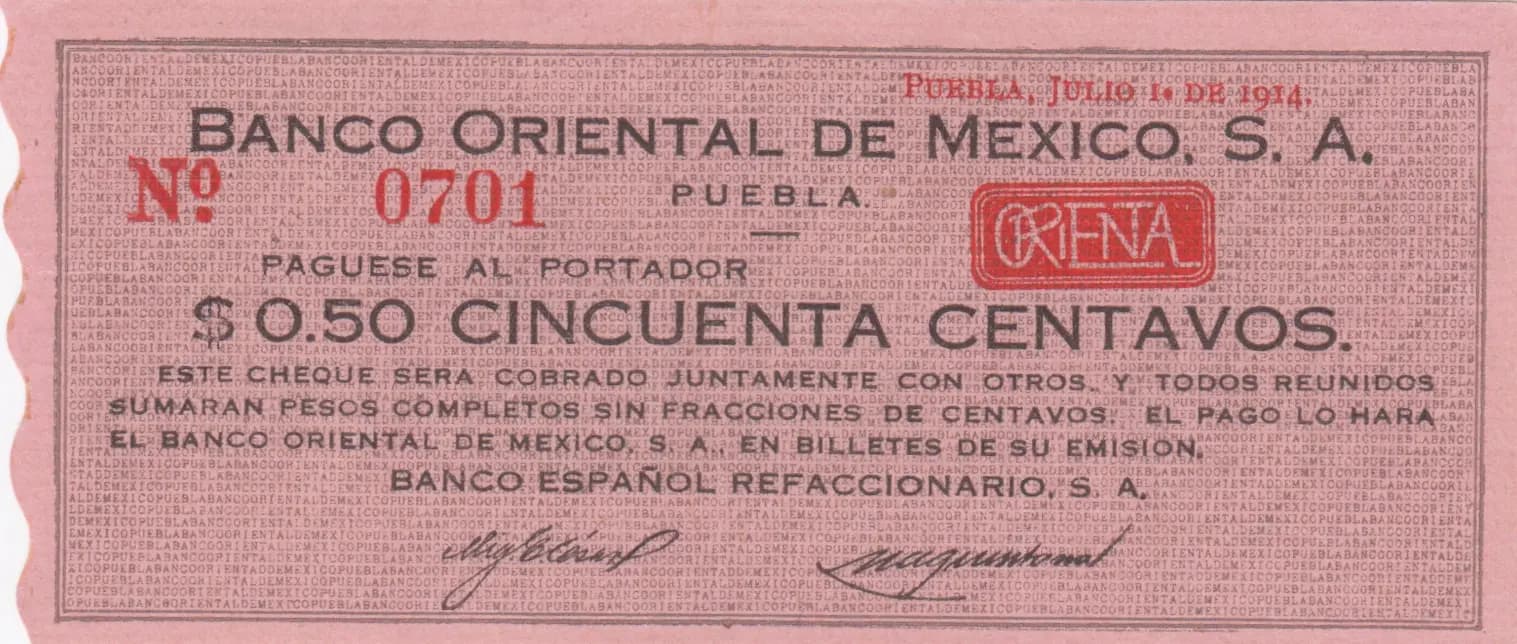
A striking rose-pink 50 centavos fractional note issued by Banco Oriental de Mexico in July 1914, during Mexico's Revolutionary period. The note features a formal check-like design with the denomination prominently displayed and includes a red CRENA stamp, showing honest wear consistent with AU condition. This is a historically significant piece from a tumultuous era when fractional currency was essential for daily commerce in Mexico.
Common. Fractional notes from the Mexican Revolution period were produced in substantial quantities by various regional banks, and Banco Oriental de Mexico's issuance was part of widespread emergency currency production. The AU condition and surviving examples in the market indicate this was not a limited issue. Without specific evidence of a small print run, early recall, or extreme scarcity in the marketplace, this note should be classified as common within its type.
Issued on July 14, 1914, from Puebla during the height of the Mexican Revolution, this note reflects the financial chaos and necessity for private bank issuance when central monetary authority was fragmented. The formal 'pay to bearer' language and reference to redemption in complete pesos demonstrates the complexity of managing fractional currency during a period of extreme political instability. Banco Oriental de Mexico's issuance of such notes was typical of the revolutionary era when various regional banks attempted to maintain liquidity in their local economies.
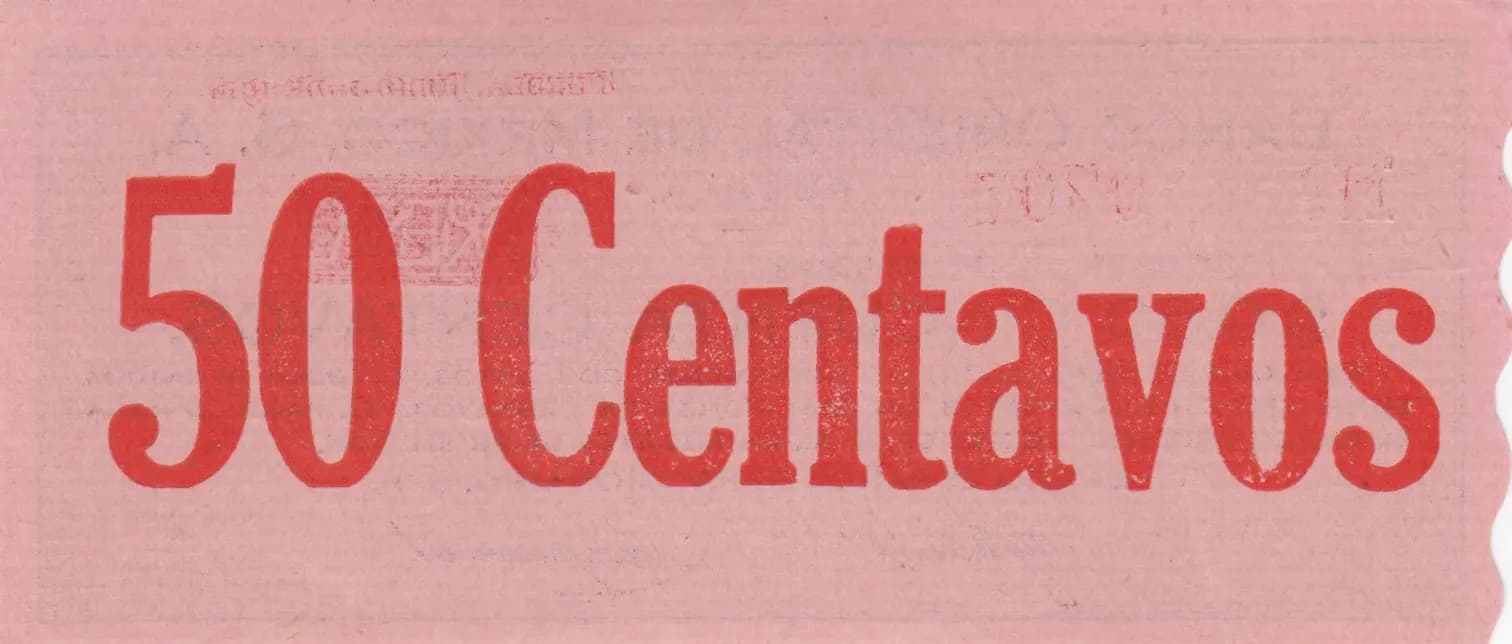
This fractional currency note employs a minimalist check-like design typical of Mexican Revolutionary-era emergency currency. The front features a formal, text-heavy layout with the issuer's name, denomination, date, and location of issue prominently displayed in black text with red accent elements. The red CRENA stamp on the right side serves as an official seal or authorization mark. The back is deliberately simple, displaying only the denomination '50 Centavos' in large red lettering on the pink background. A repeating text security pattern is visible throughout the note as a deterrent to counterfeiting. The color scheme of pink/rose with black and red text was typical of Mexican fractional notes from this period. Handwritten signatures appear at the bottom of the obverse, indicating individual authorization by bank officials. This design reflects the practical, efficient approach to emergency currency production during the Revolution when aesthetic refinement was secondary to rapid circulation of negotiable instruments.
FRONT SIDE: 'Banco Oriental de Mexico, S.A.' (Oriental Bank of Mexico, S.A.) / 'Puebla, Julio 14, de 1914' (Puebla, July 14, 1914) / 'Nº 0701' (Serial No. 0701) / 'Puebla' (Location) / 'Paguese al Portador' (Pay to Bearer) / '$ 0.50 Cincuenta Centavos' ($0.50 Fifty Centavos) / 'Este cheque sera cobrado juntamente con otros, y todos reunidos sumaran pesos completos sin fracciones de centavos. El pago lo hara el Banco Oriental de Mexico, S.A. en billetes de su emision.' (This check will be collected together with others, and all combined will sum complete pesos without fractions of centavos. Payment will be made by the Oriental Bank of Mexico, S.A. in notes of its issue.) / 'Banco Español Refaccionario, S.A.' (Spanish Refactoring Bank, S.A.) / 'CRENA' (Security stamp). BACK SIDE: '50 Centavos' (50 Centavos) displayed prominently in red.
Letterpress printing with hand-applied signatures. The note exhibits characteristics of early 20th-century Mexican bank note production, with a repeating text security pattern printed throughout the background. The straightforward text layout and minimal decorative elements suggest cost-effective, rapid production suitable for emergency fractional currency during wartime. The red CRENA stamp may have been applied separately or as part of the printing process.
Serial number 0701 is noted on this example. Varieties of this Pick number may exist based on different serial number ranges, signature combinations, date variations (though the July 14, 1914 date appears consistent with the issue), and possibly different CRENA stamp applications. Collectors should note whether the CRENA seal was consistently applied or varied across different print runs. The presence of 'Banco Español Refaccionario, S.A.' text alongside Banco Oriental de Mexico suggests a possible relationship or backing arrangement that may create distinct varieties.