5 pesos 1969
Market Prices
10 salesAbout This Note
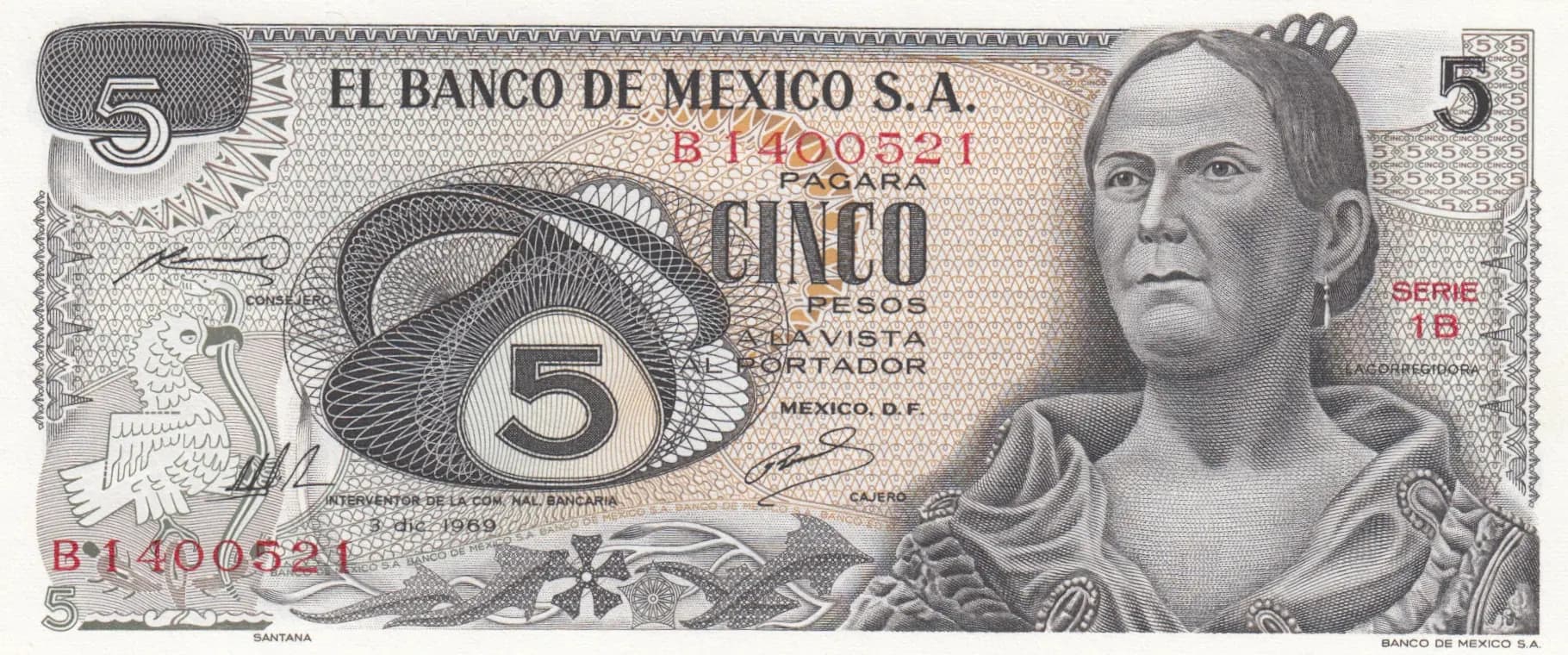
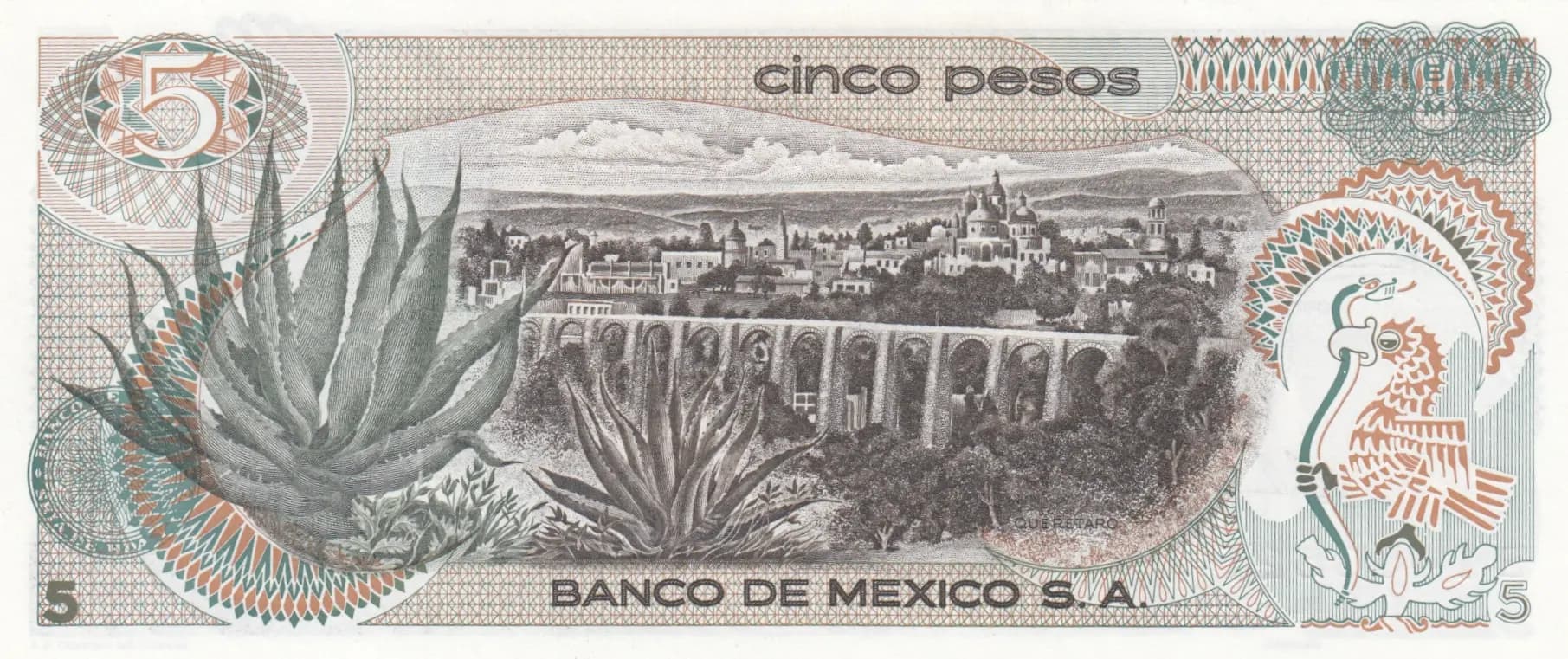
This is an uncirculated specimen of Mexico's 1969 5 pesos banknote (Pick P-62a), presenting pristine condition with exceptional eye appeal. The note features intricate black engraving on multicolor underprint, displaying a bearded portrait on the obverse and the impressive Querétaro aqueduct on the reverse, along with flora and fauna symbolism. In UNC condition, this example represents strong collector value, with recent market sales ranging from $1.54 to $8.05, making it a desirable mid-20th century Mexican currency example.
Common. This is a regular issue of the 1969 5 pesos note with standard circulation characteristics. The eBay price history provided shows consistent market activity with UNC examples selling in the $1.54–$8.05 range across multiple sales from 2013–2020, indicating healthy supply and steady collector demand at modest prices. The catalog value for UNC condition (2019) of $3 confirms this is a widely available note. No evidence of limited print runs, recalls, or short-lived production exists for this Pick number.
Issued during 1969 by Banco de México, this 5 pesos note reflects Mexico's post-revolution period emphasis on national heritage and regional pride. The reverse depicts the historic Aqueduct of Querétaro and the town landscape, celebrating colonial Mexican architecture and the state's historical significance, while the agave plant represents Mexico's agricultural heritage. The portrait on the obverse represents a notable Mexican historical figure, reinforcing the note's role in commemorating national identity during a stable period of Mexican monetary circulation.
The obverse features an elaborate engraved portrait of a bearded man in profile facing right, depicted in 19th-century clothing with a distinctive earring, positioned on the right side of the note. The left side showcases an ornate circular numeral design containing the denomination '5' surrounded by intricate geometric and scrollwork patterns. The center identifies the issuer with formal banking text and includes three signature blocks for authorized bank officials. The reverse presents a significant historical landmark—the multi-arched Aqueduct of Querétaro with colonial architecture and distant mountains in the background, flanked by symbolic elements: an agave plant (rendered in green with orange accents) on the left representing Mexican flora, and a stylized eagle or bird head in teal and orange on the right representing national heraldry. The denomination appears multiple times in decorative cartouches with geometric borders throughout the design.
Front side: 'EL BANCO DE MEXICO S.A.' (The Bank of Mexico S.A.); 'PAGARA A LA VISTA AL PORTADOR' (Will pay on demand to the bearer); 'CINCO PESOS' (Five pesos); 'MEXICO, D.F.' (Mexico, Federal District); 'SERIE 1B' (Series 1B); Serial number 'B 1400521'; Signature designations 'CONSEJERO' (Counselor), 'CAJERO' (Cashier), and what appears to be a signature or name 'SANTANA'. Back side: 'cinco pesos' (five pesos); 'BANCO DE MEXICO S.A' (Bank of Mexico S.A); 'QUERETARO' (Querétaro - location identification).
This note was produced using intaglio engraving (fine line engraving) combined with multicolor lithography, a standard security printing method for Mexican currency of this era. The printer is identified as BdM (Banco de México's printing facility). The technique exhibits characteristic features of high-security currency printing: intricate crosshatch patterns, detailed portraiture with fine line work, elaborate geometric security patterns, and carefully controlled color registration across multiple printing passes. The combination of black primary engraving with carefully applied multicolor underprinting creates the distinctive visual security features and aesthetic quality typical of 1960s Mexican banknotes.
This example bears the Series 1B designation and serial number prefix 'B,' indicating it belongs to a specific print series. The note displays three signature blocks characteristic of 1969 Mexican 5 pesos issues, with visible signatures including one identified as 'SANTANA.' While signature varieties are known to exist for this denomination and year, establishing the precise official variety designation (such as distinguishing between different Consejero, Cajero, or Governor signatures) would require comparison with comprehensive Pick catalog signature variety plates. The visual evidence suggests this is a standard issued note rather than a trial, specimen, or special variety, but the specific signature combination should be cross-referenced with Pick P-62a variant listings to determine if it represents a noted signature variety.