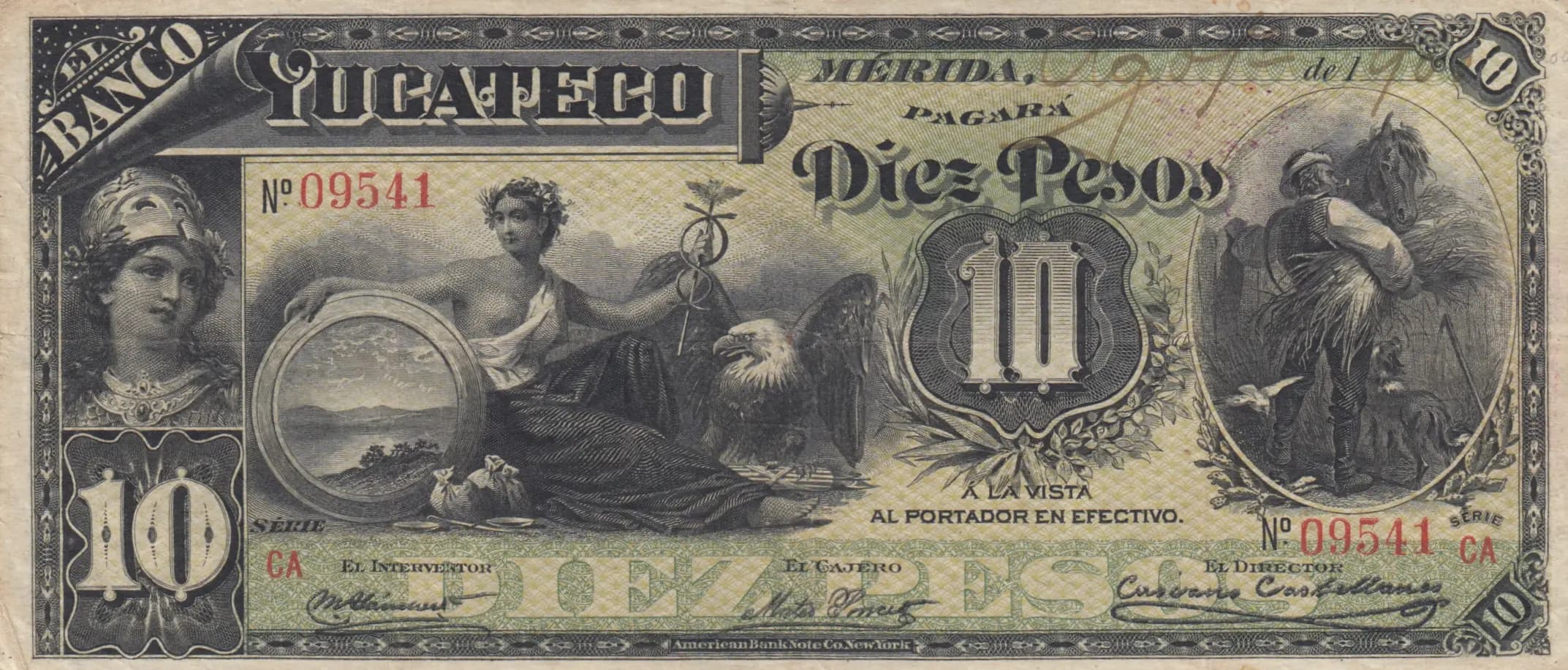
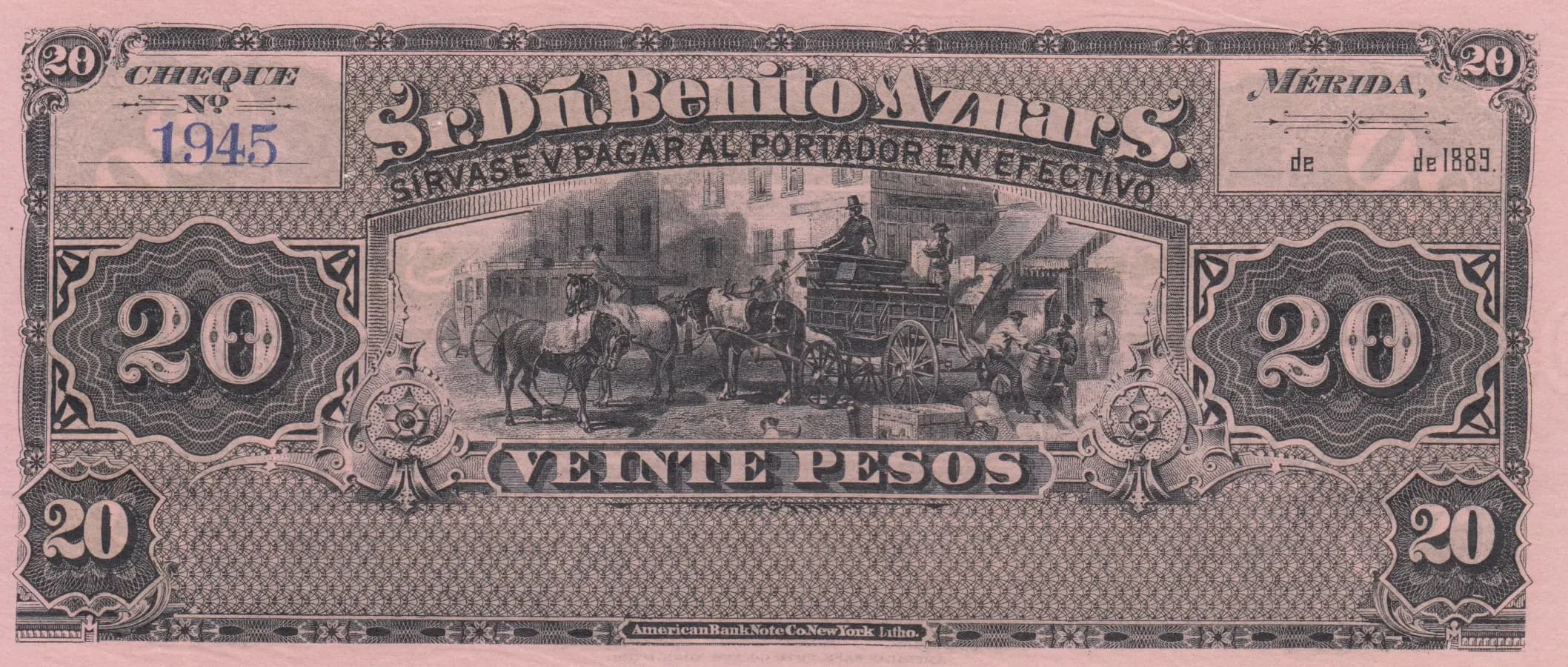
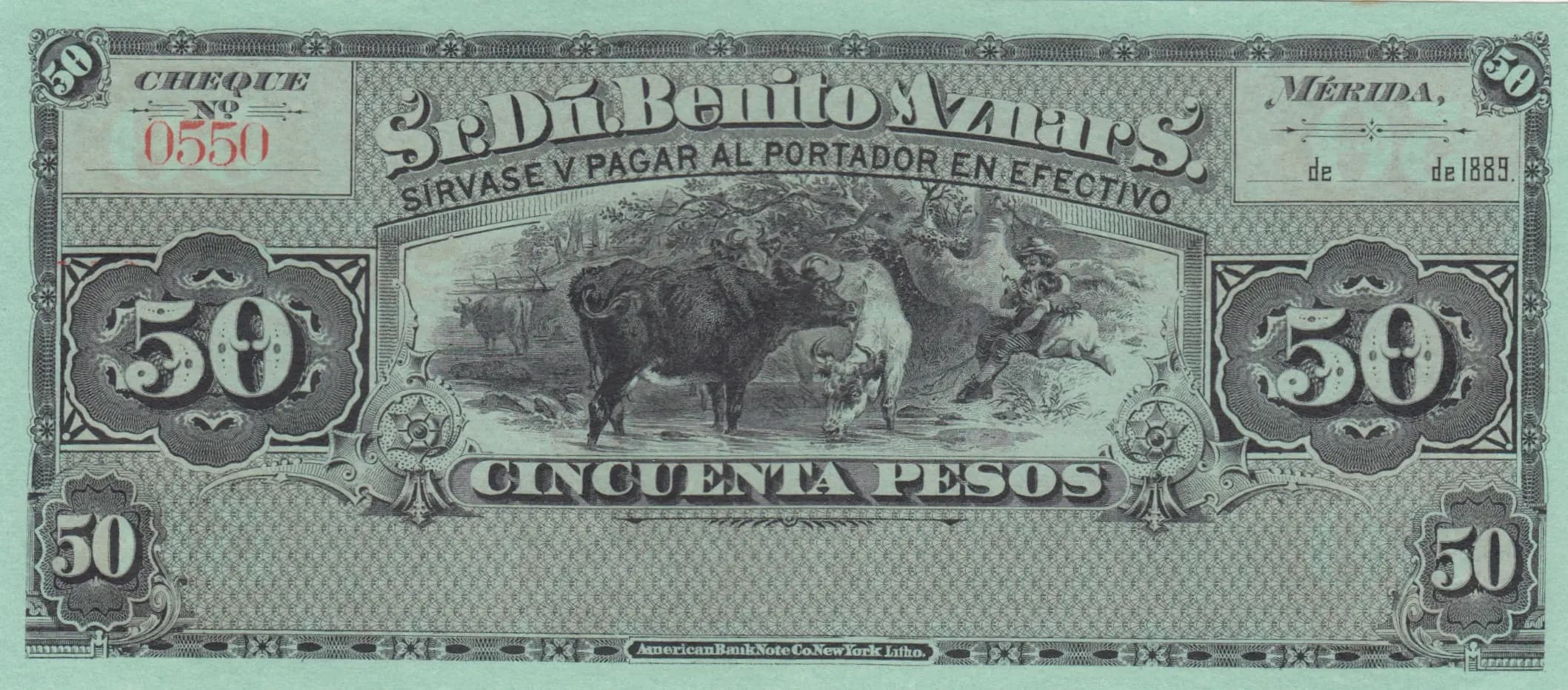
10 pesos 1900
Market Prices
About This Note
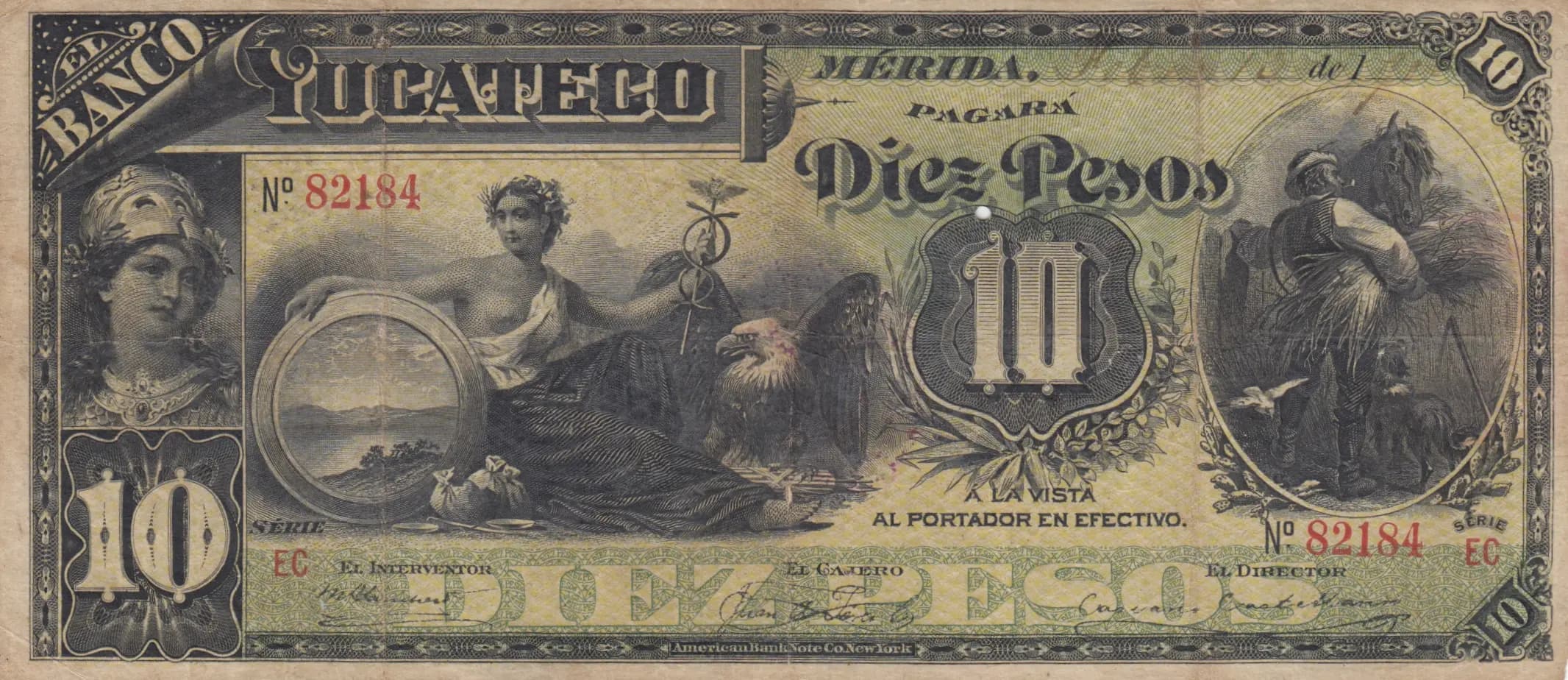
This is a Fine-grade 10 pesos banknote from Banco Yucateco, dated 1900, issued by the American Bank Note Company. The note features classical allegorical imagery including a helmeted female figure (Minerva) and an eagle, with a cream/tan background and dark engraving work. Despite showing significant aging, creasing, and foxing consistent with over a century of circulation, the intricate design and red serial number (82184) remain clearly visible, making this an interesting example of late 19th-century Mexican regional banking currency.
common. The eBay price data shows a wide range ($7.99 to $300.00 USD) with most circulated specimens selling between $65-$175 USD, indicating steady but not particularly strong collector demand. The Fine condition grade and visible circulation wear place this note in the lower-to-middle range of collector interest. Banco Yucateco issued notes regularly from 1890-1903 with multiple dated printings (13.10.1900, 1.11.1900, 29.6.1901, 28.9.1901 documented), suggesting substantial print runs. Regional Mexican banknotes from this period are generally common in circulated grades.
Banco Yucateco operated during Mexico's Porfiriato period (1876-1911) when regional banks issued their own currency under federal oversight. The classical allegorical imagery—particularly the caduceus-bearing female figure representing commerce and the eagle symbolizing Mexico—reflected the era's modernization aspirations and nationalist pride. The ABNC printing in New York underscores the period's reliance on foreign security printing expertise for high-security banknotes.
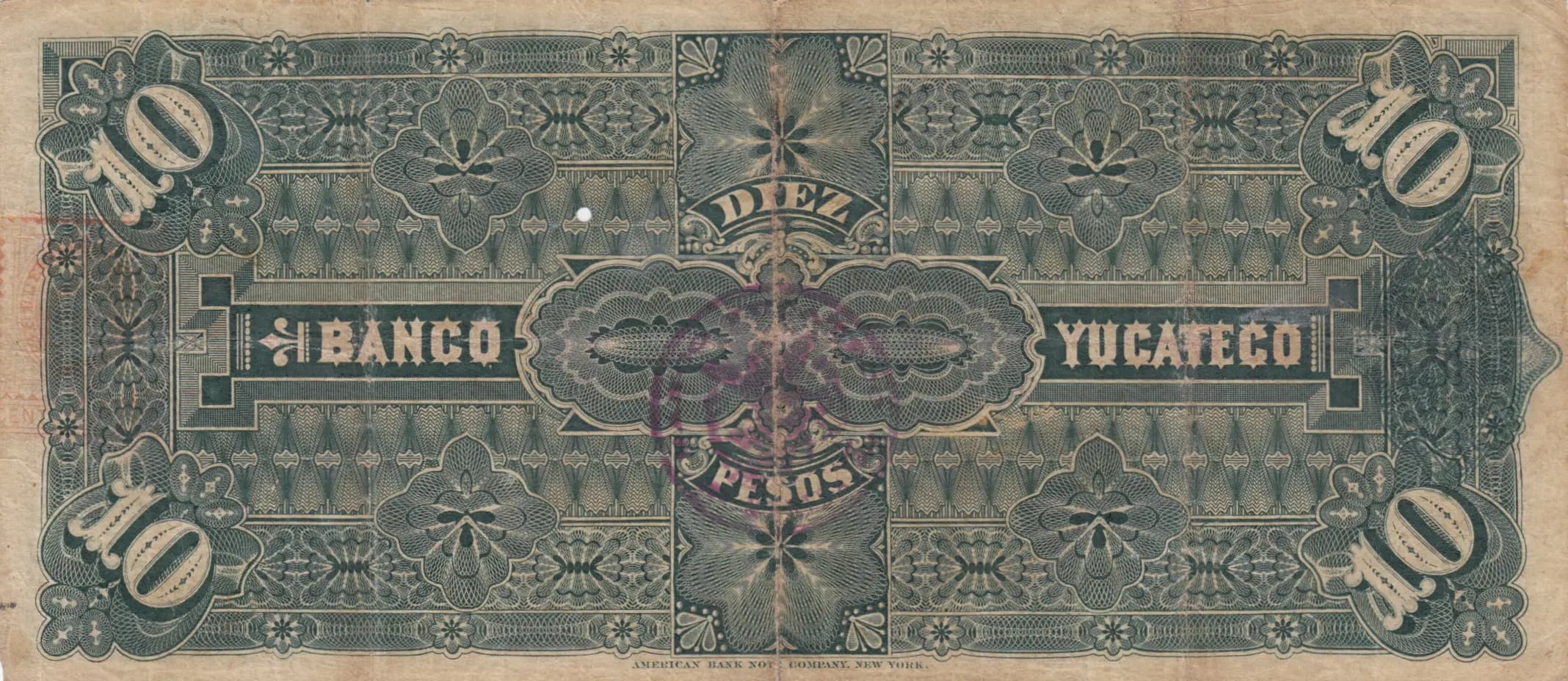
The obverse features a complex allegorical composition centered on a female figure in classical dress (representing Minerva or Mercury, associated with commerce and wisdom) holding a caduceus (Mercury's staff with intertwined serpents) and a shield containing a coastal or maritime vignette. To the left is another helmeted female figure with a laurel crown representing national emblems or Liberty. The right side displays an eagle with spread wings, the national symbol of Mexico. The denomination '10' appears in an ornate shield in the upper center. The reverse displays an intricate, symmetrical geometric and floral pattern in teal and green, with corner ornaments containing the numeral '10' in decorative ovals. The note's design emphasizes security through fine line engraving and complex repetitive patterns typical of ABNC production.
FRONT SIDE: 'BANCO YUCATECO' (Banco Yucateco Bank), 'Diez Pesos' (Ten Pesos), 'No 82184' (Serial Number 82184), 'SERIE EC' (Series EC), 'LA VISTA AL PORTADOR EN EFECTIVO' (Payable to Bearer in Cash), 'EL INTERVENTOR' (The Auditor), 'EL CAJERO' (The Cashier), 'EL DIRECTOR' (The Director), 'American Bank Note Co. New York' (American Bank Note Company, New York). BACK SIDE: 'BANCO YUCATECO' (Banco Yucateco Bank), 'PESOS' (Pesos), 'American Bank Note Company, New York' (American Bank Note Company, New York).
Intaglio (engraved) printing by the American Bank Note Company (ABNC) of New York. The fine line engraving visible throughout both sides, the complex geometric patterns, ornate decorative elements, and intricate border work are characteristic of ABNC's security printing methods. The multicolor printing (black on green and yellow underprint on obverse; teal/green on reverse) utilized separate plates for each color pass, a standard ABNC security technique of the era.
This note is identified as Pick catalog P-S468a, dated 1900. The visual analysis shows Series EC designation with serial number 82184 in red. The note represents one of the known printings from the 1890-1903 period; specific issue dates of 13.10.1900 and 1.11.1900 are documented for this denomination and design. The presence of a purple cancellation/stamp mark on the reverse suggests this particular specimen may have been withdrawn from circulation or marked for administrative purposes, a feature that should be noted as it may affect collector value relative to unmarked examples.