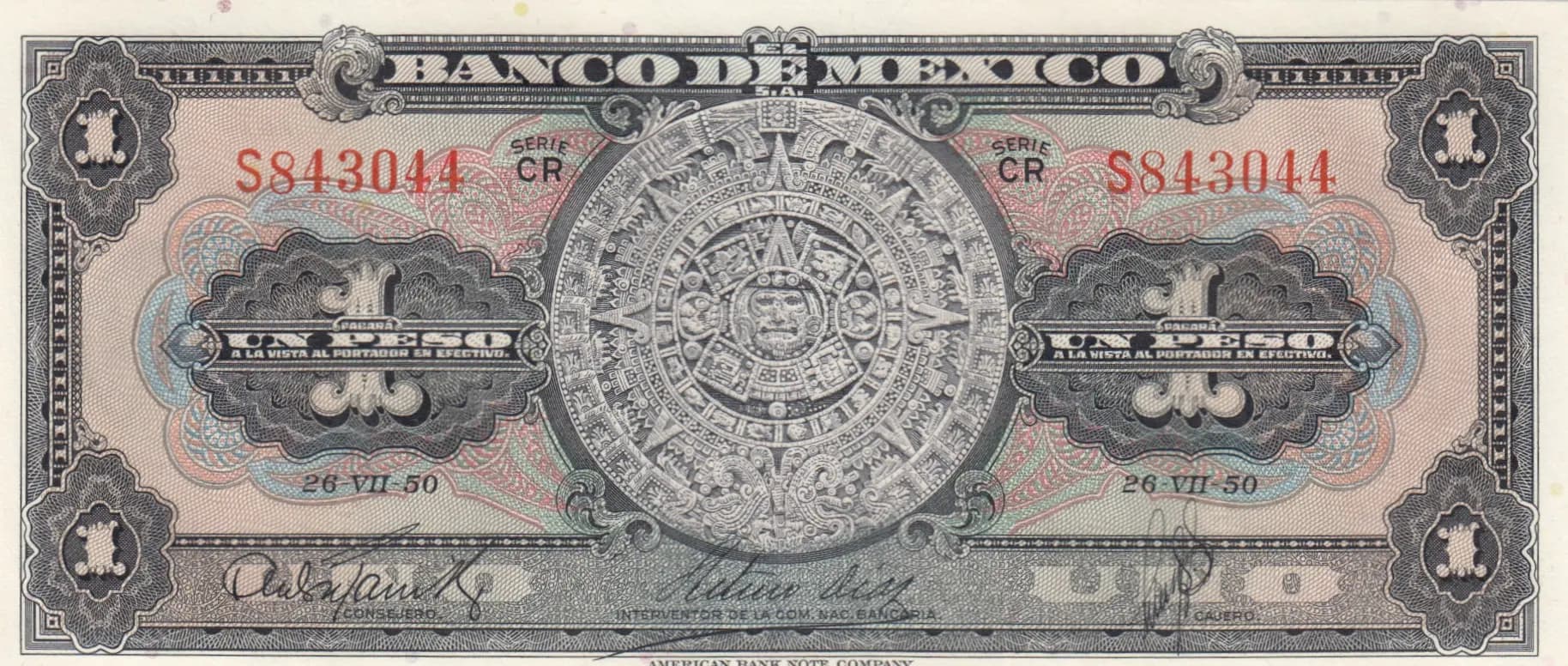
1 peso 1948
Market Prices
6 salesAbout This Note
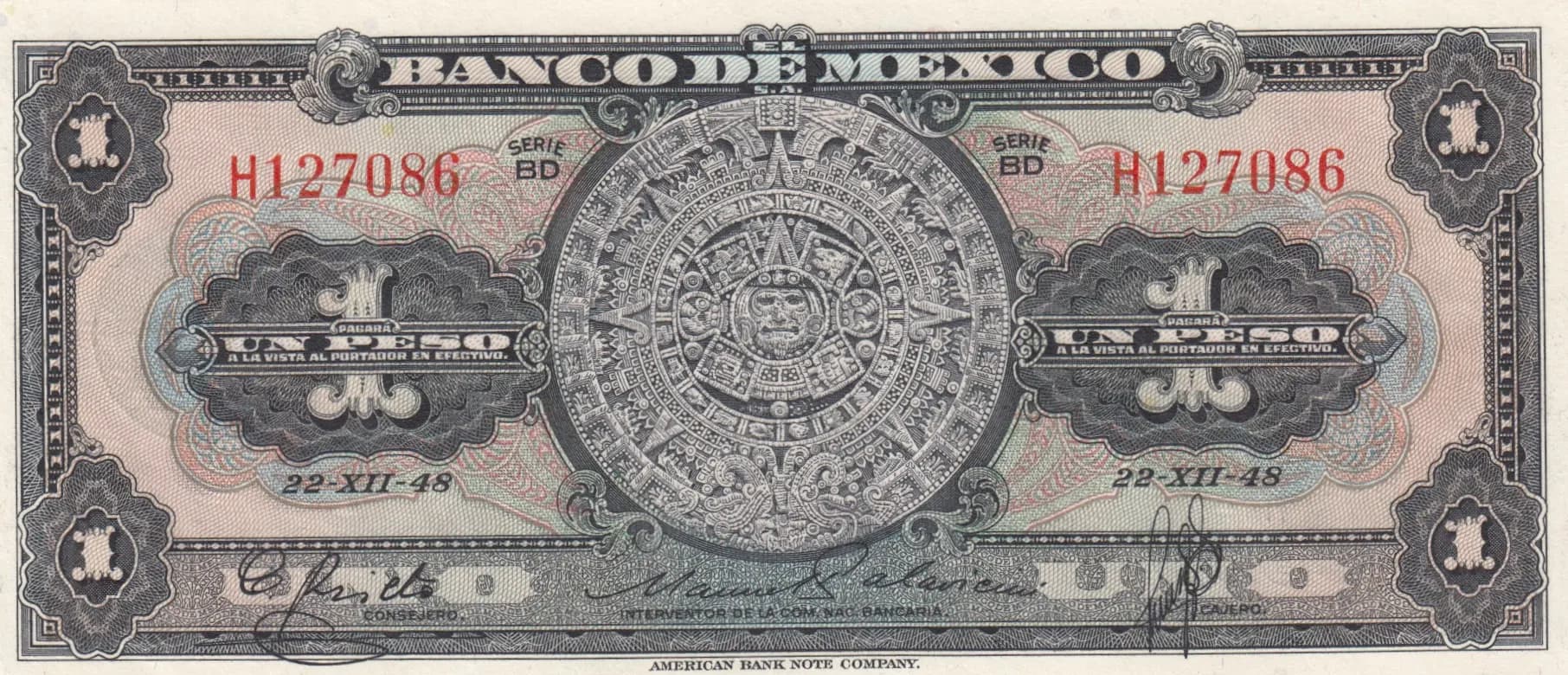
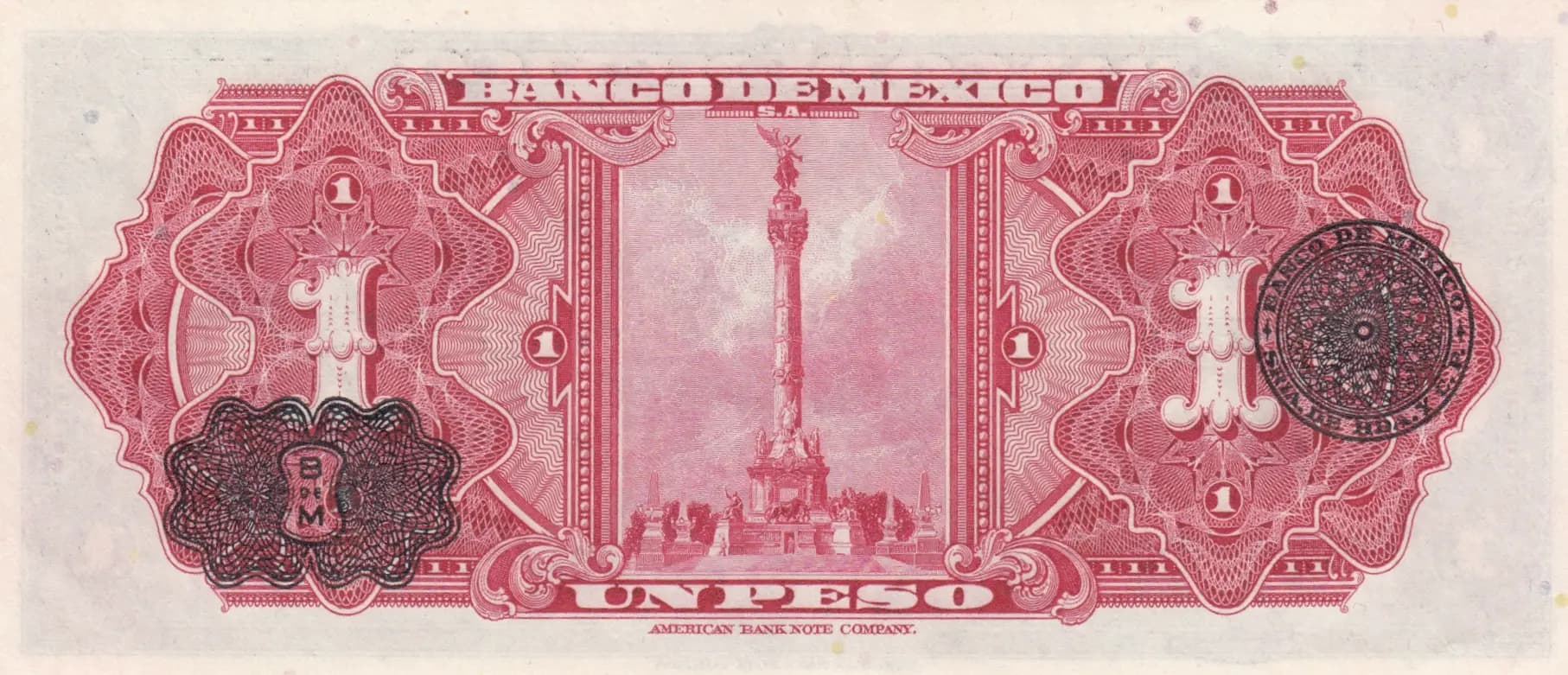
This is a 1948 Mexican 1 Peso note (Pick P-46a) issued by Banco de Mexico, presented in circulated condition despite the UNC catalog grade designation. The note features the iconic Aztec Calendar Stone (Sun Stone) on the obverse and a commemorative monument on the reverse, both rendered in attractive gray-pink and pink-red color schemes respectively. The example shows visible aging with creasing, fold marks, and yellowing typical of notes from this era that have seen handling, along with official stamp marks on the reverse.
Common. The 1948 Mexican 1 Peso is a regular issue from a major circulation period with substantial print runs. eBay market data confirms this assessment, with recent sales in lower grades (VG, F, VF) ranging from approximately $1 to $4, and even AUNC examples selling around $10. The 2016 catalog value of $6 for UNC confirms this is not a scarce issue. Despite being over 75 years old, the denomination's high circulation volume and lack of any documented rarity factors classify it as common in the numismatic market.
Issued on December 22, 1948, this note represents Mexico's post-war economic period and the Banco de Mexico's continued use of pre-Columbian imagery as national symbols. The Aztec Calendar Stone featured prominently on the obverse connected Mexico's modern identity to its indigenous heritage, while the commemorative monument on the reverse celebrated Mexican civic or historical achievements. The American Bank Note Company printing credit reflects Mexico's reliance on U.S. security printing expertise during this period.
The obverse features the renowned Aztec Calendar Stone (Sun Stone) as the central motif, surrounded by ornate decorative cornucopias positioned in all four corners, typical of mid-20th century Mexican currency design. The reverse depicts a tall commemorative monument with a statue crowning its top, flanked by symmetrical eagle emblems within ornate cartouches on either side. Both sides incorporate elaborate Baroque-style architectural framing with complex guilloché patterns and geometric borders. The color scheme transitions from gray and pink tones on the front to predominantly pink and red on the reverse, characteristic of the 1948 issue design executed by the American Bank Note Company.
FRONT: 'BANCO DE MEXICO' (Bank of Mexico), 'SERIE BD' (Series BD), Serial number H127086, '22·XIII·48' (22 December 1948 in Roman numerals), 'LA VISTA AL PORTADOR EN EFECTIVO' (Payable to bearer on sight in cash), 'AMERICAN BANK NOTE COMPANY'. BACK: 'BANCO DE MEXICO' (Bank of Mexico), 'UN PESO' (One Peso), 'AMERICAN BANK NOTE COMPANY'.
Intaglio (engraved) printing, the standard security printing method for banknotes of this era. The detailed engraving of the Aztec Calendar Stone, fine line work throughout the guilloché patterns, and the complex architectural elements on the reverse are all hallmarks of intaglio production. The American Bank Note Company, one of the world's premier security printers, executed this design, as credited on both sides of the note.
Series BD is noted on this example. The specific date of issue is 22·XIII·48 (December 22, 1948). The serial number H127086 appears to be in red ink, consistent with the series designation. Known varieties for P-46a may exist with different series letters and date variations corresponding to different printing batches, but the basic design remained consistent throughout the 1948 issuance. No overprints or special markings beyond the standard official validation stamps are evident on this particular note.