2 mark 1922
About This Note
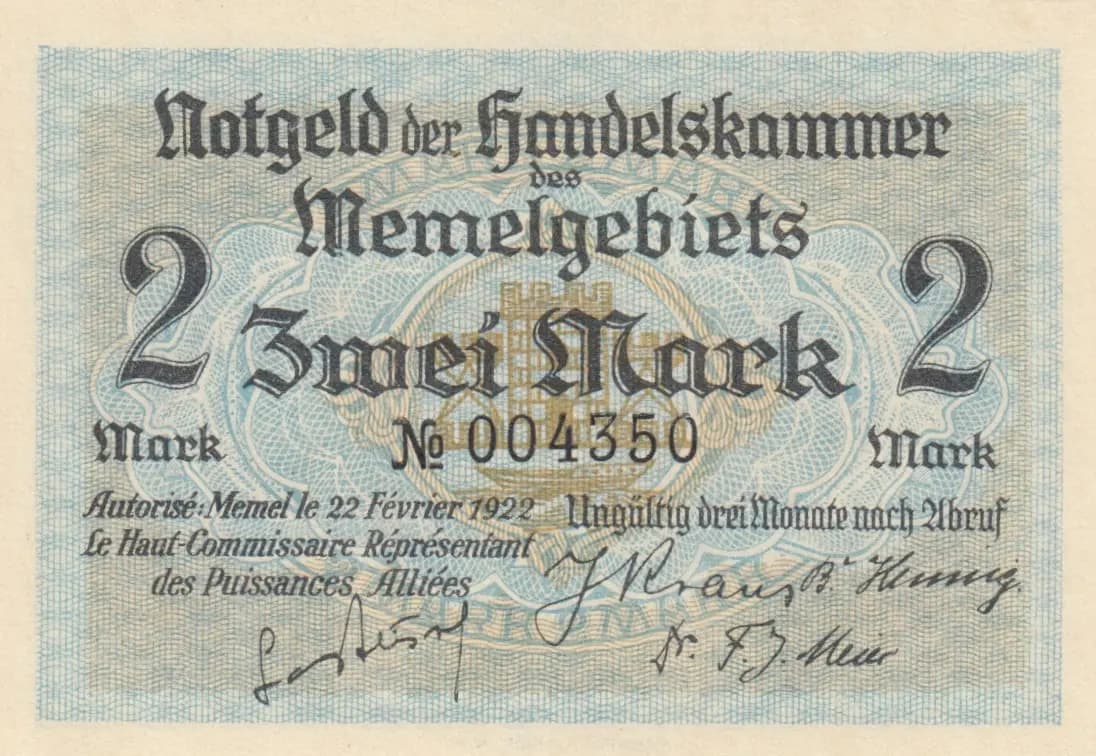
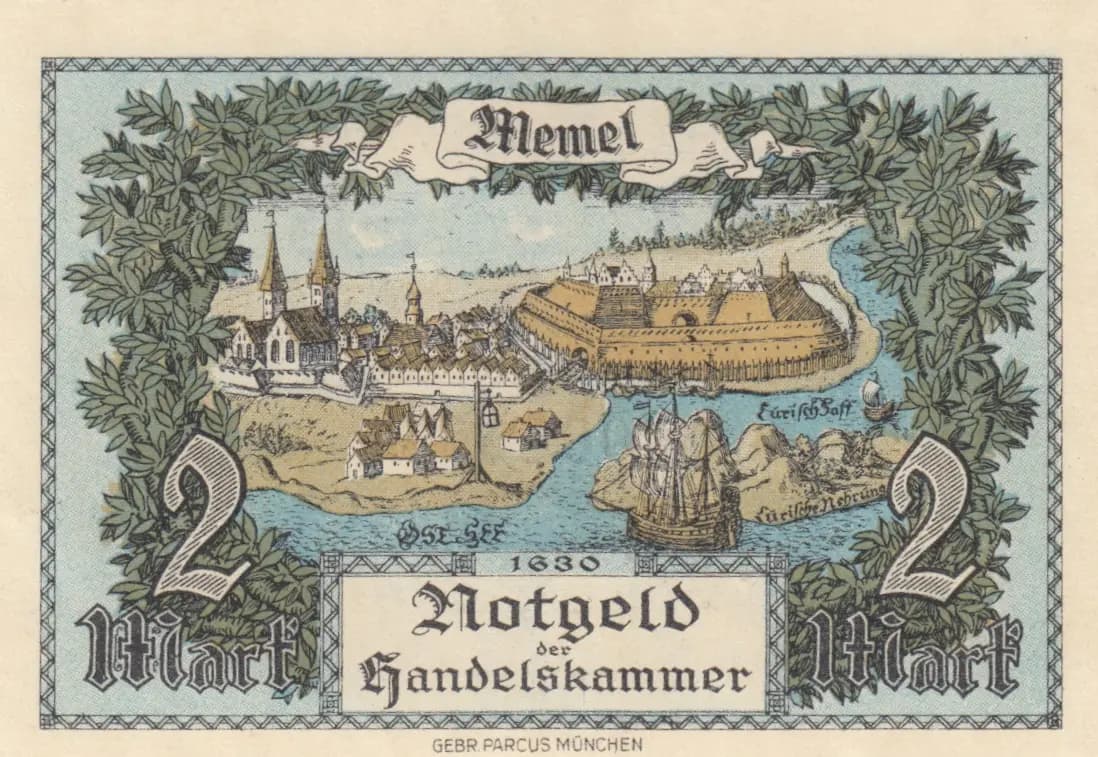
This is a Memel 2 Mark Notgeld from 1922 issued by the Handelskammer (Chamber of Commerce) in UNC condition. The note features ornate Gothic typography and a striking reverse design depicting a historical view of Memel dated 1630, framed by a laurel wreath. The bilingual inscriptions in German and French reflect the international administration of the Memel territory during this post-WWI period, making it a significant example of emergency currency from a culturally and politically important region.
Common. Memel Notgeld from 1922 was produced in substantial quantities by the Handelskammer to address circulating currency needs during the transition period. The Pick-3b designation indicates this is a cataloged variety from the standard series. UNC examples are not exceptional; these notes were functional emergency currency rather than limited commemorative issues. Serial number 004350 suggests mid-range production numbering consistent with normal circulation quantities.
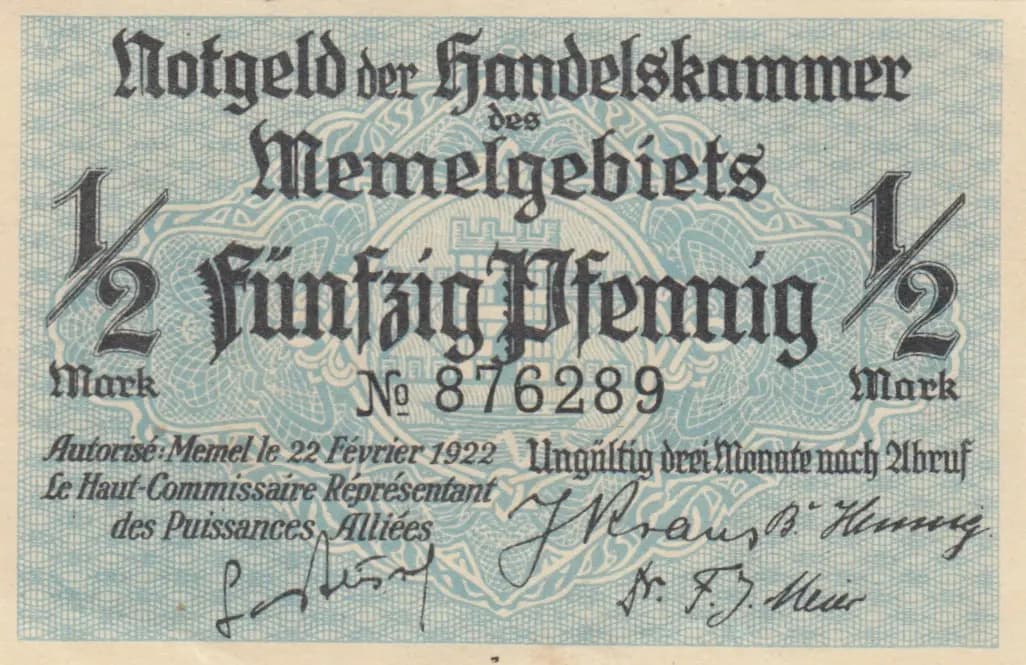
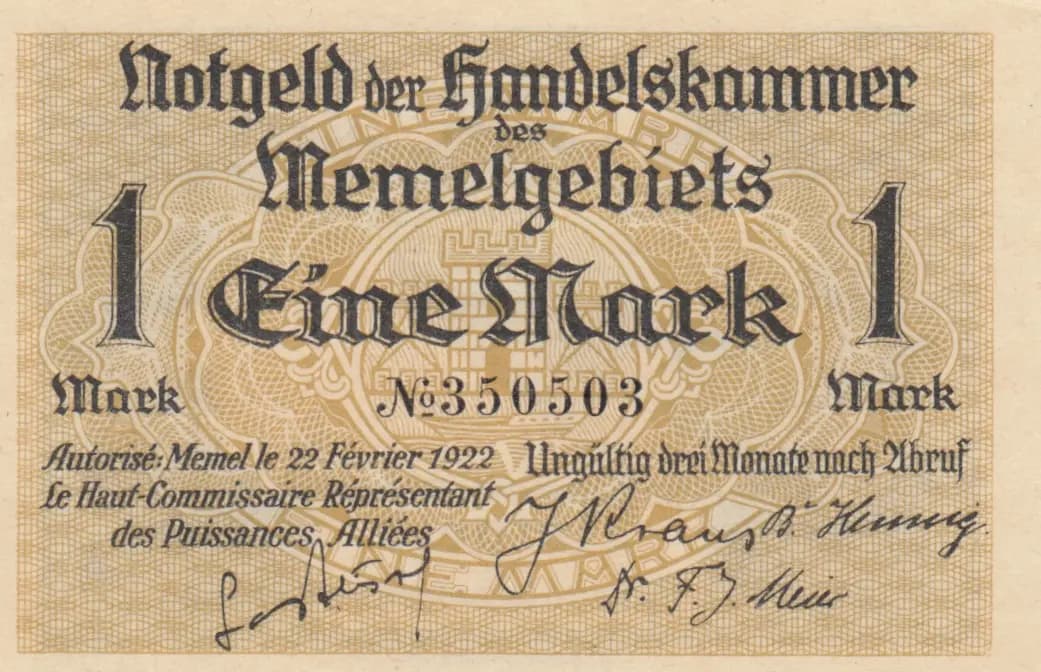
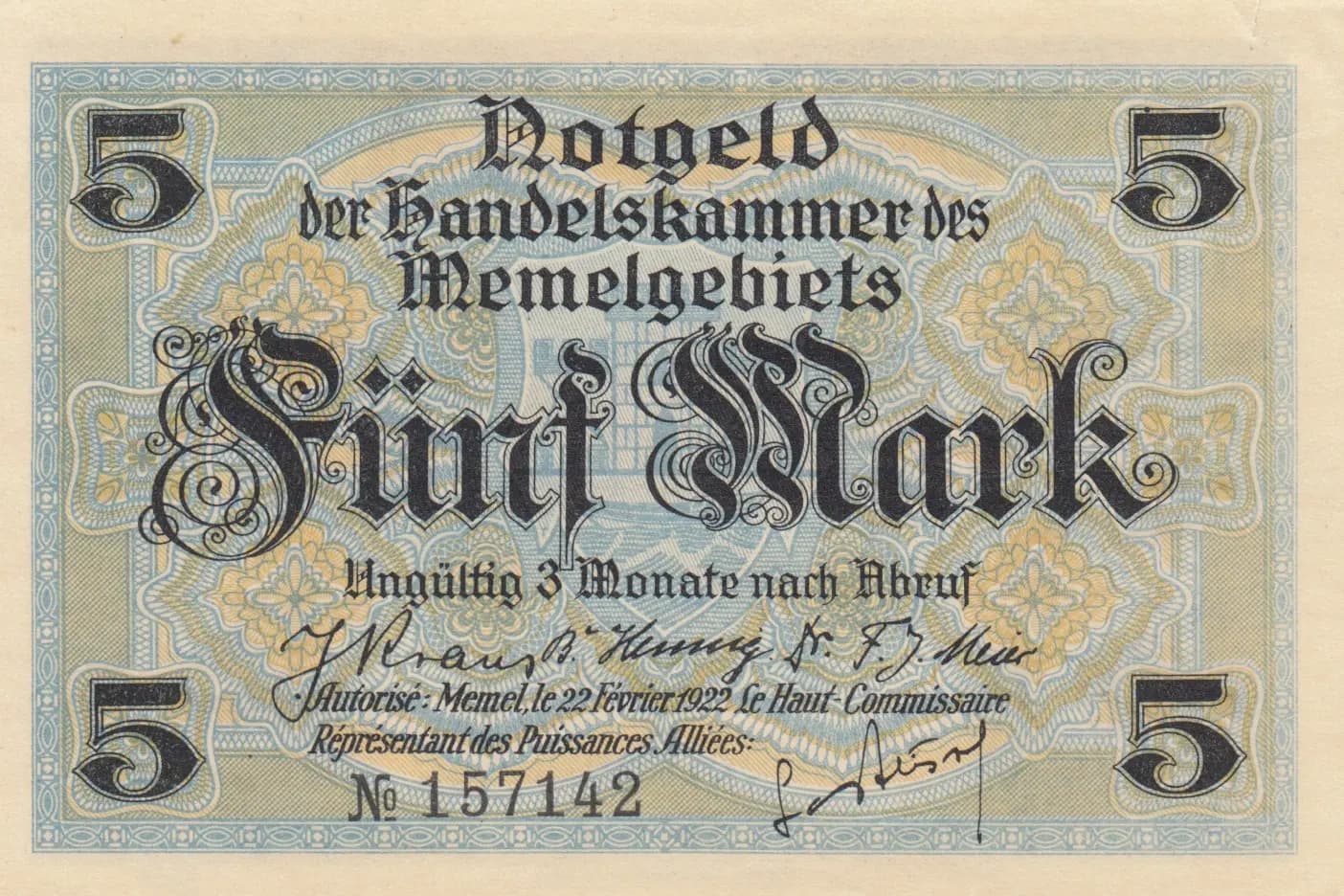
The Memel territory, located on the Baltic coast, was placed under League of Nations administration following World War I. This Notgeld was authorized on 22 February 1922 by the High Commissioner representing the Allied Powers, reflecting the region's transitional status. The reverse illustration showing Memel's fortified port city dated 1630 celebrates the region's historical importance as a Baltic trading center, while the emergency currency designation underscores the monetary instability and transitional governance of post-war Eastern Europe.
The obverse features a formal administrative design with Gothic-style typography and cross motifs centered between large denomination numerals on left and right margins. The reverse showcases a detailed historical landscape engraving of Memel's medieval port city as it appeared in 1630, complete with fortification walls, church spires, sailing vessels on the waterway, and civic architecture, all enclosed within an ornamental laurel wreath frame. The coastal settlement depicted represents the historic significance of Memel (Klaipėda) as a major Baltic trading post. The bilingual French-German inscriptions and signatures reflect the international League of Nations administration. The fine-line engraving technique and decorative guilloche patterns provide visual security.
FRONT SIDE: 'Notgeld der Handelskammer des Memelgebiets' (Emergency money of the Chamber of Commerce of the Memel territory); '2 Zwei Mark 2' (2 Two Mark 2); Serial number 'No 004350'; 'Autorisé Memel le 22 Février 1922' (Authorized Memel on 22 February 1922); 'Ungültig drei Monate nach Abruf' (Invalid three months after recall); 'Le Haut-Commissaire Représentant des Puissances Alliées' (The High Commissioner Representative of the Allied Powers); Signatures of 'L. Deschamps' and 'E. Diller'. REVERSE SIDE: 'Memel' (town name); 'Ost-See' (Baltic Sea); '1630' (historical date); '2 Mark 2'; 'Notgeld der Handelskammer' (Emergency money of the Chamber of Commerce); 'GEBR PARCUS MÜNCHEN' (printer attribution - Gebr. Parcus, Munich).
Intaglio engraving/line engraving process, characteristic of high-quality Notgeld production. The printer Gebr. Parcus (Brother Parcus) of Munich, a prominent security printer of the Weimar period, produced this note. Security features include fine guilloche line patterns in the background, detailed engraved landscape illustration on the reverse, and handwritten signature authentication by authorized officials.
Pick-3b specifically denotes this as the 2 Mark denomination from the 1922 Memel Handelskammer series. Varieties within this Pick number typically relate to signature combinations (Deschamps and Diller noted here), date variations, and serial number ranges. The noted authorization date of 22 February 1922 and the specific three-month validity clause are consistent with Pick-3b specifications. No notable overprints or date varieties are evident on the observed specimen.