100 mark 1922
About This Note
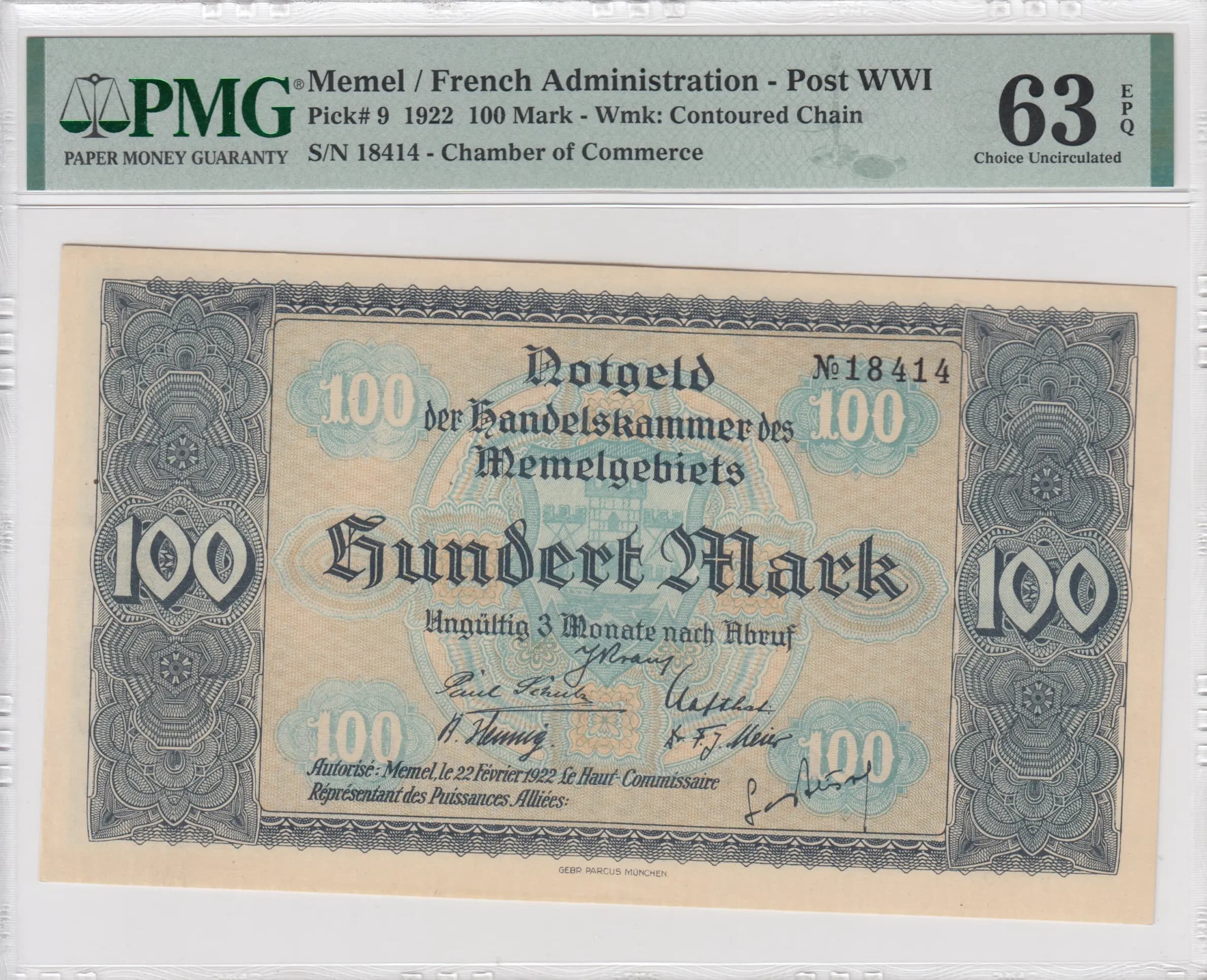
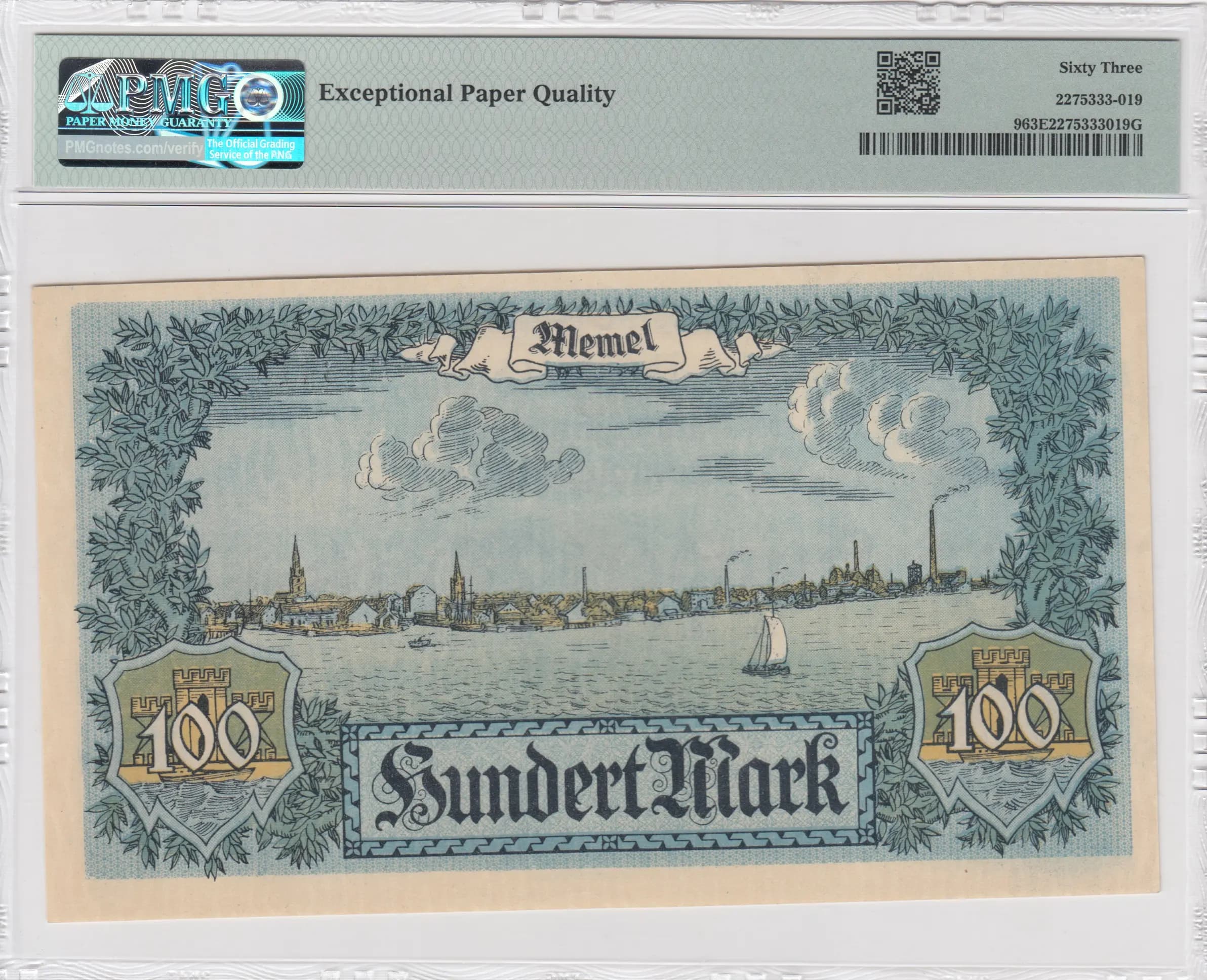
This is a PMG 63 EPQ 100 Mark Notgeld note from the Memel Territory, issued by the Handelskammer in 1922 following the post-WWI French occupation. The note displays exceptional uncirculated condition with pristine paper quality, vibrant colors, and intricate fine-line engraving throughout. The reverse features a detailed scenic vignette of the Memel cityscape with harbor, church spires, and industrial elements—a hallmark of high-quality emergency currency from this historically significant territorial period.
Common. This is a standard Handelskammer Notgeld from a well-documented territorial issue. While Memel notes have historical significance due to the region's post-WWI status under League of Nations mandate, 100 Mark denominations were issued in sufficient quantities for the territory's commercial needs. The PMG 63 EPQ grade is desirable but does not indicate rarity of the type itself—many examples exist in collections. Notgeld from this period and region remain relatively accessible to collectors, though high-grade examples command modest premiums over lower grades.
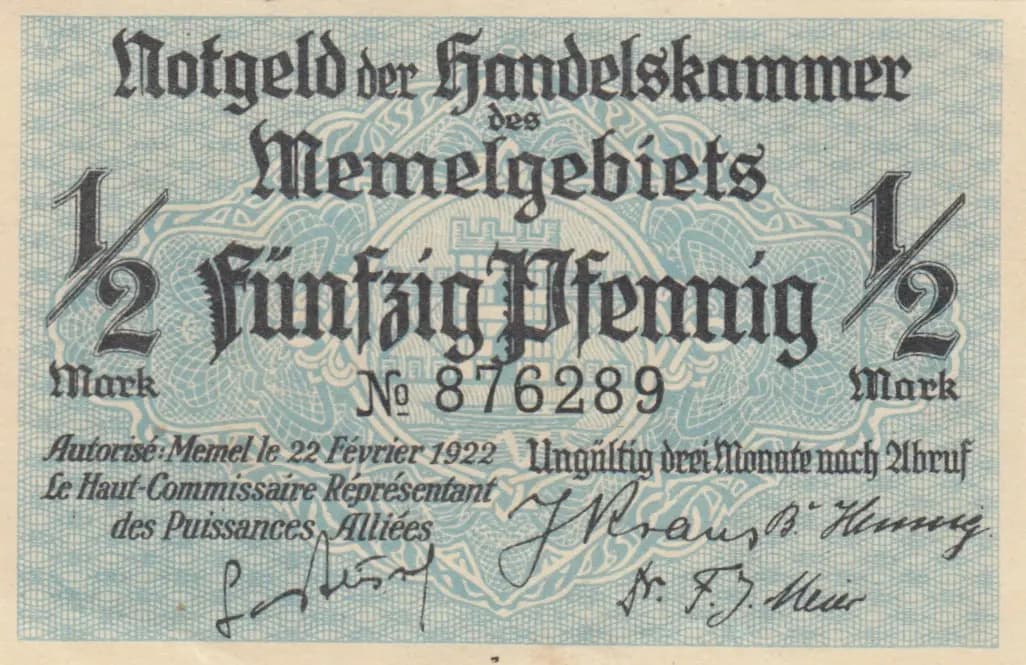
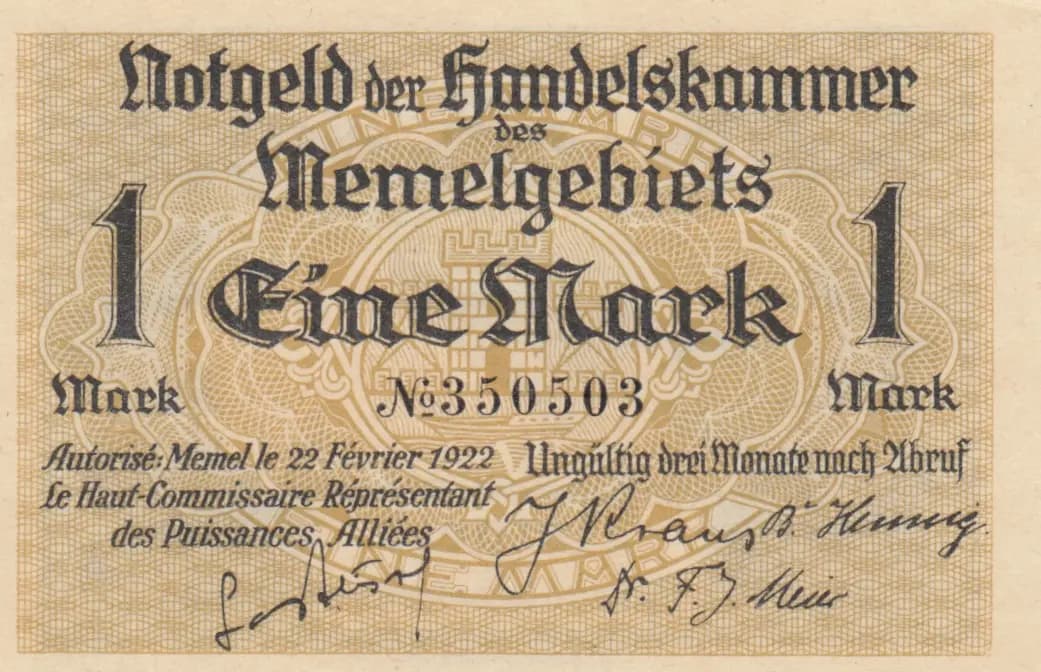
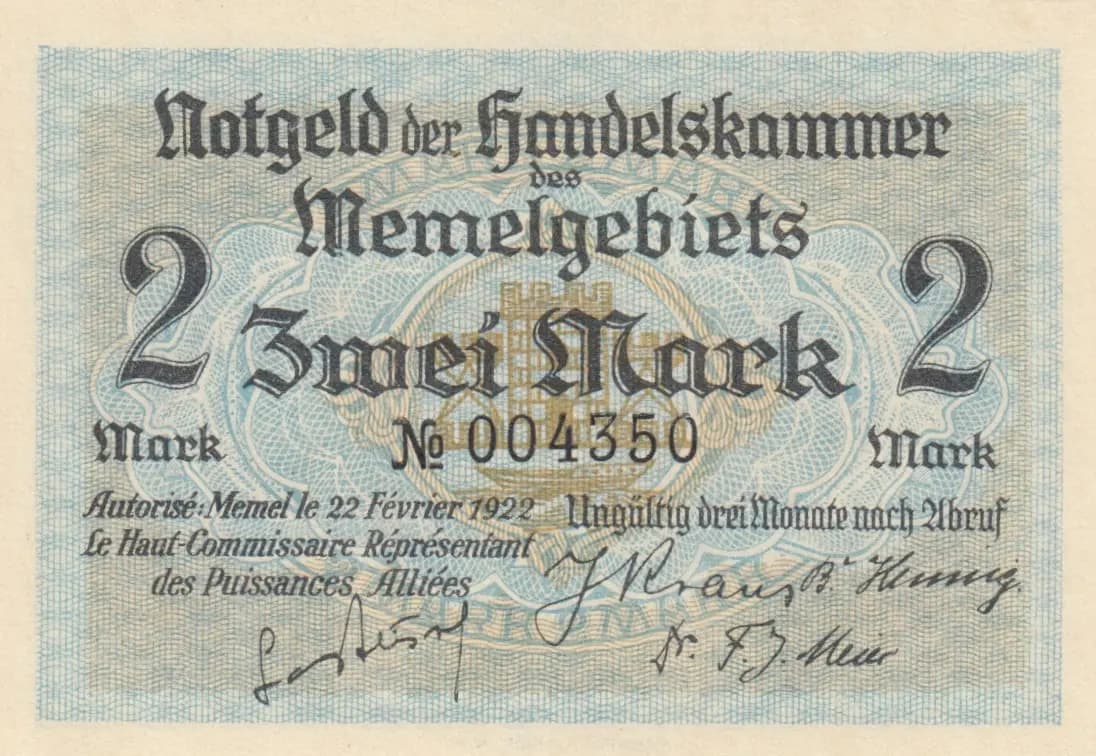
This Notgeld was authorized on February 22, 1922, during the French Administration of Memel, a territory under League of Nations mandate following World War I. The issuer, the Handelskammer (Chamber of Commerce) of the Memel Territory, issued emergency currency to address liquidity shortages in this economically troubled region. The reverse's depiction of Memel's industrial and maritime infrastructure—complete with smokestacks, sailing vessels, and prominent church spires—reflects the city's importance as a Baltic port and commercial center during this tumultuous interwar period.
The front features an ornate formal design with cream and beige background framed by dark blue-black decorative geometric borders on the left and right margins. Central light blue circular rosette designs flank the denomination '100,' with German text identifying this as emergency currency issued by the Memel Chamber of Commerce. The reverse presents a meticulously engraved scenic vignette depicting the Memel cityscape with its defining characteristics: a active harbor or river waterfront with a sailing vessel, church spires rising prominently above residential and commercial buildings, and industrial smokestacks indicating the city's manufacturing base. The landscape is rendered in fine detail against a light blue-green background, surrounded by an ornate botanical and leaf-motif border frame with decorative corner flourishes. Shield-shaped cartouches at the bottom corners contain the denomination. This design emphasizes Memel's identity as a significant Baltic commercial and industrial center.
{"front":{"notgeld":"Notgeld (Emergency Money)","issuer":"der Handelskammer des Memelgebiets (of the Chamber of Commerce of the Memel Territory)","denomination_text":"Hundert Mark (One Hundred Mark)","denomination_numeric":"100","validity":"Ungültig 3 Monate nach Rheuf (Valid for 3 months after [issuance/date])","serial":"№18414","authorization":"Autorisé-Memel, le 22 février 1922, le Haut Commissaire (Authorized - Memel, February 22, 1922, the High Commissioner)","allied_authority":"Représentant des Puissances Alliées (Representative of the Allied Powers)","printer":"GEBR. MARCUS MÜNCHEN (Gebr. Marcus printing house, Munich)"},"back":{"location":"Memel (Memel)","denomination_text":"Hundert Mark (One Hundred Mark)","denomination_numeric":"100"}}
This note was produced by Gebr. Marcus (Gebrüder Marcus) of Munich using fine-line engraving and intaglio printing techniques, as evidenced by the extremely detailed line work, intricate geometric patterns in the borders, complex scenic vignette on the reverse, and the fine contoured engraving throughout. The precision of the decorative elements, floral borders, cityscape rendering, and overall crispness characteristic of high-quality intaglio work indicates professional security printing typical of reputable German printing houses of the early 1920s. The security features include fine line engraving patterns and a contoured chain watermark.
Serial number observed: №18414. This note represents the standard 1922 issue authorized February 22, 1922. Known varieties for Pick P-9 may include different serial number ranges and potentially different signature varieties on signature lines, though the primary identifying characteristics remain consistent: 100 Mark denomination, Handelskammer der Memelgebiets issuer, Memel cityscape reverse, and GEBR. MARCUS MÜNCHEN printer attribution. The contoured chain watermark is a consistent security feature across this issue.