10 mark 1922
About This Note
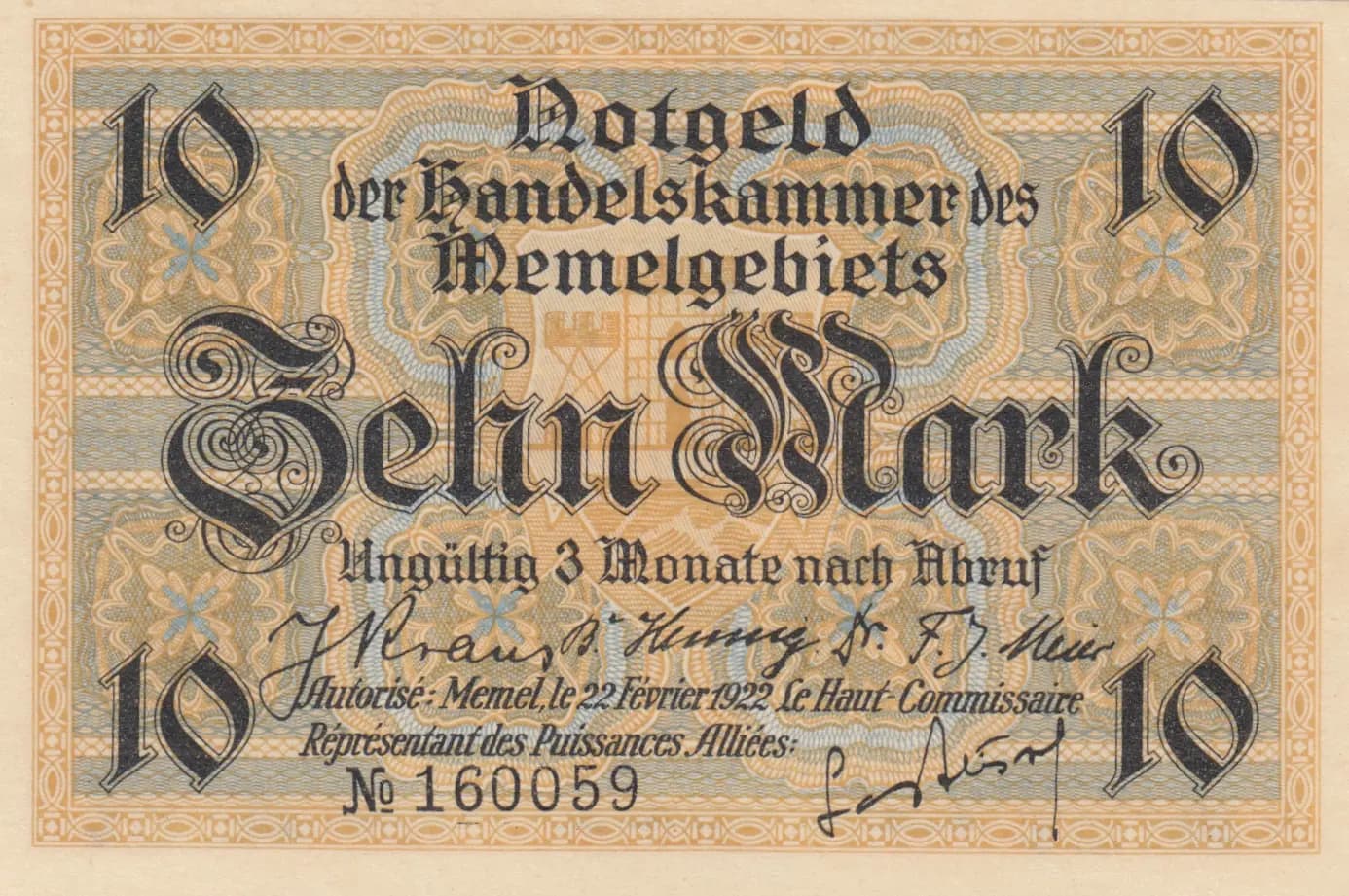
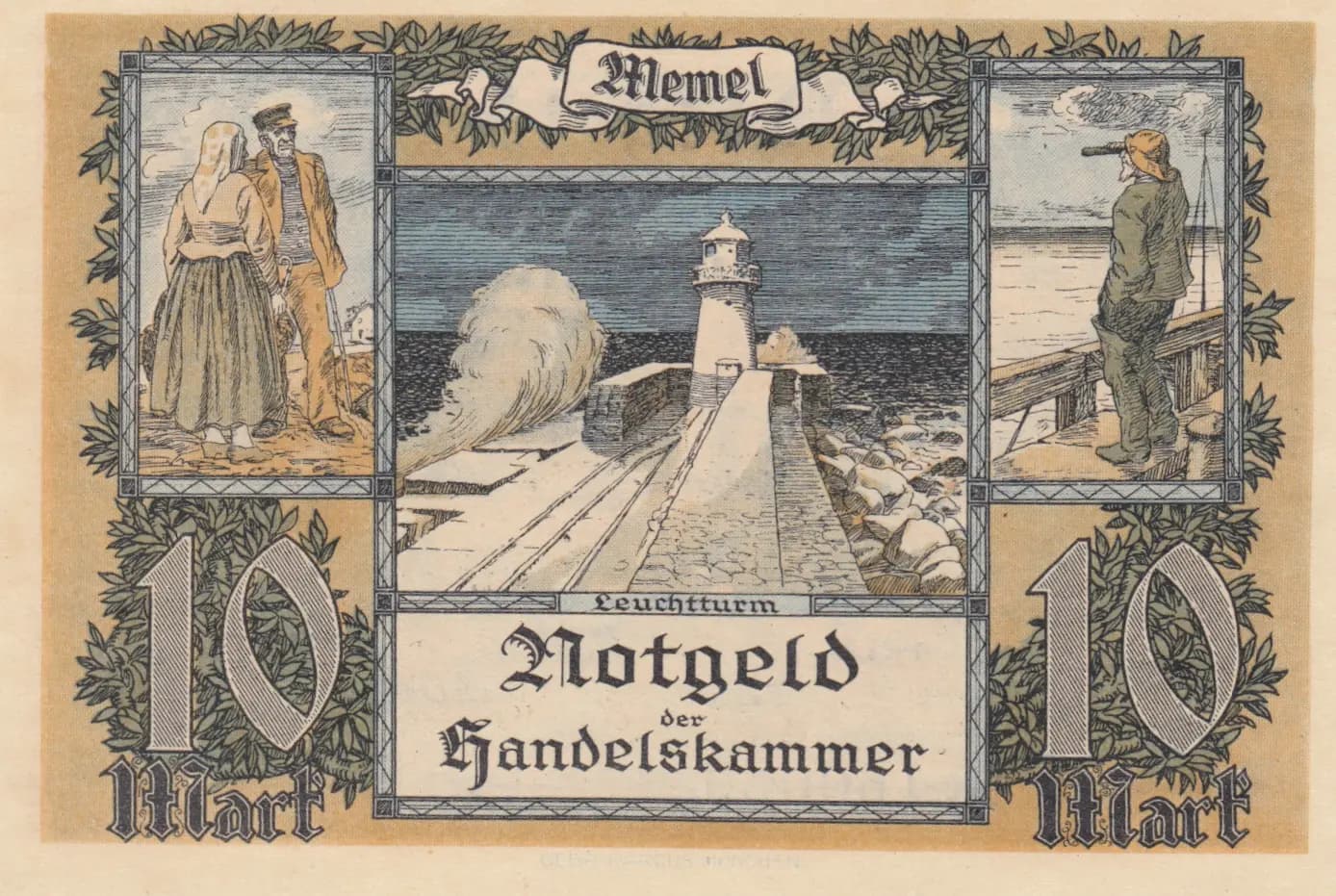
This is a 10 Mark Notgeld (emergency money) issued by the Handelskammer des Memelgebiets on February 22, 1922, during the League of Nations administration of the Memel territory. The note is presented in uncirculated condition with crisp, well-preserved colors and sharp engraving details throughout. The reverse features a striking illustration of the Memel lighthouse on a rocky Baltic coast with traditional regional vignettes, making this an exceptional example of interwar Memel emergency currency that combines historical significance with artistic merit.
common. Memel Notgeld issues from 1922, particularly the Handelskammer series, were produced in substantial quantities to meet the region's currency needs during the post-war period. While the territory's brief independence and unique international status creates collecting interest, these notes were not subject to significant recall or destruction, and examples survive in reasonable numbers across condition grades. The Pick 5 10 Mark denomination remains readily available on the collector market.
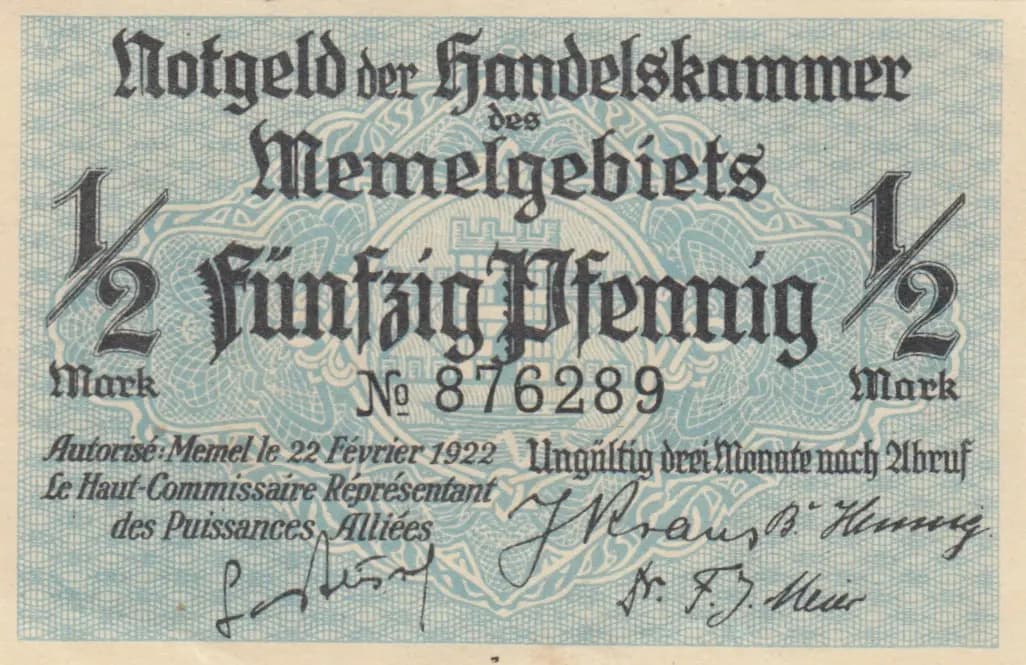
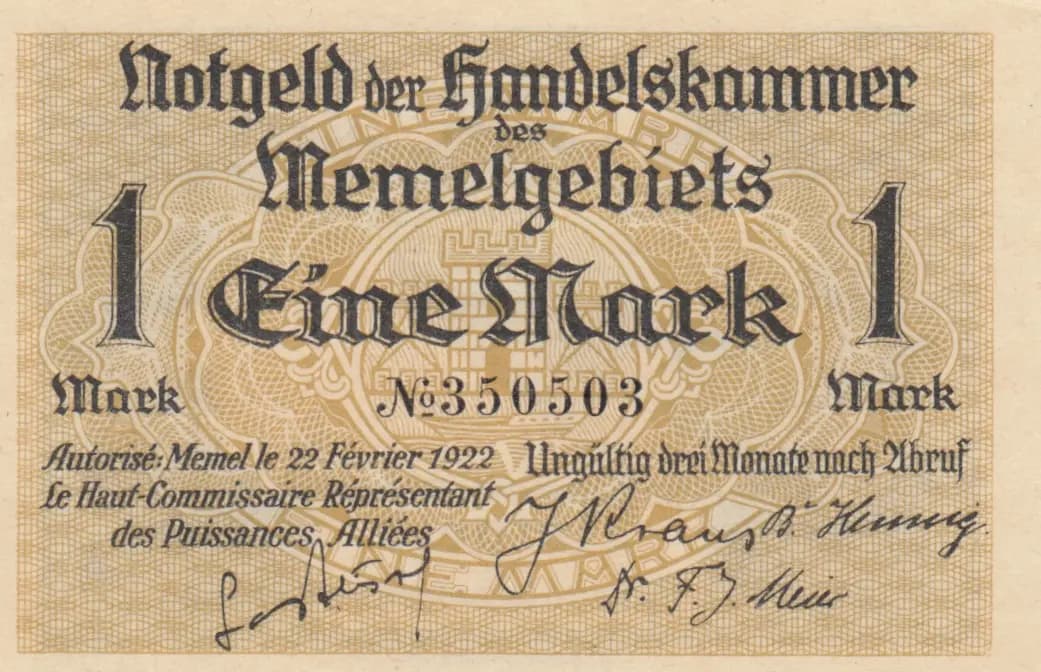
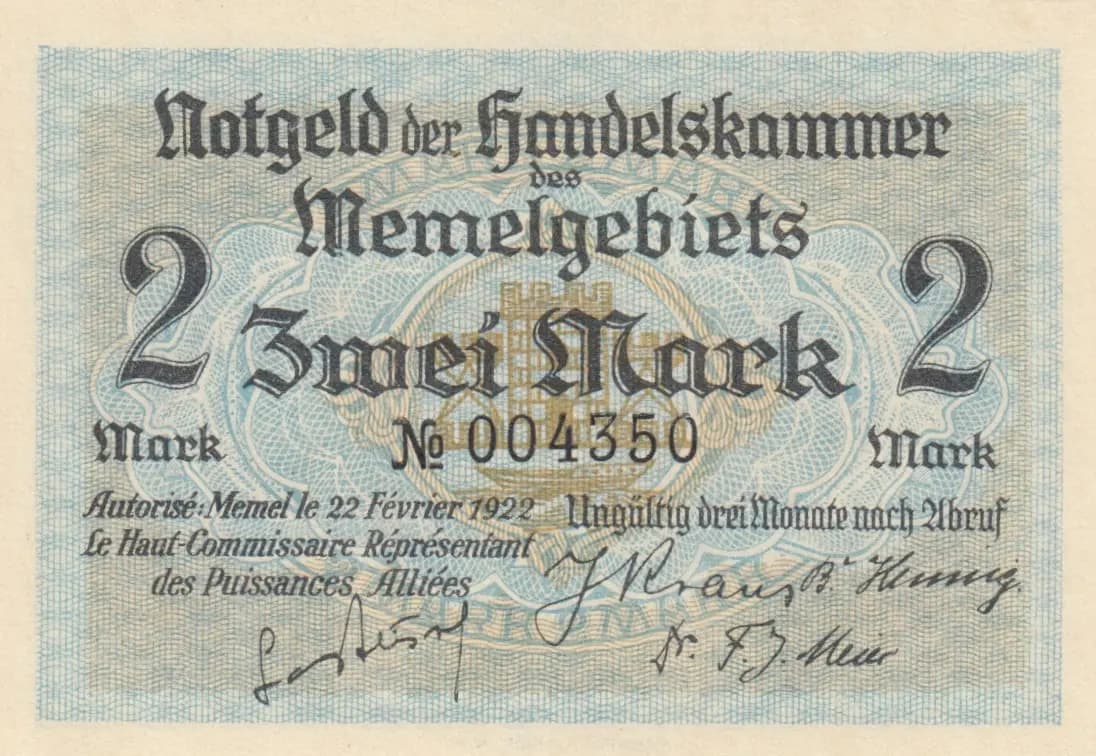
This banknote was issued during the unique post-World War I period when Memel (modern-day Klaipėda, Lithuania) was under League of Nations mandate administration. The French and German mixed inscriptions, including references to 'le Haut-Commissaire' and 'Représentant des Puissances Alliées,' reflect the territory's status as an international zone administered by Allied powers. The lighthouse depicted on the reverse is the historic Memel lighthouse, a symbol of the region's Baltic maritime heritage and economic importance during this turbulent era of territorial reorganization.
The front features a formal, administratively-styled layout with Gothic Germanic script and an ornate geometric border incorporating floral elements in the corners. Two large '10' denominations appear in opposite corners. Multiple handwritten signatures authenticate the note in the lower section, with the serial number 160059 printed centrally below. The reverse displays an elaborate engraved vignette composition with the Memel lighthouse as the dominant central feature, rendered realistically on a rocky Baltic coastline with a sailing vessel on the water and a stone breakwater. Flanking the central scene are ethnographic vignettes: on the left, figures in traditional Memel regional dress with period head coverings; on the right, a sailor or harbor worker in olive-green uniform gazing toward the sea. Large ornamental '10' numerals frame the composition with leafy decorative borders, emphasizing the artistic quality of this Chamber of Commerce issue.
FRONT: 'Notgeld der Handelskammer des Memelgebiets' (Emergency money of the Chamber of Commerce of the Memel region); 'Zehn Mark' (Ten Mark); 'Ungültig 3 Monate nach Abruf' (Invalid 3 months after call); 'Memel, le 22 Février 1922' (Memel, February 22, 1922); 'le Haut-Commissaire, Représentant des Puissances Alliées' (The High Commissioner, Representative of the Allied Powers); Serial number 'No 160059'. BACK: 'Memel' (banner at top); 'Leuchtturm' (Lighthouse); 'Notgeld der Handelskammer' (Emergency money of the Chamber of Commerce).
Engraved intaglio printing, typical of high-quality Notgeld issues of the period. The detailed lighthouse vignette, fine line work in the geometric borders, and sharp definition of the portrait figures indicate professional engraving. The color application (tan/cream base with black and blue-grey accents) is consistent with multi-color intaglio production. The handwritten signatures were added post-printing as a security and authenticity feature common to 1922 emergency currency issues.
Serial number 160059 observed. This specific note represents the standard 1922 issue dated February 22, 1922. Varieties within the Handelskammer series may include different serial number prefixes and ranges, as well as variations in handwritten signature placement and issuer designations. The consistent reference to the Allied High Commissioner indicates this is from the regulated period of League of Nations administration (1920-1923). No overprints or secondary markings are apparent.