10 rupees 1967
Market Prices
16 salesAbout This Note
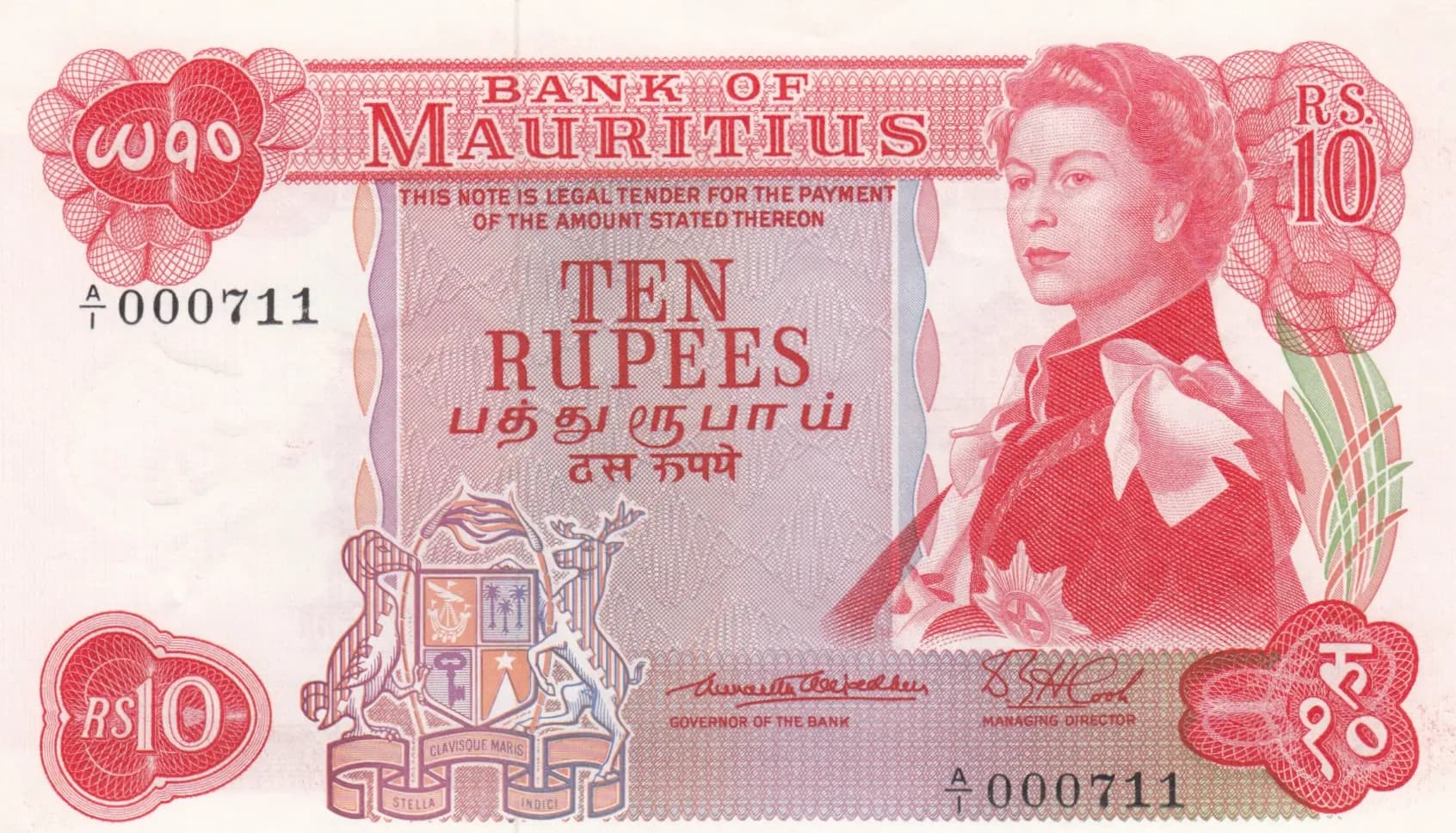
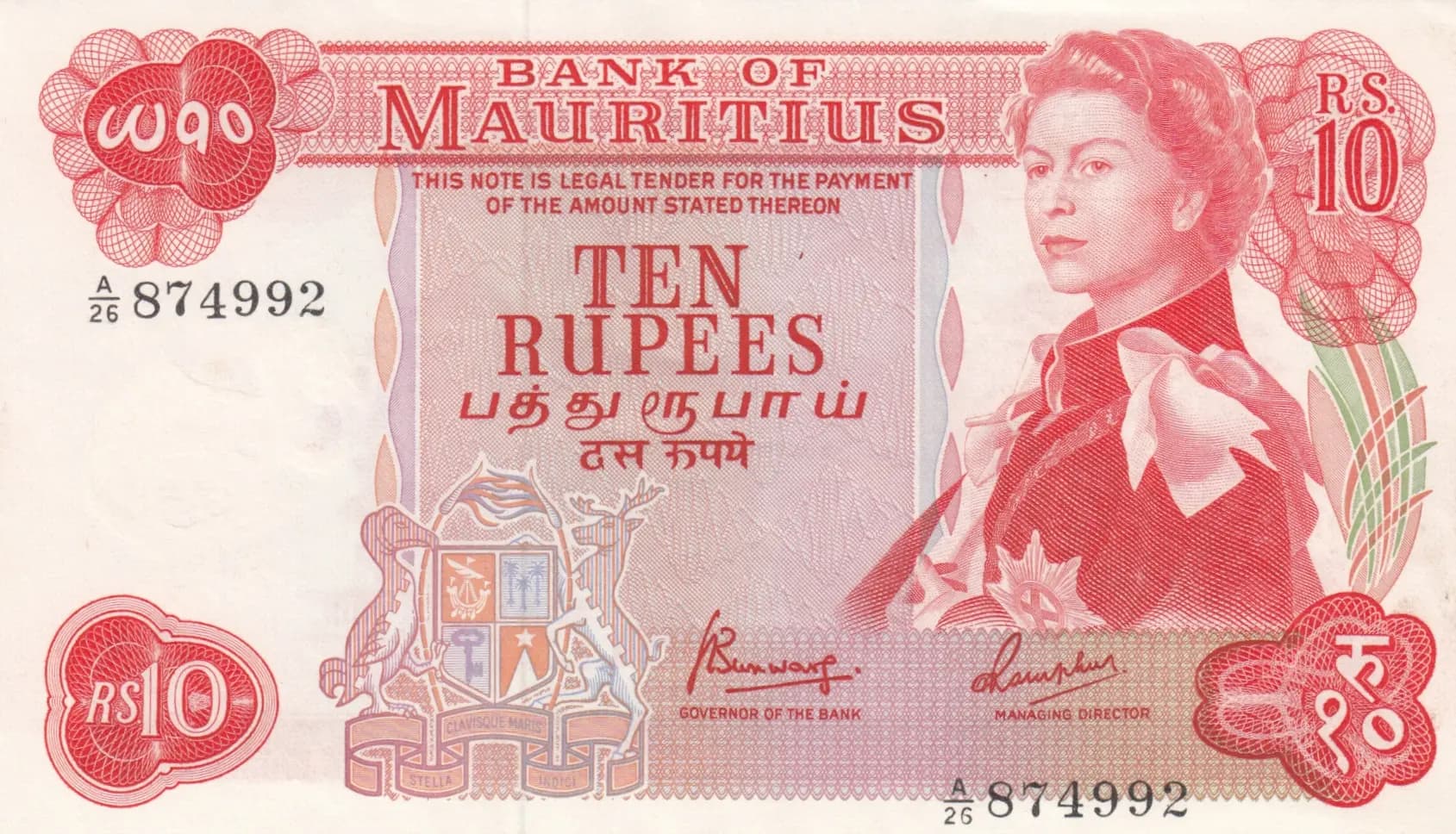
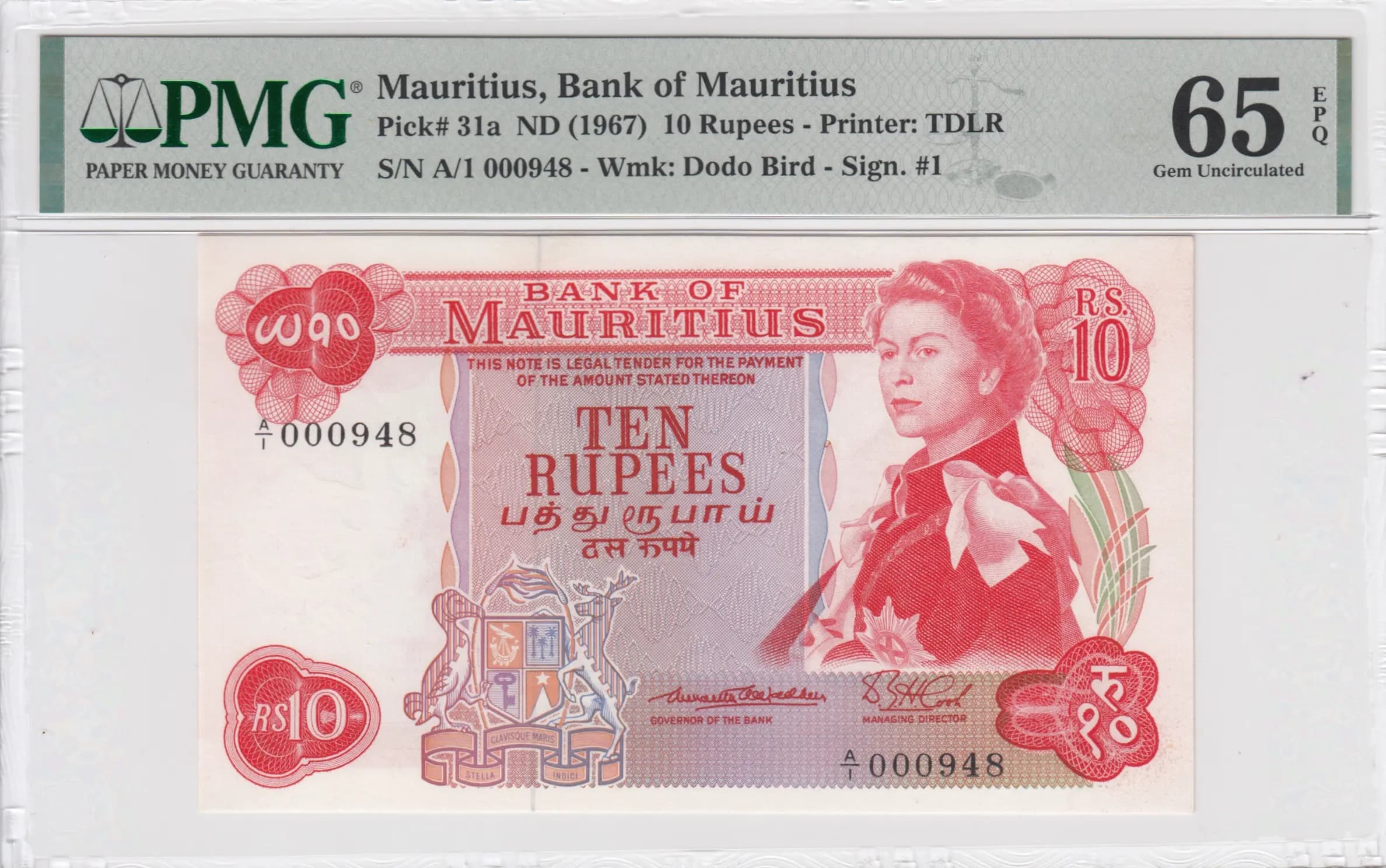
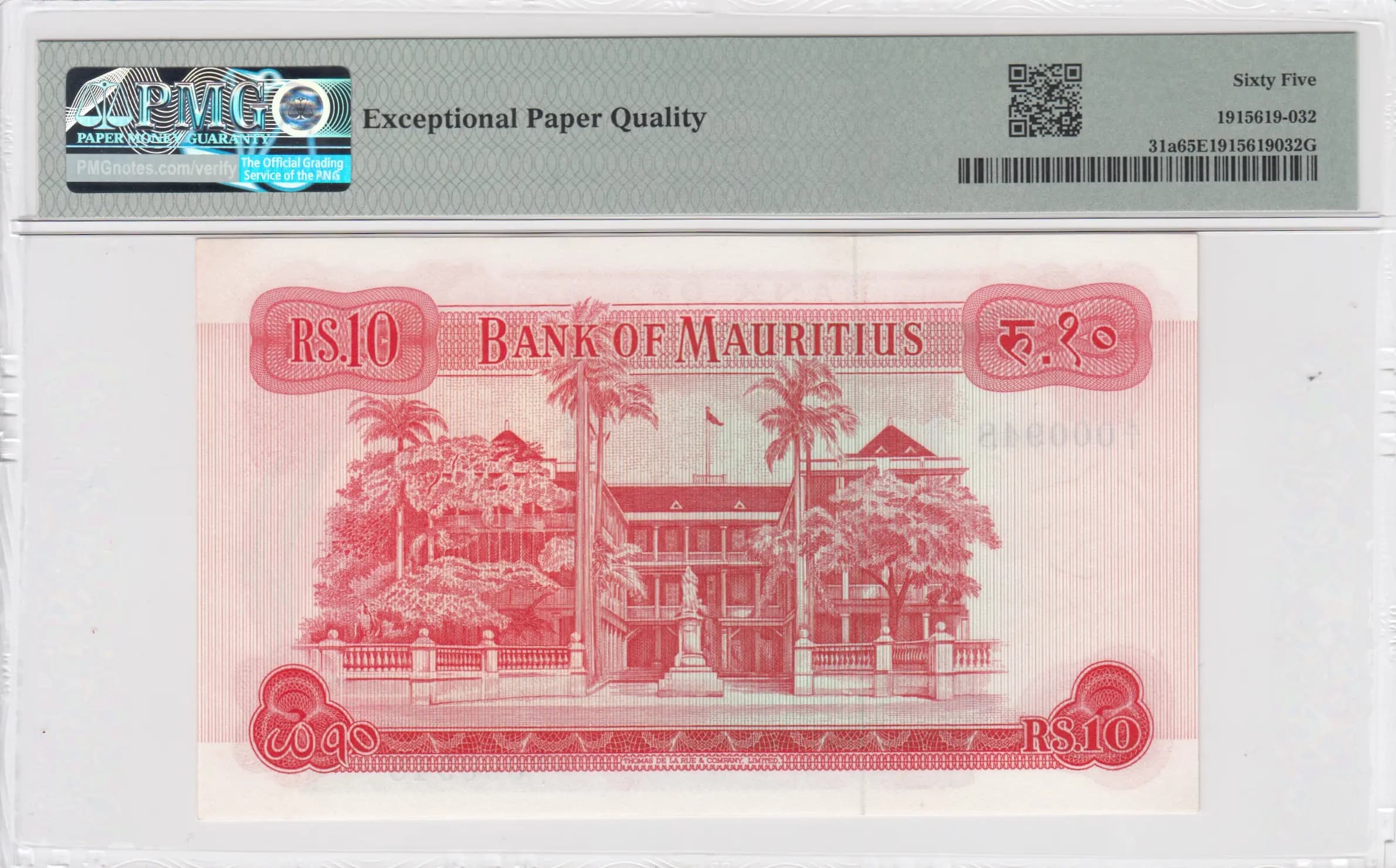
This is a PMG 65 EPQ example of the Bank of Mauritius 10 Rupees from 1967, displaying exceptional preservation with crisp printing and no signs of circulation. The note features Queen Elizabeth II in profile on the obverse and a detailed engraving of a colonial government building on the reverse, both rendered in distinctive red and pink tones with fine security line work throughout. This early post-independence Mauritian issue represents an important transitional period in the nation's monetary history and remains highly collectible in high grades.
Common. eBay transaction data shows PMG 65 examples selling in the $130-$140 range historically (2019-2020), with more recent comparable grades realizing similar or slightly lower prices ($112.50 for a PMG 64 in March 2025). The consistent availability of this note in graded populations and steady but modest secondary market pricing indicate this is a regularly encountered issue with no extraordinary scarcity. This appears to have been a standard circulation note with substantial print runs.
Issued in 1967 by the newly independent Bank of Mauritius, this banknote reflects the nation's transition to monetary sovereignty following independence from British rule in 1968 (the note was prepared in anticipation). The presence of Queen Elizabeth II honors the Commonwealth connection, while the architectural depiction of the Government Building in Port Louis symbolizes Mauritius's institutional development. The inclusion of Tamil and Hindi inscriptions alongside English reflects the multicultural composition of the Mauritian population.
The obverse features a three-quarter profile portrait of Queen Elizabeth II positioned at the right side of the note, rendered in classical numismatic style. To the left is the coat of arms of Mauritius with heraldic quartering, accompanied by the iconic dodo bird—the extinct national symbol of Mauritius—integrated into ornamental flourishes. The reverse depicts the Government Building in Port Louis, an elegant colonial-era structure with a central dome or tower, framed by symmetrical palm trees and formal landscaping with a decorative balustrade in the foreground. Both sides employ intricate cross-hatching and fine line engraving for depth and security purposes. The color scheme throughout is predominantly red and pink on a cream background, creating a warm, distinctive aesthetic characteristic of Thomas de la Rue's mid-20th century banknote design philosophy.
FRONT SIDE: 'BANK OF MAURITIUS' (English); 'R.S.' / '10' / 'TEN RUPEES' (English denomination markers); 'பத்து ரூபாய்' (Tamil: Ten Rupees); 'दस रुपय' (Hindi: Ten Rupees); 'THIS NOTE IS LEGAL TENDER FOR THE PAYMENT OF THE AMOUNT STATED THEREON' (English legal declaration); Serial number 'A 000948'; 'GOVERNOR OF THE BANK' and 'MANAGING DIRECTOR' (signature lines). BACK SIDE: 'R.S.10' appears in corner cartouches and beneath 'BANK OF MAURITIUS' (English denomination markers).
Intaglio engraving by Thomas de la Rue, London, the world's premier security printer of the period. The extensive fine line work, cross-hatching for tonal gradation, ornamental border designs, and detailed architectural rendering visible throughout both sides are hallmarks of traditional steel plate intaglio printing, which provided superior counterfeiting resistance compared to lithographic alternatives available at the time.
This note is cataloged as Pick 31a, printed by Thomas de la Rue (TDLR). The PMG population report indicates multiple varieties exist for this base Pick number (P-31a, P-31b, P-31c, P-31c*, P-31cCS1, P-31s), with differences likely reflecting printer variants, signature combinations, or serial number prefixes. The serial number 'A 000948' shown in this example places it among early examples of the A prefix series. No overprints or special markings are evident in the visual analysis.