1000 francs 1970
Market Prices
16 salesAbout This Note
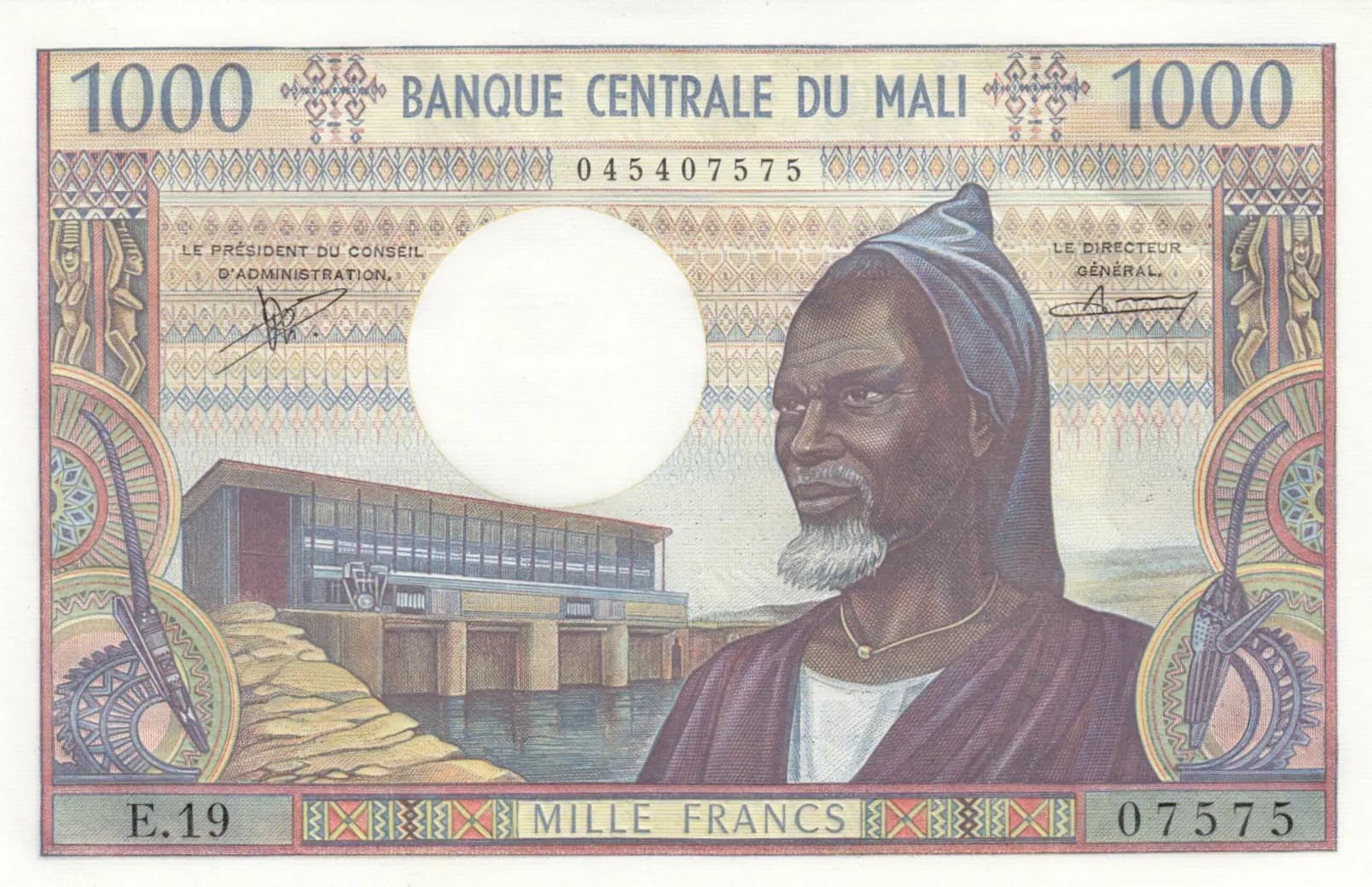
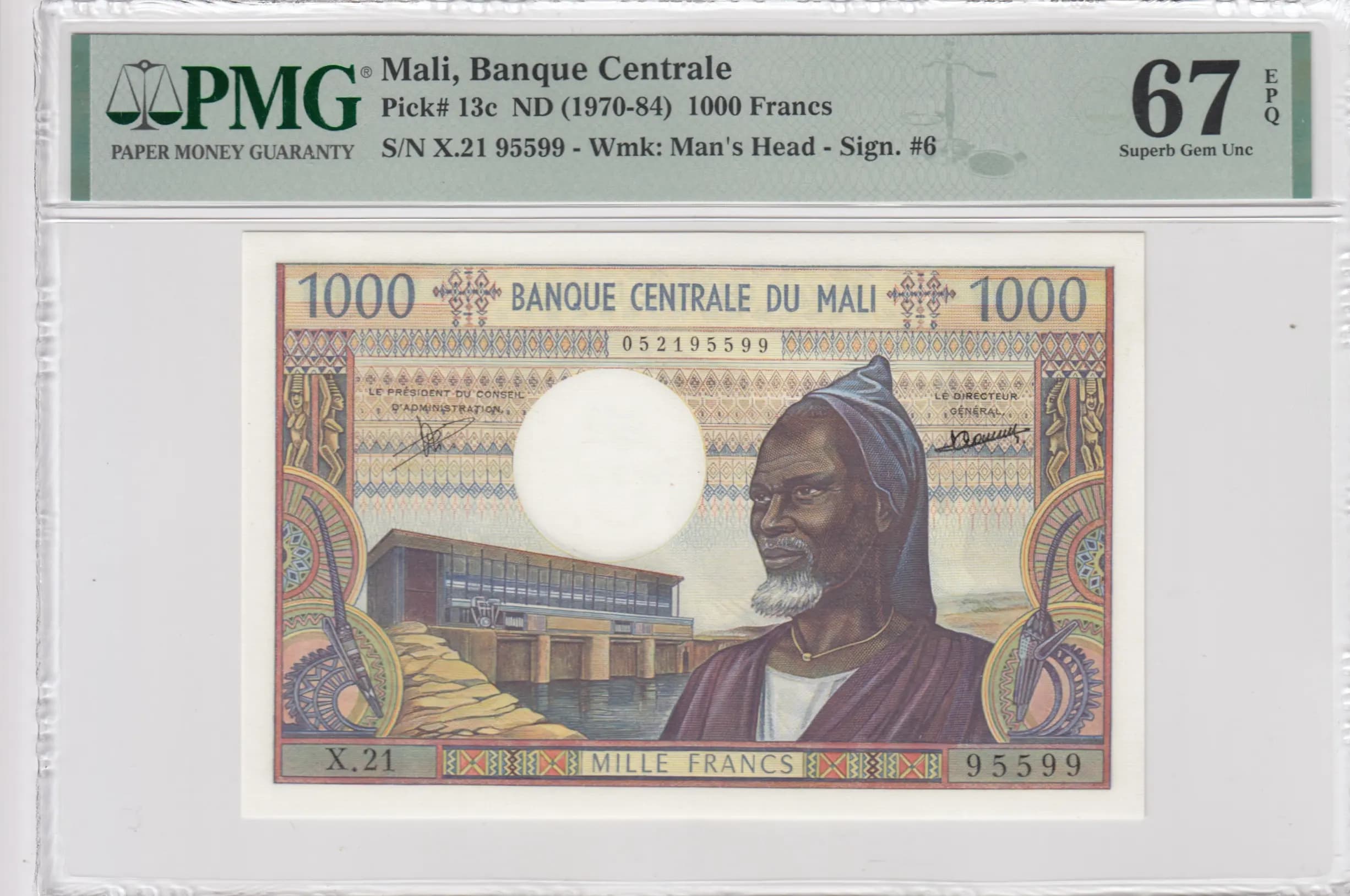
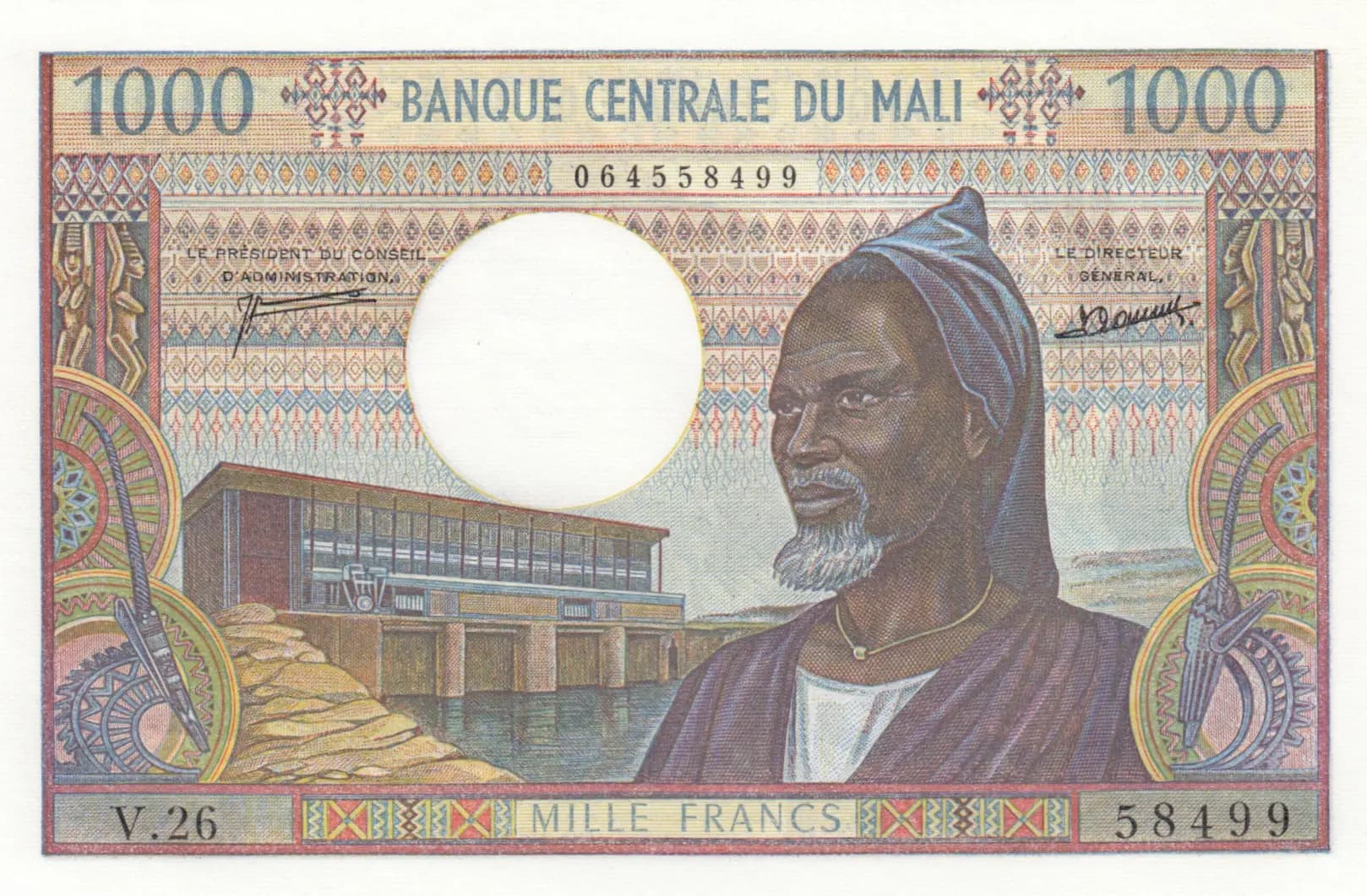
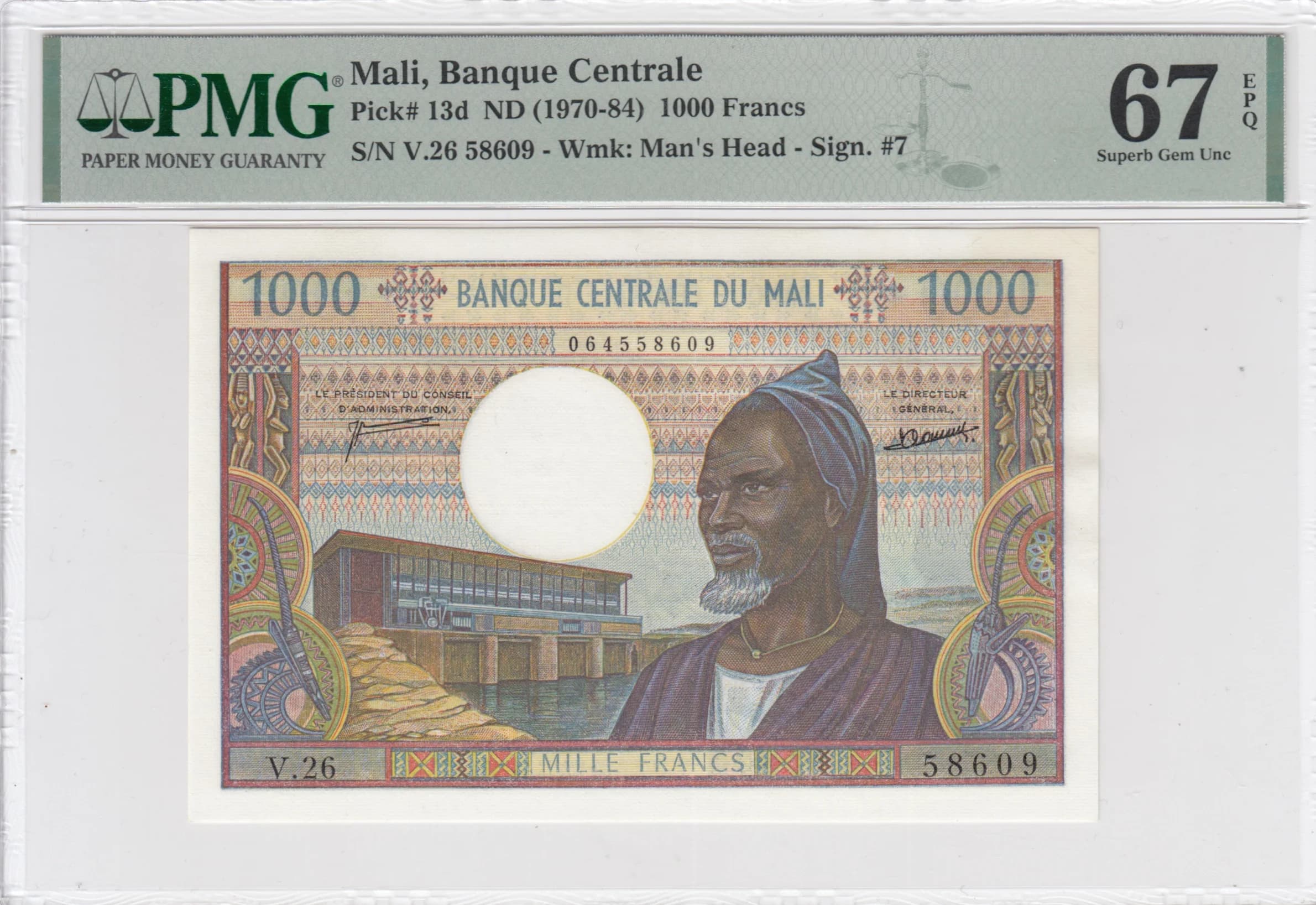
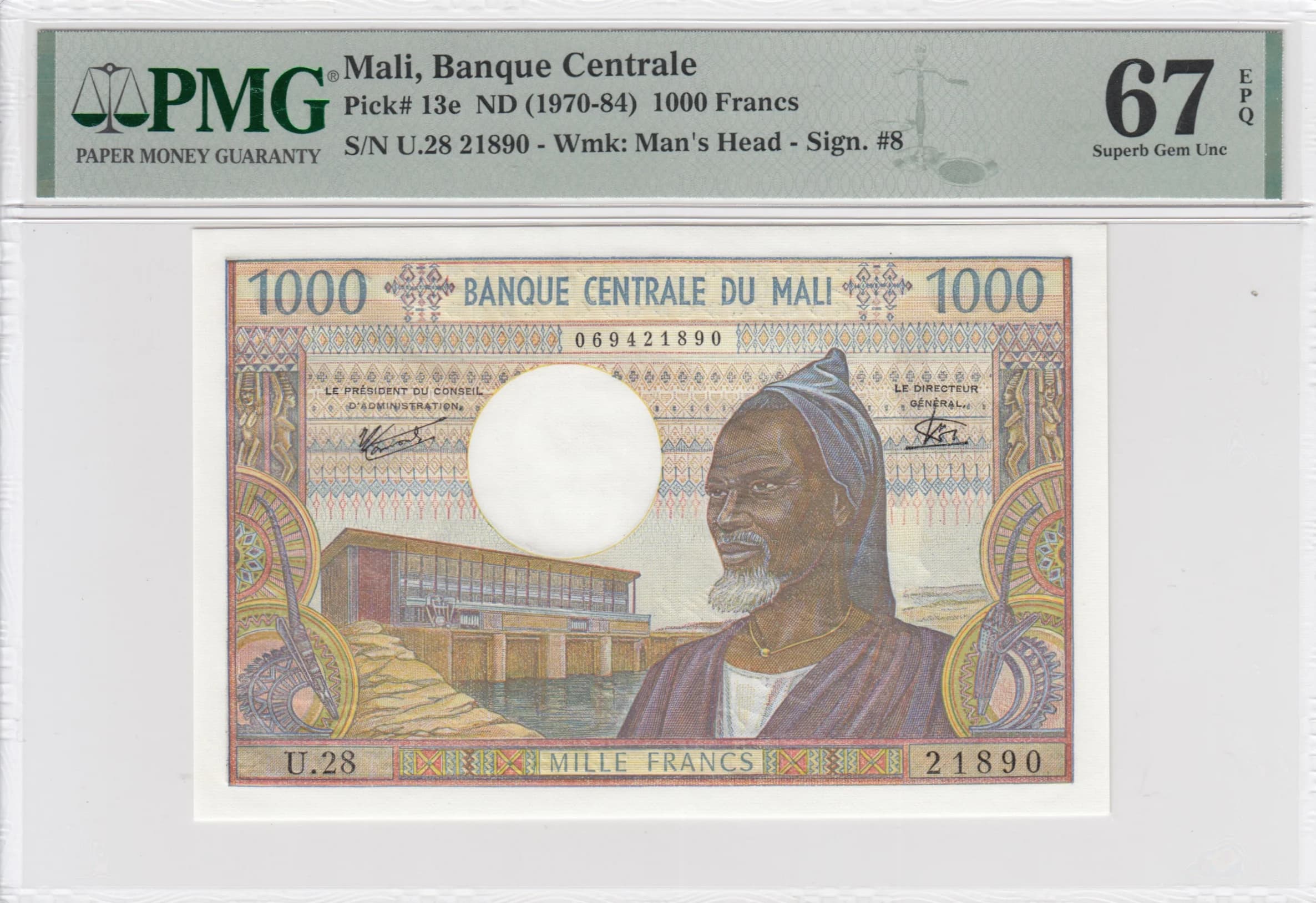
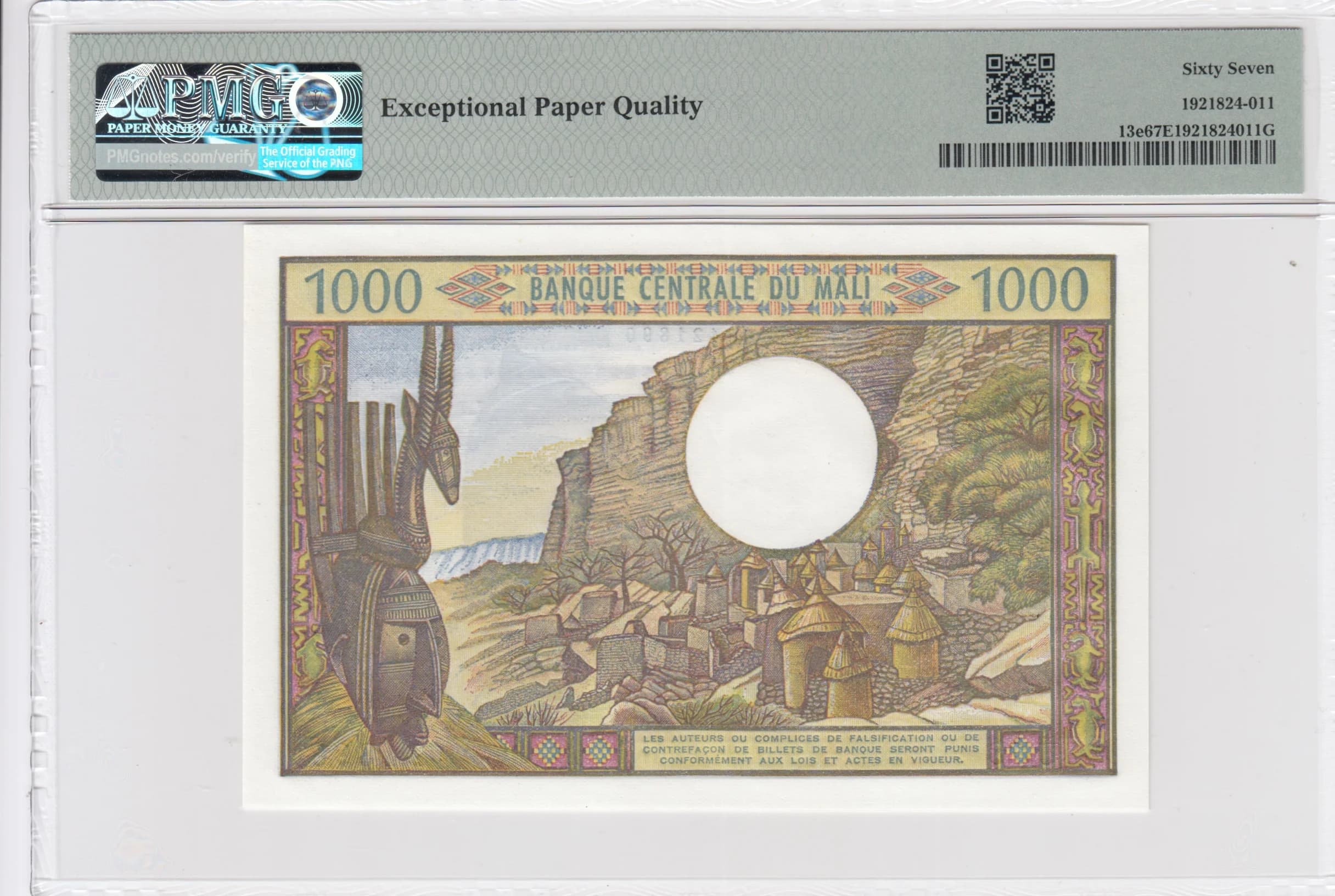
This Mali 1000 Francs note from 1970 (Pick P-13e) presents an exceptionally clean example graded PMG 67 EPQ, displaying sharp printing and pristine condition with no visible wear, creases, or tears. The obverse features a bearded man in traditional head covering beside the Sotuba Dam hydroelectric facility, while the reverse depicts the dramatic Bandiagara Escarpment landscape with traditional Dogon village architecture, making this a culturally significant representation of Mali's development and heritage during the early independence era.
Common. The secondary market eBay data shows consistent sales activity across multiple grade levels between 2009 and 2020, with PMG 67 examples selling in the $167-$188 range. The note was part of a series with multiple variants (P-13a through P-13e) issued over a 14-year period (1970-1984), indicating substantial print runs. Catalog values reflect accessibility: VF examples at $25 and UNC at $80 (2019). The consistent availability of graded examples across various conditions confirms this is a regularly encountered note in the collector market.
Issued by the Banque Centrale du Mali in 1970, this note commemorates two emblematic symbols of post-colonial Mali: the Sotuba hydroelectric dam on the Niger River, representing the nation's modernization efforts, and the Amani village beneath the Bandiagara Escarpment in Dogon country, celebrating Mali's rich indigenous cultural heritage. The imagery reflects Mali's attempt to balance technological advancement with preservation of its diverse ethnic and architectural traditions during a period of nation-building following independence from France in 1960.
The obverse features a dignified portrait of an elderly Malian man wearing a traditional indigo tagelmust (Tuareg-style head covering), positioned in profile facing left, with careful attention to rendering his facial features and traditional dress. Behind the portrait is the Sotuba Dam, a multi-story hydroelectric facility depicted with horizontal architectural banding, symbolizing Mali's industrial development. The reverse presents an expansive landscape composition of the Bandiagara Escarpment region, showing the traditional adobe cliff dwellings and thatched-roof architecture of Amani village, with fortified structures characteristic of Dogon settlements, scattered palm trees, natural rock formations, and vegetation rendered in fine engraving detail. Both sides employ sophisticated geometric border designs with decorative patterns in earth tones, gold, and purple-magenta accents, framing the primary imagery. The large circular watermark area (containing a man's head) is prominently displayed in the center of both sides.
FRONT: 'BANQUE CENTRALE DU MALI' (Central Bank of Mali), '1000' (denomination in numerals), 'MILLE FRANCS' (One Thousand Francs in words), 'LE PRÉSIDENT DU CONSEIL D'ADMINISTRATION' (The President of the Board of Directors), 'LE DIRECTEUR GÉNÉRAL' (The General Director), with series designation 'U.28' and serial number components visible. BACK: '1000' and 'BANQUE CENTRALE DU MALI' repeated, with the statutory warning: 'LES AUTEURS OU COMPLICES DE FALSIFICATION OU DE CONTREFAÇON DE BILLETS DE BANQUE SERONT PUNIS CONFORMÉMENT AUX LOIS ET ACTES EN VIGUEUR' (The authors or accomplices of falsification or counterfeiting of banknotes will be punished in accordance with the laws and acts in force).
Intaglio engraving (copperplate/steel plate printing), characterized by the fine detail work visible in the portrait rendering, landscape scene complexity, and intricate geometric border patterns. The sharp line definition, multiple color registration, and complex pattern reproduction indicate professional security printing standards typical of 1970-era central bank note production. The printer for this series is not definitively identified in available sources, though the quality suggests work by a major European security printer contracted by the Banque Centrale du Mali.
This note is identified as Pick P-13e, the fifth cataloged variant within the 1000 Francs series. The visual analysis indicates series designation 'U.28' and serial number 06942189O/21890. The five documented variants (P-13a through P-13e) likely represent printer variations, signature changes, or minor design modifications across the 1970-1984 issue period. The specific signature combinations of the bank officials ('LE PRÉSIDENT DU CONSEIL D'ADMINISTRATION' and 'LE DIRECTEUR GÉNÉRAL') and series letter would confirm the exact variant designation, typical of central bank practice for tracking issuing authority changes during this period.