1000 francs 1970
Market Prices
2 salesAbout This Note
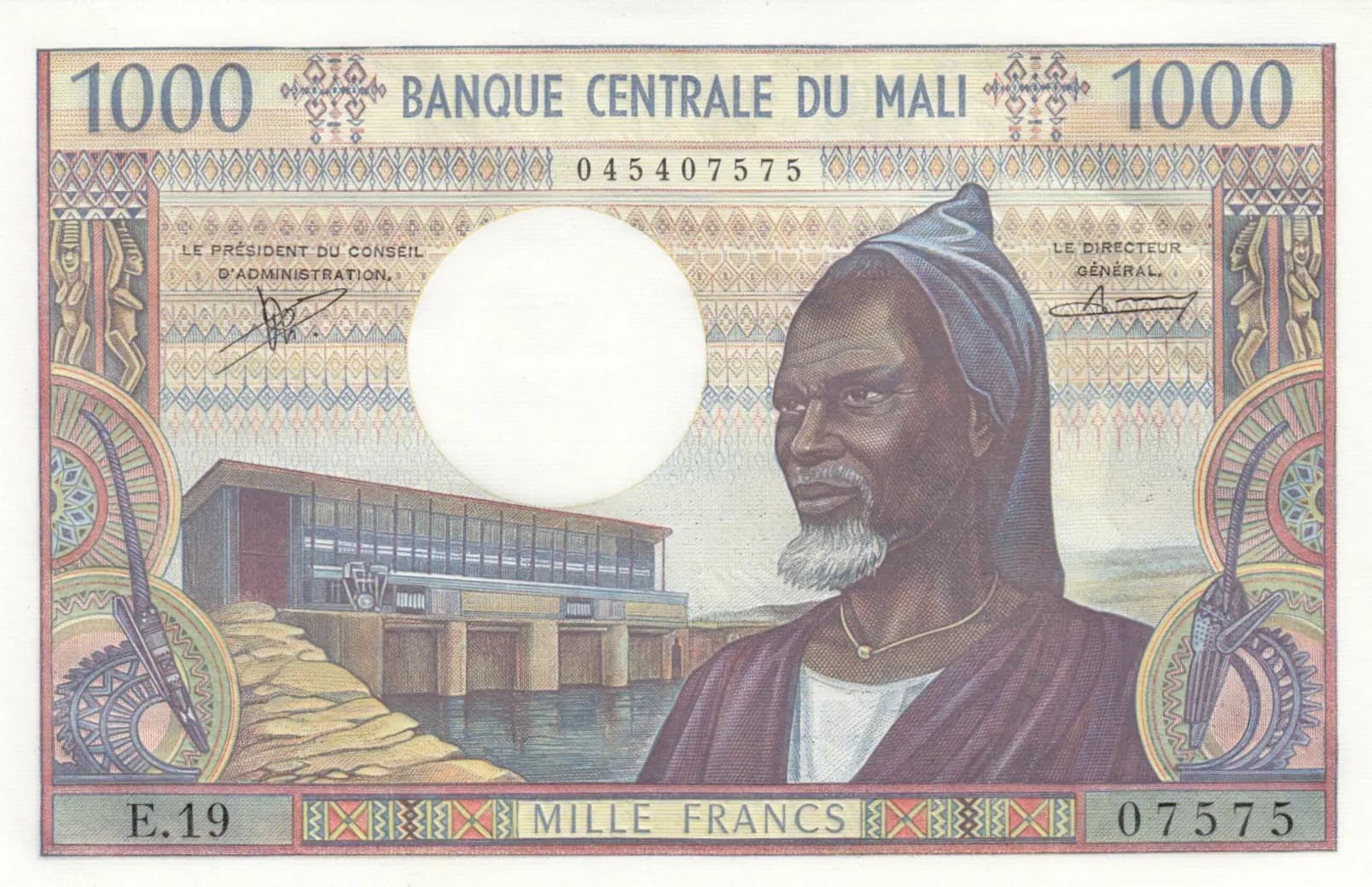
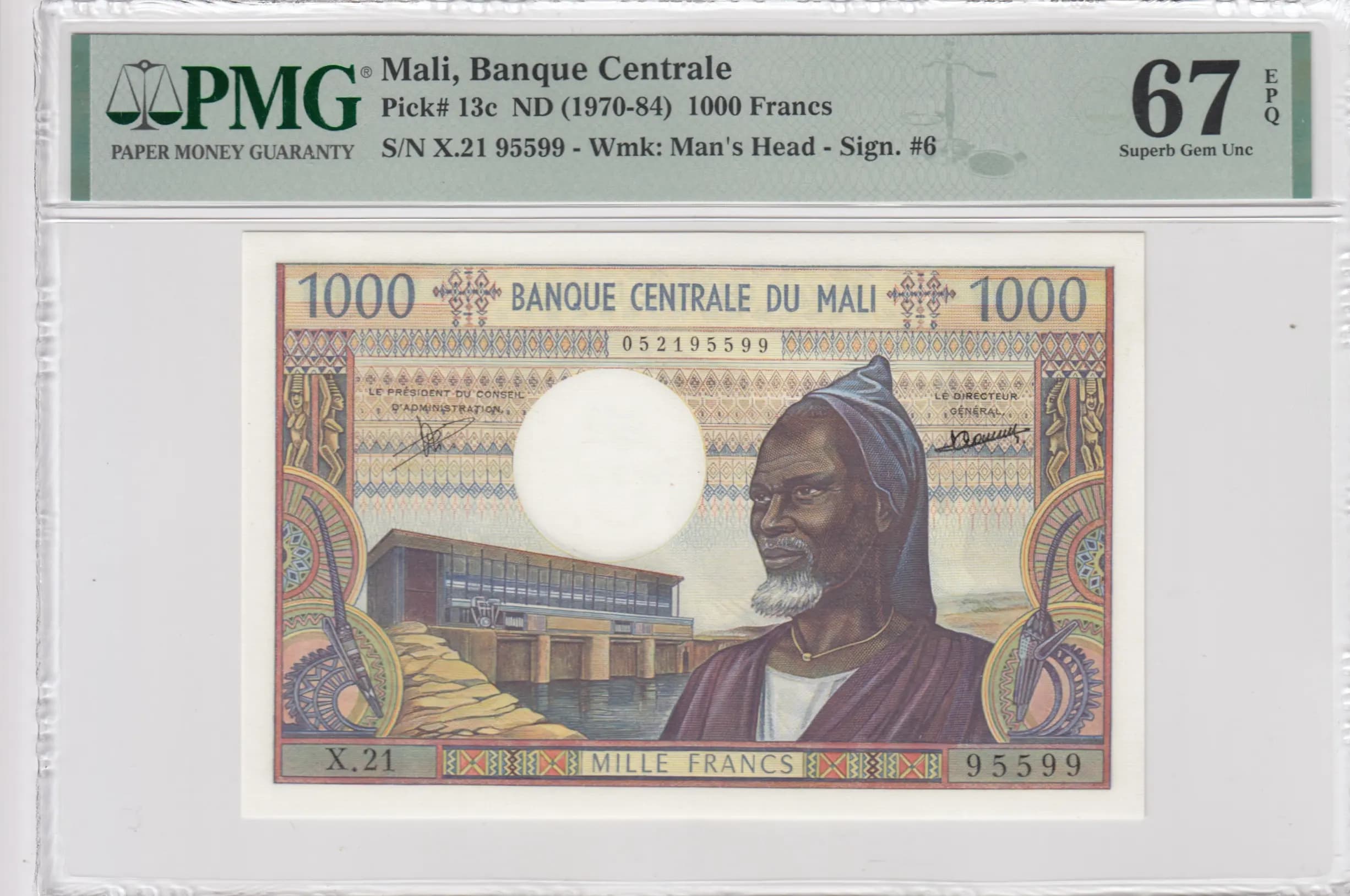
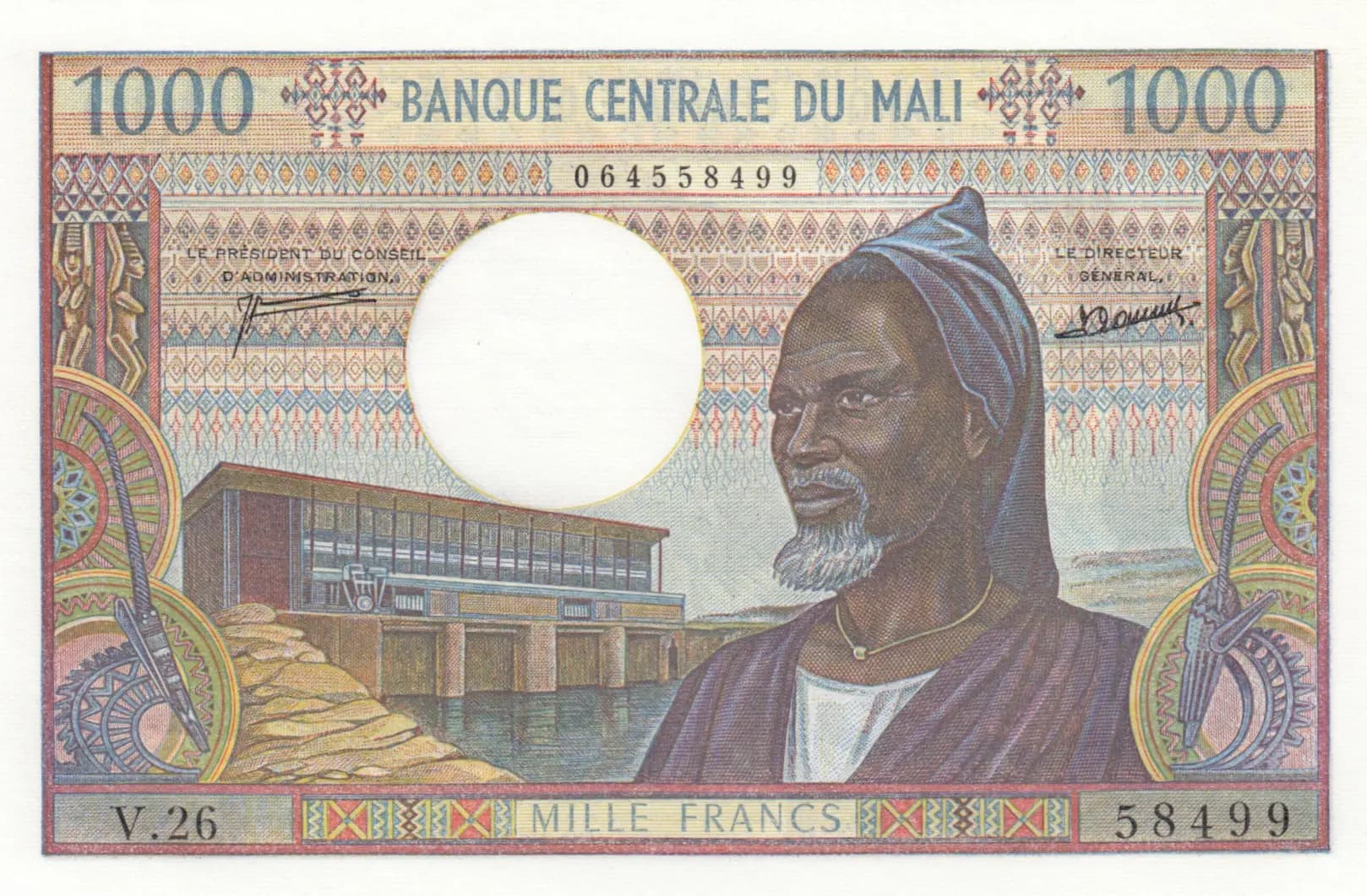
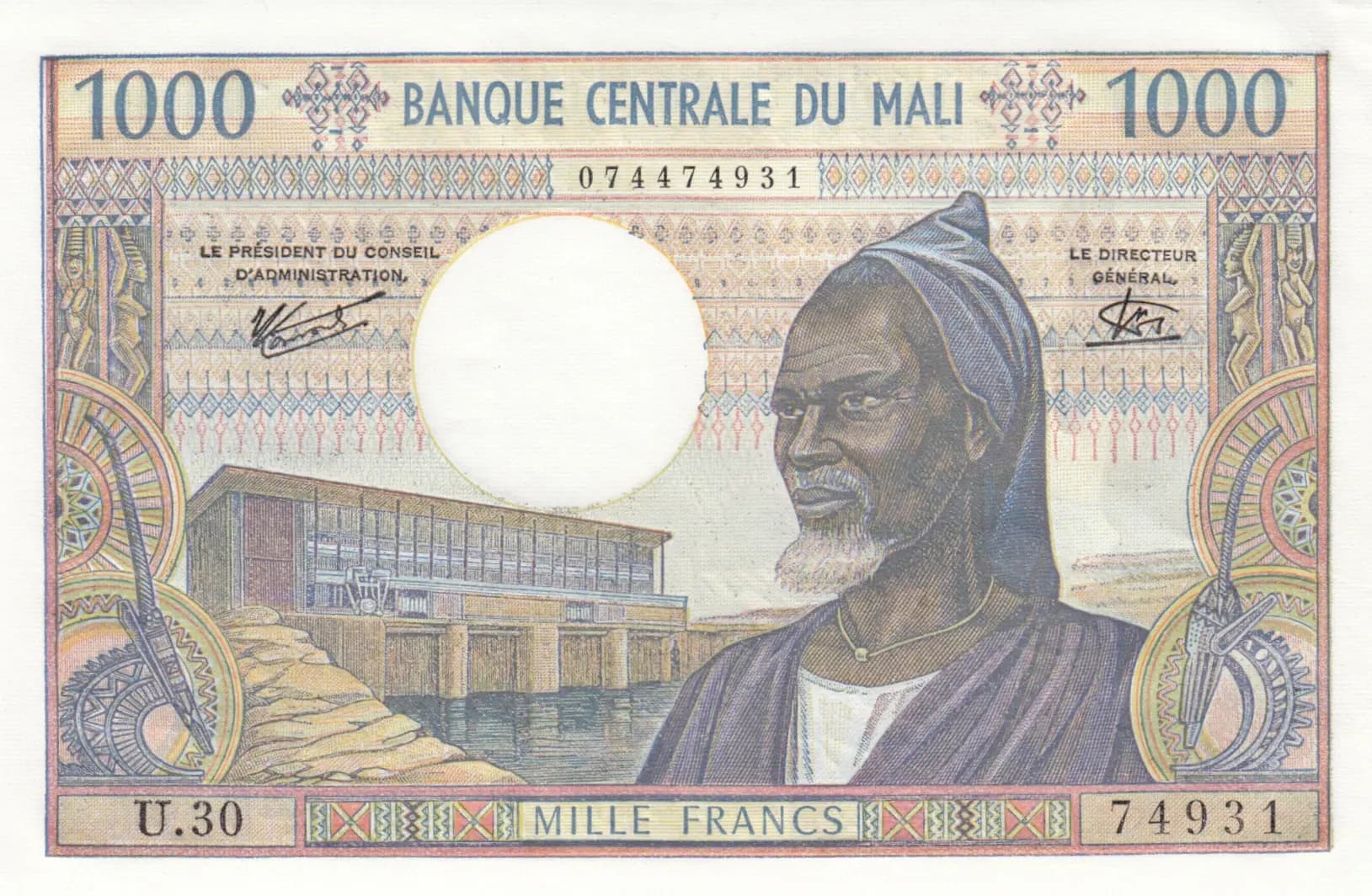
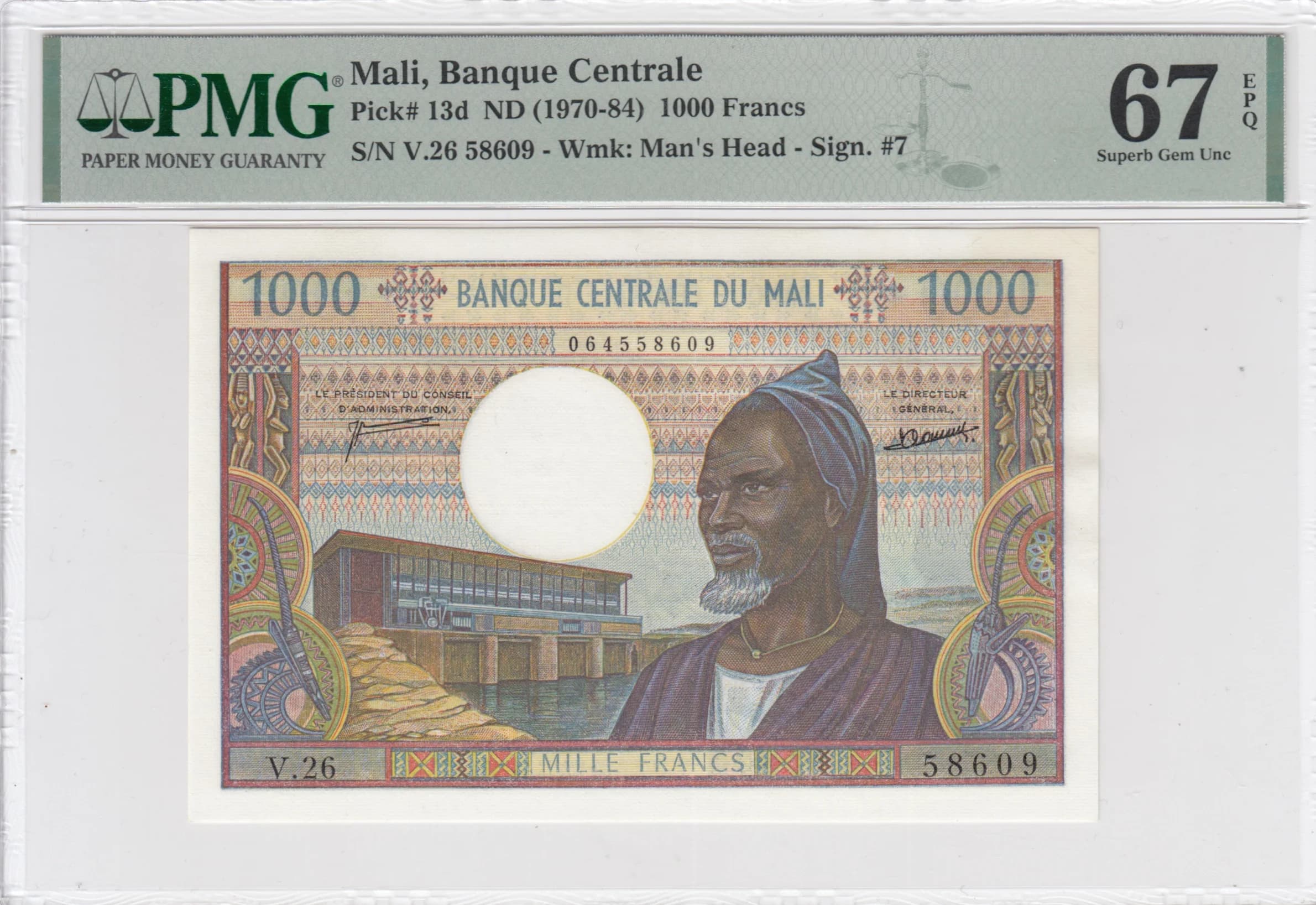
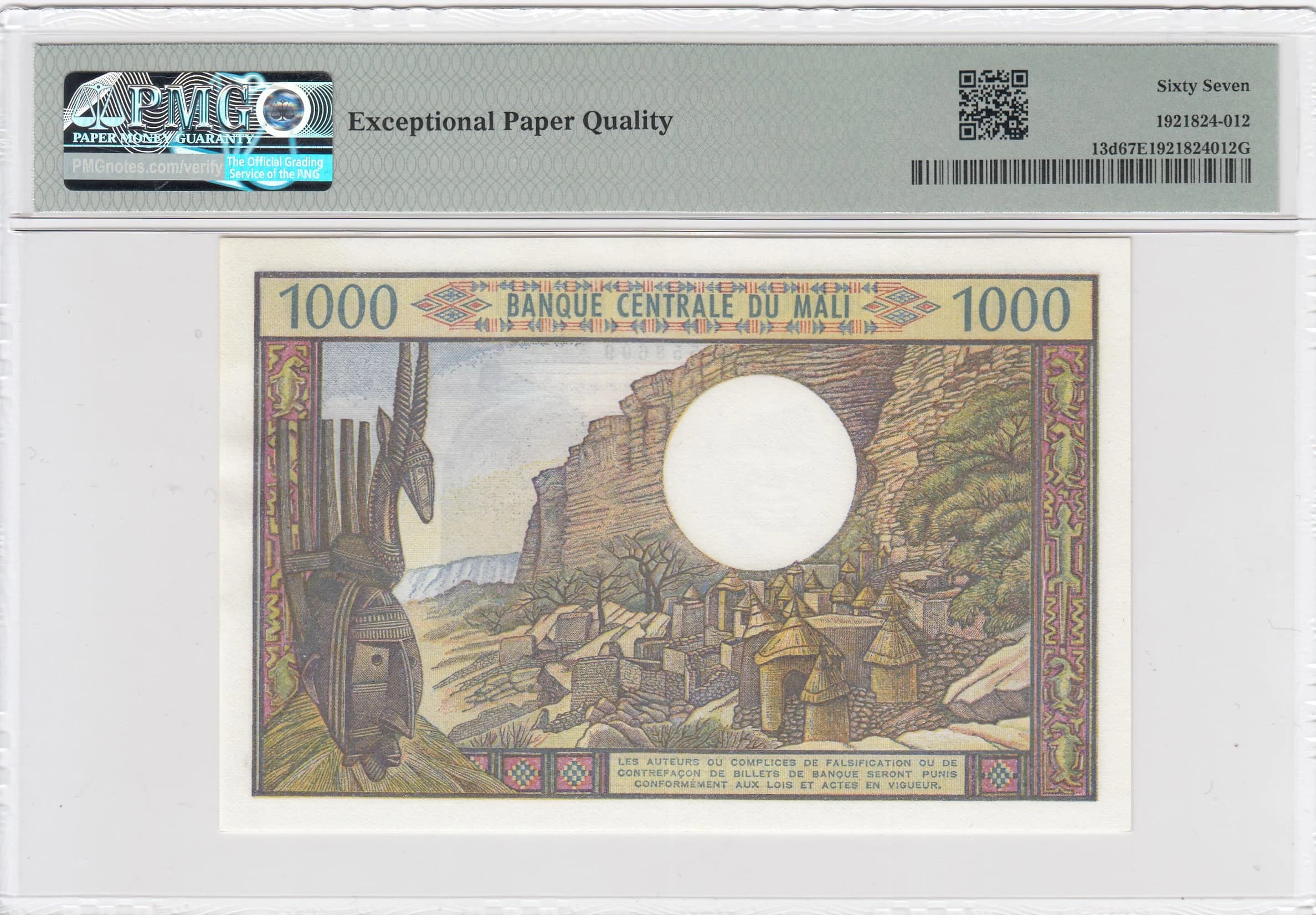
This is a PMG 67 EPQ example of Mali's 1000 Francs note from 1970 (Pick P-13d), representing an exceptional uncirculated specimen with pristine paper quality and sharp printing throughout. The note features a striking portrait of a bearded man in traditional dress alongside the iconic Sotuba dam hydropower plant on the obverse, while the reverse showcases the dramatic Bandiagara escarpment landscape with traditional Dogon village architecture. As a professionally graded PMG 67 note, this represents a premium quality example that commands collector interest, with recent market comparables showing PMG 66 specimens selling for approximately $135.
Common. The 1970 Mali 1000 Francs note is widely available in the collector market, with catalog values from 2019 indicating VF specimens at $25 and UNC at $80. Recent eBay market data shows PMG 66 examples selling for approximately $135.50, with F-grade specimens historically selling for $16.50. The note was produced in substantial quantities during its 14-year circulation period (1970-1984 per catalog notation), and multiple graded examples exist in PMG's population report across five cataloged varieties (P-13a through P-13e). While the specific PMG 67 grade represents above-average preservation, the underlying note type itself is not scarce.
Issued by the Banque Centrale du Mali in 1970, this note commemorates two important symbols of Mali's post-independence development: the Sotuba hydroelectric facility on the Niger River, representing the nation's modernization efforts, and the Bandiagara escarpment villages of Dogon country, reflecting Mali's rich cultural heritage and traditional ways of life. The combination of these imagery choices reflects Mali's attempt to balance progress with cultural preservation during the early years of its independent monetary system following the dissolution of the Mali Federation.
The obverse features a prominent right-facing portrait of an older bearded man wearing traditional blue-purple head covering and white inner garment, representing a dignified elder or notable figure of Malian society. Behind the portrait is the Sotuba dam hydropower facility, depicted as a multi-story industrial building with horizontal striping, symbolizing Mali's hydroelectric infrastructure on the Niger River. The reverse depicts the Bandiagara escarpment landscape characteristic of the Dogon region, with dramatic rocky cliff formations showing natural geological stratification on the left, traditional conical-roofed mud hut village structures in the center and right, scattered vegetation, and open savanna terrain. Both sides feature ornate geometric patterns and decorative border elements in burgundy, gold, tan, and blue tones, with circular watermark areas positioned centrally on each side. The overall design reflects classical engraving techniques with fine line work throughout.
Front: '1000' (denomination in numerals), 'BANQUE CENTRALE DU MALI' (Central Bank of Mali), 'MILLE FRANCS' (One Thousand Francs), 'LE PRÉSIDENT DU CONSEIL D'ADMINISTRATION' (The President of the Board of Administration), 'LE DIRECTEUR GÉNÉRAL' (The General Director), 'V.26' (series/plate identifier), '58609' and '064558609' (serial numbers). Back: '1000' (denomination in numerals), 'BANQUE CENTRALE DU MALI' (Central Bank of Mali), '1000' (denomination in numerals), 'LES AUTEURS OU COMPLICES DE FALSIFICATION OU DE CONTREFAÇON DE BILLETS DE BANQUE SERONT PUNIS CONFORMÉMENT AUX LOIS ET ACTES EN VIGUEUR.' (The authors or accomplices of counterfeiting or forgery of banknotes will be punished in accordance with the laws and acts in force.)
This note employs intaglio (engraved) printing techniques, as evidenced by the fine detailed line work, intricate geometric patterns, and sharp definition of both portraiture and architectural/landscape elements visible in the images. The crisp borders, precise denomination numerals, and elaborate security patterns characteristic of this era's banknote production indicate professional security printing. While specific printer attribution for P-13d is not definitively documented in standard references, Mali's central bank notes from this period were typically produced by established European security printers such as Bradbury, Wilkinson & Co. or De La Rue, though definitive confirmation would require printer's marks or archival documentation.
This specimen is identified as Pick P-13d, one of five documented varieties for the base 1000 Francs 1970 denomination. The visual series identifier 'V.26' on the obverse and serial number configuration '064558609' are specific to this example. The distinction between P-13a through P-13e likely reflects variations in signature combinations, date notations, or minor design elements that distinguish different printing runs or administrative periods within the 1970-1984 issuance window, though precise differentiating characteristics between these varieties would require direct comparative analysis of multiple examples or access to detailed PMG/Pick catalog specifications.