1000 francs 1970
Market Prices
16 salesAbout This Note
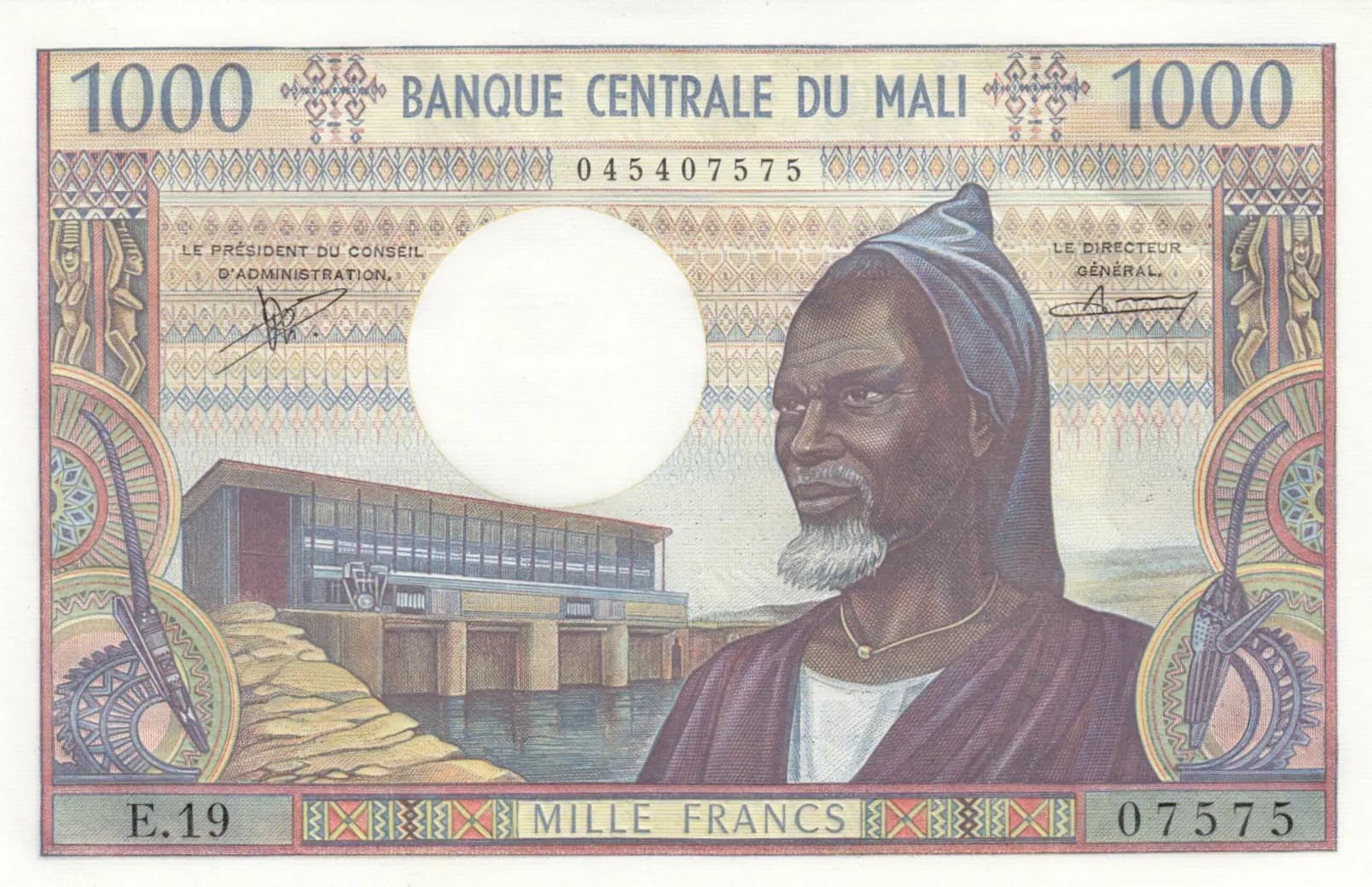
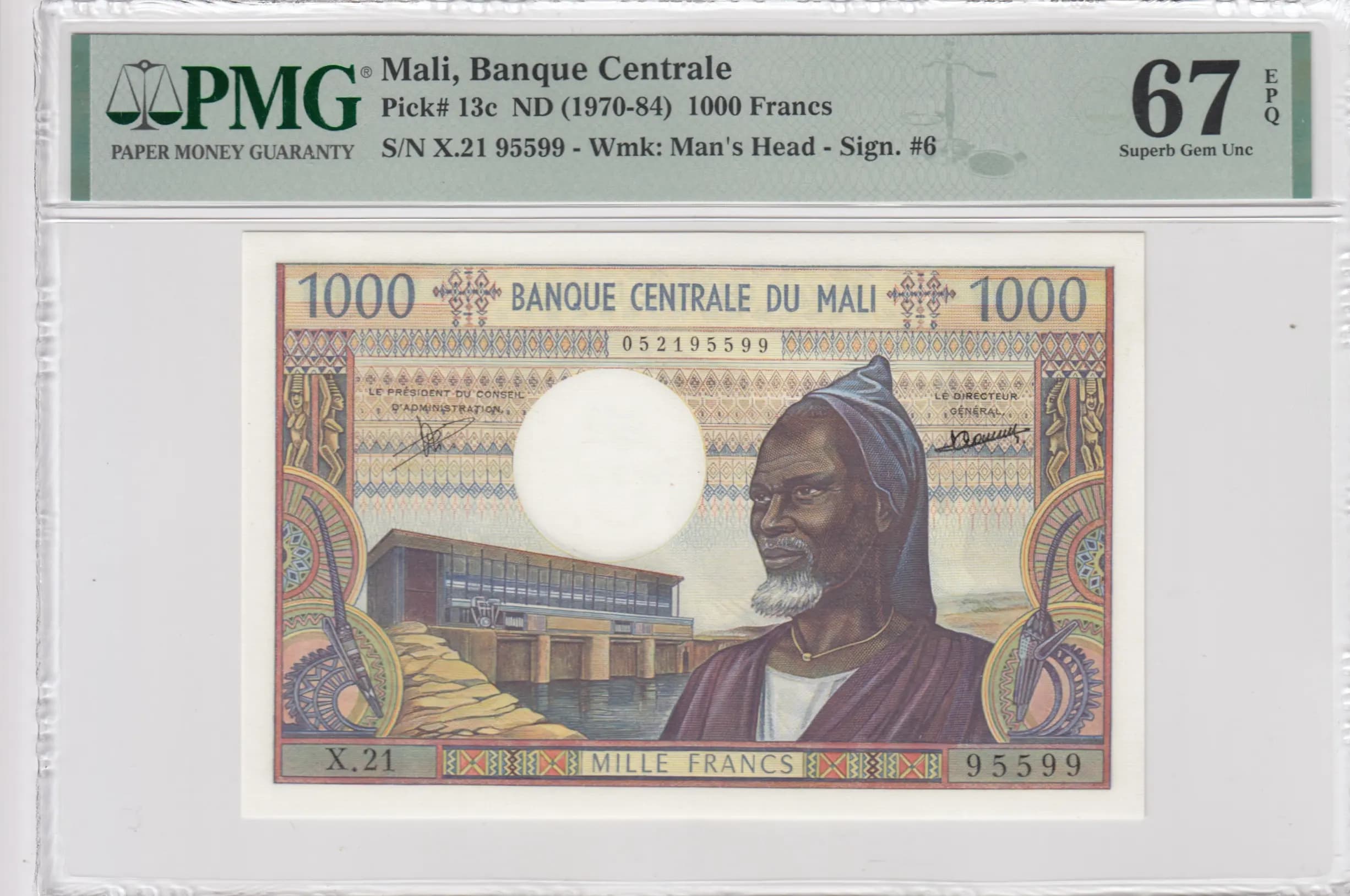
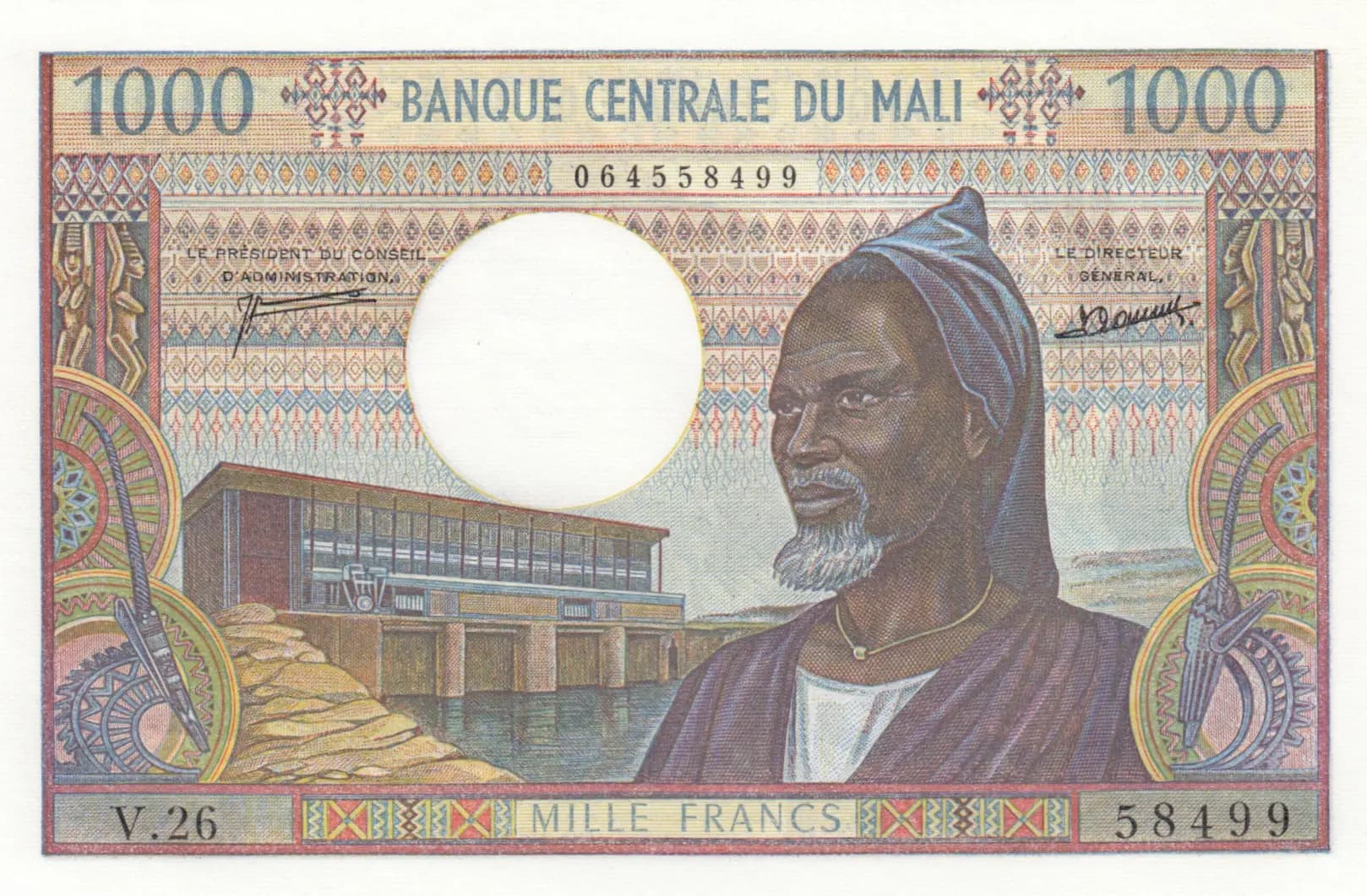
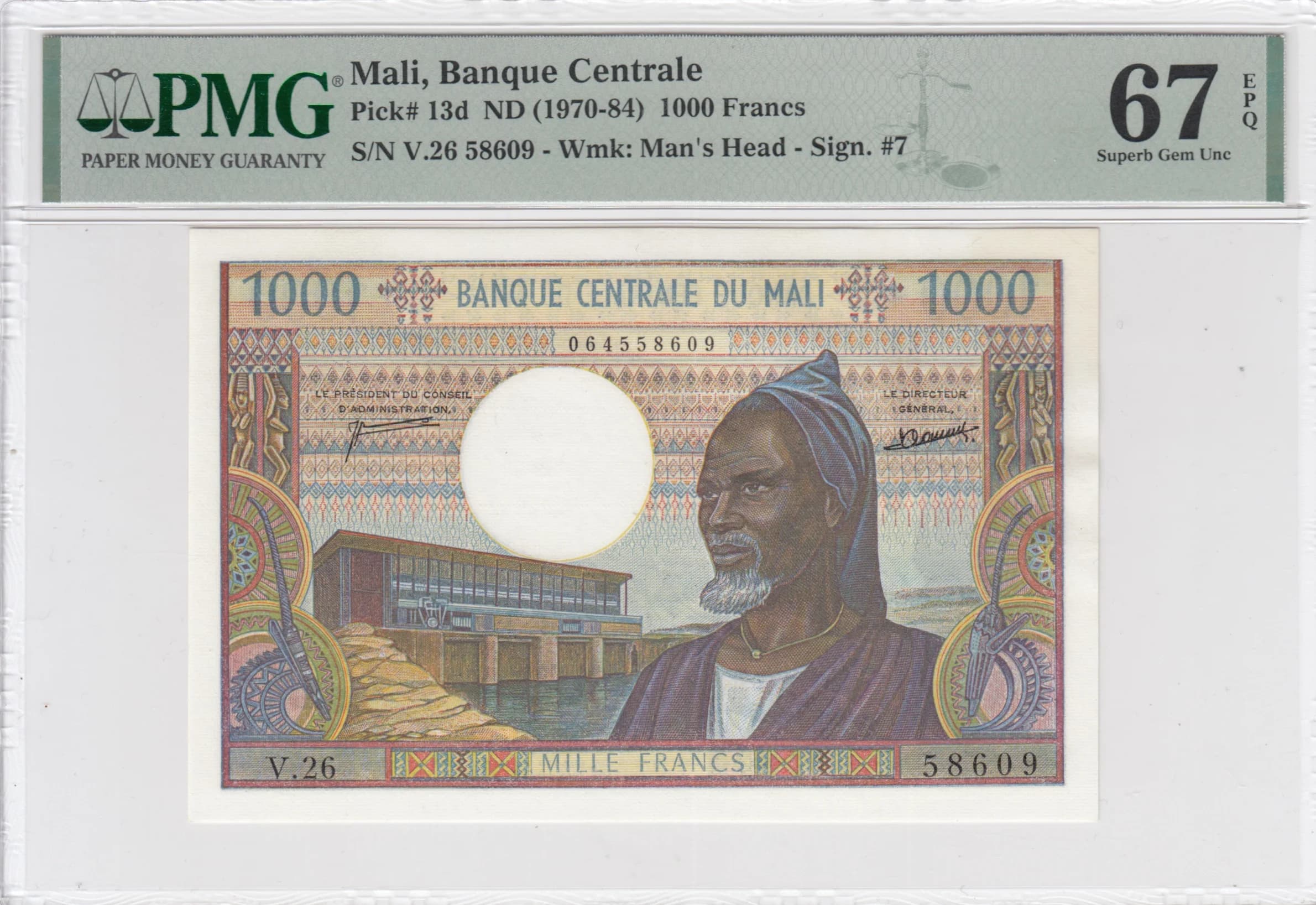
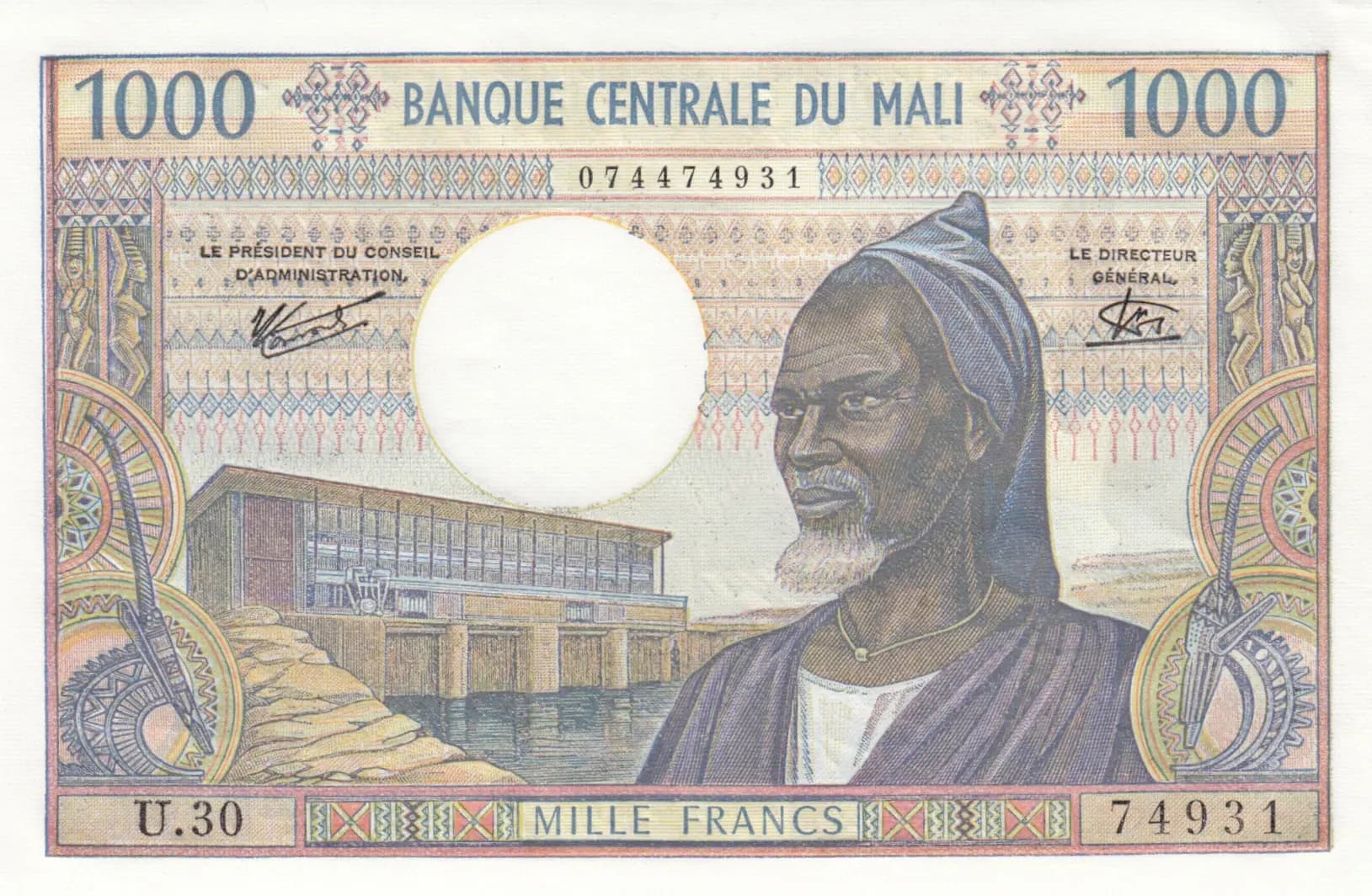
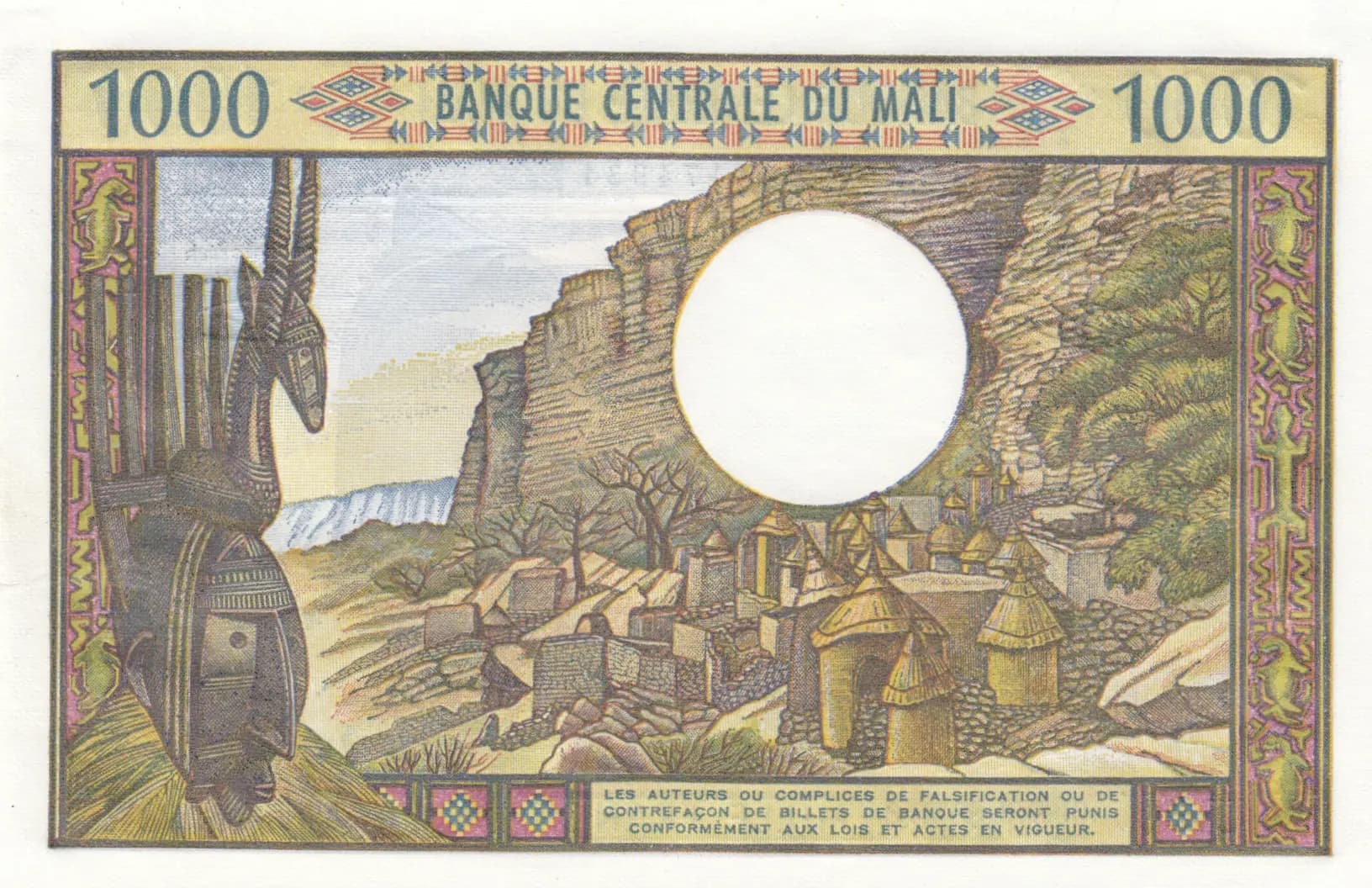
This is an exceptional Uncirculated example of Mali's 1000 Francs banknote from 1970 (Pick-13e), issued by the Banque Centrale du Mali. The note features pristine condition with crisp edges, vibrant colors, and no evidence of wear, handling, or creasing. The front showcases a distinguished bearded man in traditional dress alongside the Sotuba dam on the Niger River, while the reverse depicts a scenic Dogon village beneath the Bandiagara escarpment with traditional conical-roofed architecture and carved wooden mask imagery—making this an important cultural artifact documenting Mali's heritage and modernization during this period.
Common. The eBay market data shows consistent sales activity across multiple condition grades from 2009 to 2020, with UNC examples regularly bringing $80-$110 and even PMG-graded specimens (67) reaching only $167-$201. The note was issued across a 14-year span (1970-1984) with multiple varieties catalogued (P-13a through P-13e), indicating substantial print runs. The prevalence of graded examples in the PMG population report and regular market circulation confirms this is not a scarce issue. These price levels and availability patterns are consistent with common African banknotes from the 1970s.
Issued in 1970, this banknote reflects Mali's post-independence identity, having gained sovereignty from France in 1960. The design iconography—the Sotuba hydropower dam representing modernization and national development, paired with the traditional Dogon village and cultural artifacts—illustrates Mali's balancing act between contemporary infrastructure and preservation of its rich ethnic heritage. The French language inscriptions and formal banking protocols reflect the currency union frameworks that governed West African monetary policy during this era.
The obverse features a distinguished Mali notable—likely a government or cultural figure—depicted in right profile wearing a traditional indigo tagelmust (Tuareg turban), rendered in fine line engraving with careful attention to facial features and traditional dress. The left portion showcases the Sotuba Dam (Barrage de Sotuba), a modern hydroelectric facility on the Niger River featuring horizontal architectural lines and stepped construction, symbolizing Mali's post-colonial infrastructure development. Ornate decorative borders in gold, orange, blue, and purple frame the composition with geometric patterns and diamond-shaped ornamental designs characteristic of West African artistic traditions. The reverse illustrates Amani village nestled beneath the Bandiagara Escarpment in Dogon country, with multiple conical-roofed traditional dwellings rendered in warm earth tones, rocky cliff formations with vegetation, and a prominent carved wooden mask or sculptural element on the left. Decorative borders feature stylized horses and geometric motifs in purple and gold. Both sides incorporate a large circular watermark area at center, and the note employs fine line engraving throughout with sophisticated security printing techniques.
FRONT: 'BANQUE CENTRALE DU MALI' (Central Bank of Mali); 'MILLE FRANCS' (One Thousand Francs); '1000' (denomination, repeated); 'LE PRÉSIDENT DU CONSEIL D'ADMINISTRATION' (The President of the Board of Administration); 'LE DIRECTEUR GÉNÉRAL' (The General Director); 'U.30' (printer/series designation); Serial number '0744749931'. BACK: 'BANQUE CENTRALE DU MALI' (Central Bank of Mali); '1000' (denomination, repeated); 'LES AUTEURS DU COMPLICES DE FALSIFICATION OU DE CONTREFAÇON DE BILLETS DE BANQUE. SERONT PUNIS CONFORMÉMENT AUX LOIS ET ACTES EN VIGUEUR.' (The authors and accomplices of counterfeiting or forging banknotes will be punished in accordance with laws and acts in force.)
Intaglio (engraved) printing on cotton-fiber banknote paper, exhibiting the characteristic fine line work, depth, and tactile quality of traditional currency production. The intricate geometric borders, detailed landscape rendering, and portrait engraving demonstrate the high-security printing standards of major European security printers contracted by African central banks in the 1970s. Serial numbers and designations appear to be printed separately, with 'U.30' likely indicating the printing house designation. The watermark circle (visible as white space in the image) would have been created during the paper manufacturing process.
This specimen is catalogued as Pick-13e, indicating it is the fifth recognized variety within the 1000 Francs 1970 issue series. Varieties in this series (P-13a through P-13e) are distinguished by signature variations and possibly subtle design changes across the 1970-1984 issuance period. The observed serial number '0744749931' with 'U.30' designation may indicate specific printing batches or security features that distinguish this from earlier varieties (P-13a through P-13d). Without side-by-side comparison, the specific distinguishing characteristics of the P-13e variety cannot be determined from this image alone, but Pick catalog documentation typically notes signature, date, or security feature differences among lettered varieties.