1000 francs 1970
Market Prices
6 salesAbout This Note
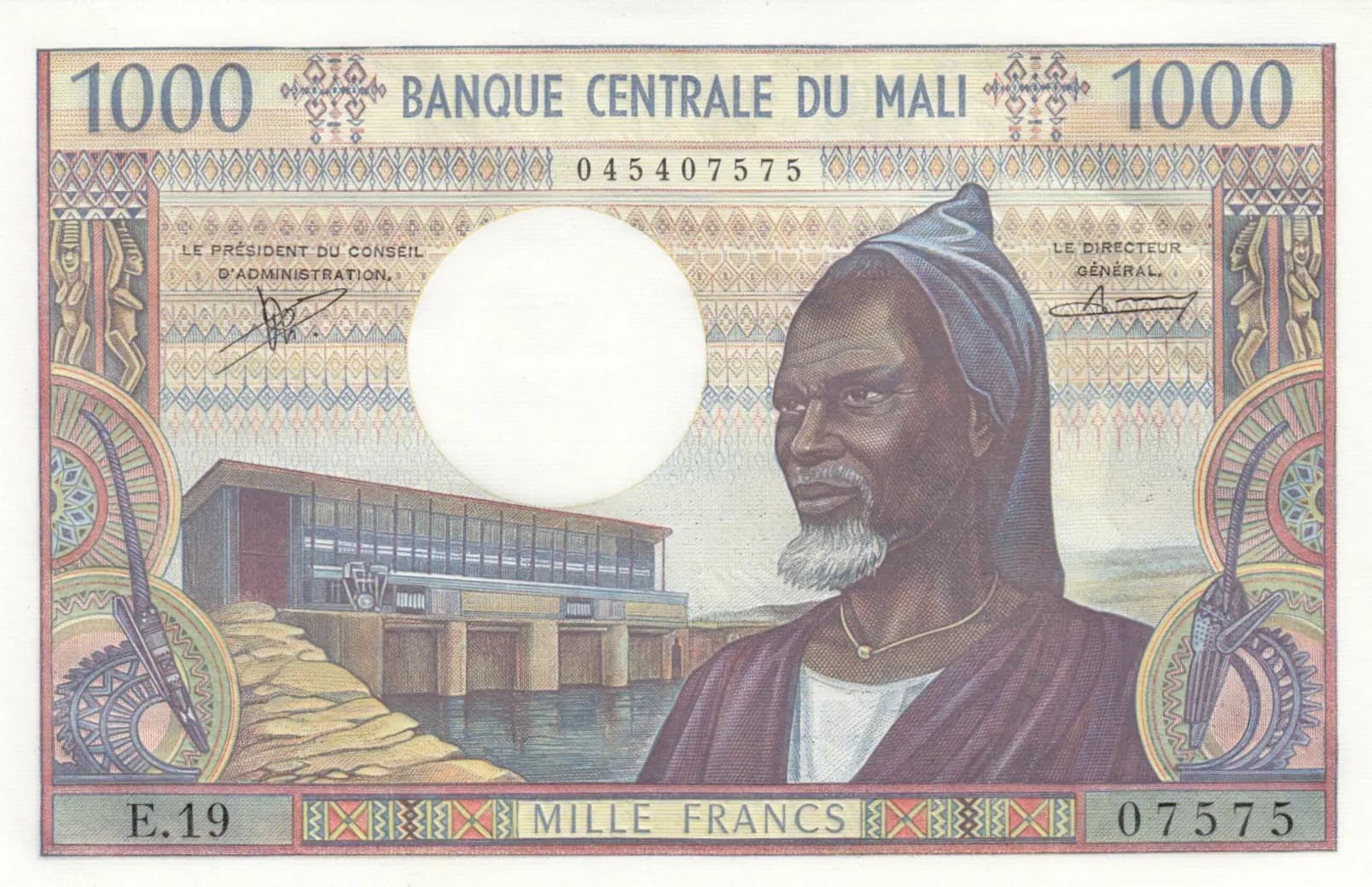
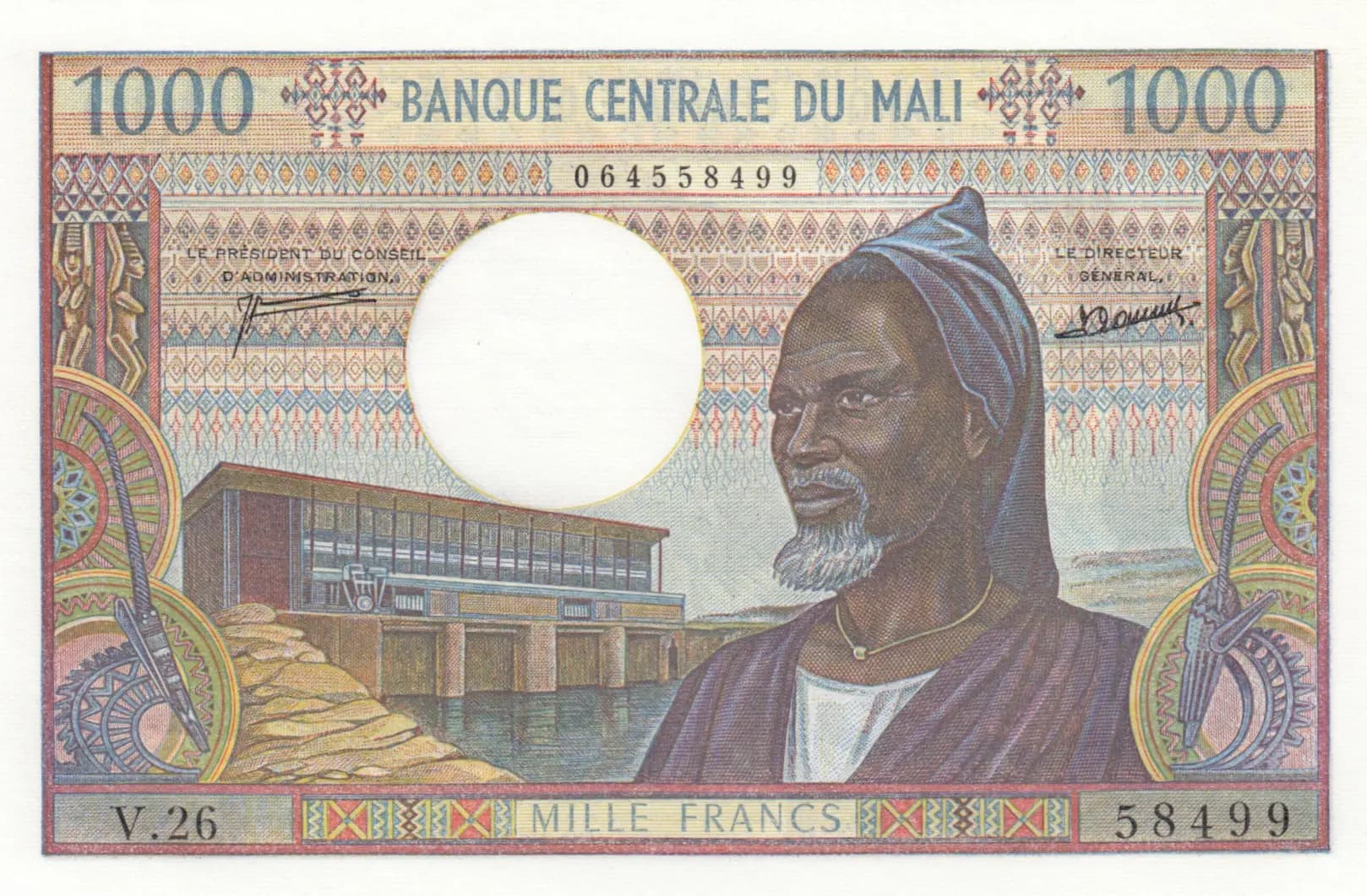
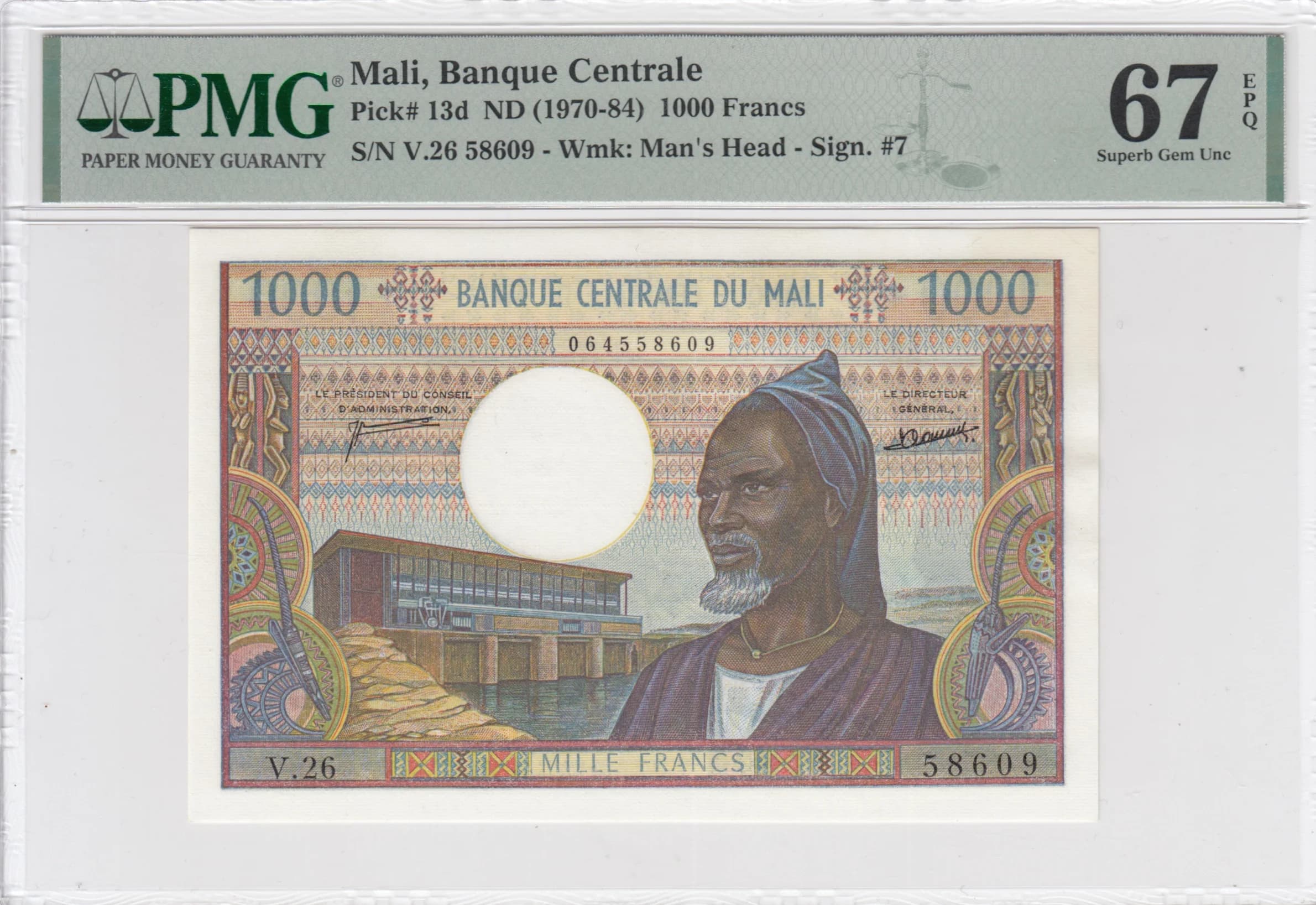
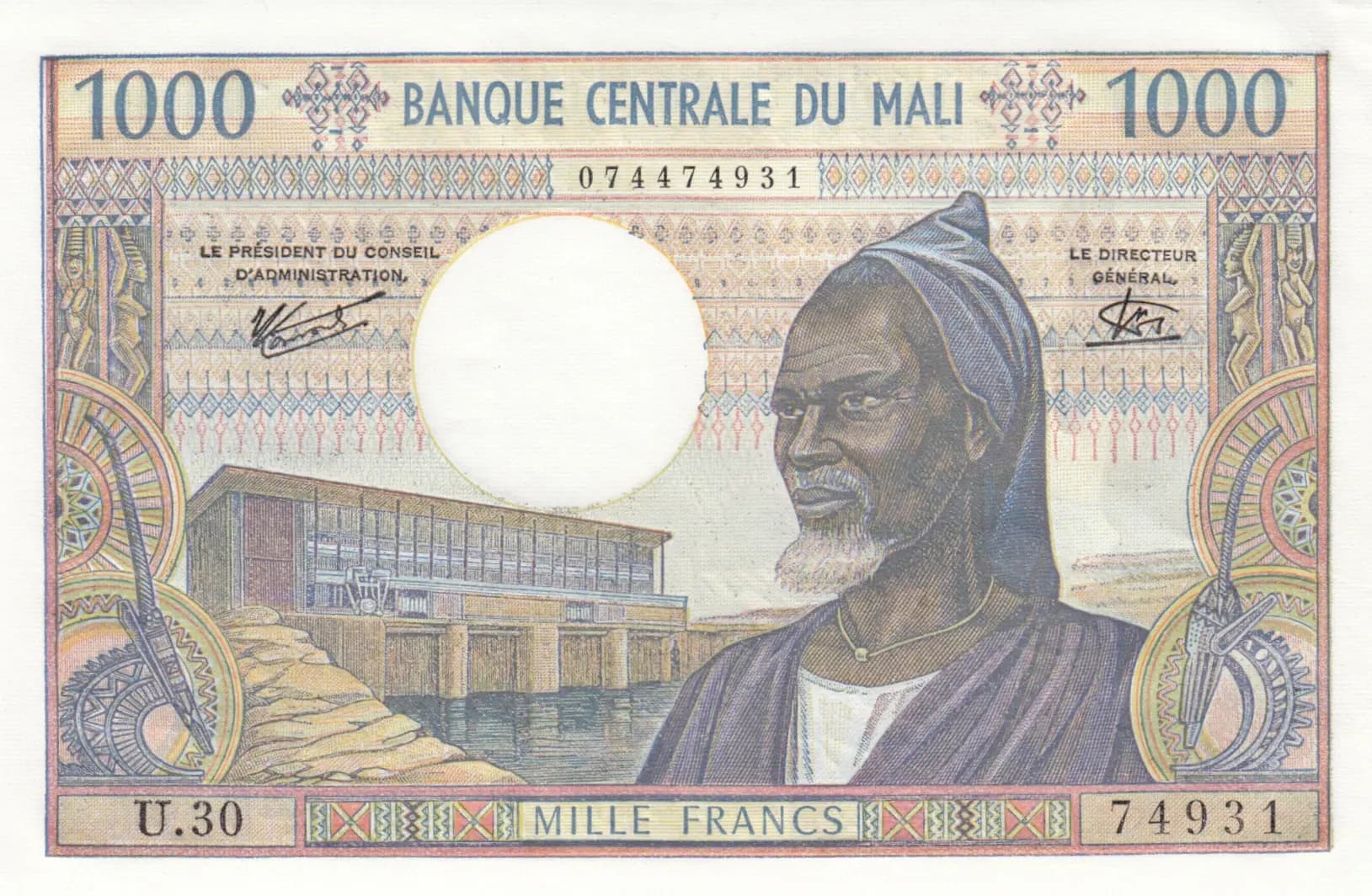
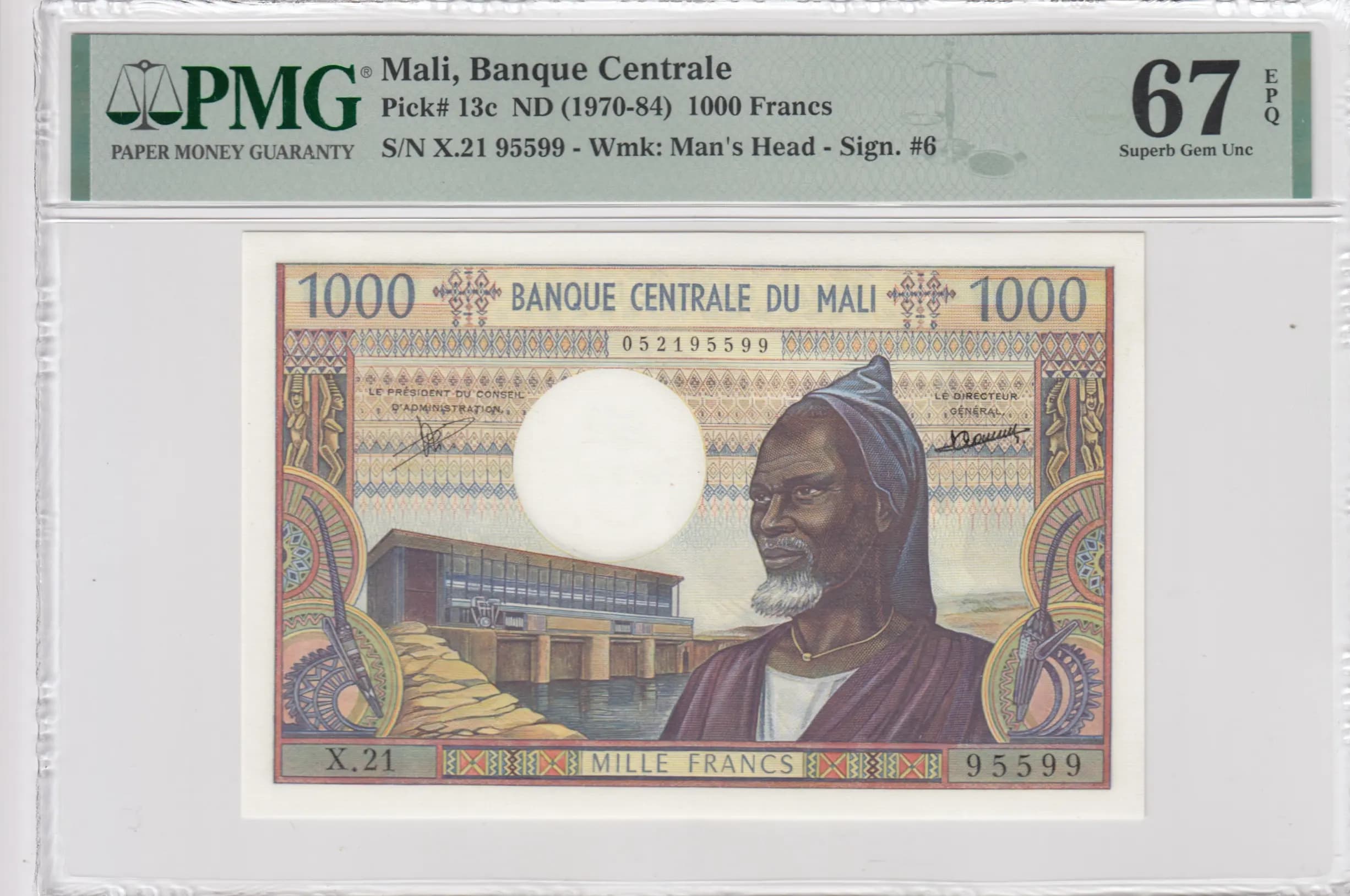
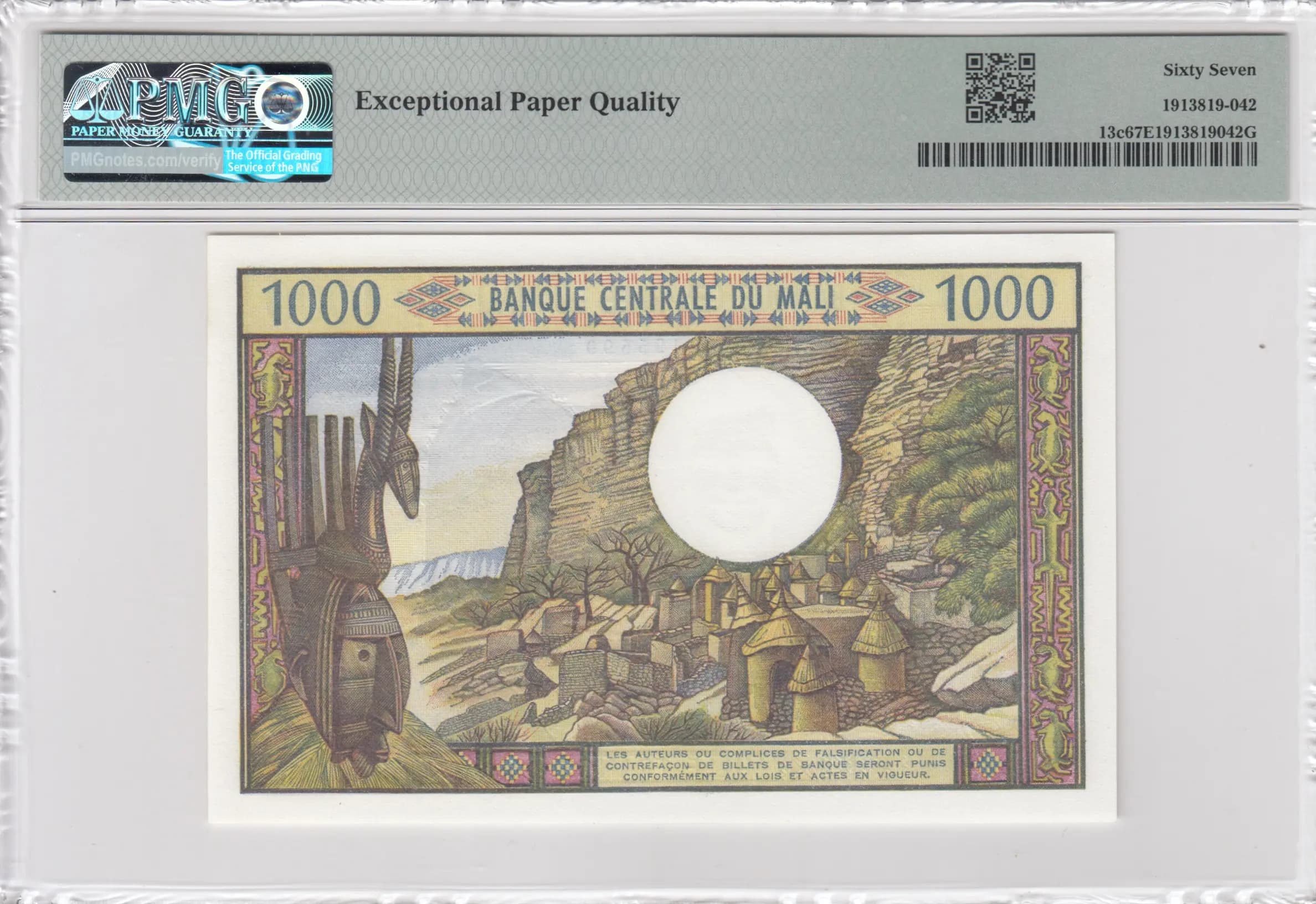
A stunning PMG 67 EPQ example of Mali's 1000 Francs note from 1970, featuring exceptional preservation and vibrant color. The obverse displays a bearded man in traditional dress alongside the iconic Sotuba hydroelectric dam, while the reverse depicts the striking Bandiagara escarpment landscape with traditional Dogon settlements. This high-grade specimen represents the finest condition typically encountered for this issue, with crisp paper, sharp engraving detail, and no signs of circulation.
Common. The catalog value for UNC examples is listed at $80 (2019), and eBay historical sales data shows regular circulation of comparable grades ranging from $61–$148 over a 10-year period, with consistent supply. While PMG 67 EPQ is a high grade (in the upper tier), the denomination itself was issued in substantial quantities during the 1970–1984 circulation period. No evidence of limited print runs, recalls, or short-lived issuance exists for this Pick number. The consistent availability across multiple graded examples in the PMG population report supports a common classification, despite this specimen's excellent condition.
Issued by the Banque Centrale du Mali during the early years of Mali's post-independence monetary period, this note celebrates the nation's modern infrastructure and cultural heritage. The Sotuba dam, depicted on the obverse, symbolized Mali's developmental aspirations, while the reverse's representation of the Dogon people's mountain settlement honored the country's rich ethnic and cultural diversity. The French inscriptions reflect Mali's continued institutional ties to French colonial monetary frameworks during this transitional era.
This note exemplifies mid-20th century West African currency design with distinctive artistic integration of national imagery. The obverse features a dignified portrait of an unidentified bearded elder wearing a traditional indigo tagelmust (Tuareg-style head covering) positioned in profile to the right, framed by a prominent circular watermark window—a security feature common to this series. The left side displays the Sotuba Dam, a modernist hydroelectric facility on the Niger River with characteristic horizontal grid-patterned windows and columned base, representing Mali's post-independence infrastructure development. The reverse presents a landscape composition of the Bandiagara Escarpment region in Dogon country, featuring dramatic cliff formations, rocky outcrops, and traditional cone-shaped granary structures of the Dogon people scattered across the terrain with a winding valley path. Both sides employ intricate geometric border designs and corner medallions reflecting traditional African artistic motifs. The color palette transitions from warm earth tones (tan, beige, cream, browns) on the obverse to ochres, yellows, greens, and grays on the reverse, creating visual distinction between the two sides.
Obverse: 'BANQUE CENTRALE DU MALI' (Central Bank of Mali), 'MILLE FRANCS' (One Thousand Francs), '1000' (denomination appears multiple times), 'LE PRÉSIDENT DU CONSEIL D'ADMINISTRATION' (The President of the Board of Administration), 'LE DIRECTEUR GÉNÉRAL' (The General Director), Serial number prefix 'X.21' and serial numbers '95599' and '05219599'. Reverse: 'BANQUE CENTRALE DU MALI' (Central Bank of Mali), '1000' (denomination), 'CONTREFAÇON PUNIE CONFORMÉMENT AUX LOIS ET ACTES EN VIGUEUR' (Counterfeiting punished according to laws and acts in force).
Intaglio engraving (recess printing), characteristic of central bank currency production in this era. The fine line work visible in the border decorations, geometric patterns, and landscape engraving details, combined with the sharp portrait rendering, are consistent with traditional steel plate engraving. The note likely employed multi-color intaglio printing with separate passes for different color zones. The circular watermark/security window visible in both the visual analysis and security feature descriptions indicates the use of specialized security printing techniques. The specific printer for P-13c is not definitively documented in standard references, but follows the design standard established for Mali's Banque Centrale du Mali currency program of this period.
This note is cataloged as Pick P-13c, representing one of five identified variants for the 1000 Francs Mali note (P-13a through P-13e). The distinction between variants typically relates to signature changes, date variations, or security feature modifications across the issue period (1970–1984). The serial number prefix 'X.21' and the specific signature combinations visible on this specimen should be cross-referenced with detailed Pick catalog notes to confirm the exact variety assignment. Without access to the complete signature roster for this series, the P-13c variety designation appears consistent with the Pick catalog standard, likely representing a mid-series printing with specific signature configurations.