100 rupees 1960
Market Prices
15 salesAbout This Note
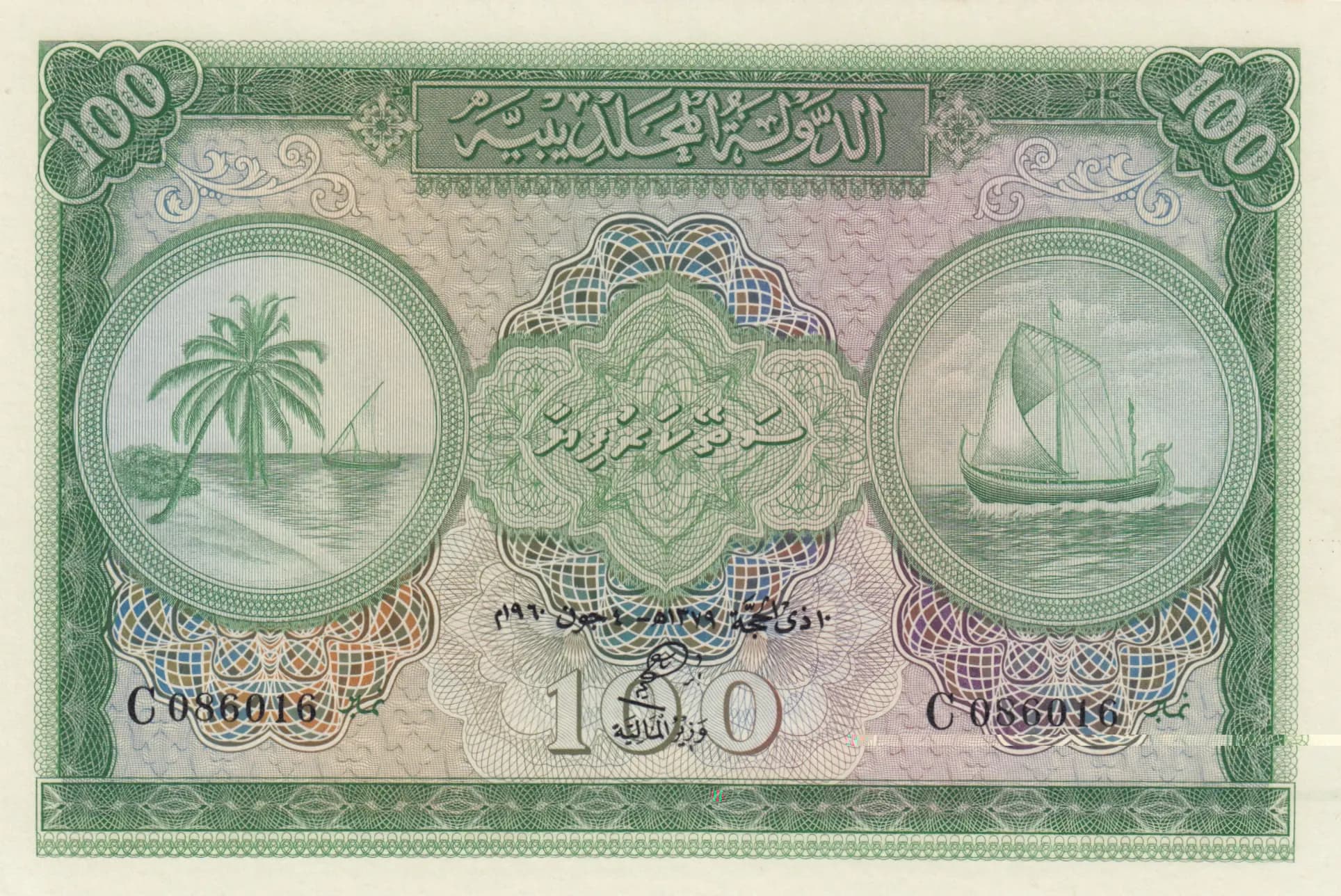
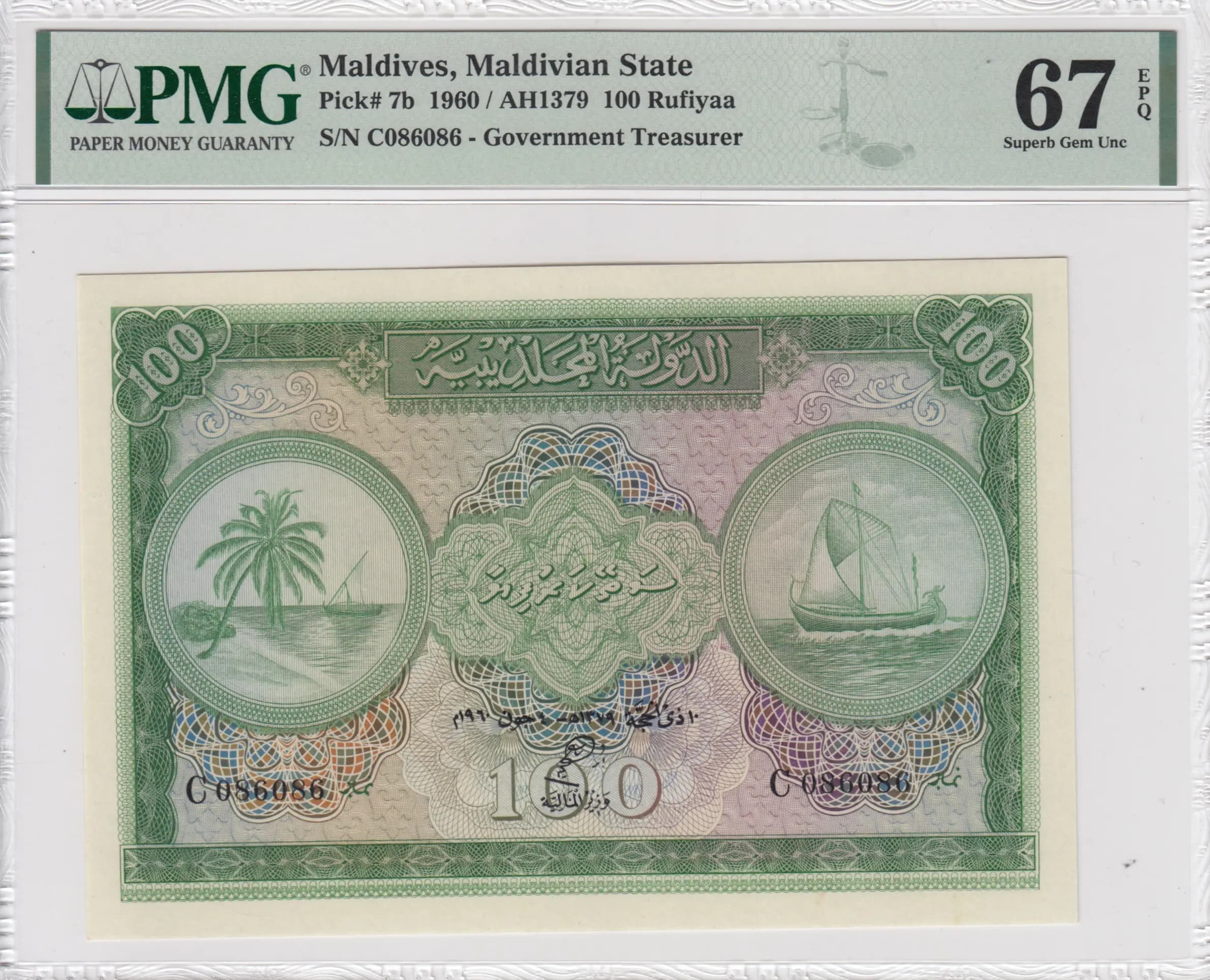
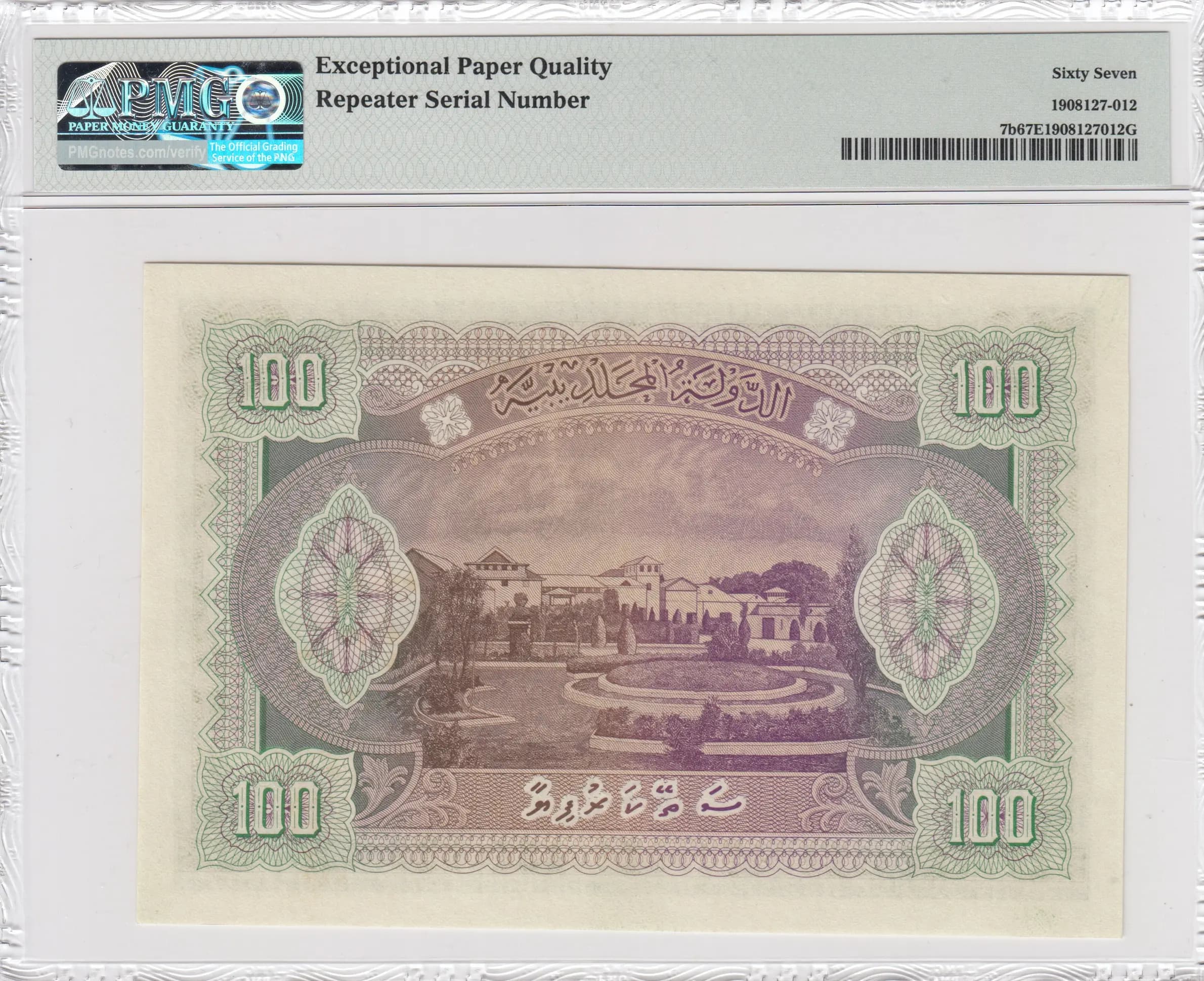
A stunning PMG 67 EPQ example of the 1960 Maldivian State Treasury 100 Rufiyaa (Pick-7b), featuring pristine uncirculated condition with sharp intaglio printing throughout. The note showcases distinctive green and multicolored designs on the obverse with circular medallions depicting a palm tree and traditional dhow, while the reverse displays an ornate architectural complex in mauve and green. This is one of the earliest banknote issues from the Maldivian State, representing a significant piece of numismatic history from the nascent island nation.
Common. This is a regular-issue banknote from the Maldivian State with substantial circulation and survival. eBay price tracking data demonstrates consistent availability across multiple condition grades spanning the past 15 years, with PMG 67 examples selling regularly in the $220-$430 range (averaging approximately $300-350). The catalog value for UNC examples stands at $200 (2019), and numerous examples have been offered and sold in recent years, indicating adequate supply in the market. While not as ubiquitous as modern currency, this is a well-represented note in private collections and dealer inventories.
Issued in 1960 during the early period of the Maldivian State Treasury's autonomous currency operations, this note predates the adoption of the Rufiyaa name by several years and reflects the nation's transition toward monetary independence. The depicted palm tree and dhow vessel symbolize the Maldives' maritime heritage and tropical geography, while the elaborate palace or governmental building complex on the reverse represents the seat of state authority under the sultanate system. The sophisticated intaglio designs and security features reflect international standards of the era, indicating the Maldivian State's commitment to establishing credible currency on the world stage.
The obverse features a distinctive dual-medallion composition with a palm tree on an island in the left circular frame and a traditional sailing dhow vessel in the right frame, both symbols of Maldivian maritime and tropical identity. Between the medallions sits an ornate central geometric emblem with Islamic geometric patterns rendered in green with accents of red, blue, and yellow. The reverse depicts an elaborate architectural complex—identified as either the Sultan's palace or Court of Eterekoilu based on catalog references—with manicured gardens and a central circular landscaping feature, surrounded by corner ornaments featuring teardrop-shaped geometric motifs. Decorative borders with intricate geometric patterns frame both sides, characteristic of high-security banknote design of the period. The denomination '100' is prominently displayed on both sides.
FRONT: 'ދިވެހިސްޓާނުގެ ސުލްތާނަތް' (Dhivehi) = 'Maldivian State'; '100' (Numeric) = denomination; 'C086086' (Alphanumeric) = Serial Number. BACK: 'ދިވެހިސްޓާނުގެ ސުލްތާނަތް' (Dhivehi) = 'Maldivian State'; '100' (Numeric) = denomination in all four corners; 'ސާ ދިވެހި ރުފިޔާ' (Dhivehi) = 'One Hundred Rufiyaa'.
Intaglio (engraved) printing with multiple color security printing zones. The fine geometric details, sharp line work, and crisp definition of the ornamental borders visible in both obverse and reverse indicate traditional steel engraving combined with multi-color offset lithography for the background and security features. The watermark areas visible in the circular medallions suggest incorporation of security watermarking in the note's substrate. The printer/security printer for this specific Pick number is not definitively documented in standard catalogs, though such sophisticated early Maldivian currency typically employed international security printers such as De La Rue or similar establishments.
This specimen is identified as Pick-7b, one of five known variants for the base Pick-7 number cataloged by PMG. The variants (P-7a, P-7as, P-7b, P-7bs, P-7s) likely represent differences in signature combinations or serial number series. The observed specimen bears serial number C086086, which may indicate a specific printing batch. No overprints or date variations are visible on the inspected example, consistent with the standard 1960 issue. The 'b' designation in Pick-7b typically indicates a variant within the same denomination and year, but the specific differentiating features (likely signature or printer variants) would require comparative examination with other variants in the series.