50 avos 1944
“serie J”
Market Prices
19 salesAbout This Note
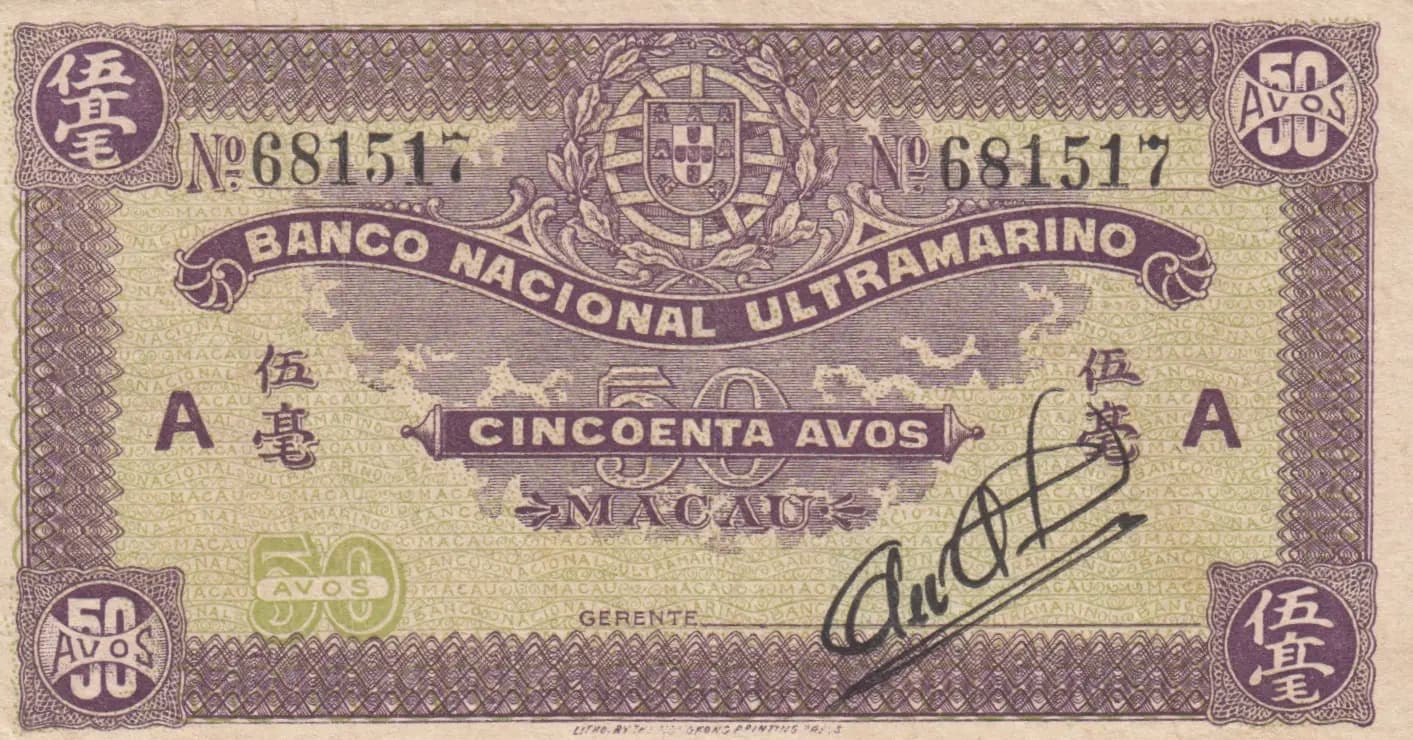
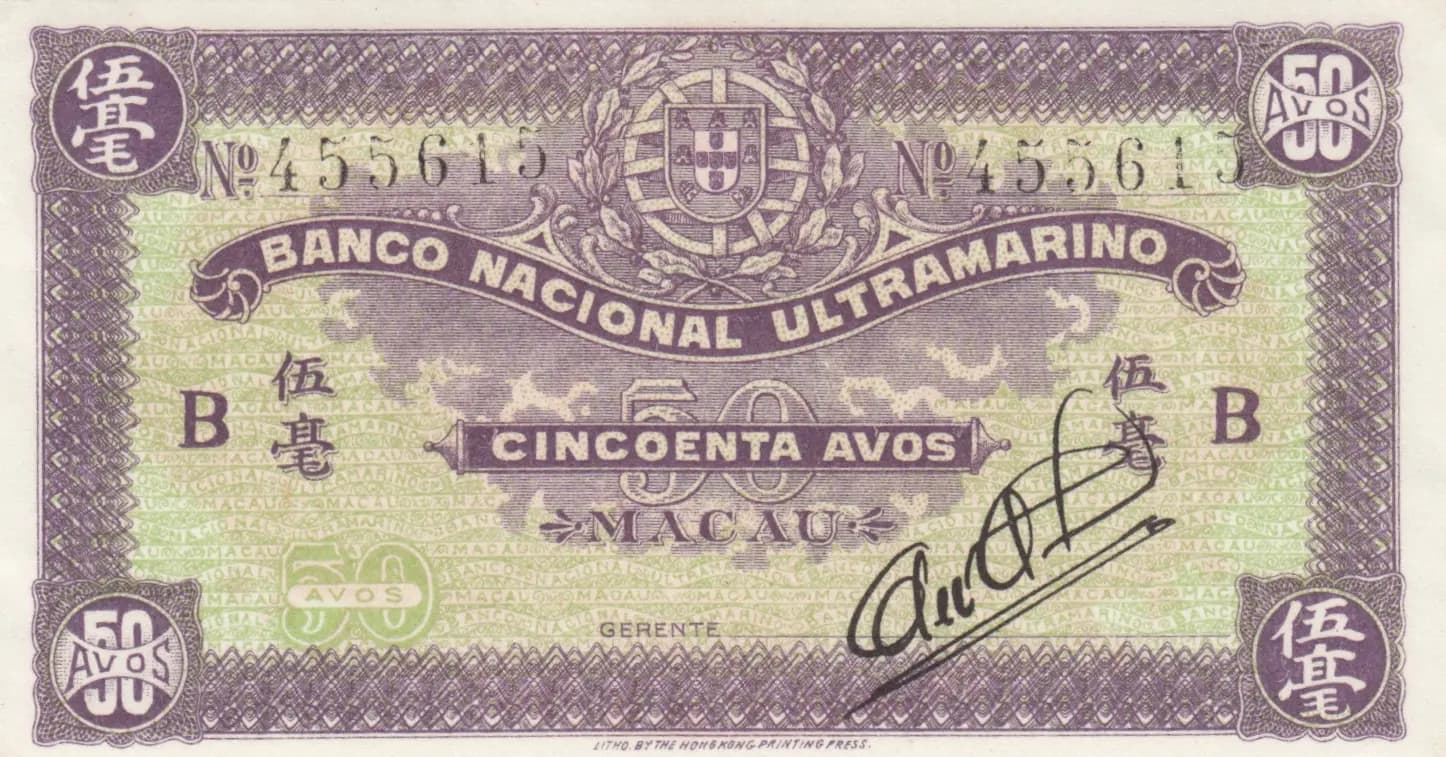
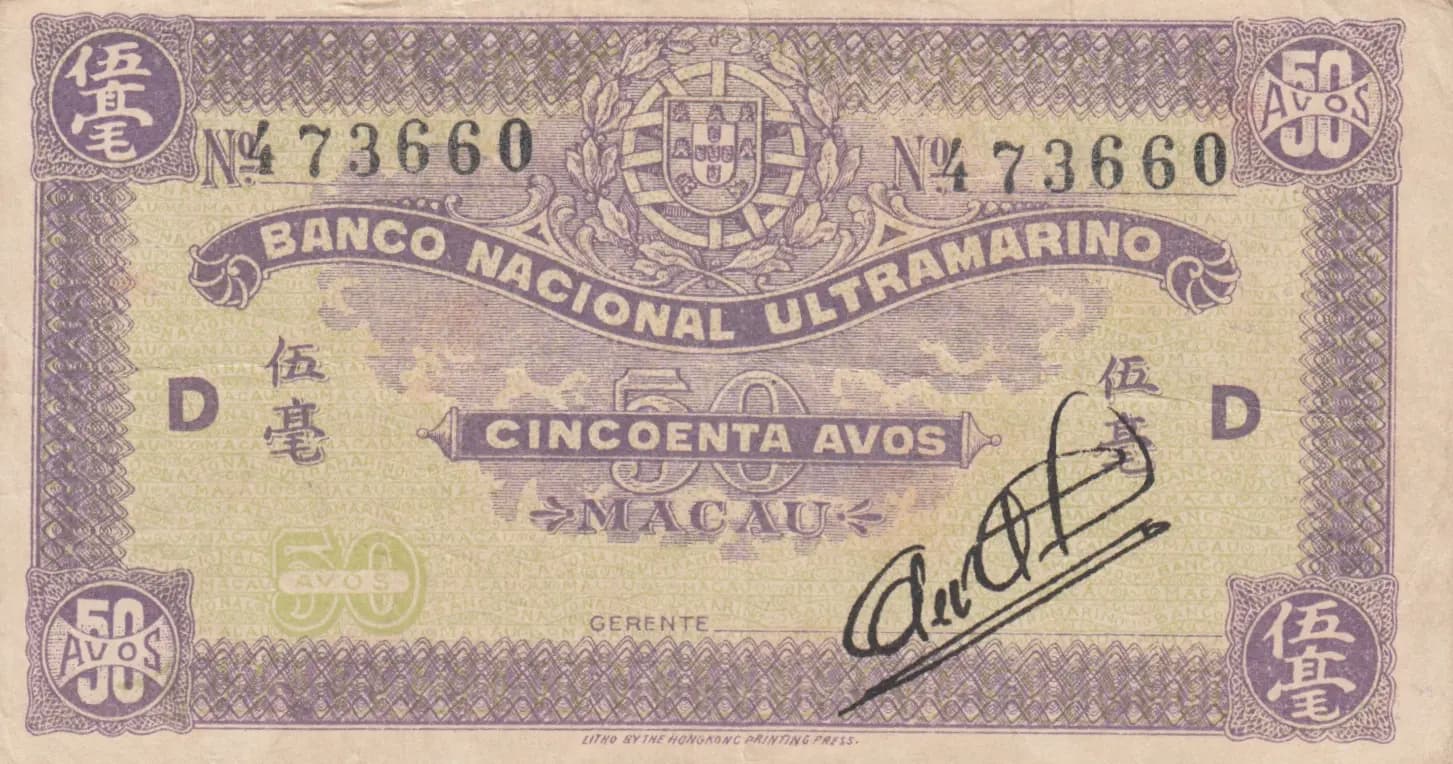
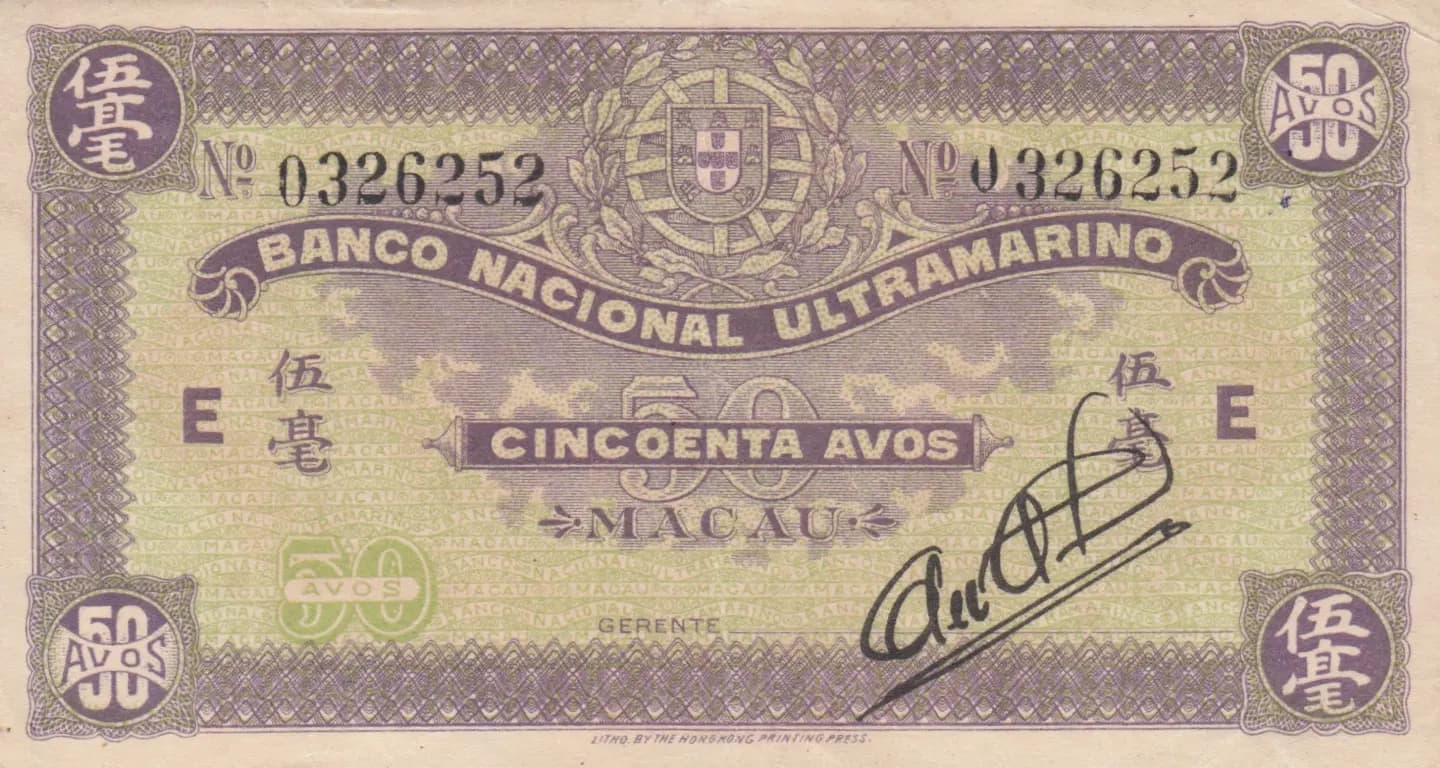
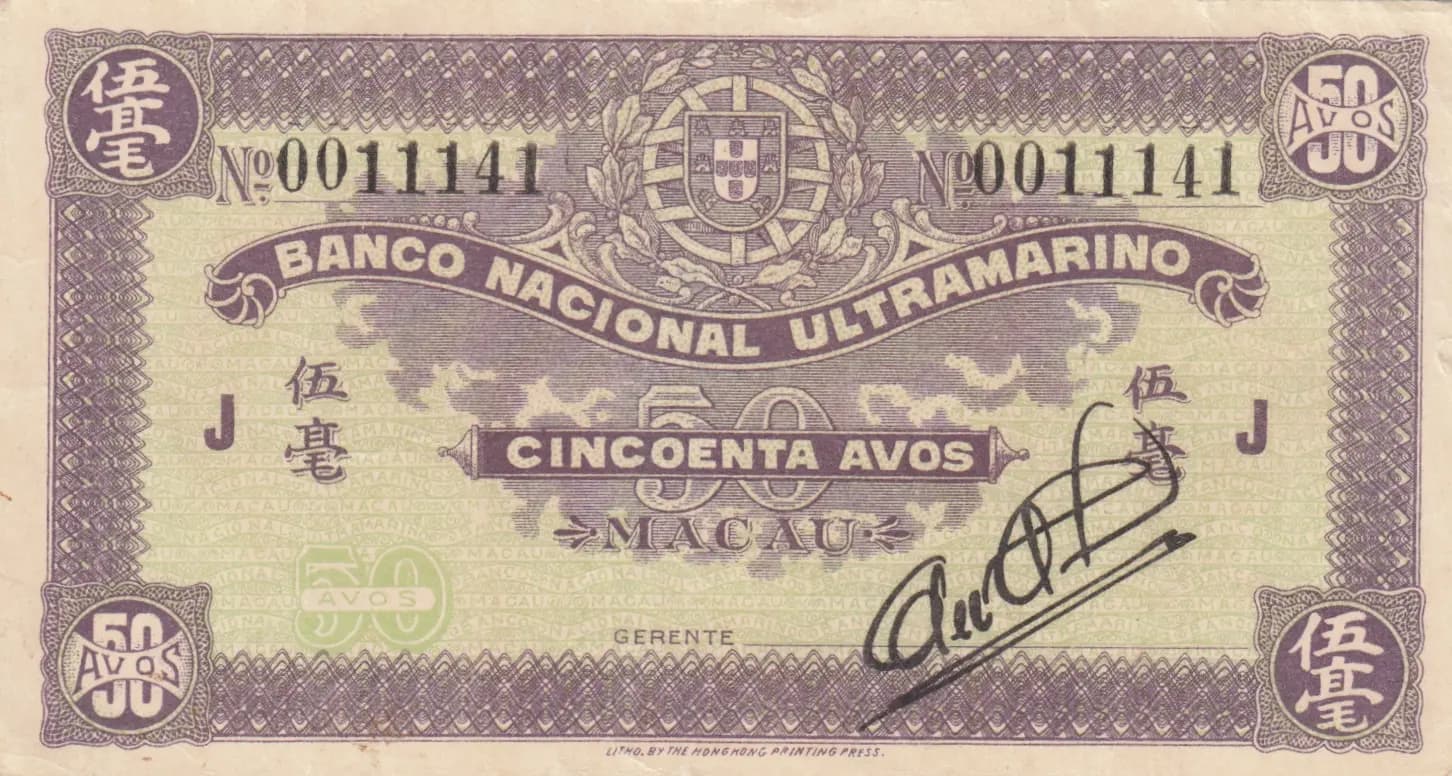
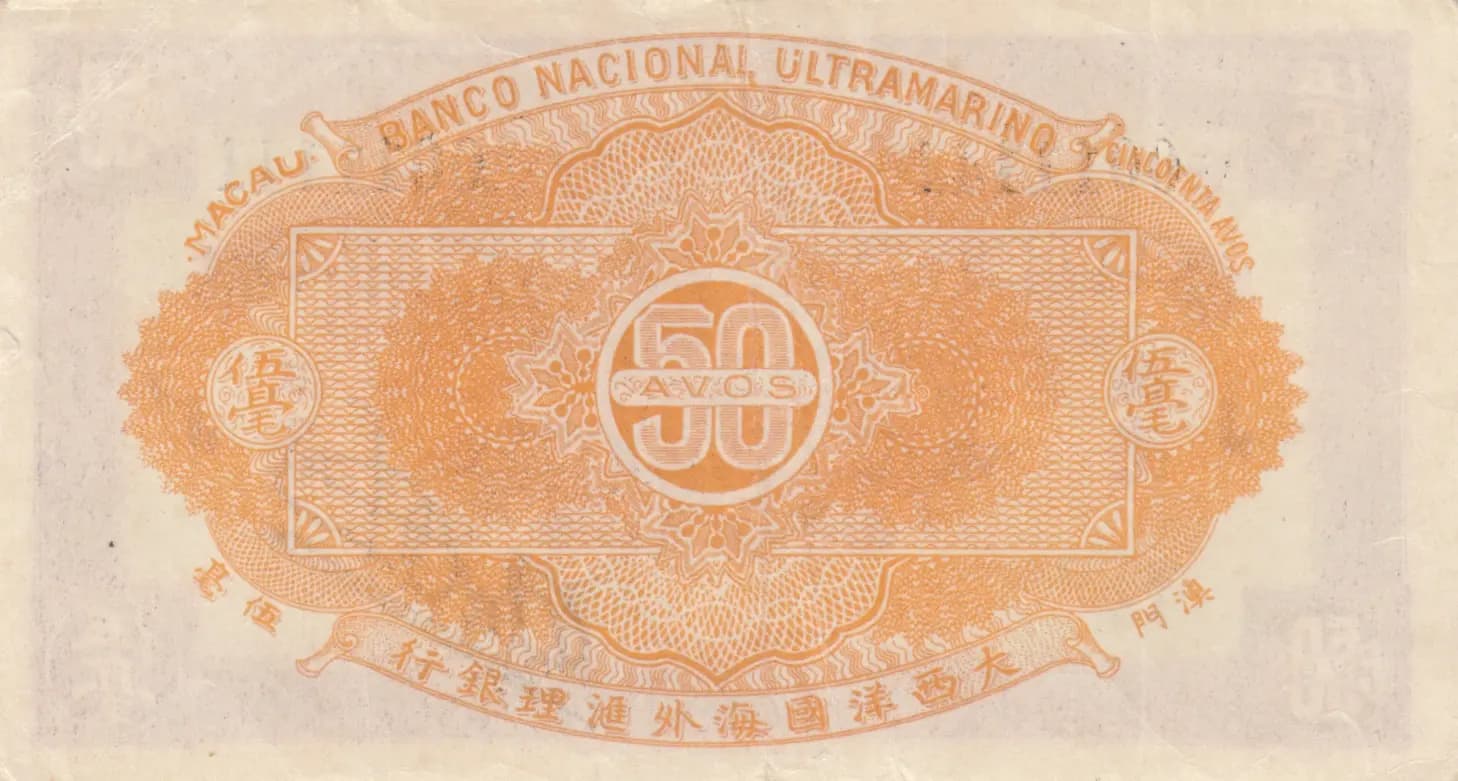
This 50 avos banknote from 1944 is an elegant example of Portuguese colonial currency issued by Banco Nacional Ultramarino for Macau. The note features distinctive purple/violet on the obverse and orange/peach on the reverse, with intricate engraved decorative borders and a central Portuguese heraldic shield surrounded by laurel wreaths. In VF condition with light creasing and age-appropriate patina, this specimen exhibits the fine line work characteristic of early 20th-century currency design and represents an important piece of Macau's monetary history.
Common. The 50 avos denomination was a routine circulating note issued in substantial quantities by Banco Nacional Ultramarino throughout Macau's colonial period. No historical evidence suggests limited print runs, early recall, or short-term issuance for this Pick number. Notes from this series remain relatively available in the collector market, with VF condition specimens representing typical preservation levels for surviving examples from the 1944 issue.
Issued in 1944 during World War II, this banknote reflects Portugal's continued colonial administration of Macau under the Banco Nacional Ultramarino, which served as the currency authority for Portuguese overseas territories. The incorporation of both Portuguese heraldic symbolism (the shield and laurel wreaths) and Chinese characters in circular seals demonstrates the bicultural nature of Macau's governance during this period. The denomination in both Portuguese and numerals reflects the practical currency needs of the territory's mixed population.
The obverse features a Portuguese coat of arms — a quartered shield design typical of Portuguese heraldry — prominently centered and surrounded by an ornate laurel wreath, symbolizing achievement and dignity. The shield is flanked by decorative geometric cross-hatch patterns forming an elaborate border frame. The reverse displays a highly symmetrical design with a central circular denomination seal containing '50 AVOS JU' enclosed within ornamental scrollwork and floral filigree elements. Four corner positions contain Chinese characters in circular seals, reflecting Macau's dual Portuguese-Chinese administration. The overall design employs fine engraved line work throughout, with no portrait elements, emphasizing institutional authority through heraldic and decorative iconography rather than individual representation.
FRONT SIDE: 'BANCO NACIONAL ULTRAMARINO' (National Overseas Bank), 'CINCOENTA AVOS' (Fifty avos), 'MACAU' (Macau), 'GERENTE' (Manager), Serial number 'No 0011141', '50 AVOS JU' (denomination marker with Chinese character). Chinese characters appear in corner seals indicating position/location. BACK SIDE: 'BANCO NACIONAL ULTRAMARINO' (National Overseas Bank), 'MACAU' (Macau), 'CINCOENTA AVOS' (Fifty avos), '50 AVOS JU' (denomination marker), with Chinese characters in corner position seals.
Intaglio (copperplate) engraving, evidenced by the fine, precise line work, intricate cross-hatching patterns, and detailed filigree visible throughout both sides of the note. The complex decorative borders, geometric patterns, and the sharp clarity of the coat of arms indicate traditional engraved security printing methods employed by Portuguese currency printers of this era. The depth and definition of the ornamental elements, particularly the laurel wreath detailing and scrollwork on the reverse, are characteristic of high-quality intaglio production used for colonial currency security.
Specimen identified as serie J (noted in collector notes), indicating this is from the 'J' series designation. Serial number observed: No 0011141. The letter designation 'J' in the denomination marking ('50 AVOS JU') may indicate a specific printing batch or series identifier. Known varieties for P-21 include different series letters (A through J documented), which serve as the primary variety differentiator for this denomination. Further research into the specific 'J' series population and any signature variations on this issue would be warranted for comprehensive variety cataloging.