50 avos 1944
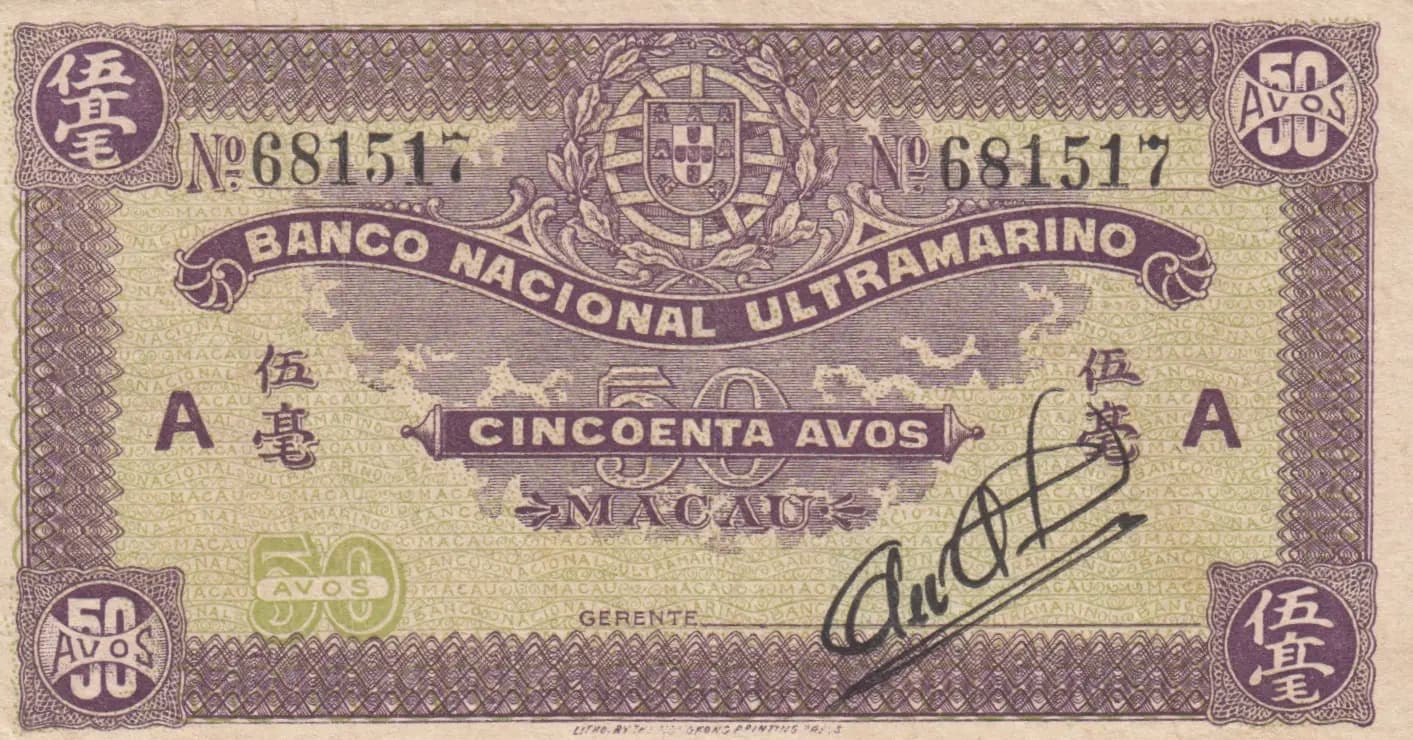
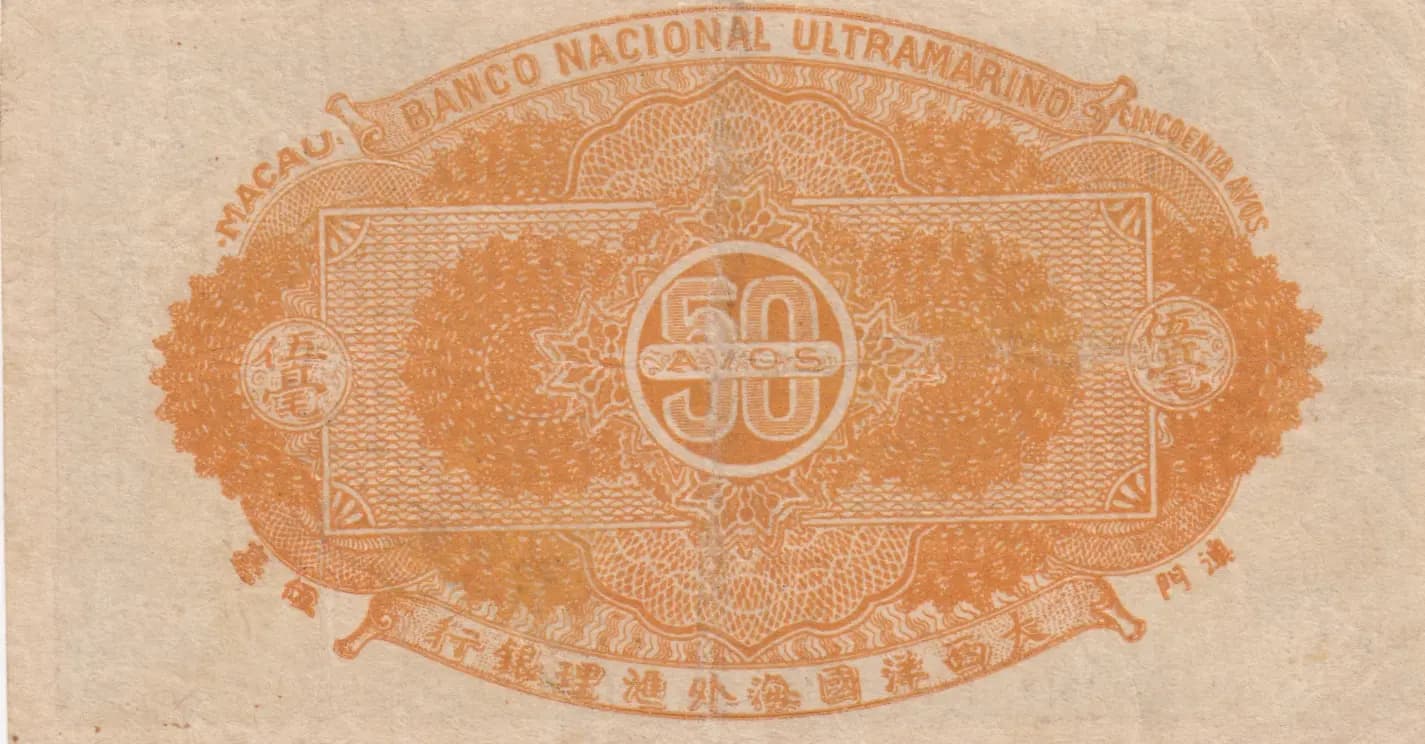
“serie A”
Market Prices
19 salesAbout This Note
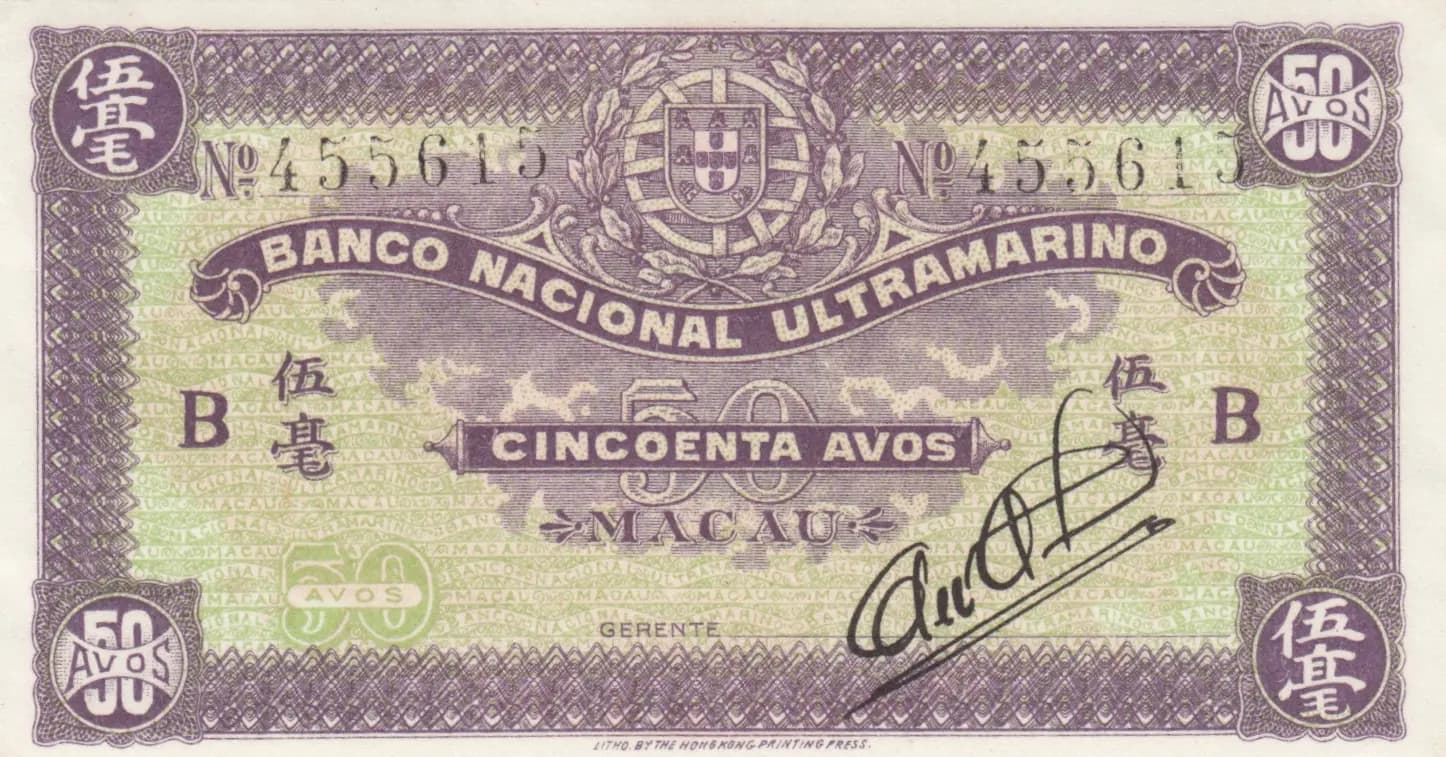
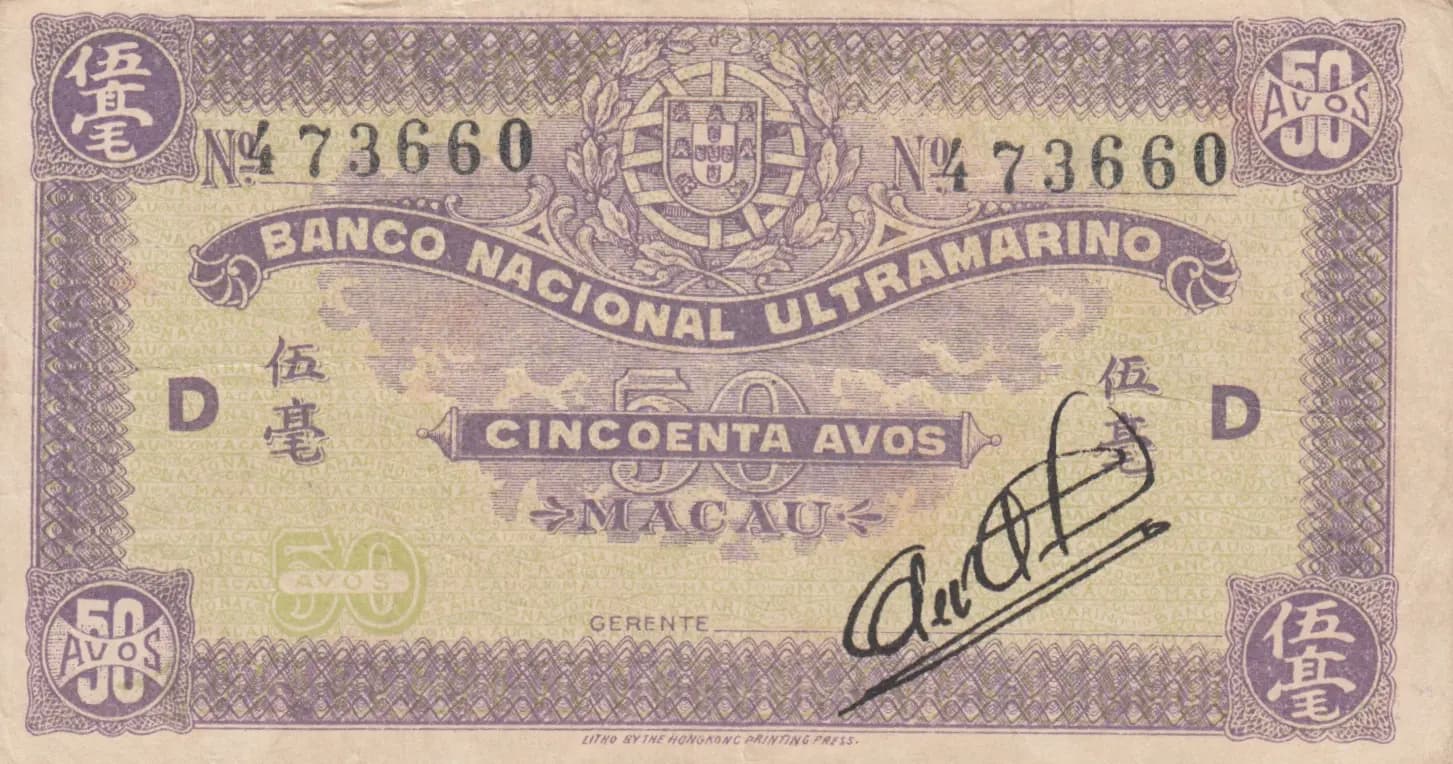
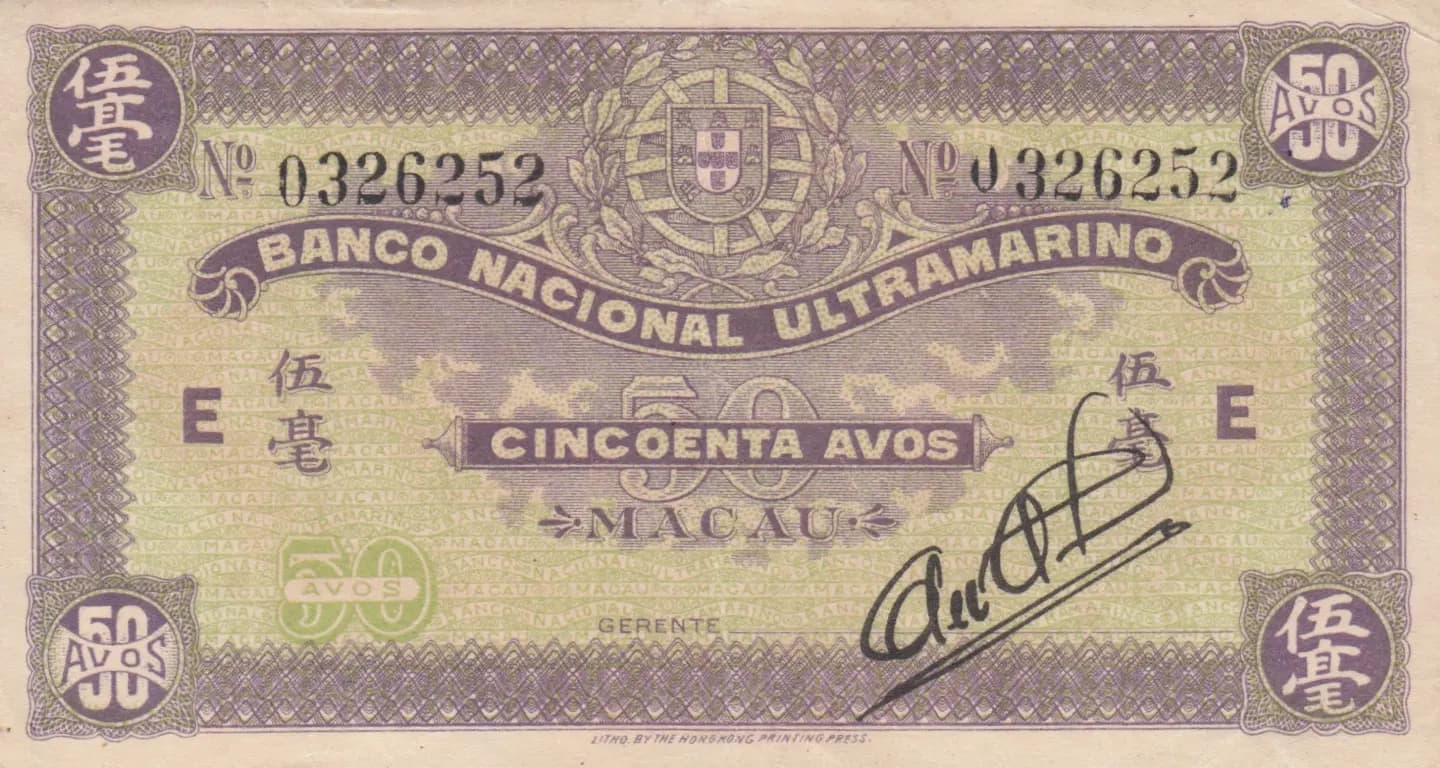
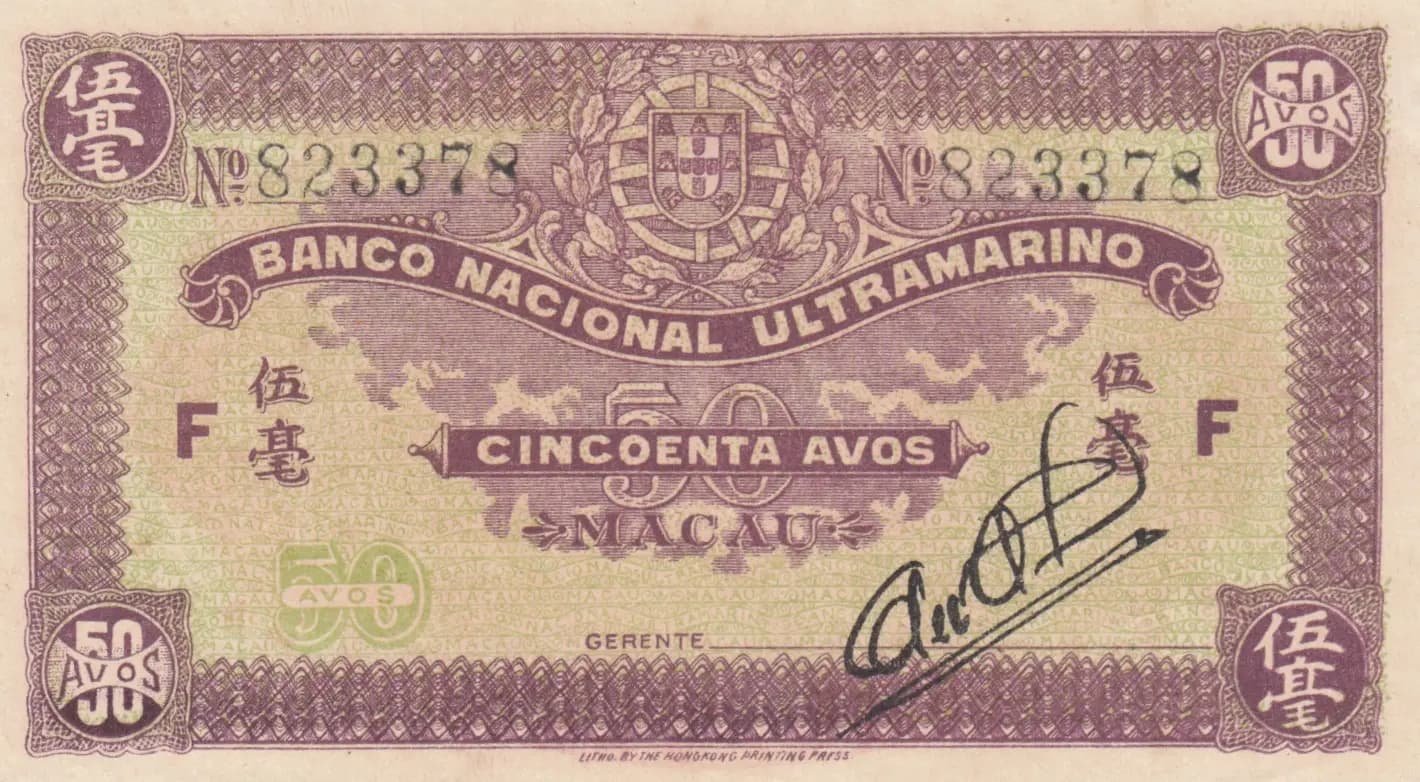
This Macau 50 avos from 1944 (Pick 21) presents in Very Fine condition with characteristic purple obverse and orange reverse typical of this issue. The note displays the distinctive block letters A-J flanking the central Portuguese coat of arms, differentiating it from the earlier P-17 without these letters. Though showing expected age-related patina and foxing consistent with an 8-decade-old banknote, the note retains good structural integrity with no major tears, making it an appealing example for collectors of Portuguese colonial currency.
Common. The eBay market data shows consistent sales activity across multiple condition grades from 2010 to 2024, with VF examples selling in the $15-$23 range and catalog valuations (2016) placing VF at $15 USD. The existence of numerous sales records across 14+ years, including multiple examples in various grades, and the lack of any annotation in catalog references regarding limited print runs or scarcity all indicate this is a standard issue with adequate circulation among collectors. Notes regularly achieving sub-$25 prices in the secondary market are definitionally common.
This note was issued during the final year of World War II by the Banco Nacional Ultramarino, Portugal's overseas banking authority that administered Macau's currency. The bilingual Portuguese-Chinese design reflects Macau's status as a Portuguese colony with a predominantly Chinese population, while the Portuguese coat of arms and formal banking nomenclature underscore colonial financial authority. The 1944 issue represents a transitional period in Macau's monetary history, produced locally by Hongkong Printing Press amid wartime logistical constraints.
The obverse features the Portuguese royal coat of arms at center, enclosed within an ornate laurel wreath, rendered in purple and mauve tones on a cream background. Block letters A through J frame the central design on both left and right margins, a distinguishing feature from the earlier P-17 variety. The reverse displays a large circular denomination medallion prominently inscribed '50 AVOS' in the center, surrounded by elaborate floral and geometric ornamental patterns in orange and tan. Corner seals bearing Chinese characters appear on both sides, establishing the note's bilingual colonial character. The fine linear background pattern and intricate engraved borders throughout provide decorative security elements consistent with early-20th-century Portuguese colonial banknote production.
FRONT: 'BANCO NACIONAL ULTRAMARINO' (National Overseas Bank), 'CINCOENTA AVOS' (Fifty avos), 'MACAU', '伍拾圓' (Fifty avos in traditional Chinese), '伍拾' (Fifty in Chinese), 'GERENTE' (Manager), Serial number 'No 681517', Series letter 'A'. BACK: 'BANCO NACIONAL ULTRAMARINO' (National Overseas Bank), 'MACAU', '50 AVOS', '伍拾圓' (Fifty in traditional Chinese numerals), '中華民國澳門外幣國幣局' (text relating to Macau currency administration).
Intaglio engraving, executed by Hongkong Printing Press as noted in catalog references. The fine detail in the coat of arms, ornate border designs, and background geometric patterns are characteristic of high-quality intaglio work. The crisp line work visible in the ornamental borders and security patterns, along with the dimensional quality of the printing, confirm traditional engraved plate printing rather than lithography. The thin paper stock noted in reference materials is consistent with wartime paper constraints and typical of Portuguese colonial issues of this period.
This note is identified as Series A, as indicated by the block letter 'A' visible on both sides of the design. The presence of block letters A-J differentiates this 1944 issue (Pick 21) from the earlier 1942 variety (Pick 17) which lacked these letters. The specific serial number observed is 681517. Series variants A through J are documented for this issue, with Series A being among the standard varieties issued. No overprints or special markings are evident that would indicate a rare variety or substitution series.