50 avos 1944
“serie D”
Market Prices
19 salesAbout This Note
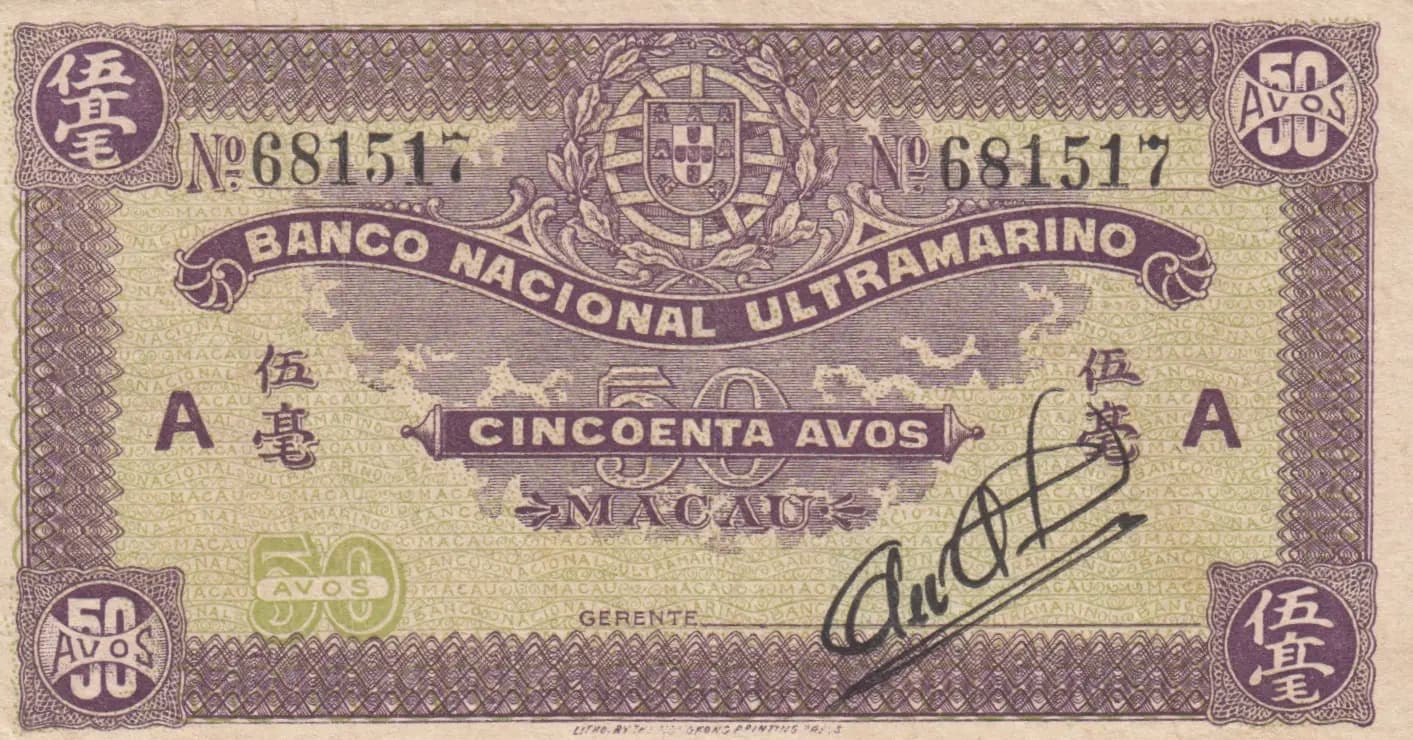
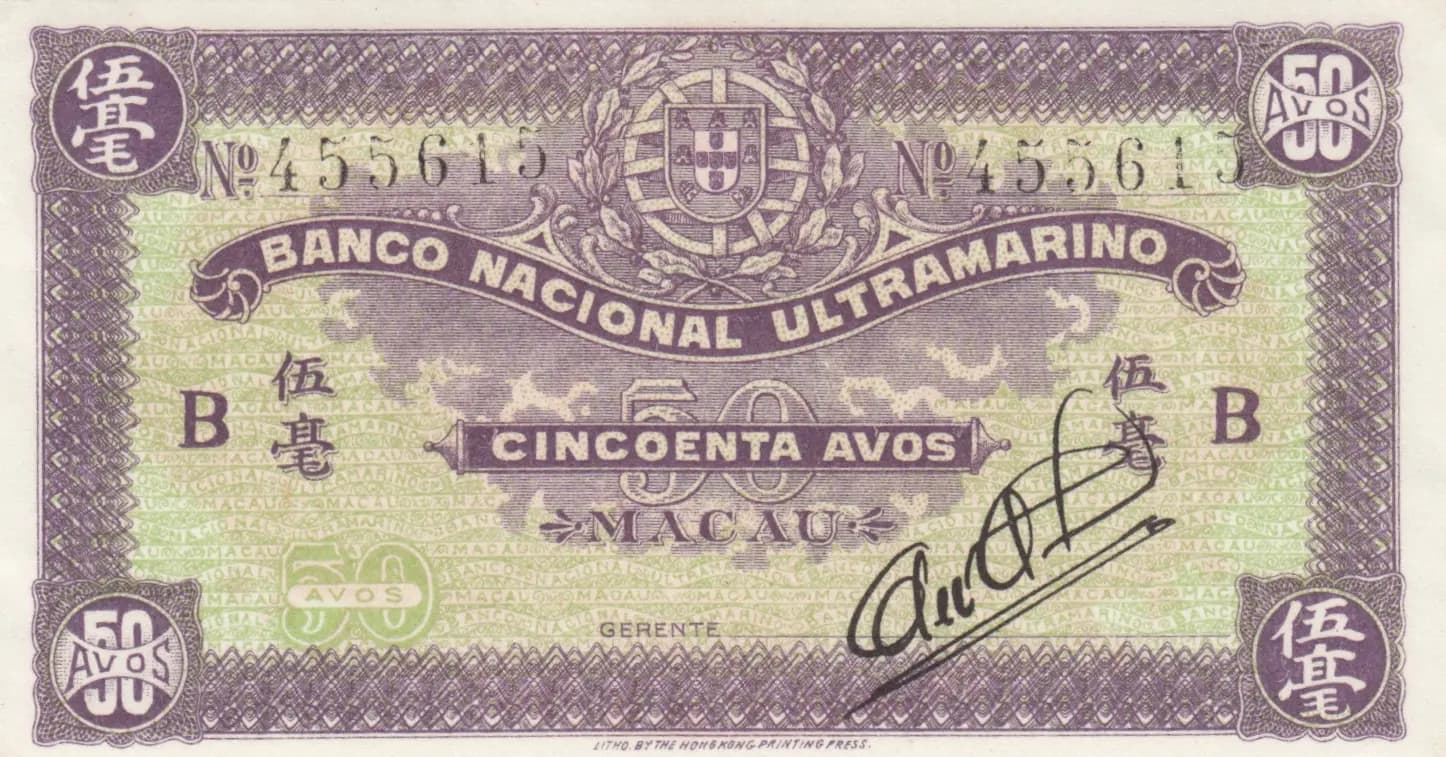
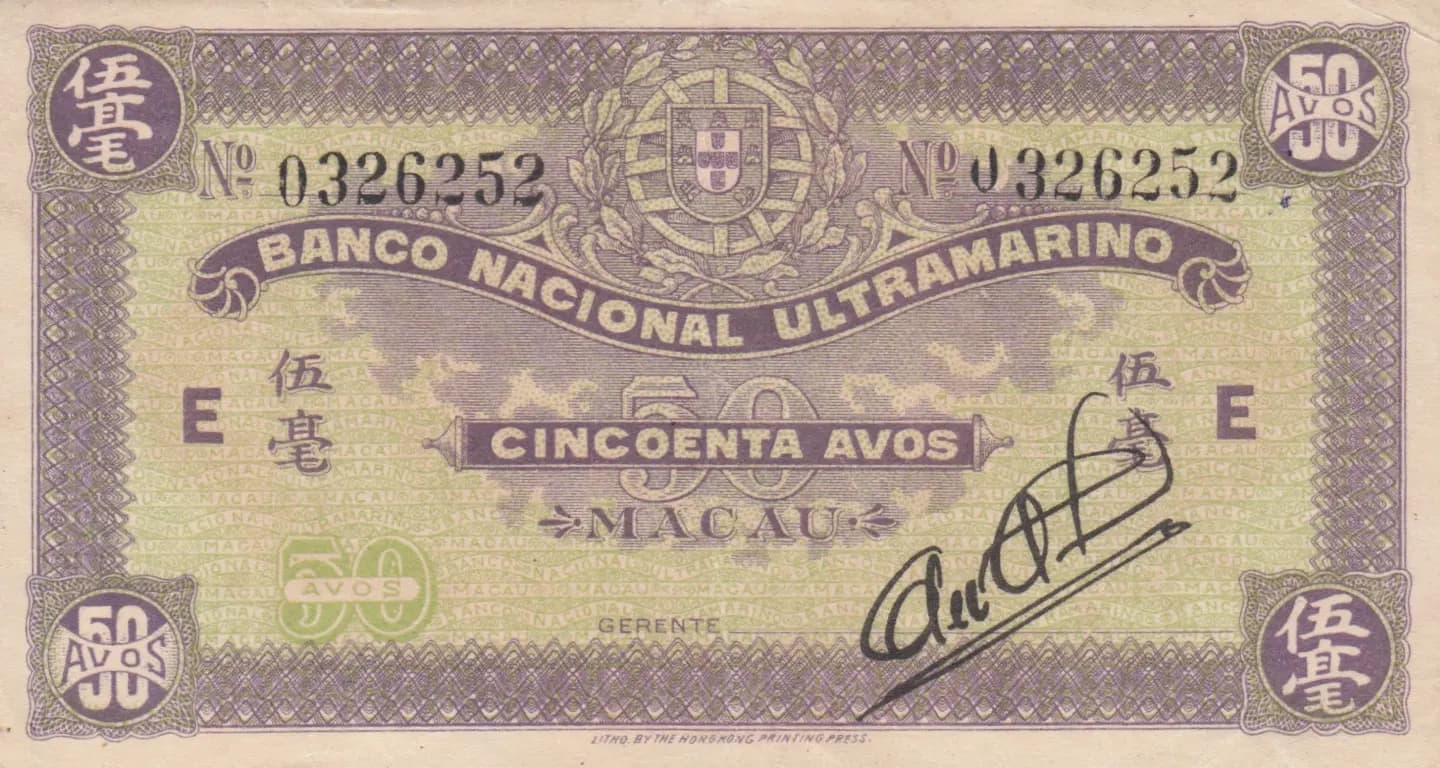
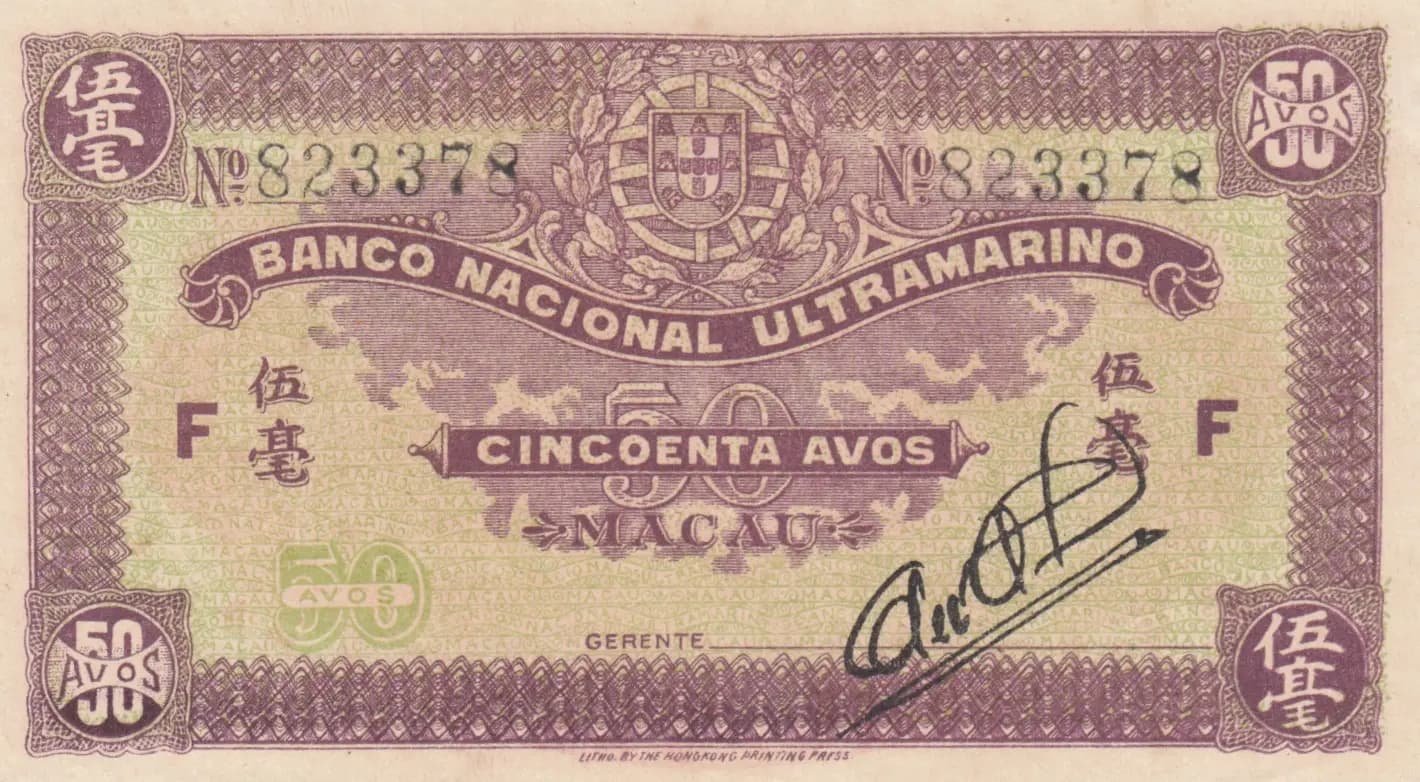
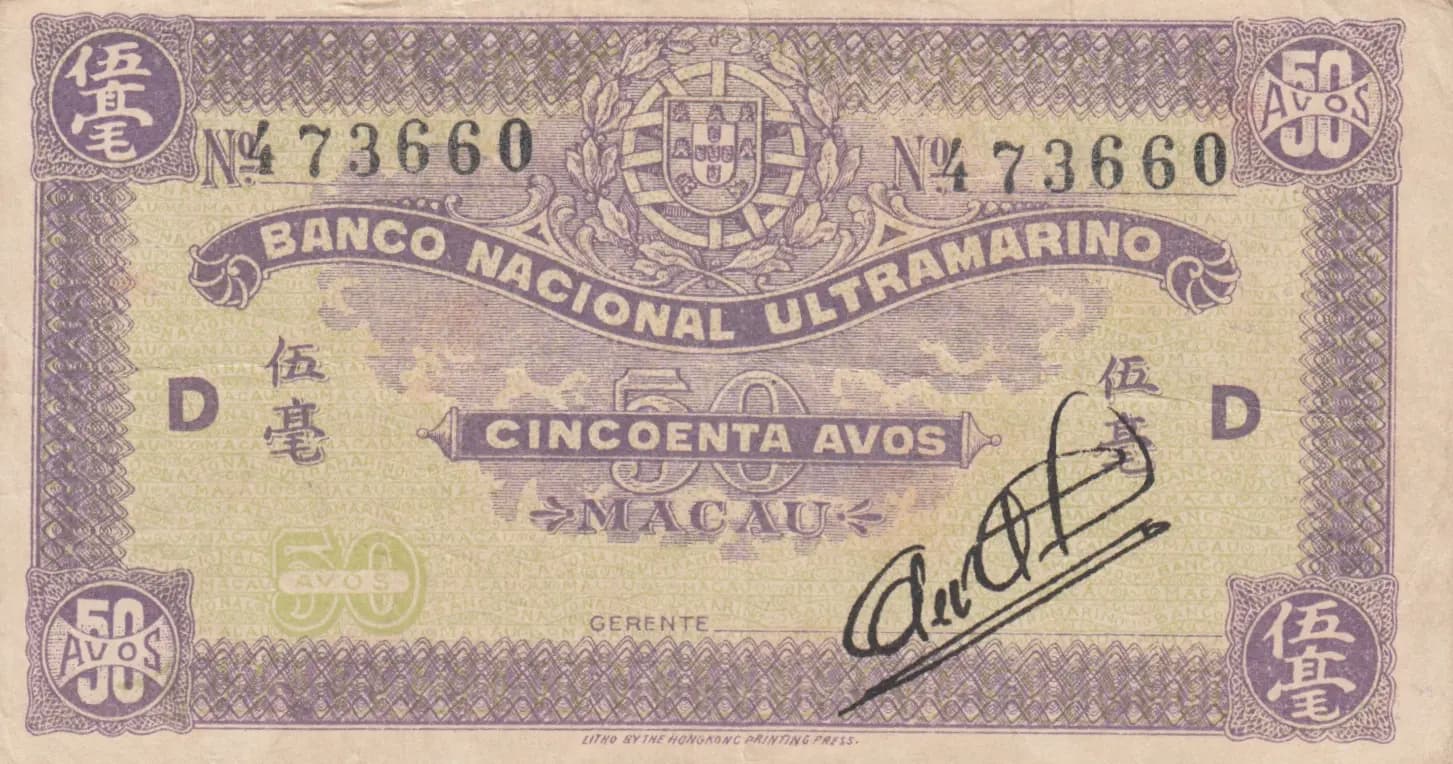
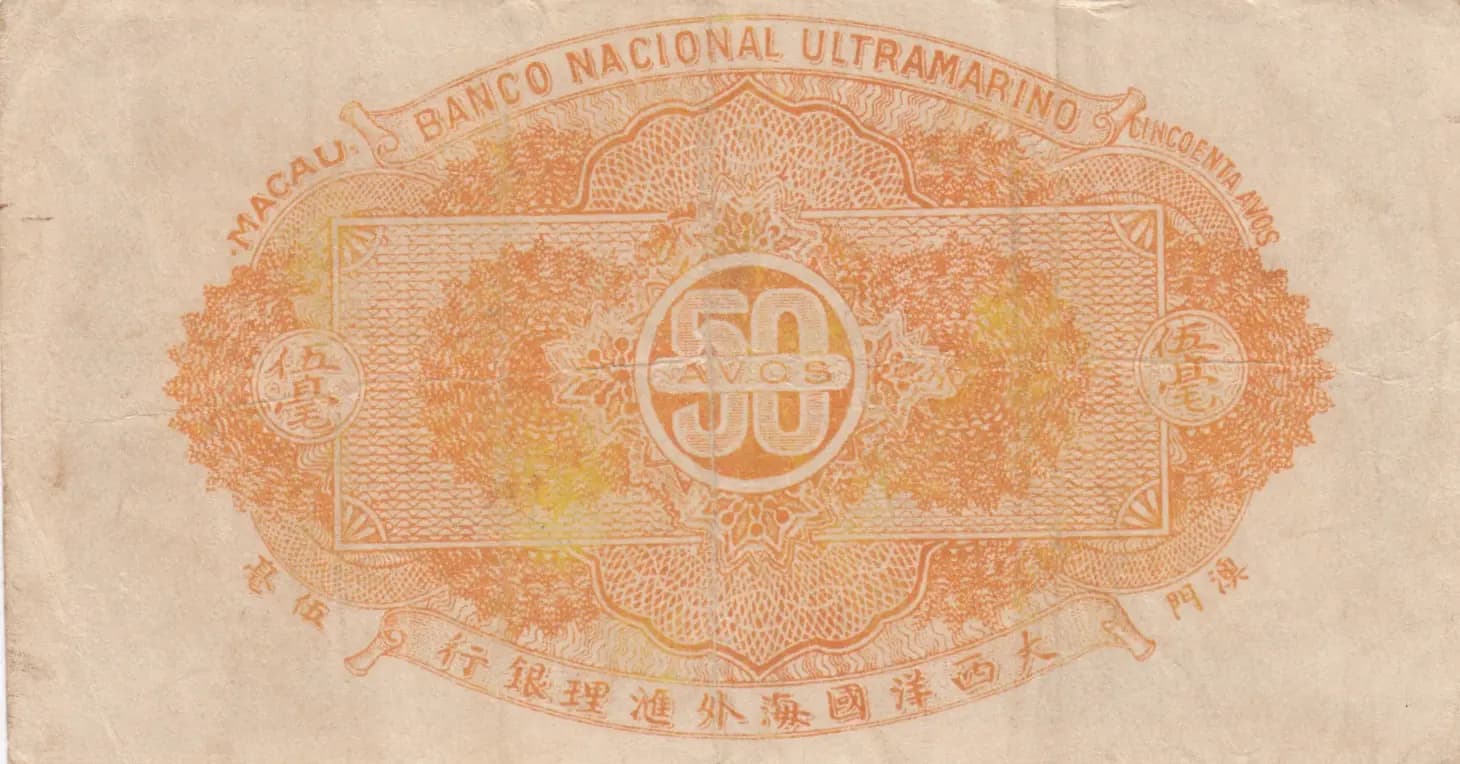
This is a VF-graded 50 avos banknote from Macau issued by Banco Nacional Ultramarino in 1944, belonging to series D. The note features an elegant bilingual design with Portuguese and Chinese text, ornate geometric borders, and a central heraldic shield, reflecting Macau's colonial Portuguese heritage during the mid-20th century. Despite significant aging with visible foxing, creasing, and yellowing consistent with its 80-year age, the note remains well-preserved with clear, legible inscriptions and intricate line work still evident, including a handwritten signature across the obverse.
Common. The 50 avos denomination from the 1944 Banco Nacional Ultramarino series represents standard circulation currency with no documented evidence of restricted print runs, recalls, or scarcity. While the note is now 80 years old and aged examples are increasingly encountered in collections, the denomination itself was produced in quantities consistent with colonial monetary requirements. VF-graded examples with series D designation are typical catalog inventory items without premium rarity factors.
This 1944 50 avos note was issued during the Japanese occupation of Macau in World War II, a period when the Portuguese colony maintained nominal neutrality. The design incorporates Portuguese heraldic symbols and Portuguese language prominently alongside Chinese characters, reflecting Macau's unique bicultural status as a Portuguese enclave in Asia. The Banco Nacional Ultramarino, Portugal's overseas colonial bank, continued operations throughout the war, making this note a significant artifact of wartime monetary circulation in the Far East.
The obverse features a symmetrical, highly ornamental layout centered on the Portuguese coat of arms or heraldic shield, flanked by classical laurel wreaths and decorative floral elements. The denomination and issuing bank name are displayed prominently in Portuguese, with Chinese characters rendered in circular seals at each corner—a bilingual approach reflecting Macau's colonial administrative structure. The reverse showcases a large circular emblem dominating the center field with '50 AVOS' prominently displayed, surrounded by concentric decorative rings and radiating ornamental patterns. The overall design employs neo-classical aesthetic conventions typical of Portuguese colonial currency, with extensive use of geometric borders, scrollwork, and fine line patterns throughout both sides. No portraits are depicted; instead, heraldic and symbolic elements convey institutional authority. The color scheme shifts from purple/violet tones on the obverse to warmer orange, tan, and cream tones on the reverse.
OBVERSE: 'BANCO NACIONAL ULTRAMARINO' (Ultramarino National Bank), 'CINCOENTA AVOS' (Fifty avos), 'MACAU' (Macau), Serial number 'Nº 4 73660', Series designation 'D', 'GERENTE' (Manager), Chinese numerals '伍' (five) and '壹' (one) in corner seals, 'LITHO BY THE NONGNANG PAINTING PRESS' (printing credit). REVERSE: 'MACAU' (Macau), 'BANCO NACIONAL ULTRAMARINO' (Ultramarino National Bank), 'CINCOENTA AVOS' (Fifty avos), '50 AVOS' (Fifty avos - numeral form), Chinese text '澳門' (Macau) and '國外海進理銀行葡' (Portuguese Overseas Bank).
Lithography, as credited directly on the note: 'LITHO BY THE NONGNANG PAINTING PRESS.' The visual analysis confirms the use of fine intricate line work, geometric patterns, and the characteristic appearance of lithographic production typical of mid-20th century Far Eastern printing operations. The detailed border work, decorative wreaths, and consistent line spacing reflect the capabilities of lithographic stone engraving, which was the dominant security printing method for colonial currency during this era.
Series D designation as noted in the collector notes and visible on the obverse as serial prefix 'D'. The serial number observed is '4 73660'. The handwritten signature visible across the obverse represents a manager's authentication mark, a common security feature on notes from this issuing authority. No overprints or additional variety markers are evident from the visual analysis. The Nongnang Painting Press credit indicates the specific printing facility responsible for this issue.