10 patacas 1944
Market Prices
3 salesAbout This Note
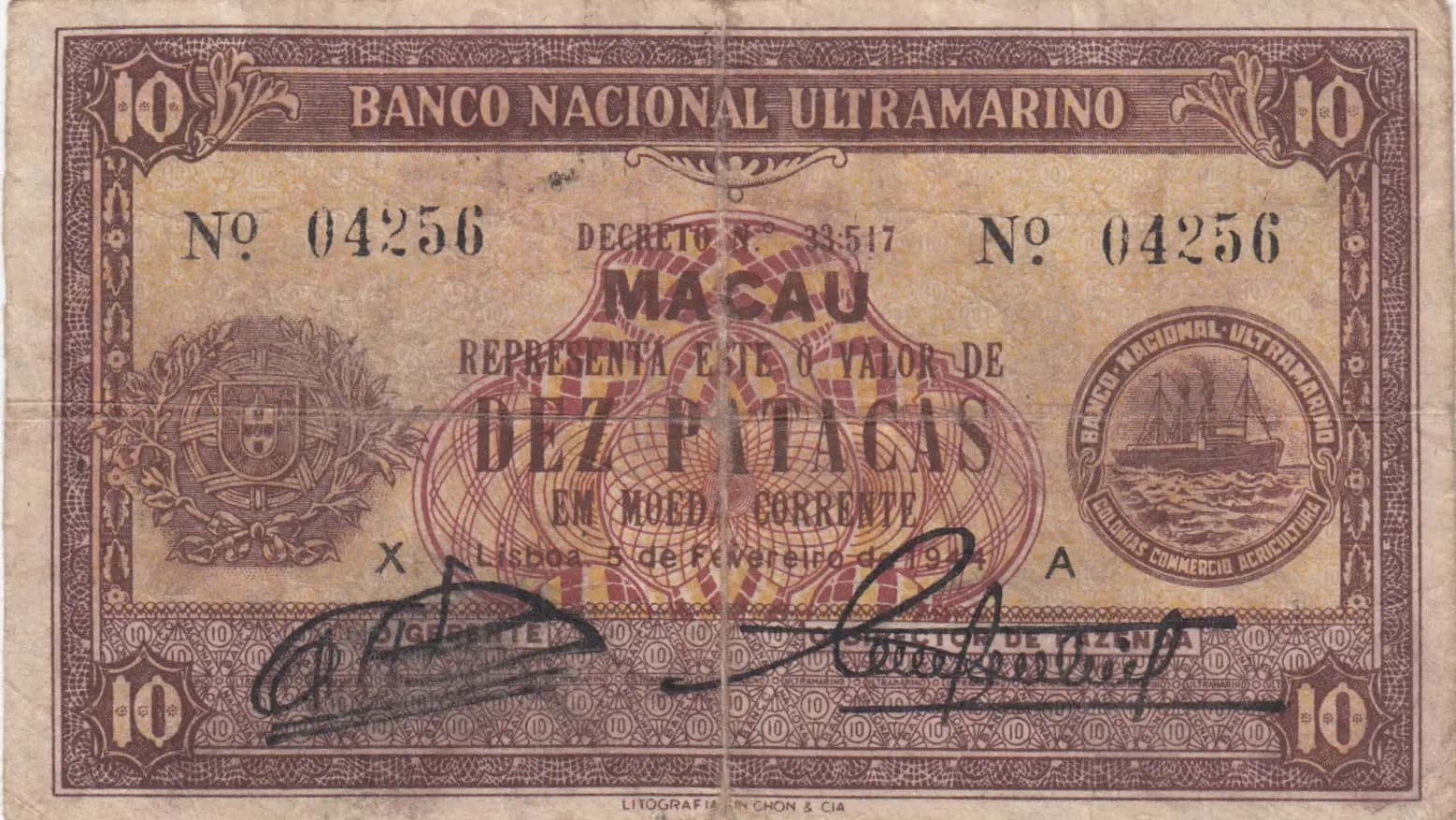
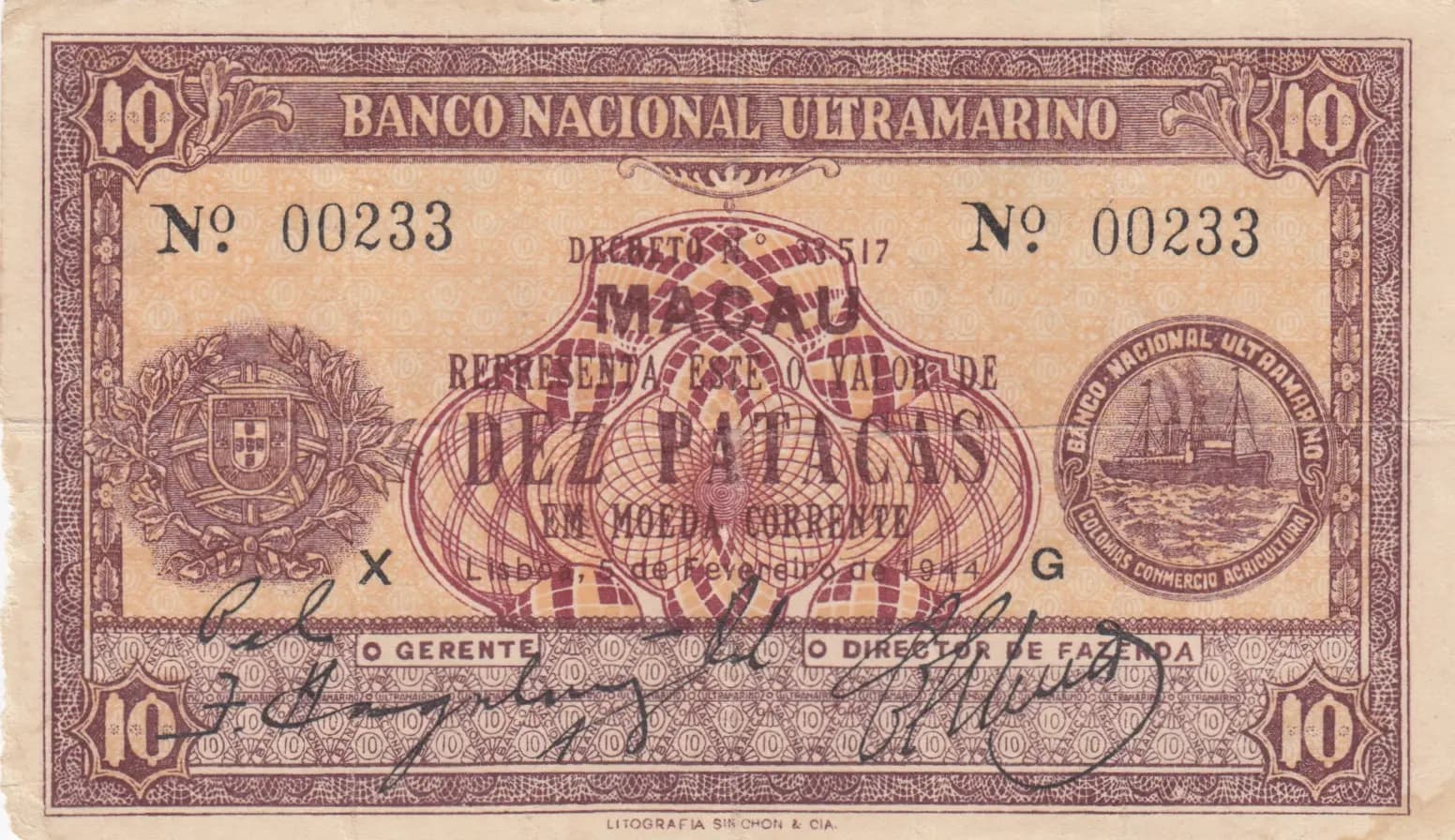
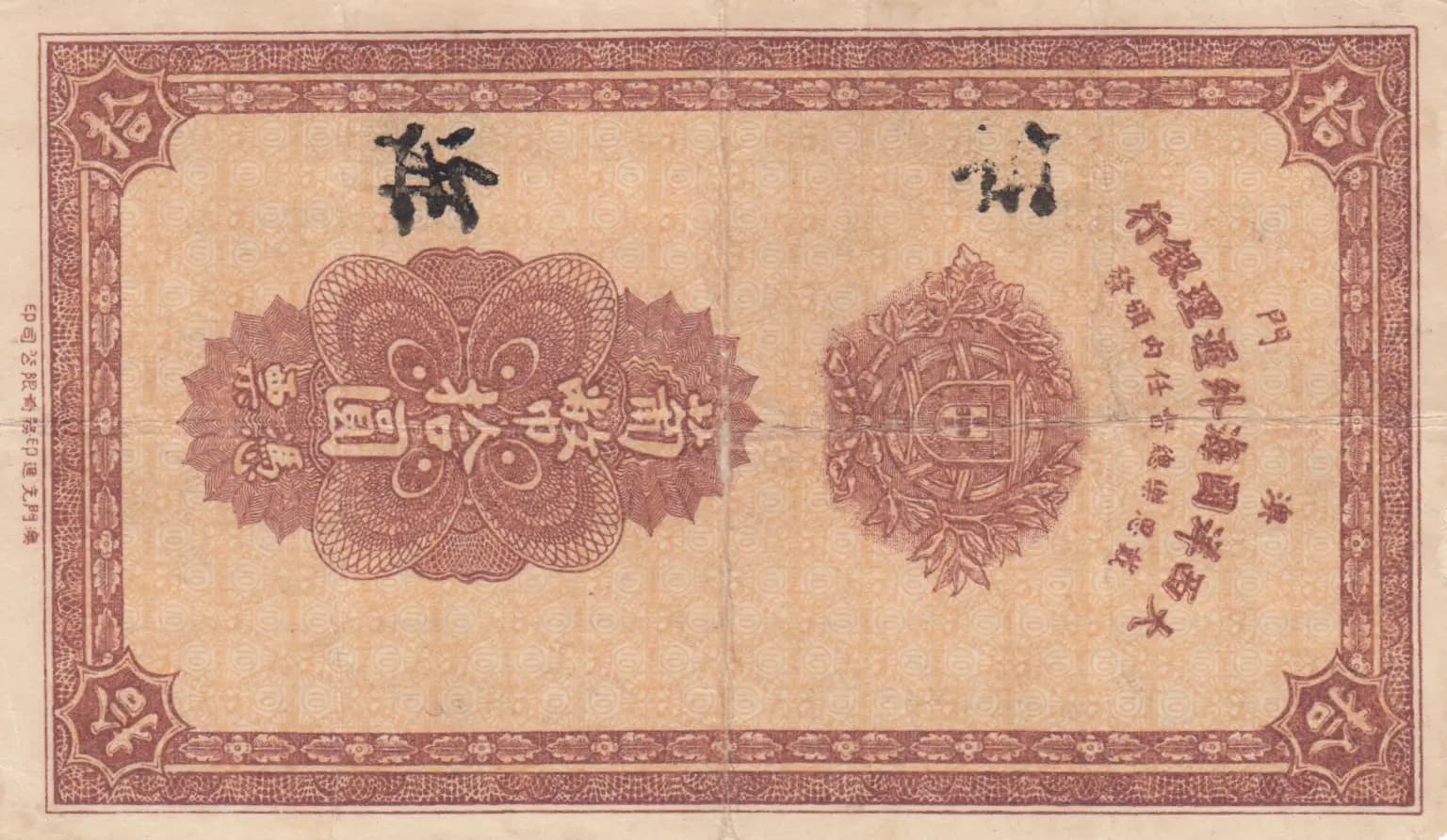
This 10 Patacas banknote from Banco Nacional Ultramarino (1944, Pick-23) exemplifies early Portuguese colonial currency in Macau, printed in distinctive purple/maroon and cream tones with ornate heraldic designs. The note displays significant circulation wear with multiple handwritten signatures, stamps, and age-related foxing, consistent with its Fair (F) condition grade. The presence of chop marks and manuscript annotations indicates this note saw active use in the Macau commercial and banking sector during the mid-20th century.
Common. Despite its age (1944) and colonial origin, eBay market data indicates modest pricing for this note: a Fair-graded example sold for $189.50 in 2017 with strong bidding interest, VG examples around $131, and catalog values (2016) of only $25 for VG condition. The note was part of a regular issue with moderate circulation in Macau. Print run information is not exceptionally limited, and multiple examples appear in market circulation. The Fair condition of this specimen and its relatively modest market value ($189.50 for similar grade) place it firmly in the common category, though it retains collector appeal due to its historical significance and colonial Portuguese-Macau heritage.
Issued during World War II under Decree No. 517, this banknote represents Portuguese colonial financial authority in Macau, a strategically important neutral territory during the Pacific War. The imagery prominently features Portuguese heraldic symbols (coat of arms) alongside Asian design elements and maritime symbolism (ship emblem in circular frame), reflecting the syncretic cultural and commercial identity of the Portuguese trading enclave. The Banco Nacional Ultramarino was Portugal's primary instrument for colonial currency management throughout its overseas territories.
The obverse features an elaborate ornamental composition centered on a globe-incorporating heraldic design, flanked by two coats of arms: the Portuguese royal coat of arms on the left within a shield frame, and a ship emblem in a circular frame on the right, symbolizing maritime commerce and Portuguese naval heritage. The reverse presents mirror heraldic elements with the Portuguese coat of arms surrounded by laurel wreaths on the right side, and a geometric emblematic design incorporating Asian characters on the left, visually representing the Sino-Portuguese cultural synthesis of Macau. The entire note is bounded by intricate floral scrollwork and geometric border patterns typical of early-20th-century Portuguese colonial currency design. Serial numbers appear in duplicate at the top of the obverse, with signature lines for bank officials at the bottom.
FRONT: 'BANCO NACIONAL ULTRAMARINO' (National Overseas Bank); 'Nº 00233' (Serial Number 00233); '10' (Denomination); 'O GERENTE' (The Manager); 'O DIRECTOR DE FAZENDA' (The Finance Director); 'DECRETO Nº 517' (Decree No. 517); 'REPRESENTAÇÃO DO VALOR DE' (Representation of the Value of); 'LITOGRAFIA SIN CHON & CIA.' (Sin Chon & Co. Lithography); 'X' and 'G' (Likely signature or authorization initials). BACK: '10' (Denomination); Chinese characters visible on left emblematic design and near coat of arms on right side (specific transcription limited by artistic rendering and image resolution, but consistent with bilingual Portuguese-Chinese inscriptions typical of Macau currency).
Lithography (confirmed by the inscription 'LITOGRAFIA SIN CHON & CIA.' on the note itself). The visual characteristics—including fine line engraving for border details, ornate decorative elements, and the ability to render both Portuguese heraldic symbols and Chinese characters—are consistent with advanced lithographic printing. The printer name appears to reference a Macau-based or China-based lithographic firm, and the technical quality of the engraved ornamental work suggests professional security printing standards for the period.
Serial number variety: 'Nº 00233' with letter designations 'X' and 'G' visible. Signature variety evident from handwritten signatures of official signatories (specific identities not legible in visual analysis). The note bears chop marks and manuscript annotations typical of mid-20th-century Macau banking practice, suggesting this specific specimen may have been retained by a bank or trading house as a marked example. No major overprints or dated varieties are apparent; the note represents the standard 1944 lithographic issue authorized under Decreto Nº 517. Variations in signature combinations and serial number prefixes/suffixes are typical for this Pick number across the print run.