1 avo 1942
Market Prices
12 salesAbout This Note
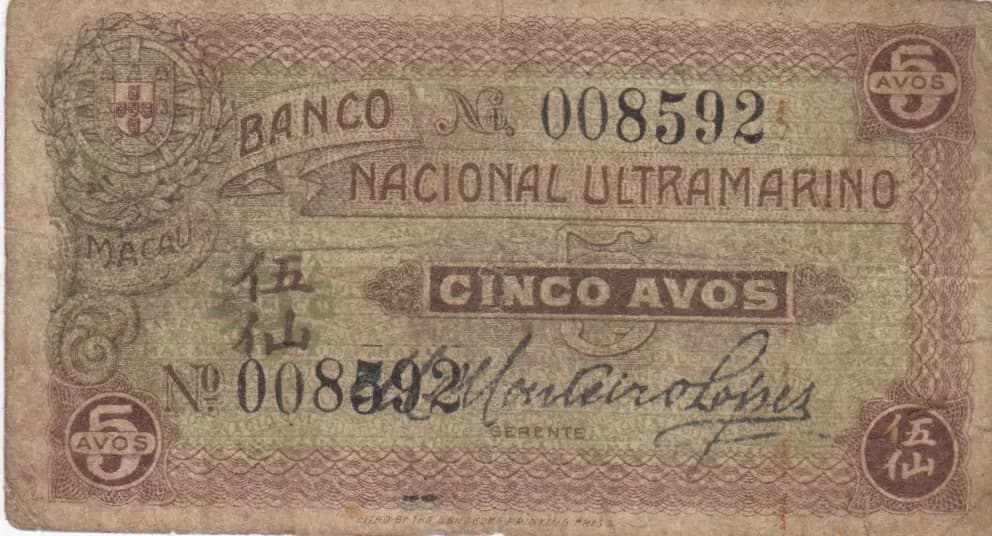
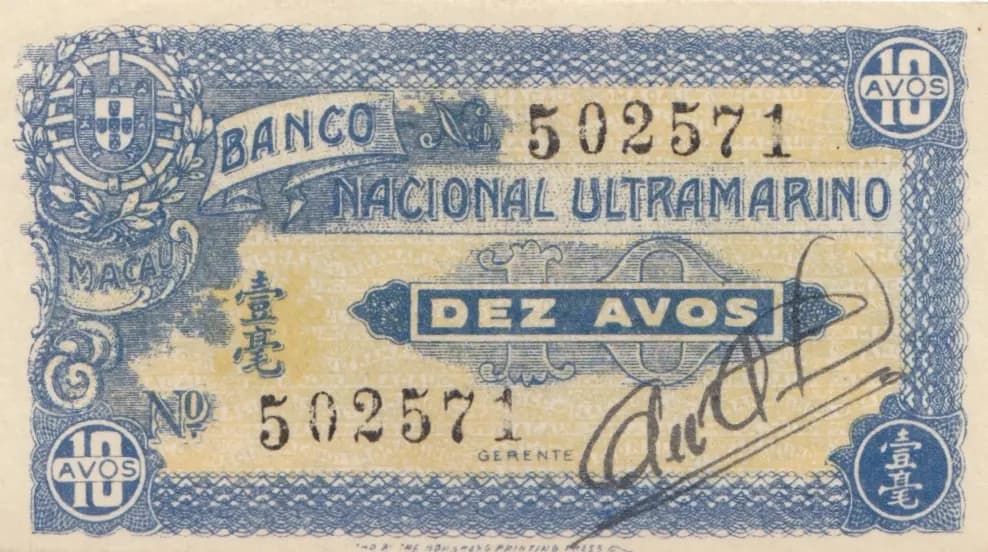
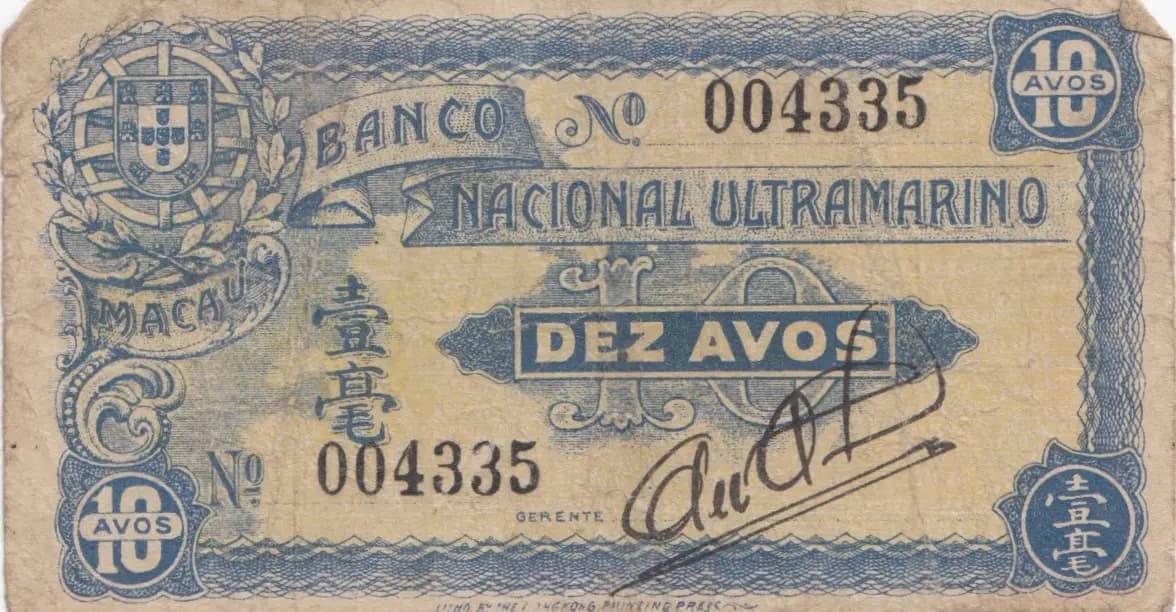
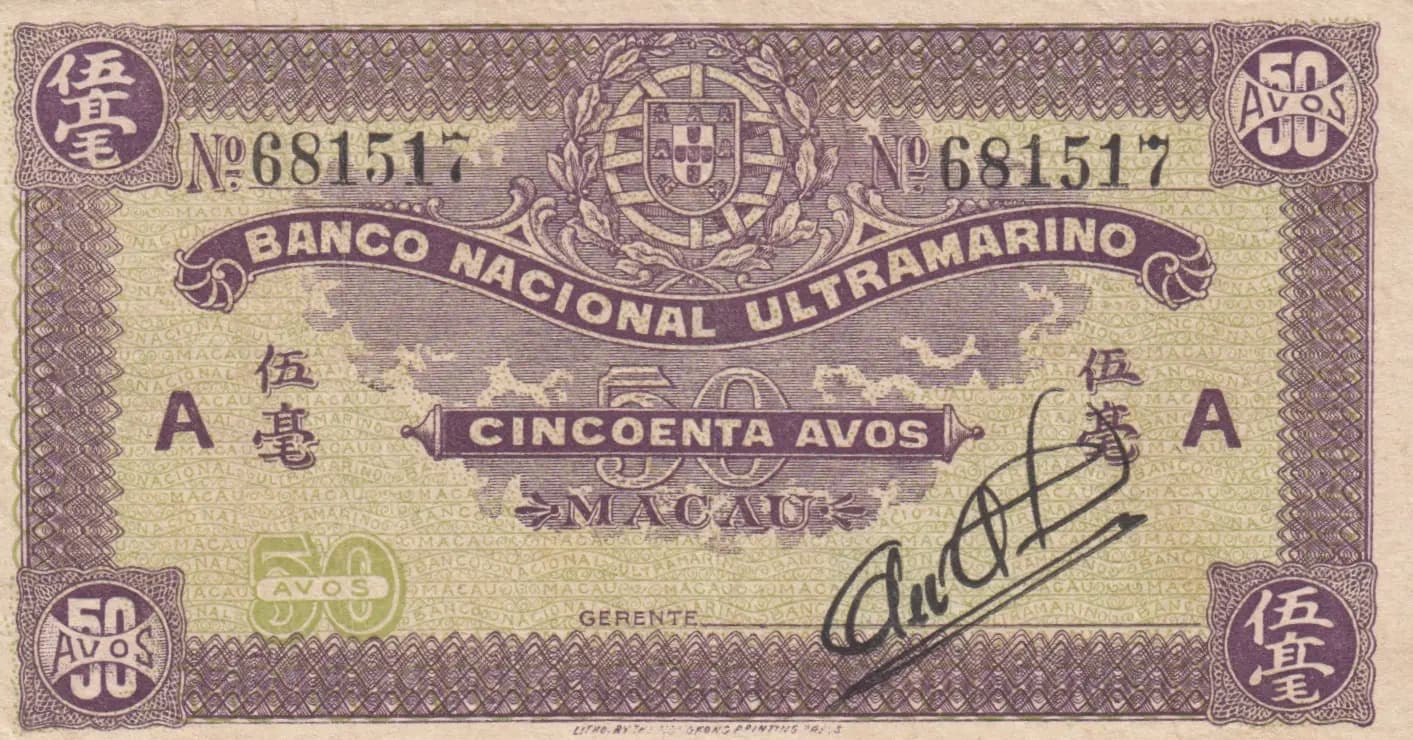
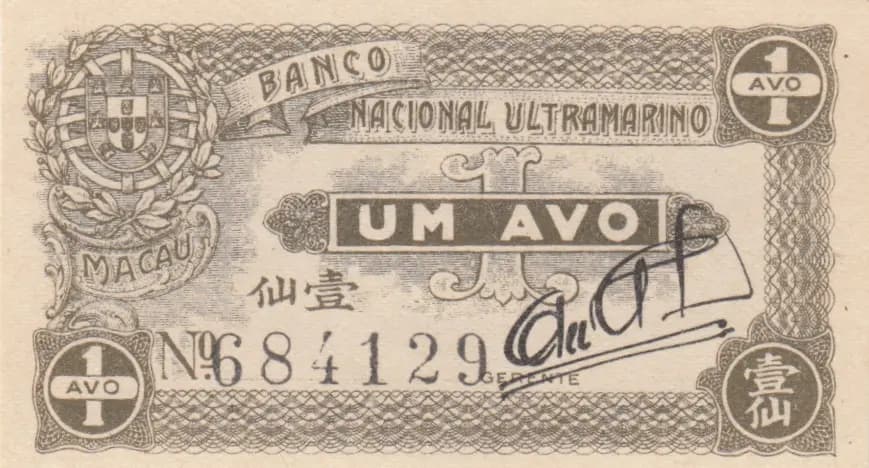
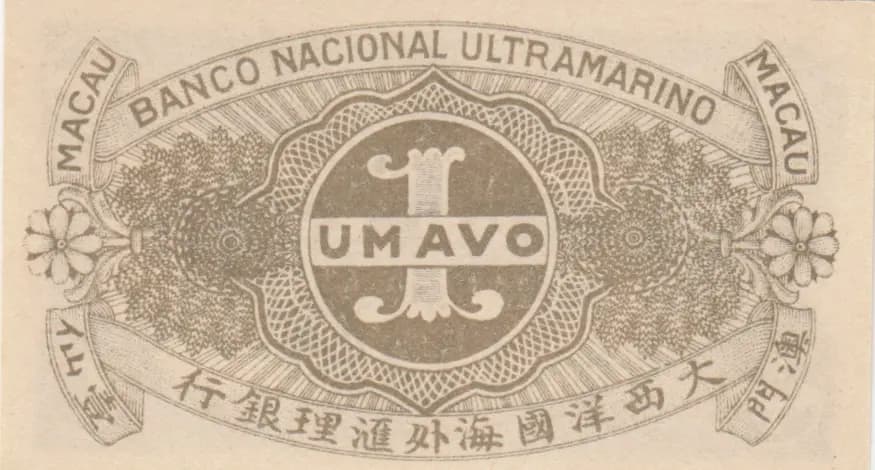
This 1942 Macau 1 Avo banknote from Banco Nacional Ultramarino presents a fine example of early 20th-century Portuguese colonial currency design. The note exhibits the characteristic sepia-brown color scheme and ornate engraving typical of the period, with a classical portrait on the obverse and an elaborate heraldic medallion on the reverse. Despite showing age-appropriate foxing and discoloration consistent with an 80+ year old banknote, the UNC condition grade reflects excellent preservation of the original design and printing detail.
Common. While this is a historical banknote from 1942, eBay market data shows consistent sales activity across multiple condition grades spanning from 2009 to 2026. UNC examples have sold regularly at $12.50 to $113.50, with recent PMG-graded examples (PMG 58-65) selling in the $20-$93 range, suggesting stable collector demand but not scarcity. The 2016 catalog value of $80 for UNC is reasonable and aligns with recent mid-range sales. The relatively consistent appearance of this note in the secondary market indicates a reasonable print run and acceptable survival rate, typical of regular-issue colonial banknotes from major Portuguese issuers.
Issued during World War II, this banknote represents Portuguese colonial monetary authority in Macau during a period of significant geopolitical upheaval. The Banco Nacional Ultramarino, Portugal's primary overseas banking institution, maintained control of Macau's currency even as war engulfed Asia. The heraldic arms with laurel wreath and the bilingual Portuguese-Chinese inscriptions reflect Macau's unique status as a Portuguese colony with deep Chinese cultural integration, a distinction evident in the visual design's European engraving style combined with Chinese character markings.
The obverse features a left-facing profile portrait of a historical figure in classical engraving style, positioned in the center-right of the note. To the left is the Portuguese coat of arms with shield design encircled by a laurel wreath, labeled 'MACAU' beneath. The denomination 'UM AVO' is prominently displayed in an ornate decorative cartouche at center. Circular emblems marked 'AVO' appear in the corners. The reverse presents a more symmetrical, heraldic design dominated by a large central circular medallion containing 'UM AVO' with a decorative castle or cross symbol at its heart, surrounded by an elaborate scalloped border. Floral ornamental designs flank both sides of the medallion. Throughout both sides, complex geometric border patterns and rosette designs provide security and aesthetic appeal. The entire note employs a sepia-brown printing scheme on cream/beige paper stock.
Front side: 'BANCO NACIONAL ULTRAMARINO' (Bank National Overseas/National Overseas Bank); 'UM AVO' (One Avo); 'MACAU' (Macau); 'AVO' (repeated in corner emblems); Serial number 'Nº6 84129'; Chinese characters '仙臺' (reference marking). Back side: 'BANCO NACIONAL ULTRAMARINO' (National Overseas Bank); 'UM AVO' (One Avo); 'MACAU' (Macau); Chinese text 'KIT銀行港澳海國祥老我' (appears to be descriptive or reference marking related to the banking institution and geographic jurisdiction). All text appears in both Latin and Chinese scripts reflecting the bilingual nature of colonial Macau.
Intaglio engraving (line engraving/copperplate), the standard security printing method for high-quality banknotes of this era. The detailed line work visible in the portraits, ornamental borders, geometric patterns, and heraldic elements is characteristic of intaglio production. The depth and clarity of the engraved lines, combined with the precise registration of multiple color passes (despite the single apparent color), indicate professional production by an established security printer, consistent with Banco Nacional Ultramarino's standards. The printer for this specific issue is not definitively identified in available catalog data, but Portuguese colonial banknotes of this period were often produced by European security printers contracted by the Portuguese government.
Serial number observed: Nº6 84129. The visual analysis notes what appears to be a signature or mark crossing through the serial number area, which may indicate a specific signature variety or post-issuance marking. The exact significance of this marking cannot be determined without additional reference material specific to this Pick number's known signature varieties. No obvious overprints, date variations, or other distinguishing varieties are apparent from the images provided. Standard research would recommend consulting the Pick catalog directly for documented varieties of P-13, which may include different signature combinations or serial number prefixes typical of this 1942 issue.