1 pataca 1945
Market Prices
25 salesAbout This Note
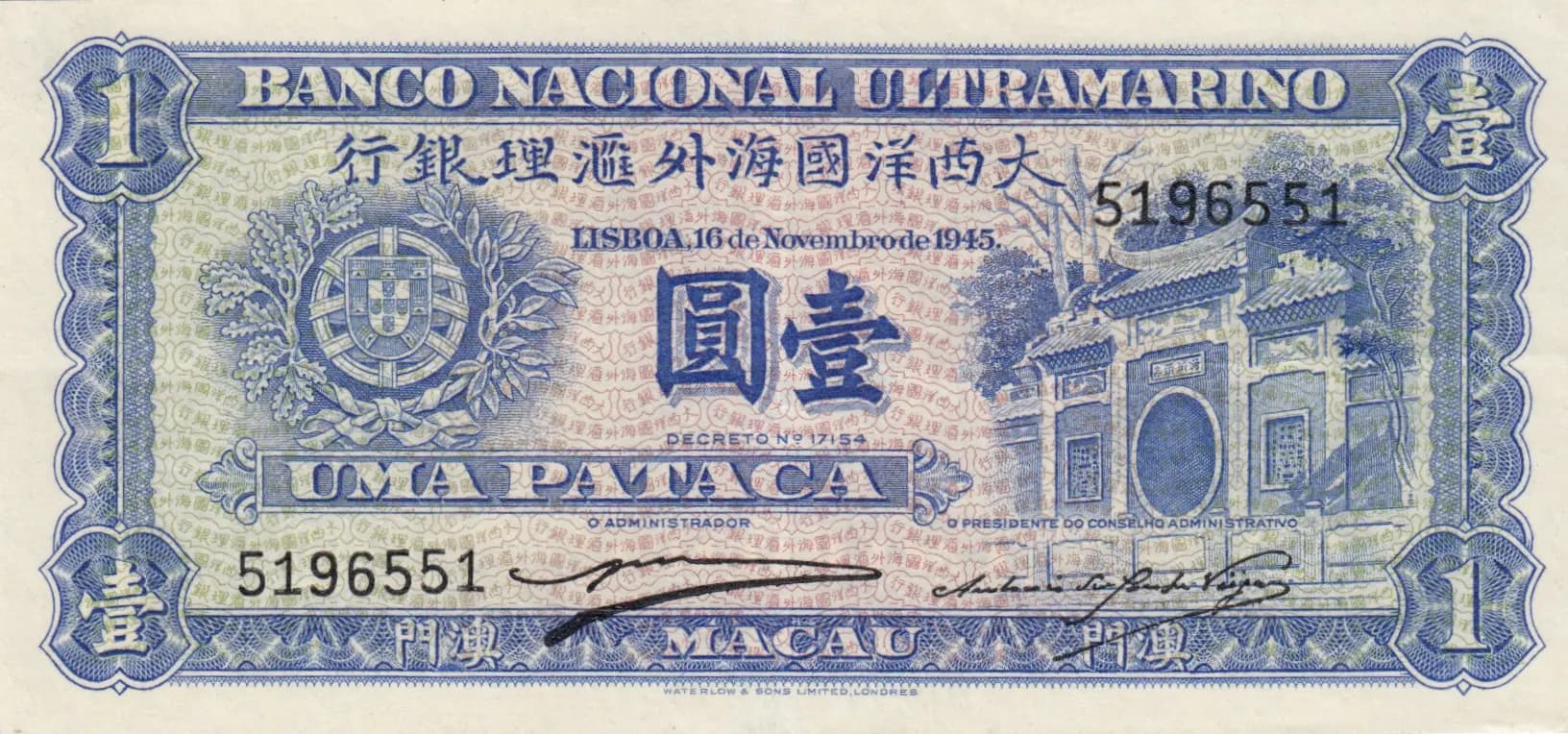
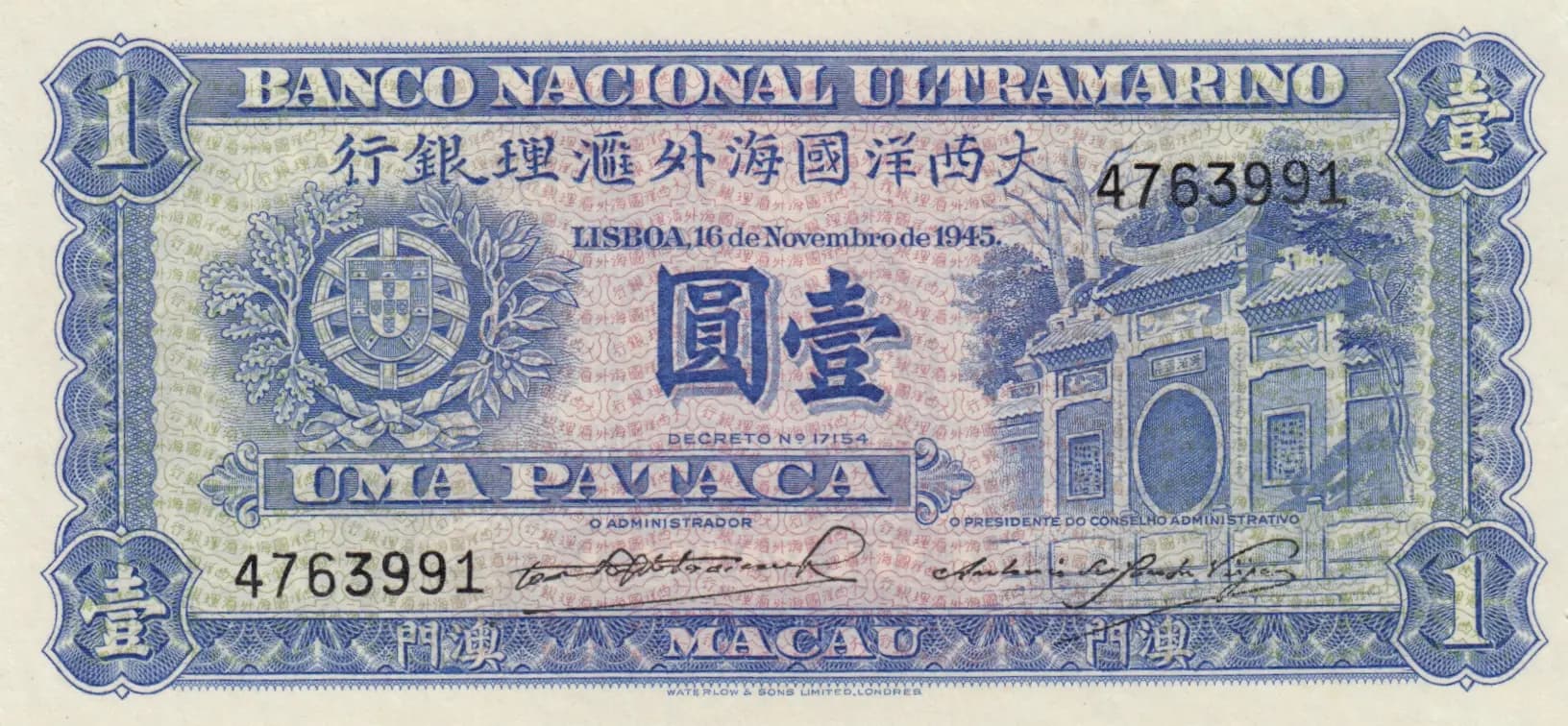
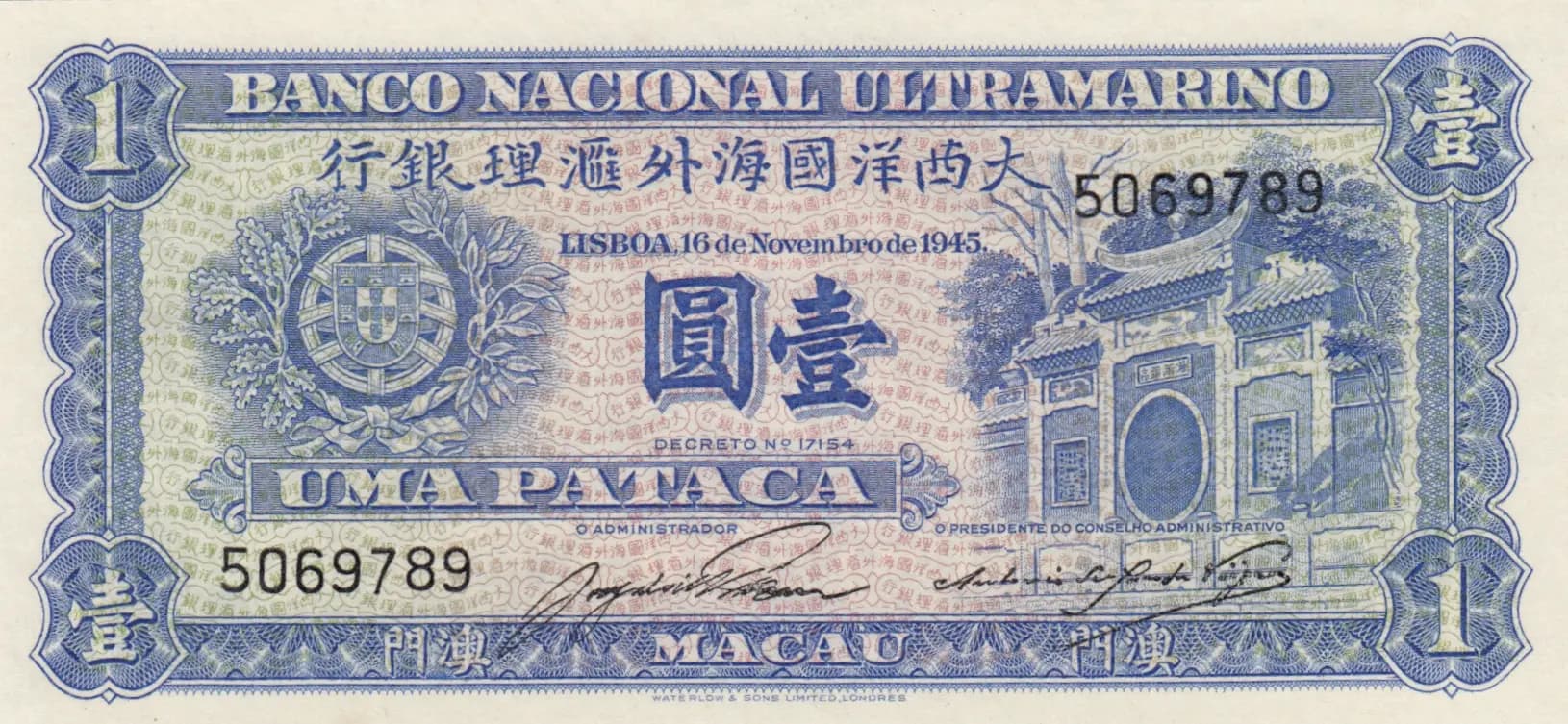
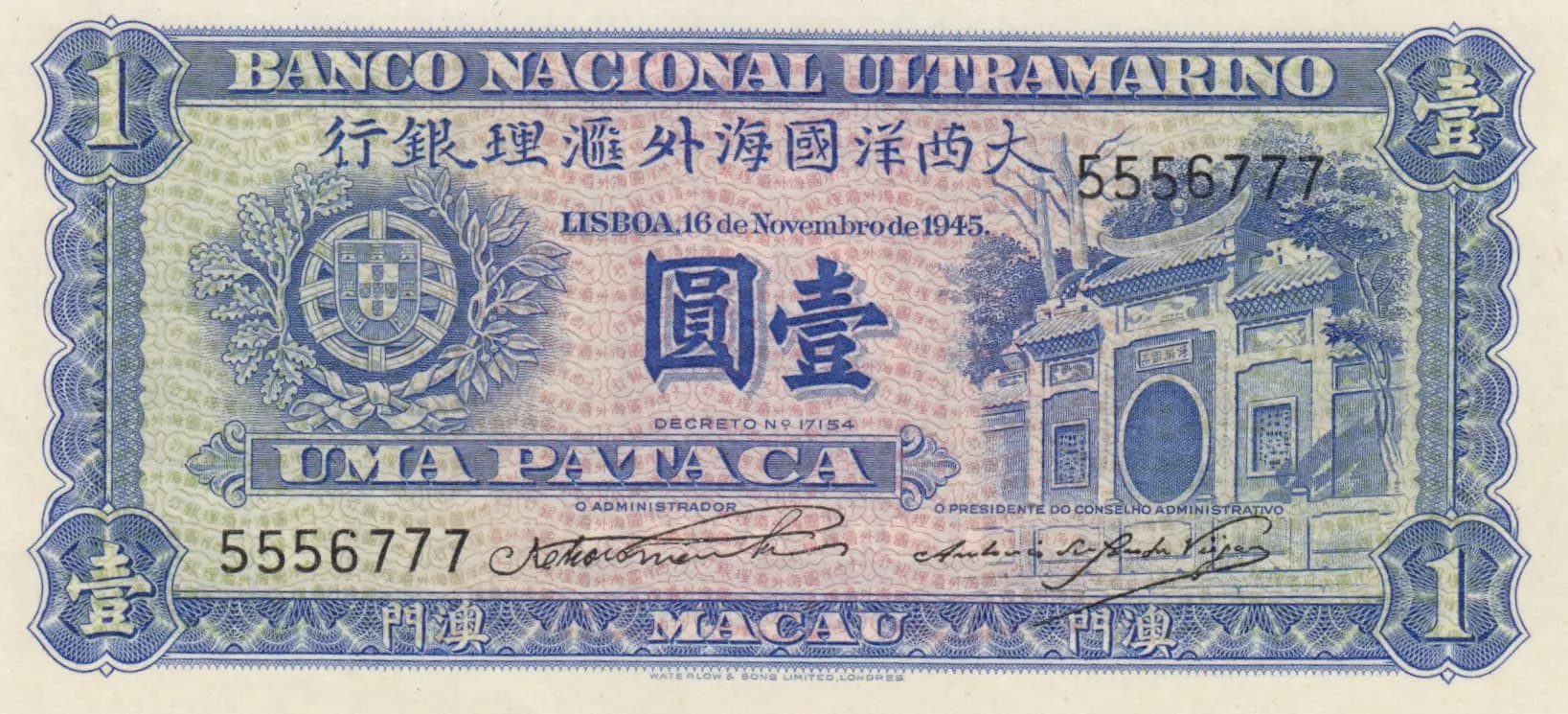
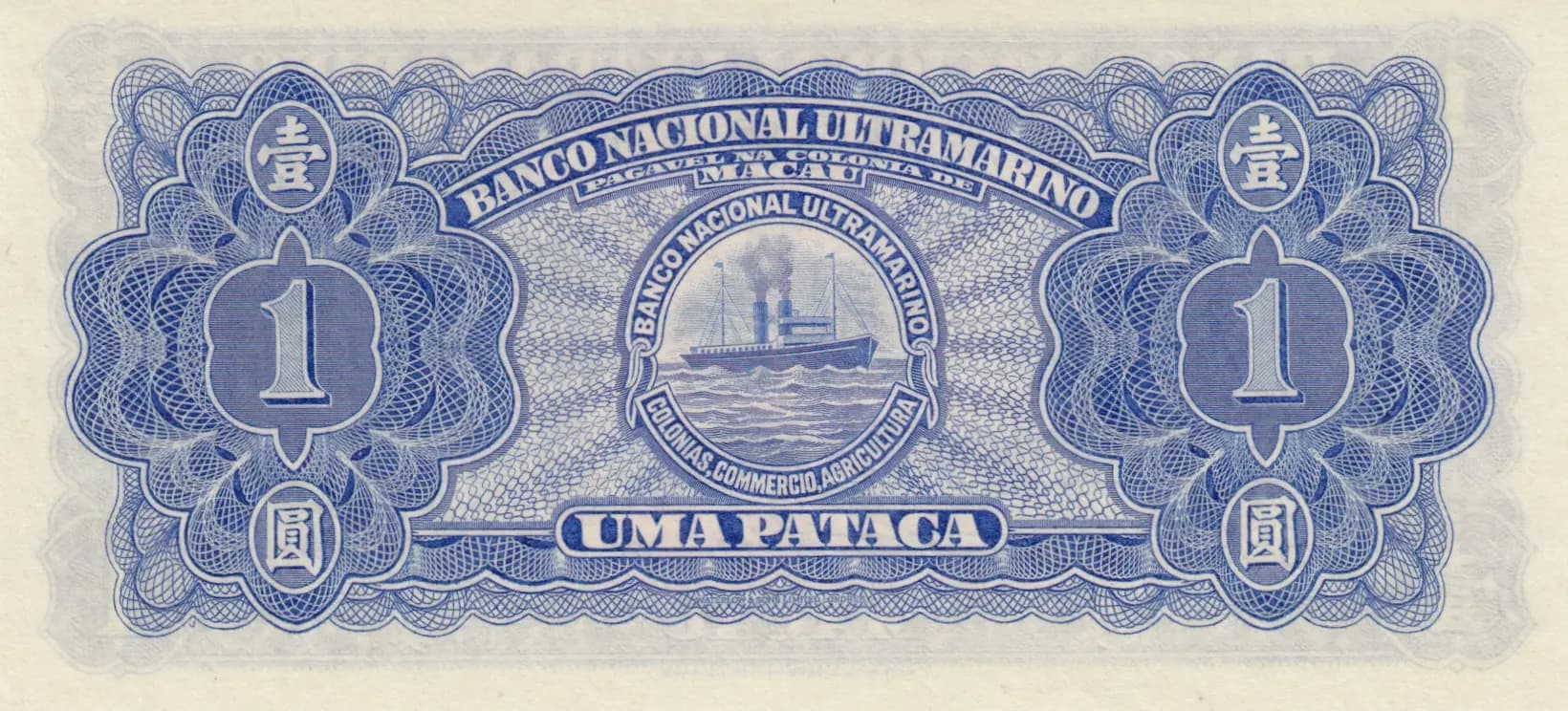
This is a 1 Pataca note from Banco Nacional Ultramarino dated November 16, 1945, representing a fascinating transitional piece of Macau's colonial monetary history. The note displays the characteristic blue and multicolored design with the A-Ma temple prominently featured on the obverse and a steamship medallion on the reverse, both symbolizing Macau's maritime commerce heritage. While the note shows clear signs of age with creasing and foxing consistent with 80-year-old currency, the printing remains sharp and legible, making it a collectible example of Portuguese colonial currency from the final years of World War II.
Common. This Pick 28 note demonstrates strong market activity with consistent sales across all condition grades from VG to UNC over the past 15 years. eBay data shows regular transactions with UNC examples selling in the $80-130 range historically, and even lower grades (VG, F) consistently finding buyers at modest prices ($4-40). The 2016 catalog valuation of $150 for UNC reflects typical market expectations for common colonial issues. The large print run and absence of known recalls or restricted distribution support a common classification. Current market prices on the lower end ($69-127 in recent UNC sales) suggest strong collector interest but established supply.
Issued in November 1945, just as World War II concluded, this note represents Banco Nacional Ultramarino's post-war assertion of monetary control in the Macau colony. The imagery—the A-Ma temple reflecting Chinese religious and cultural identity, and the steamship symbolizing maritime trade and Portuguese commercial dominance—encapsulates Macau's dual colonial heritage and its importance as a trading hub connecting Europe and Asia. This period marked a return to normalcy in Macau after years of Japanese occupation and wartime disruption.
The obverse features a sophisticated two-language design integrating Portuguese colonial authority with Chinese cultural recognition. The left side displays the Portuguese coat of arms with heraldic shield and laurel wreaths, symbolizing state authority. The right side showcases an ornate rendering of the A-Ma Temple (Templo de A-Má), one of Macau's most significant Taoist temples, depicted with characteristic multi-tiered architecture, decorative roofing, and detailed stonework. Large Chinese characters 圓 (Yuan/Pataca) and 壹 (One) occupy central positions, with extensive guilloche border ornamentation throughout. The reverse presents a more minimalist design dominated by a circular medallion containing a detailed steamship vignette, representing Macau's maritime commercial importance and the bank's role in facilitating trade. The entire background features intricate guilloche patterns, with corner elements displaying the denomination numerals, emphasizing the note's security and formal status.
Front Side: 'BANCO NACIONAL ULTRAMARINO' (National Overseas Bank); '行銀 埋 滙外海國洋 向大' (Chinese characters for National Overseas Bank); 'LISBOA, 16 de Novembro de 1945' (Lisbon, November 16, 1945); '圓臺' (Pataca/Taiwan Yuan); 'UMA PATACA' (One Pataca); 'DECRETO Nº 17154' (Decree No. 17154); 'O ADMINISTRADOR' (The Administrator); 'O PRESIDENTE DO CONSELHO ADMINISTRATIVO' (The President of the Administrative Council); 'MACAU' (Macau); Serial number '5556777'. Back Side: 'BANCO NACIONAL ULTRAMARINO' (National Overseas Bank, repeated); 'PAGADOR NA COLONIA DE MACAU' (Payable in the Colony of Macau); 'UMA PATACA' (One Pataca); 'DELIAS COMERCIO AGRICOLA' (For Commerce and Agriculture).
This note was produced by Waterlow & Sons (W&S), London, using intaglio engraving, the predominant security printing method of the era. The visual analysis confirms multiple color printing (blue, green, red/pink, cream) applied in successive passes, with extensive fine-line engraving visible in the ornamental borders, guilloche patterns, and architectural details. The sharp clarity of the temple rendering and steamship vignette, combined with the precise decorative line work, are characteristic of high-quality intaglio production. Security features embedded in the design include the complex guilloche background patterns, multiple color combinations, and the intricate engraved details that would be difficult to counterfeit with contemporary technology.
This specific example displays signature varieties typical of the 1945 issue, with two handwritten signatures visible at the bottom of the obverse as required for bank notes of this period. The serial number 5556777 indicates standard sequential numbering with no evident overprint or special marking. No rare varieties (such as color variants, date overprints, or signature substitutions) are apparent in this specimen. The note conforms to standard Pick 28 specifications for the 1945 Banco Nacional Ultramarino 1 Pataca issue.