20 heller 1920
Market Prices
17 salesAbout This Note
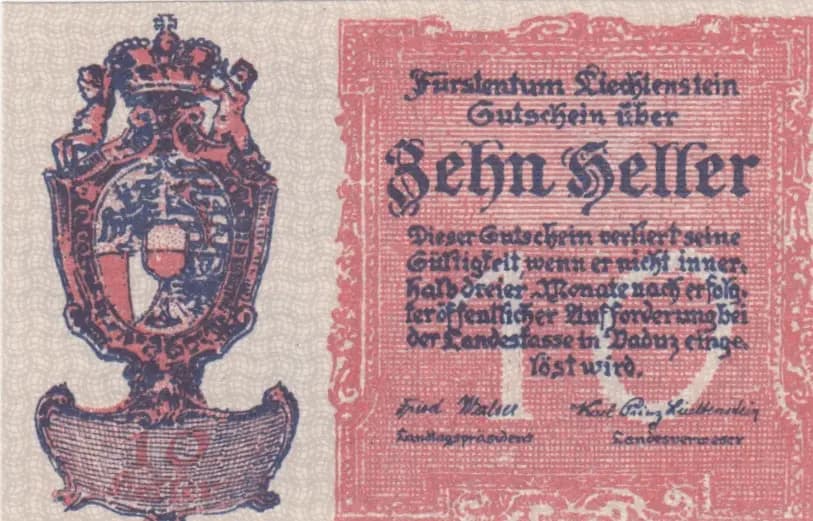
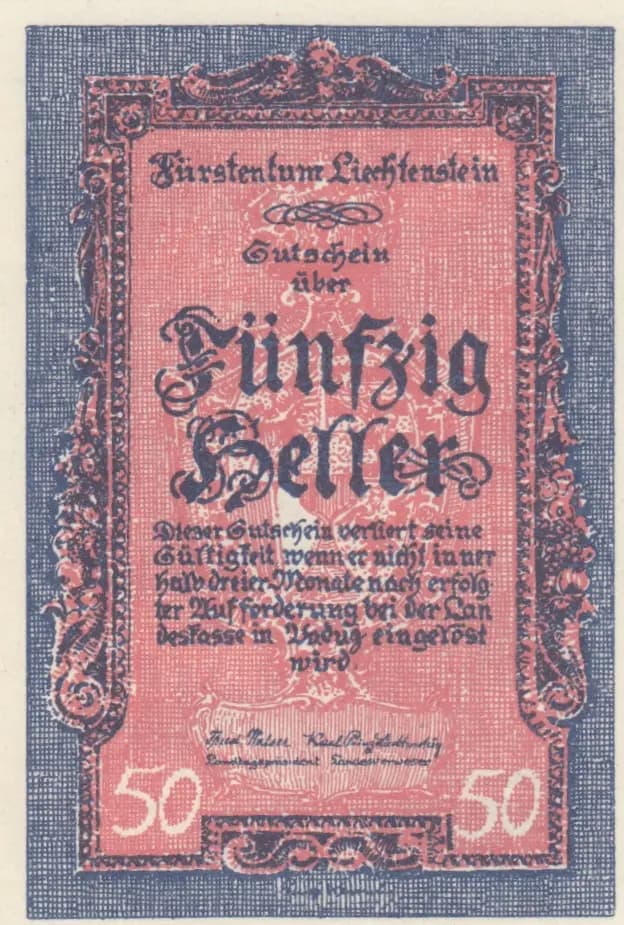
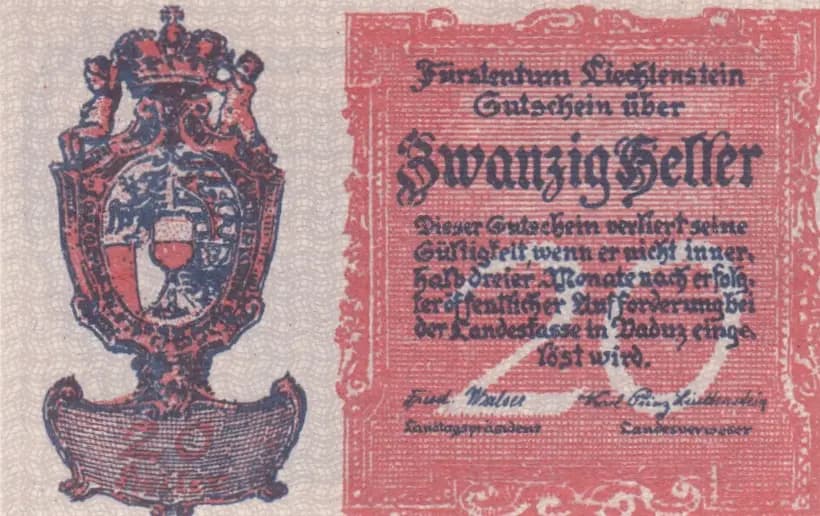
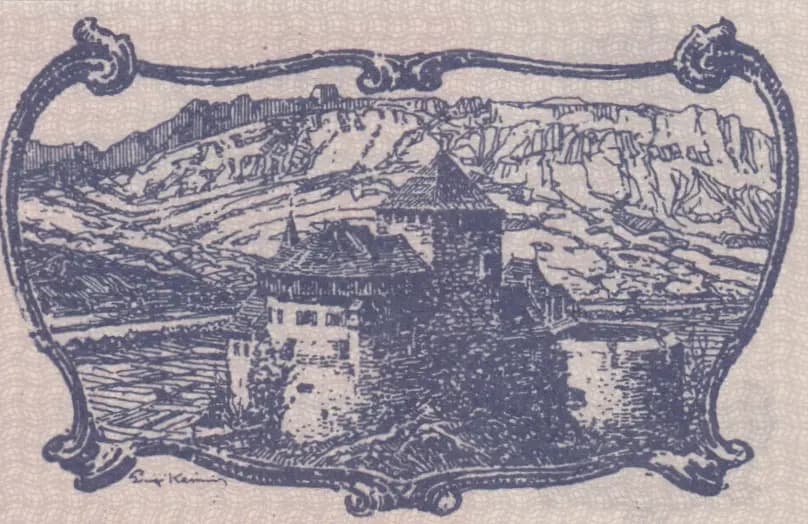
This 1920 20 Heller emergency note from Liechtenstein is an exceptionally preserved example of the principality's early monetary voucher system, presented in UNC condition with crisp paper and vibrant red and blue coloration throughout. The front displays an ornate heraldic coat of arms in a shield design with a crowned quartered shield, while the reverse features a beautifully engraved illustration of Vaduz Castle set in mountainous landscape, both rendered in fine detail characteristic of period bank note production. This is a historically significant small denomination note issued during Liechtenstein's transitional post-WWI period, representing a fascinating example of Alpine principality emergency currency.
Common. The secondary market data from realbanknotes.com shows consistent eBay sales of this note in various grades (VF, EF, AUNC, UNC) ranging from approximately $8-$41 over the past decade, with UNC examples typically selling in the $13-$18 range. The 2016 catalog valuation of $40 for UNC examples has not been sustained in actual market transactions, which regularly close at half that price. The PMG population report indicates limited professional grading activity, but the frequency and consistency of sales at modest prices indicates this note remains widely available in collector channels.
Liechtenstein issued this 20 Heller voucher in 1920 during the post-World War I economic transition, when the principality was stabilizing its financial systems and currency infrastructure. The note's designation as a 'Gutschein' (voucher) with a two-month validity period reflects the temporary nature of emergency currency issues during this period of European monetary reconstruction. The depiction of Vaduz Castle on the reverse emphasizes the principality's sovereignty and territorial identity during this critical period of national consolidation.
The obverse features the quartered coat of arms of the Principality of Liechtenstein, depicted as a shield with a crown above it, surrounded by ornate decorative borders rendered in red and blue. The heraldic design is positioned on the left with inscription panels on the right in red decorative cartouches. The reverse presents an engraved landscape illustration of Vaduz Castle, the principal fortress and residence of the reigning prince, depicted with its characteristic towers and fortifications set against a mountainous Alpine background. The castle illustration is framed within an ornate decorative border with curved architectural elements and scrollwork at the corners. The paper exhibits the light aging patina typical of 1920s banknote production.
FRONT SIDE: 'Fürstentum Liechtenstein' (Principality of Liechtenstein) | 'Gutschein über' (Voucher for) | 'Zwanzig Heller' (Twenty Heller) | 'Dieser Gutschein verliert seine Gültigkeit wenn er nicht inner halb Zweier Monate nach Erlass der Landesregierung eingereicht (ist wird)' (This voucher loses its validity if not submitted within two months after issue by the territorial government) | 'Vaduz' (Vaduz) | 'Landeshauptmann' (Head of Government) | 'Sanitätsrat' (Sanitary Councillor/Health Councillor). BACK SIDE: 'sig. Kenzler' (Signature Kenzler) indicating authorization by an official named Kenzler.
Engraved intaglio printing on cotton-fiber banknote paper, characteristic of legitimate emergency currency production from this period. The fine detail visible in both the heraldic coat of arms and the Vaduz Castle landscape illustration, combined with the precision of the decorative borders and typography, indicates professional security printing standards. The color separation between red inscription panels and blue/dark blue design elements suggests multiple-pass printing typical of early 20th-century Central European banknote production.
This Pick-2 example is the standard 1920 issue of the 20 Heller denomination from Fürstentum Liechtenstein. The signature 'Kenzler' visible on the reverse represents the issuing authority official for this series. No overprints, date variations, or serial number prefixes are evident in the visual analysis. The PMG catalog notes only one variant exists for this Pick number, confirming the uniformity of this issue. The note's designation as a two-month validity voucher is consistent with the standard emergency issue specifications for this series.