10 heller 1920
Market Prices
19 salesAbout This Note
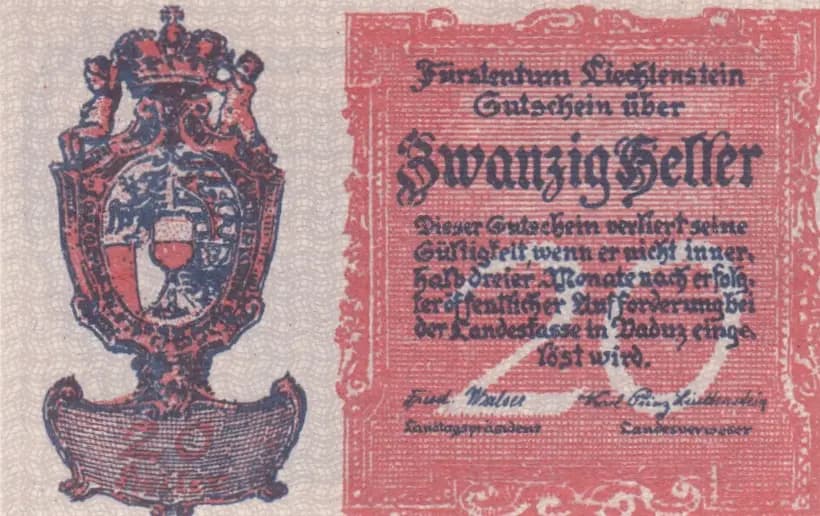
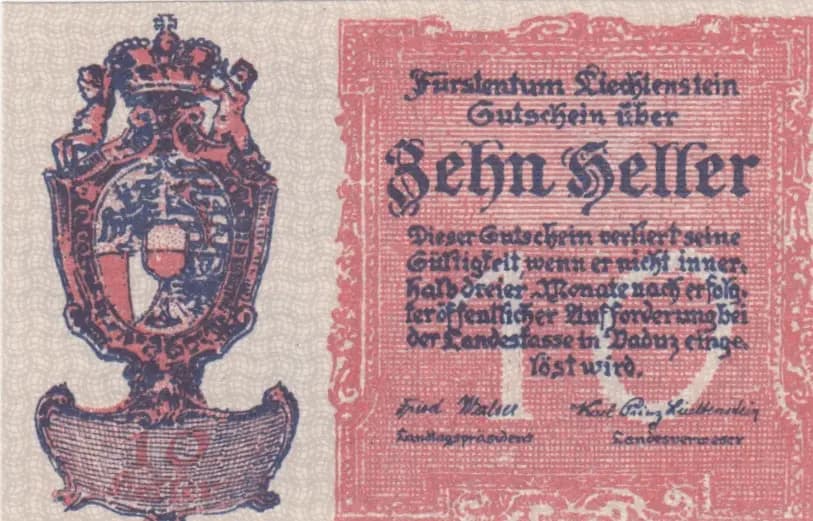
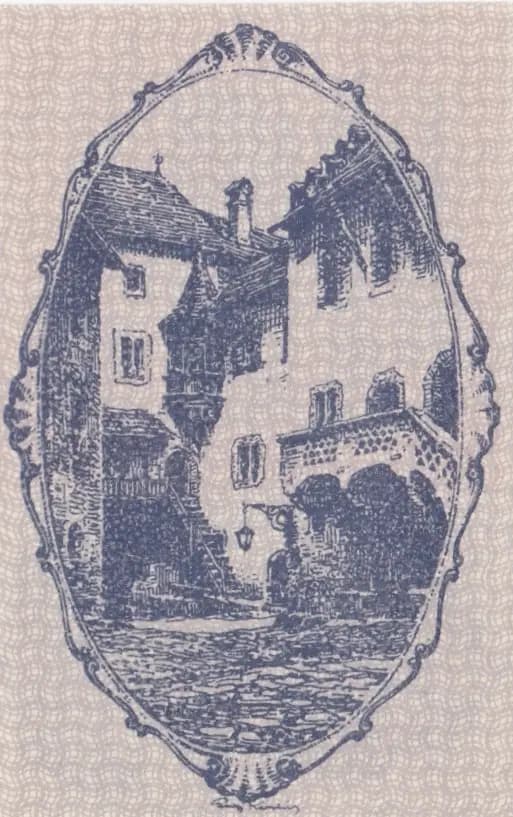
This 1920 Liechtenstein 10 Heller note in UNC condition is an exceptional example of early principality emergency currency, featuring the ornate coat of arms of Fürstentum Liechtenstein on the obverse and a detailed engraved illustration of a historic Vaduz building on the reverse. The note exhibits crisp printing with vibrant blue and red coloration, minimal wear, and clear preservation of all design elements—characteristics consistent with uncirculated specimens. This is a foundational piece of Liechtenstein numismatics from the immediate post-WWI period.
common
Issued in 1920, this voucher-style note represents Liechtenstein's early monetary emergency when the principality required supplementary currency following Austria-Hungary's collapse and the end of World War I. The coat of arms prominently displayed emphasizes Liechtenstein's sovereignty during a period of regional monetary instability, while the depicted Vaduz landmark (likely the princely residence or government building) reinforces the principality's institutional continuity and administrative authority over its small Alpine territory.
The obverse displays the Princely Coat of Arms of Liechtenstein rendered in blue and red with heraldic crown and shield elements positioned on the left. The right side contains a formal redemption notice in decorative red-tinted ornamental borders, signed by two officials responsible for the principality's treasury administration. The reverse features an engraved oval-framed illustration in blue ink of a multi-story stone castle or government building characteristic of 16th–18th century Alpine architecture, featuring multiple windows, doorways, and detailed stonework—identified as representing the administrative or princely seat in Vaduz. Both sides incorporate subtle crosshatch or woven background patterns typical of engraved security printing of the era.
Front Side: 'Fürstentum Liechtenstein' (Principality of Liechtenstein) | 'Gutschein über Zehn Heller' (Voucher for Ten Heller) | 'Dieser Gutschein verliert seine Gültigkeit wenn er nicht innerhalb [period] Monate nach erfolgter schriftlicher Anforderung bei der Landeskasse in Vaduz eingelöst wird.' (This voucher loses its validity if it is not redeemed within [specified] months from the date of written request at the State Treasury in Vaduz.) | 'gez. Walther' (signed Walther) | 'Karl Georg Kadelburger' (Karl Georg Kadelburger—likely a government official or signatory). Back Side: No inscriptions observed; design features only the architectural illustration.
Intaglio engraving (copperplate/steel engraving) combined with letterpress elements for text. The fine detail visible in the coat of arms, architectural rendering, and ornamental borders is consistent with professional security printing of the 1920 period. The subtle background patterns and crisp line work indicate multi-plate or multi-pass intaglio production. The printer for this series is not definitively identified in standard catalogs, though Liechtenstein employed Swiss and Austro-Hungarian security printers during this period.
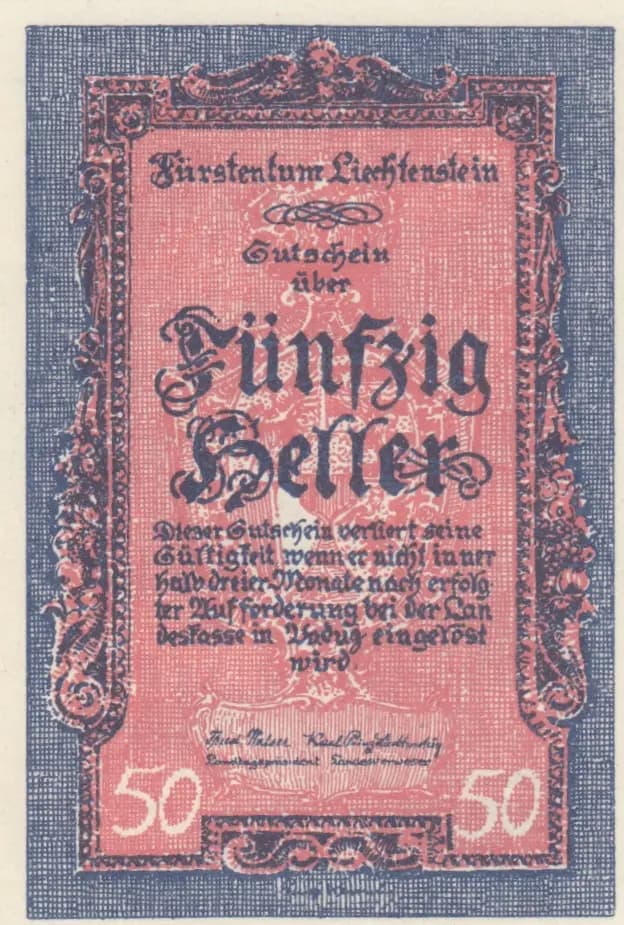
Pick catalog identifies this as P-1, the sole base Pick number for the 10 Heller 1920 issue. No major varieties (different signatures, dates, or serial ranges) are currently documented in standard references for this denomination. The note is a regular issue without known overprints, prefix variations, or error states. Signatures of 'Walther' and 'Karl Georg Kadelburger' appear consistent across examples, indicating a single standard printing. Further detailed variety research (serial number ranges, minor signature variations) would require access to institutional archives or specialized Liechtenstein numismatic collections.