5 piastres 1950
Market Prices
6 salesAbout This Note
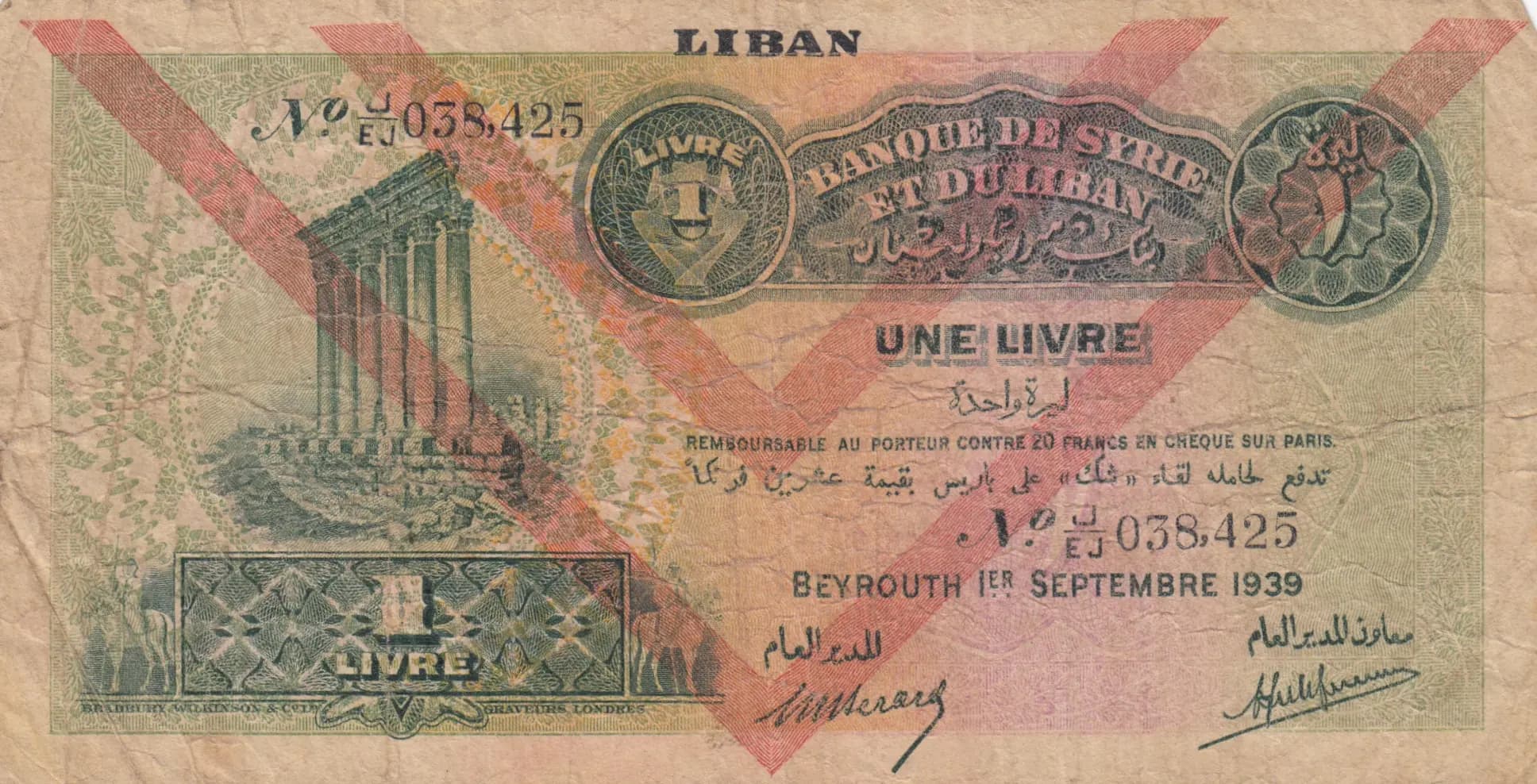
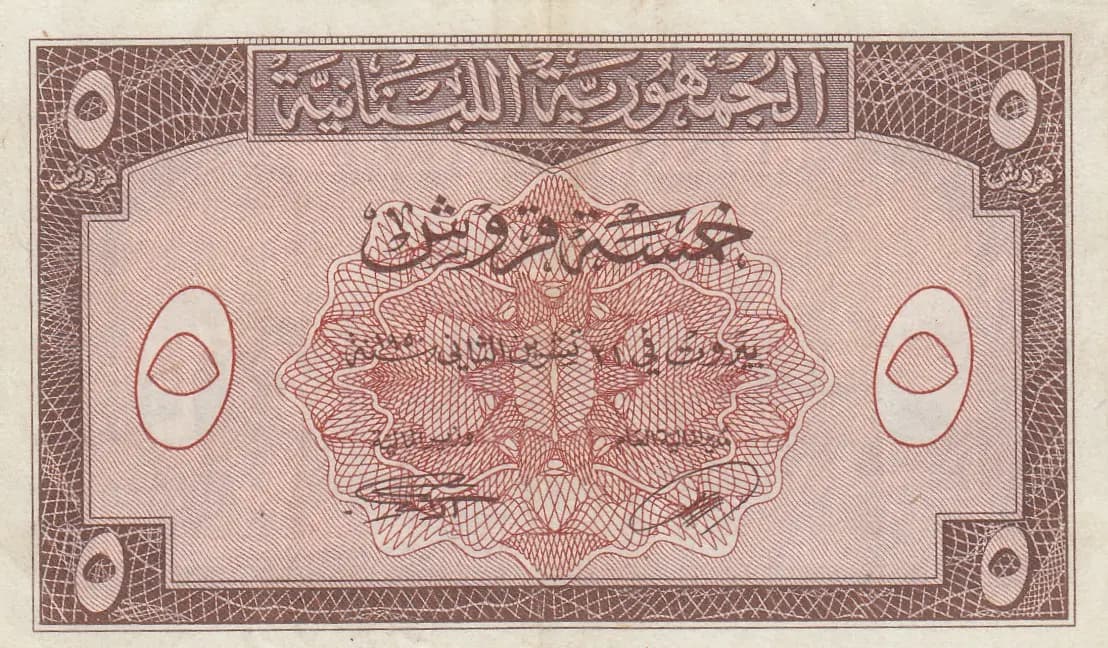
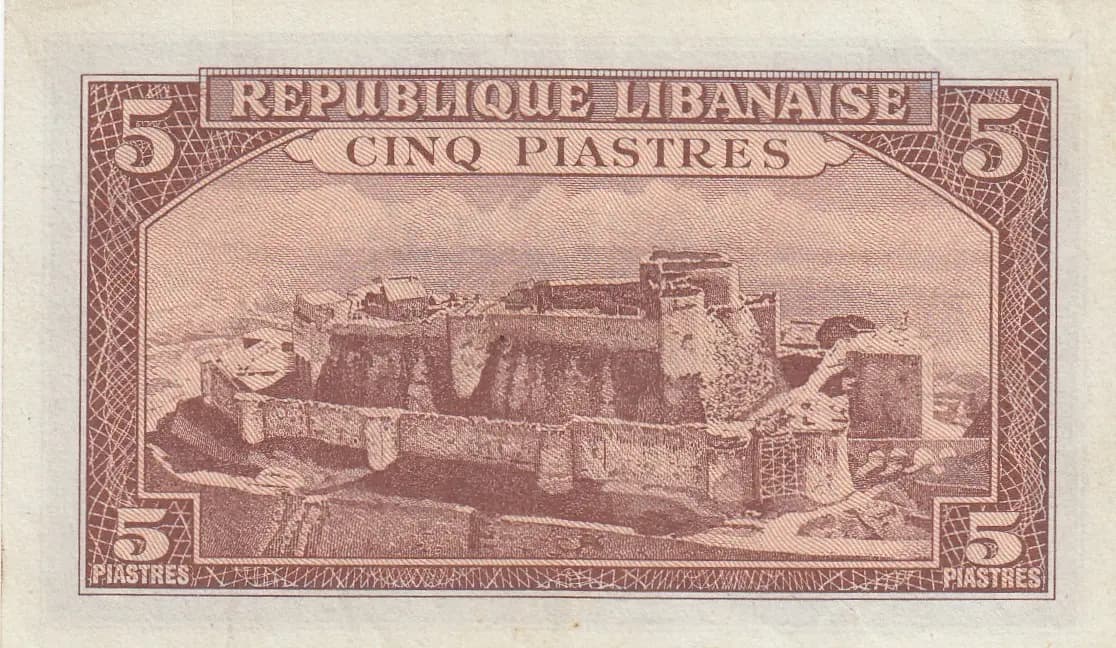
This Lebanon 5 Piastres from 1950 (Pick P-46) presents in VF condition with crisp, well-preserved paper and vibrant brown-on-red-brown coloring throughout. The obverse features a detailed engraved depiction of Krak des Chevaliers, the iconic Crusader castle, prominently displayed as the centerpiece, while the reverse showcases an ornate circular medallion with intricate geometric and floral patterns typical of mid-20th century Lebanese currency design. This note represents an early postwar issue from the newly stabilized Lebanese Republic and remains a popular collector item, with recent market activity supporting valuations in the $15-50 range for VF specimens.
Common. The 1950 5 Piastres is a regular issue banknote with substantial print runs, as evidenced by consistent market availability and multiple sales records spanning over a decade (2014-2021) at modest prices. Recent eBay transaction data shows specimens in F condition regularly selling in the $22-39 range, with VF examples at approximately $51, and catalog values reflecting common status ($2 VG, $15 VF, $45 UNC as of 2016). Notes of this denomination from major world currencies rarely achieve scarcity unless specifically recalled or from extremely limited issues—neither applies here.
Issued in 1950, this banknote reflects Lebanon's consolidation as an independent nation following the end of the French Mandate and represents the early currency period of the modern Lebanese Republic. The prominence of Krak des Chevaliers—one of the Levant's most significant medieval fortifications—symbolizes the nation's rich historical and cultural heritage spanning from the Crusades through Ottoman and modern periods. The dual-language French and Arabic inscriptions demonstrate Lebanon's bicultural identity during this formative post-independence era.
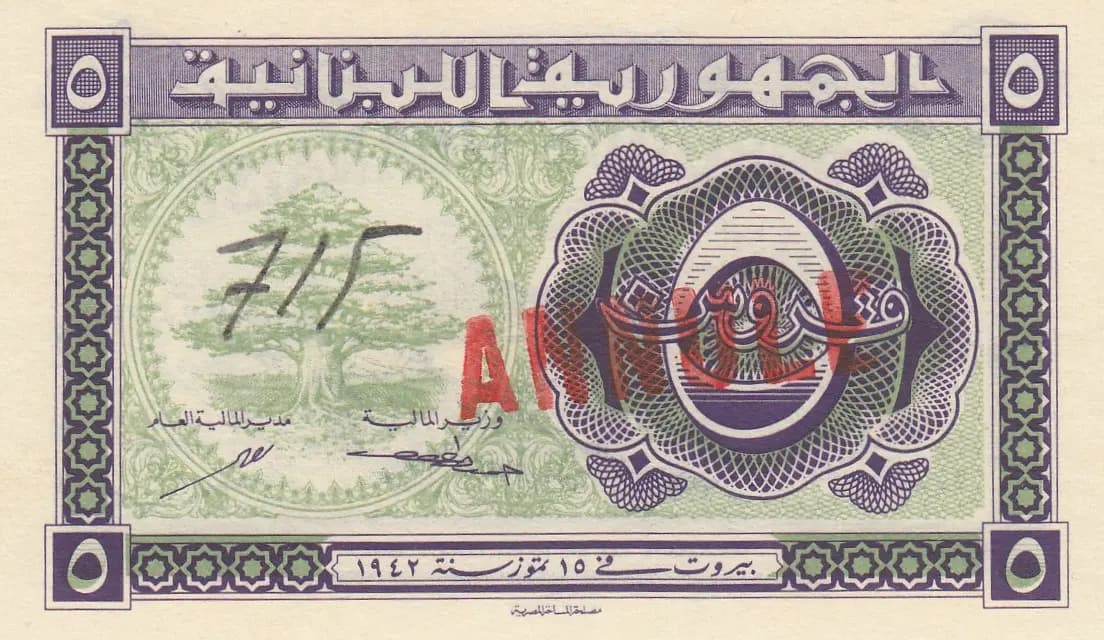
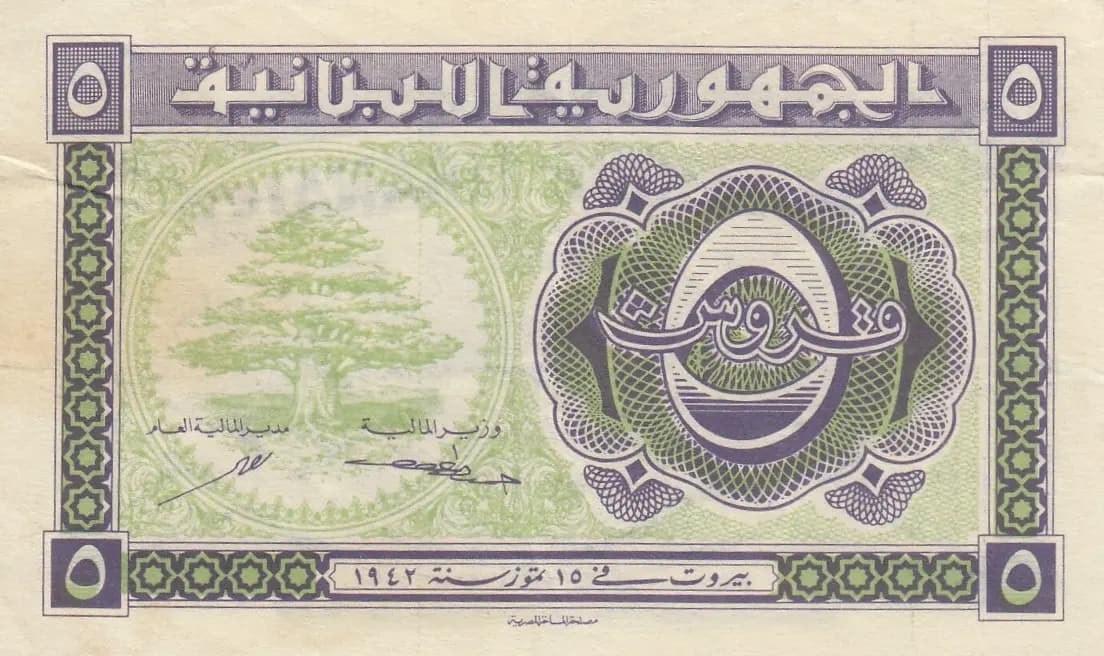
The obverse features Krak des Chevaliers (also known as Qal'at al-Hosn), the 12th-century Crusader fortress situated in northern Lebanon, depicted as an elevated fortification with multiple towers and ramparts rendered in fine engraved detail. Large denominational numerals '5' are positioned in both bottom corners. The reverse displays a large ornate circular medallion as the focal point, filled with symmetrical geometric and floral linework characteristic of Islamic and Levantine design traditions. Flanking the central medallion are two concentric oval security elements. The entire design is framed with decorative geometric borders and corner ornaments, typical of 1950s security printing practices.
Front side: 'REPUBLIQUE LIBANAISE' (Lebanese Republic), 'CINQ PIASTRES' (Five Piastres), '5' (numerical denomination), 'PIASTRES' (piastres). Back side: 'الجمهورية اللبنانية' (al-Jumhūriyyah al-Lubnāniyyah - Lebanese Republic in Arabic).
This note was produced using intaglio (engraved) printing, evidenced by the fine detailed linework visible in both the architectural rendering of Krak des Chevaliers and the intricate geometric patterns of the ornamental medallion. The precise, crisp details of the security features and border framework are characteristic of this high-security printing method commonly employed for banknote production in this era. The printer for Lebanese notes of this period was typically a European security printer, though specific attribution would require additional documentation.
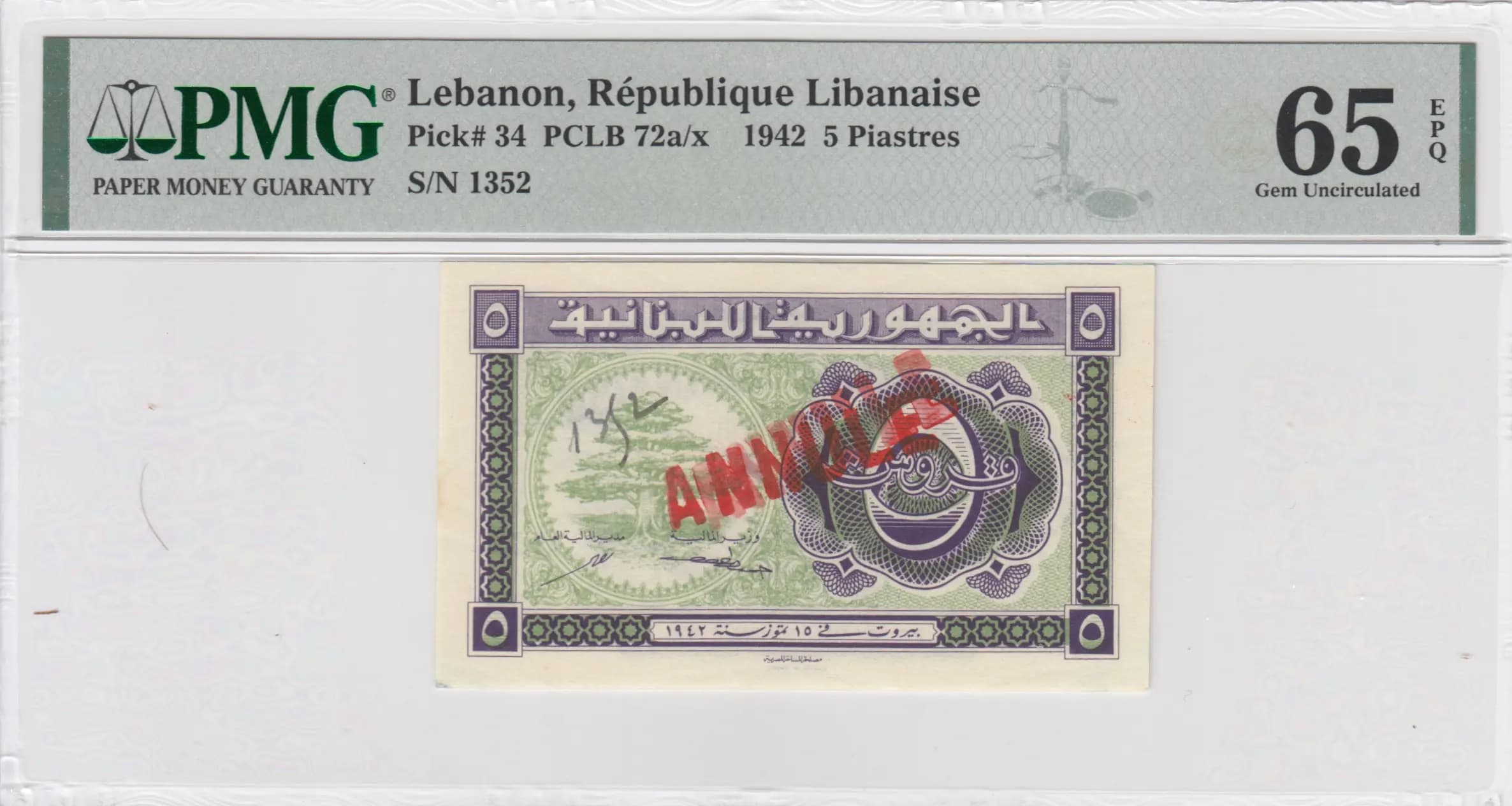
The PMG population report indicates a single cataloged variant for Pick P-46. No specific signature varieties, date variants, or serial number prefix variations have been identified from the visual analysis. The note presents as a standard 1950 issue without evident overprints, security thread variations, or other distinguishing characteristics that would classify it as a distinct variety.