25 piastres 1950
Market Prices
29 salesAbout This Note
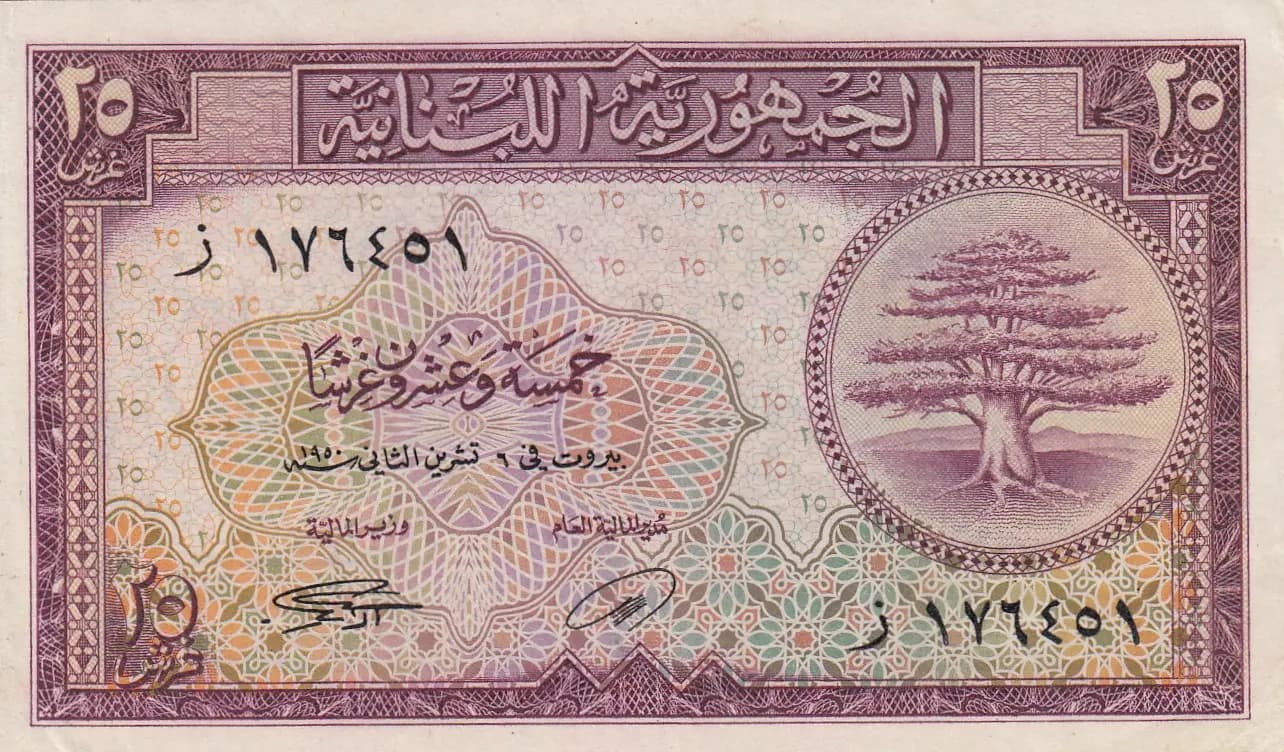
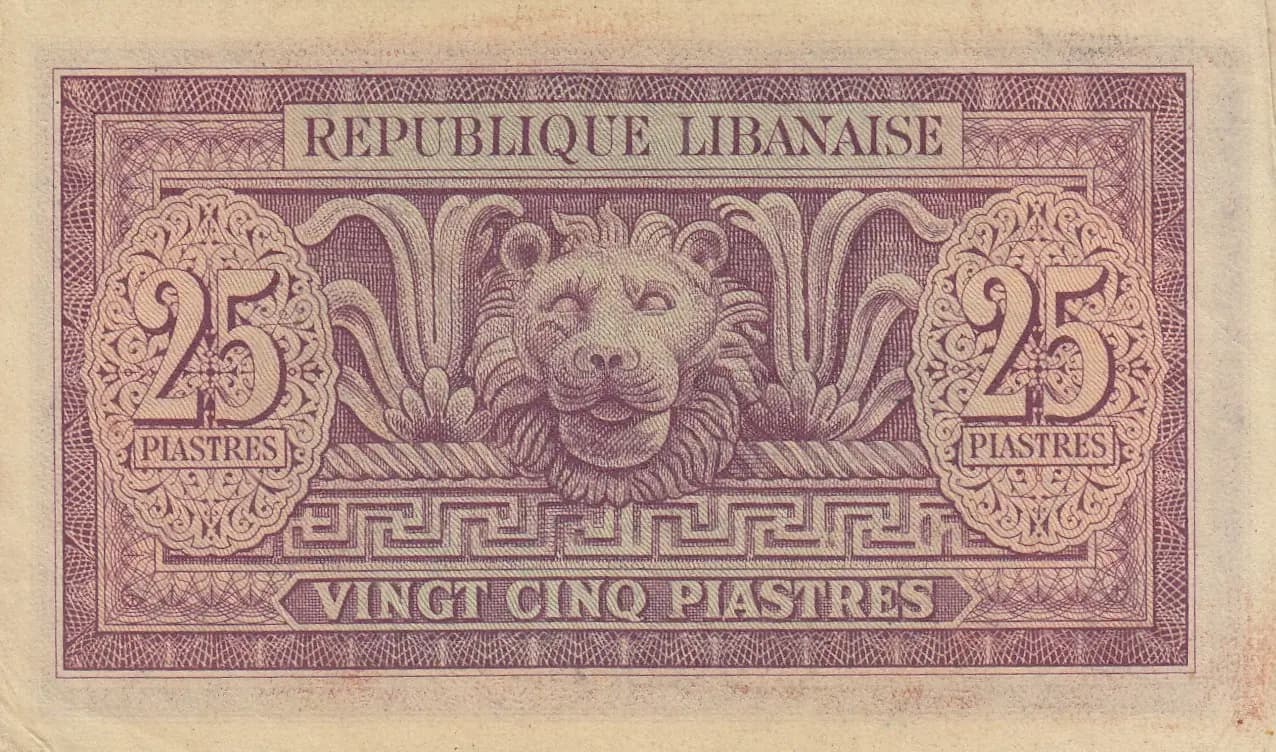
This Lebanese 25 Piastres note from 1950 (Pick P-42) features vibrant purple, pink, orange, and green printing with ornate decorative elements characteristic of mid-20th century Near Eastern currency design. The obverse displays an elaborate geometric and floral medallion alongside a cedar tree vignette on the right, while the reverse presents two lion heads separated by scrollwork beneath French and Arabic inscriptions. The AU condition grade is supported by the visual observation of minimal wear on the reverse, though the front shows age-related yellowing and historical handwritten markings consistent with period circulation.
Common. Secondary market data from eBay transactions spanning 2010-2024 shows consistent pricing in the $9-$30 range for Fine to Very Fine examples, with AU and AUNC specimens commanding $60-$180. The note appears with regular frequency in the numismatic market, and the PMG population report indicates standard cataloging without indication of extreme scarcity. The large number of documented sales transactions and the consistent, moderate price points across multiple years and grade levels are strong indicators of common availability in the collector market.
Issued during the early years of Lebanese independence (Lebanon gained sovereignty in 1943), this note reflects the country's dual French-Arabic linguistic heritage through its bilingual inscriptions—'REPUBLIQUE LIBANAISE' in French and 'الجمهورية اللبنانية' in Arabic. The cedar tree, depicted in a circular medallion on the obverse, is Lebanon's national emblem and appears on the country's flag, symbolizing the nation's identity and sovereignty. The lion imagery on the reverse references traditional heraldic symbolism employed across the Levantine region during this period of nation-building and currency modernization.
The obverse features a prominent decorative medallion on the left with intricate geometric and floral patterns rendered in purple and mauve, flanked by a circular vignette on the right containing an engraved cedar tree—Lebanon's national symbol and constitutional emblem. The reverse displays two outward-facing lion heads positioned centrally, separated by ornamental scrollwork and foliage, with a Greek key pattern border below and denomination marking. The entire composition employs fine guilloché patterns and elaborate border designs typical of security printing of the era. The color palette of purple, pink, orange, and green on cream underprint creates a distinctive aesthetic characteristic of Lebanese currency from this immediate post-independence period.
FRONT: 'الجمهورية اللبنانية' (Lebanese Republic, Arabic); '٢٥' (25, Arabic numerals); serial numbers in Arabic script. BACK: 'REPUBLIQUE LIBANAISE' (Lebanese Republic, French); '25 PIASTRES' (25 Piastres, English/French numerals); 'VINGT CINQ PIASTRES' (Twenty-five Piastres, French). The dual-language presentation reflects post-independence Lebanon's official commitment to both Arabic and French as state languages.
This note was produced using intaglio engraving, evidenced by the fine line work, detailed guilloché patterns, and the crisp, deeply-impressed appearance of the decorative elements visible in the images. The complex geometric borders, portrait-quality lion head engraving, and elaborate floral medallion patterns are consistent with high-security banknote printing standards employed by international security printers during the 1950s. The multi-color printing (purple, pink, orange, green) suggests multiple impression passes typical of period security printing methods.
This specific example represents the 1950 issue date variant (Pick P-42 catalogs both 1948 and 1950 dates; the serial number area visible in the image suggests this is the 1950 printing). The visible handwritten markings and signatures on the obverse appear to be period notations rather than official variety markers. No overprints or formal series/prefix variations that would constitute separate catalog varieties are apparent from the visual analysis. The note should be recorded with its specific serial number and the handwritten marks noted for provenance documentation.