1 livre 1961
Market Prices
45 salesAbout This Note
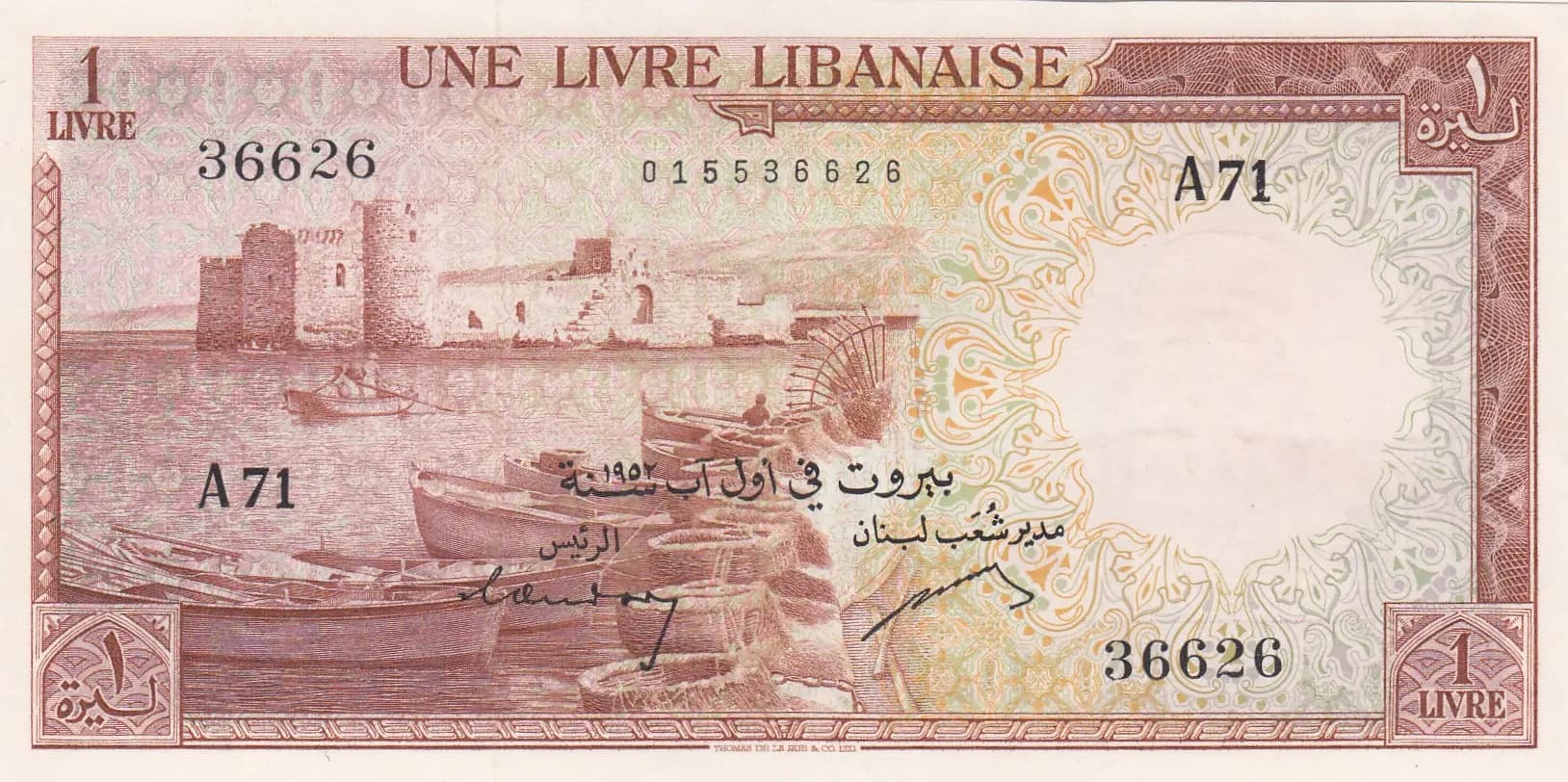
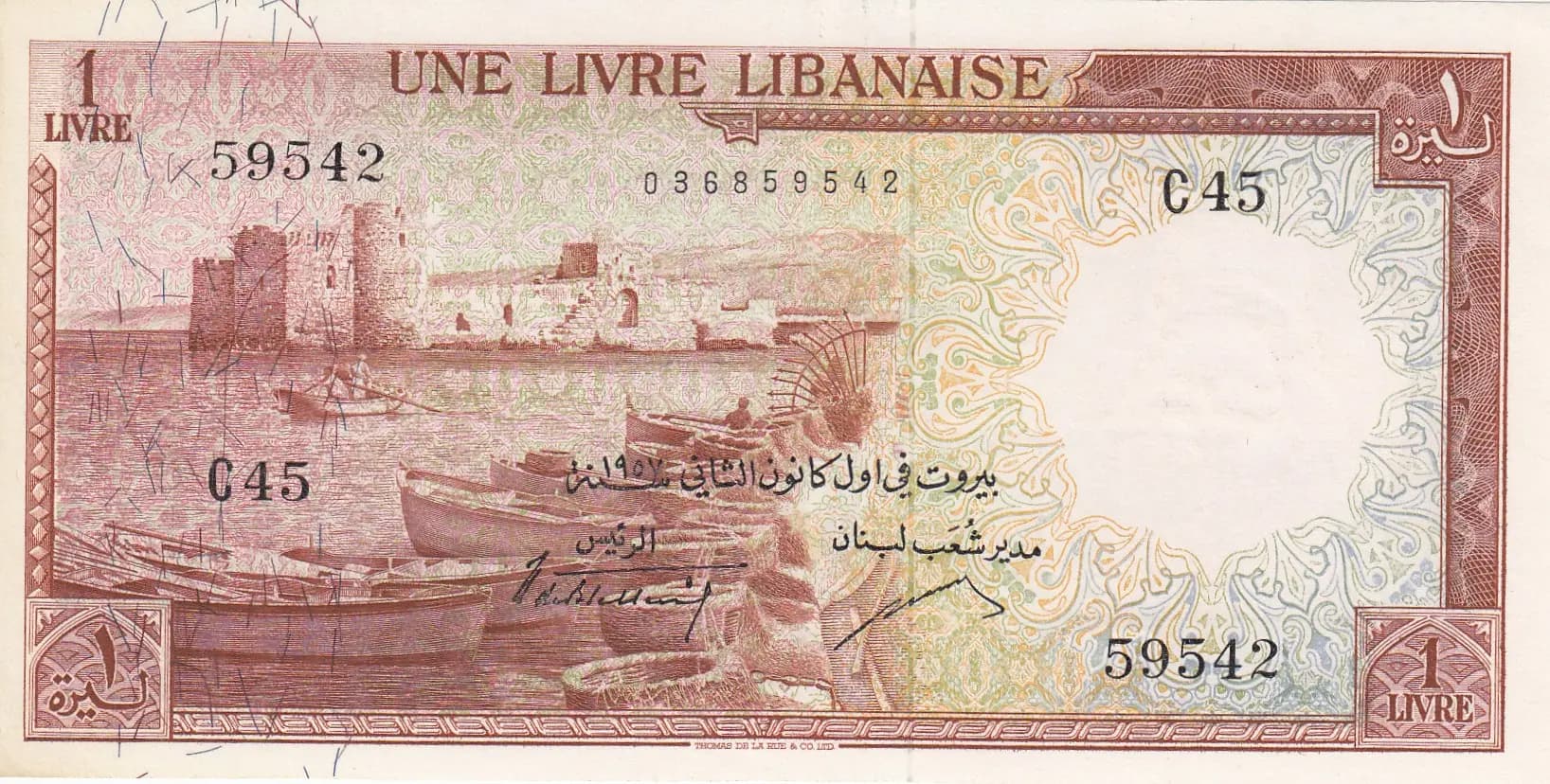
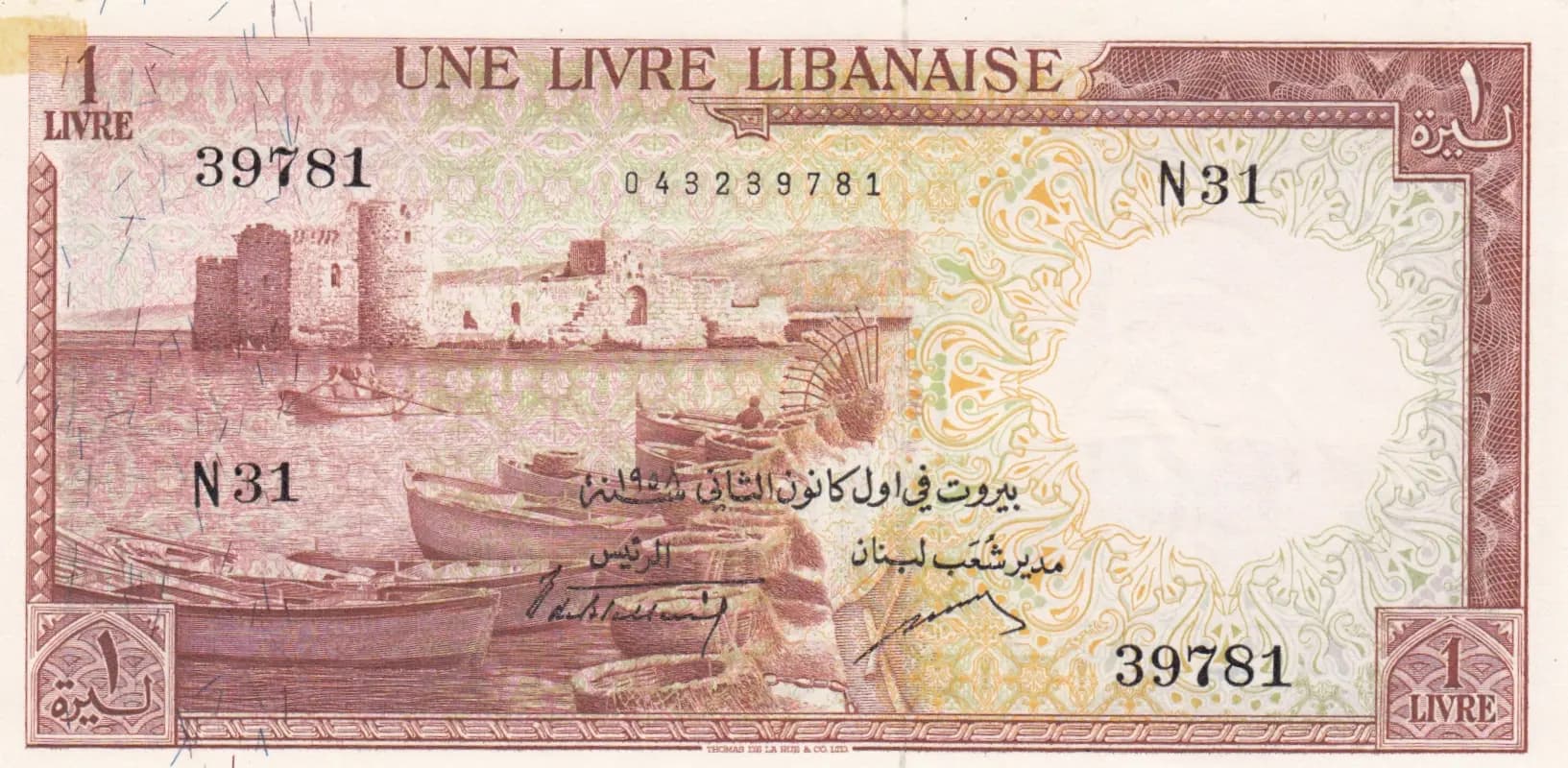
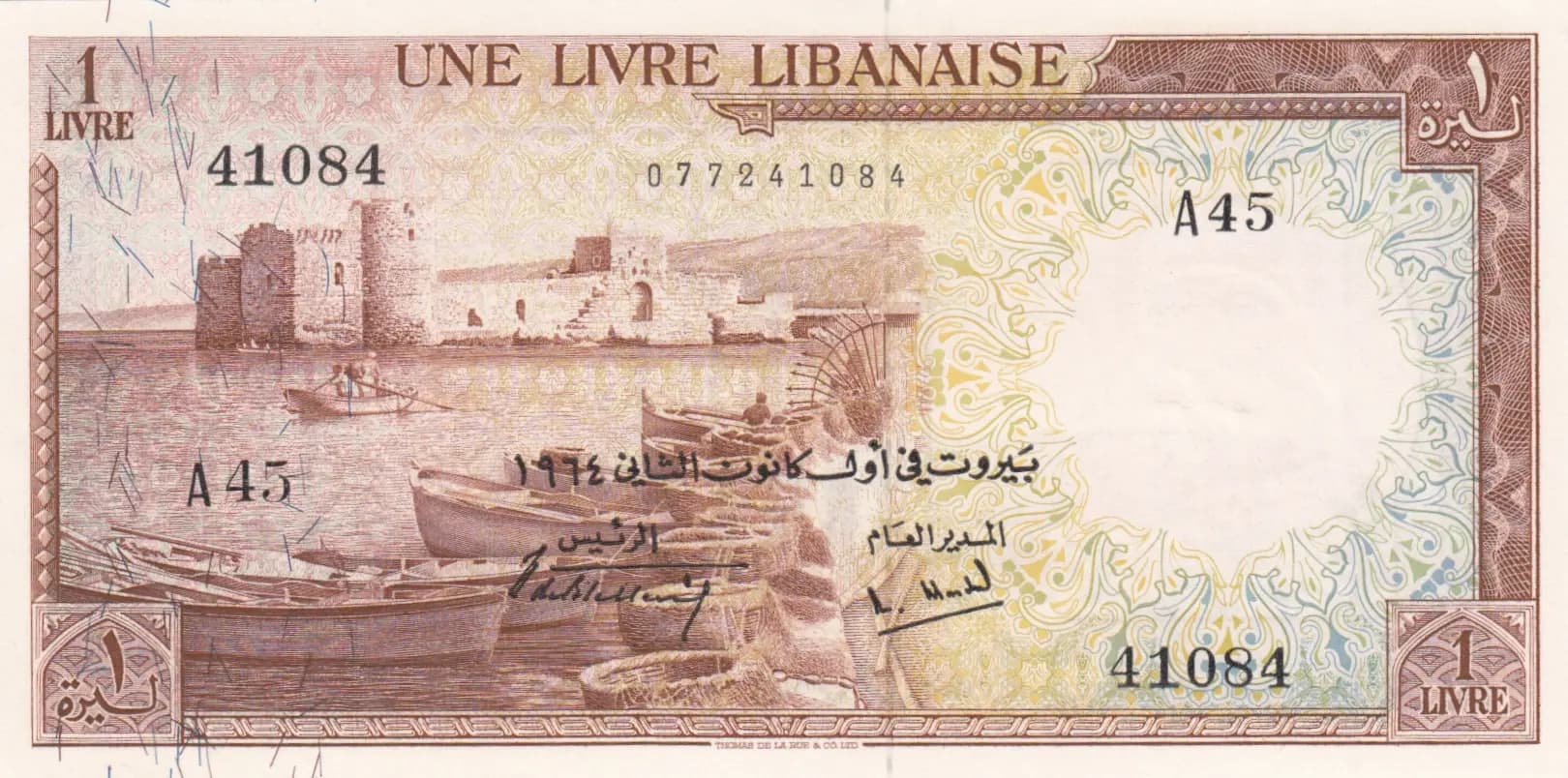
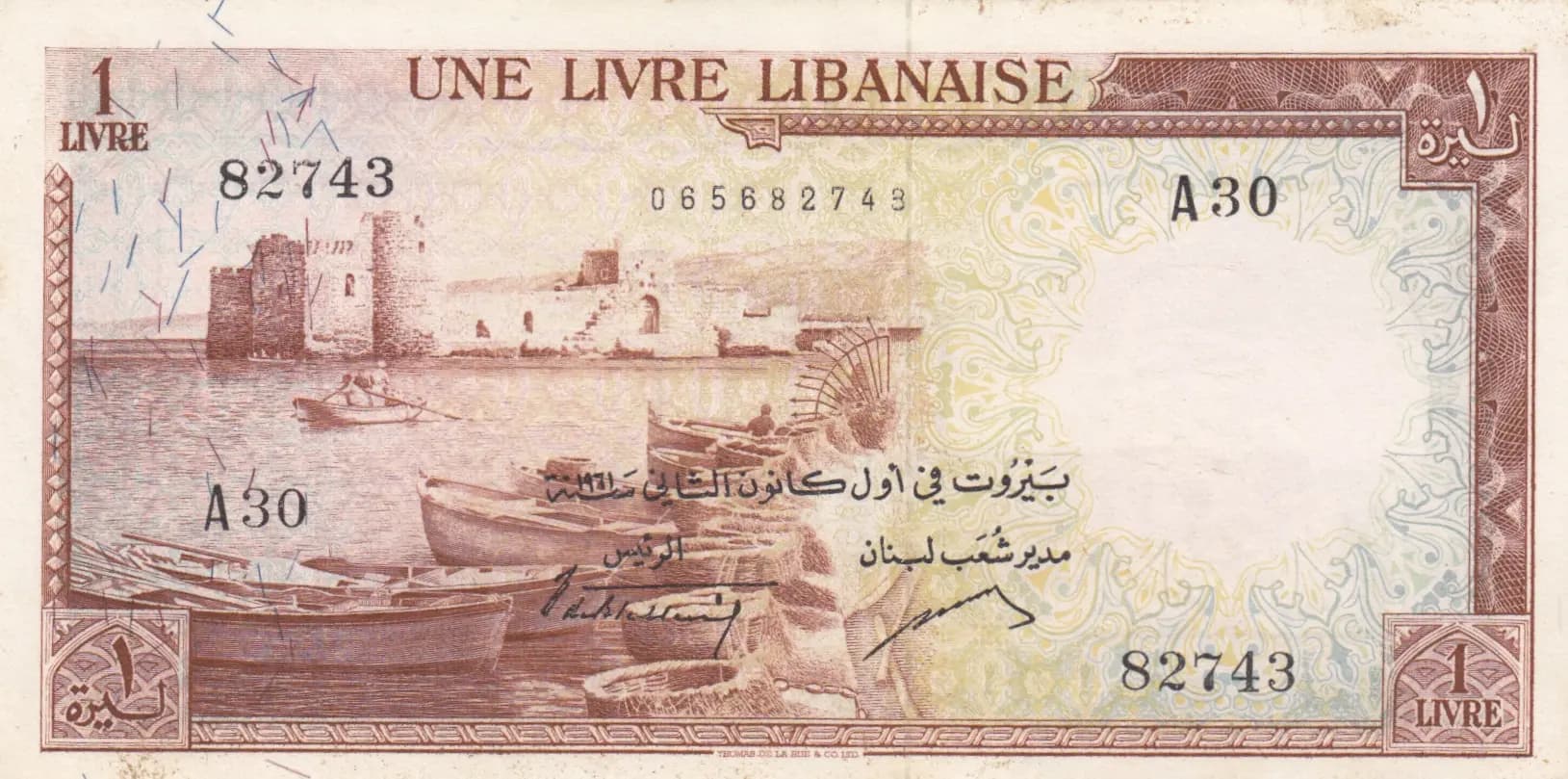
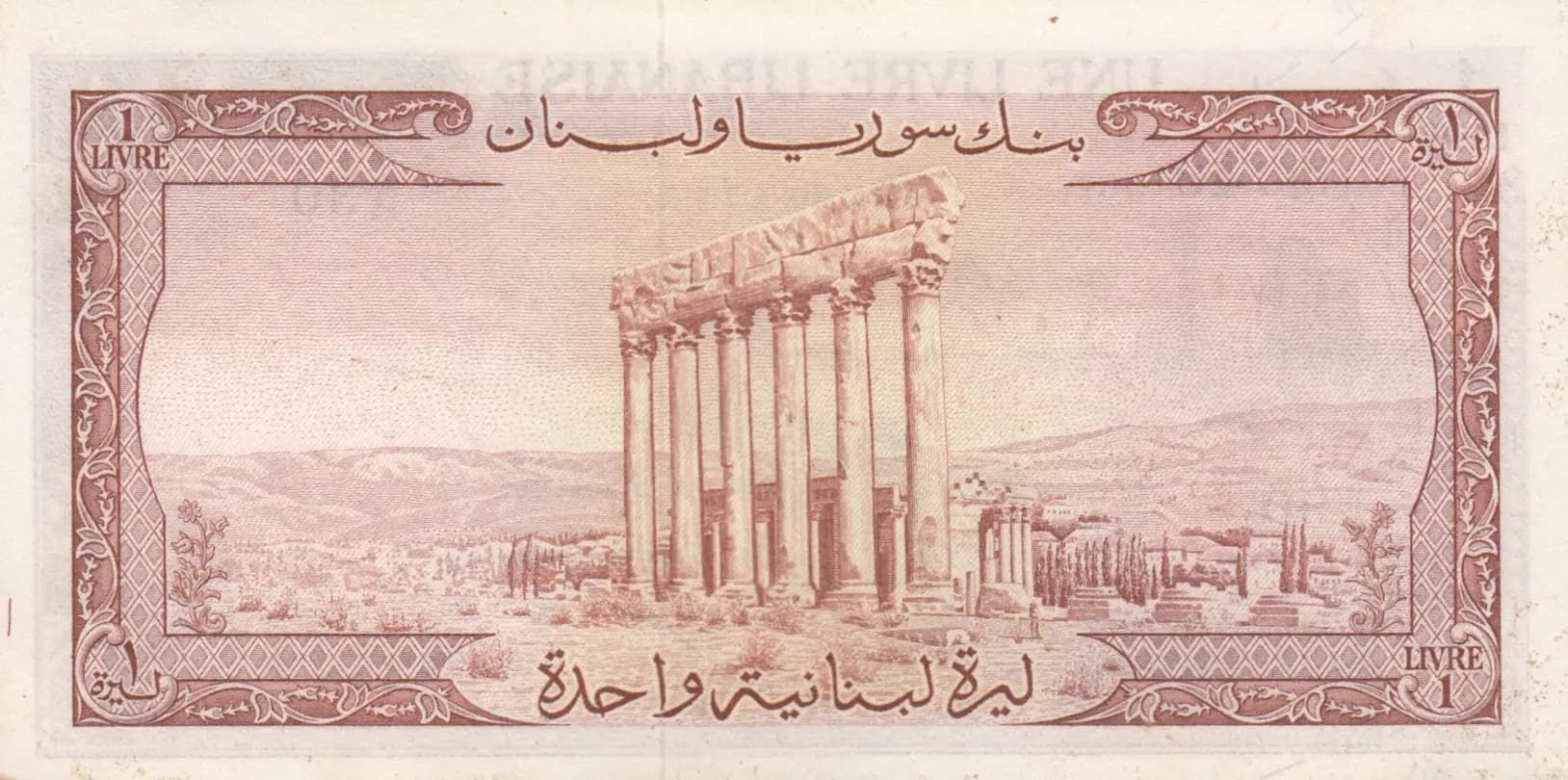
This is a 1961 Lebanese 1 Livre note issued by the Banque de Syrie et du Liban, graded AU (About Uncirculated). The note features an attractive reddish-brown color scheme with detailed engraved imagery of Sidon's coastal fortifications and harbor vessels on the front, and the magnificent Corinthian columns of Baalbek's Jupiter Temple on the reverse. Despite showing some age-related yellowing and minor creasing consistent with AU grade, the note retains excellent clarity of design and the fine line engraving characteristic of Thomas de la Rue's prestigious security printing work.
Common. This note, cataloged as Pick P-55b from an extended series (1952-1964), shows strong market activity in eBay sales data spanning from 2012 through 2022, with numerous examples selling in the $5-$30 range depending on condition grade. AU-graded examples have sold for $20-$27, while higher-graded PMG specimens (63-64) have commanded $85-$133.50, reflecting grading premiums rather than inherent rarity. The extended issue period, regular appearance in auctions, and catalog valuation of $60 UNC indicate substantial print runs and broad collector availability.
Issued during the Banque de Syrie et du Liban's note-issuing period (1952-1964), this 1 Livre represents a period of relative stability in Lebanon before the civil turmoil that would later grip the nation. The depicted landmarks—the Crusader Castle at Sidon and the Roman Jupiter Temple columns at Baalbek—reflect Lebanon's rich historical heritage spanning Phoenician, Roman, and Crusader periods, celebrating the nation's position as a cultural crossroads in the Eastern Mediterranean.
The obverse features a romantic maritime scene centered on the Crusader Castle of Sidon (Saida), depicted on the left with its characteristic coastal fortifications and defensive towers overlooking calm harbor waters populated with traditional Lebanese fishing and sailing vessels. The composition employs ornamental geometric border patterns flanking both left and right margins with decorative corner emblems, typical of mid-twentieth-century security printing aesthetics. The reverse showcases the famous Jupiter Temple ruins at Baalbek, displaying three tall Corinthian columns with an elaborate carved entablature, set within a landscape showing cypress trees and distant settlements characteristic of the Bekaa Valley region. Both sides employ the same warm reddish-brown palette with cream and tan underprinting, unified by fine-line engraved rendering that provides excellent anti-counterfeiting security through intricate detail work.
Front side: 'UNE LIVRE LIBANAISE' (One Lebanese Pound) and 'LIVRE' (Pound) in French; Arabic text includes 'مديرية النقد اللبنانيين' (Lebanese Monetary Authority/Currency Directorate), 'بيروت في أول كانون الأول' (Beirut, first of December), and 'الأول' (First/One). Serial number components '82743', series designation 'A30', and full serial '0656827749' are also present. Back side: 'LIVRE' (Pound) appears twice in French; Arabic inscription 'بنك سورية والسلطة الحقة' (Bank of Syria and Lebanon) and 'ليرة لبنانية واحدة' (One Lebanese Pound).
Intaglio (engraved) printing by Thomas de la Rue, London, recognized as one of the world's premier security printing houses. The fine line engraving visible throughout both sides, the detailed architectural rendering, ornamental borders, and decorative security patterns are characteristic of De la Rue's intaglio process. The note incorporates a security strip as noted in catalog references, and the multicolored underprint visible beneath the primary design demonstrates the sophisticated multi-plate printing coordination typical of professional currency production.
Cataloged as Pick P-55b, indicating this is a later variant of the 1 Livre series. The PMG population report notes variants P-55a and P-55s also exist for this denomination. The observed series designation 'A30' and serial number format suggest this specimen represents the standard circulation printing variant. The specific date reference 'بيروت في أول كانون الأول' (Beirut, first of December) appears consistent with the official 1961 issue date, though the series ran 1952-1964. No overprints or exceptional markings distinguishing this as a rare variety are present; the light blue handwritten marks visible in the upper corners appear to be post-issue collector notations rather than official designations.