1 livre 1952
Market Prices
17 salesAbout This Note
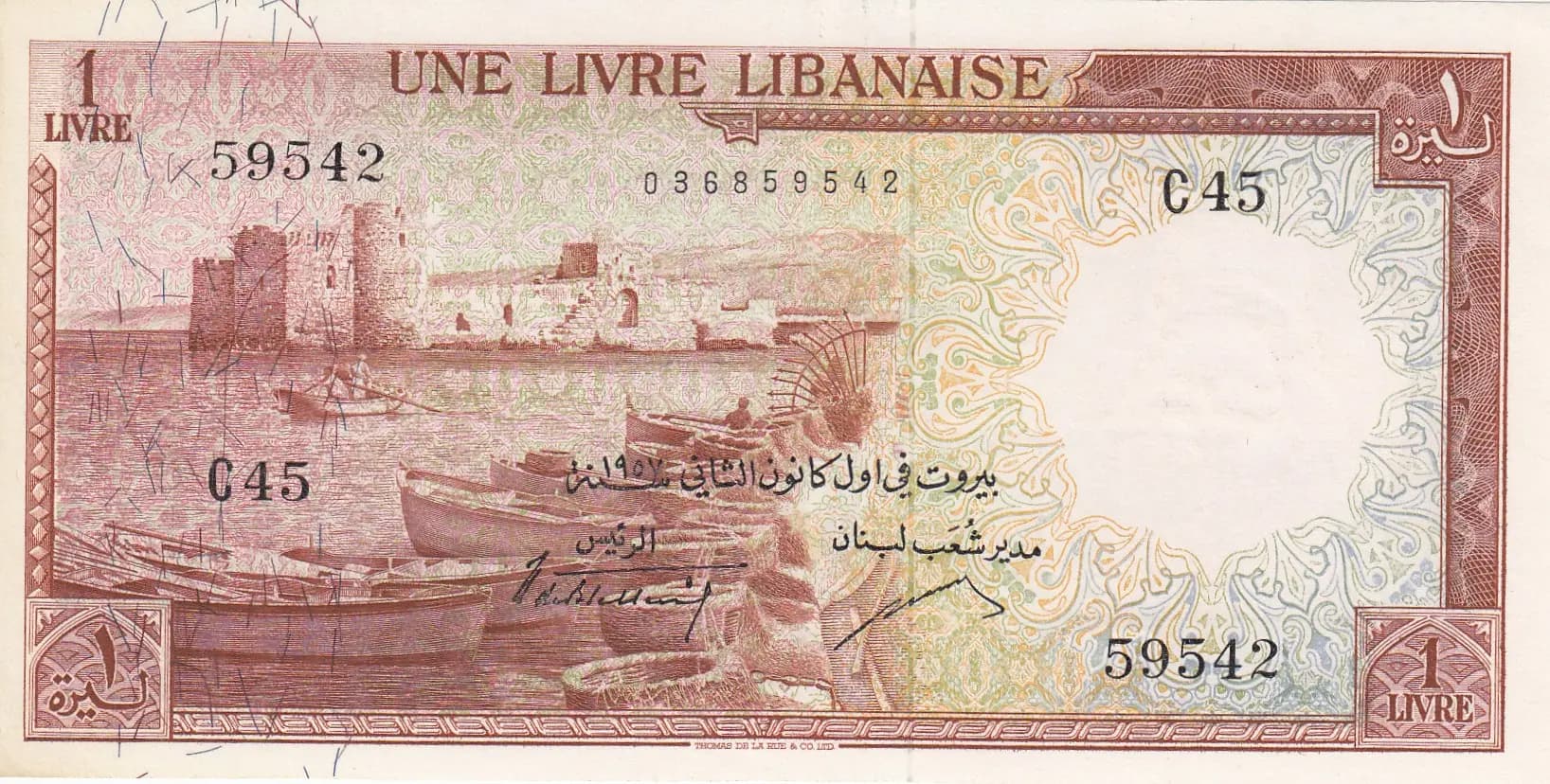
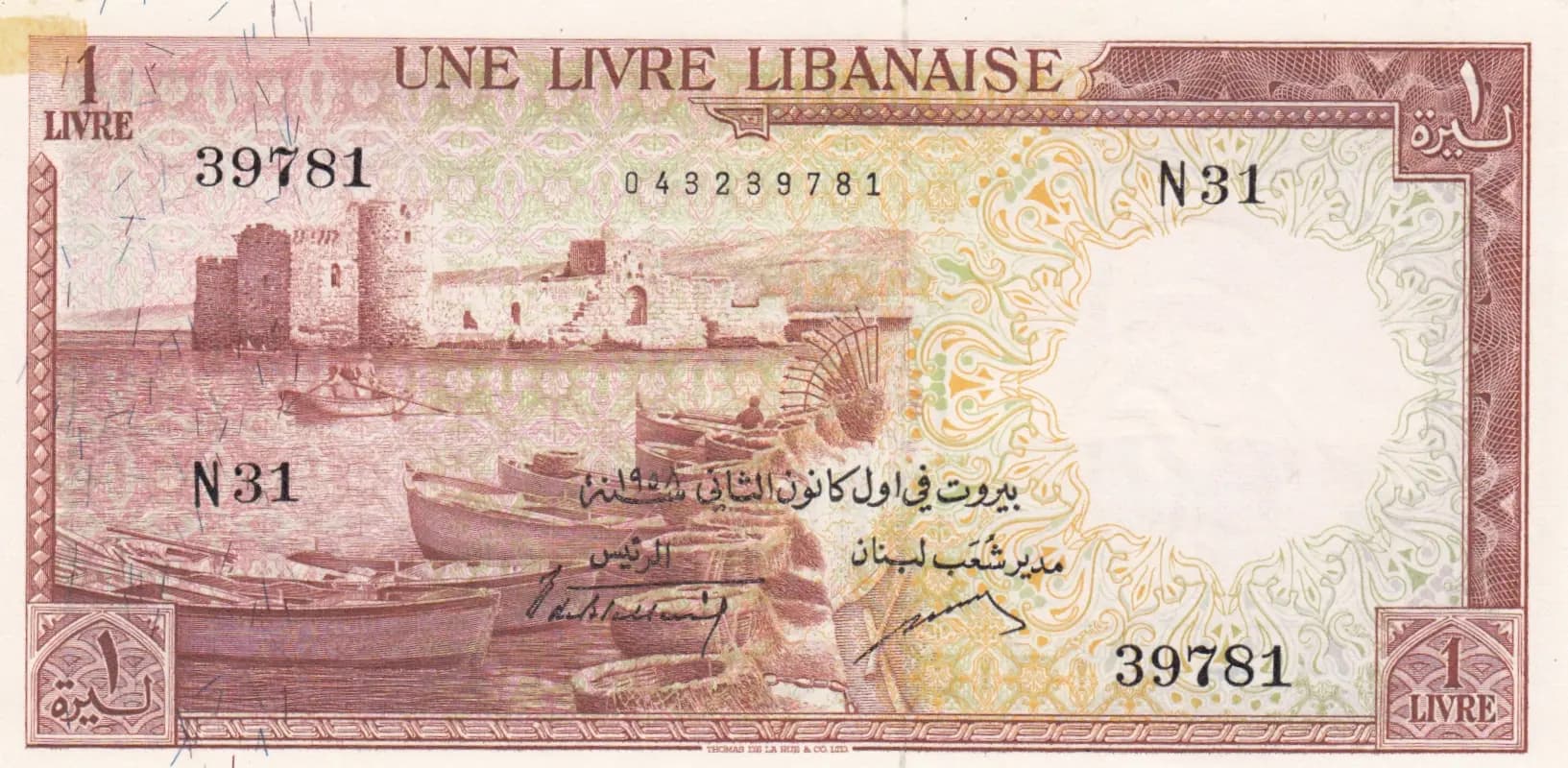
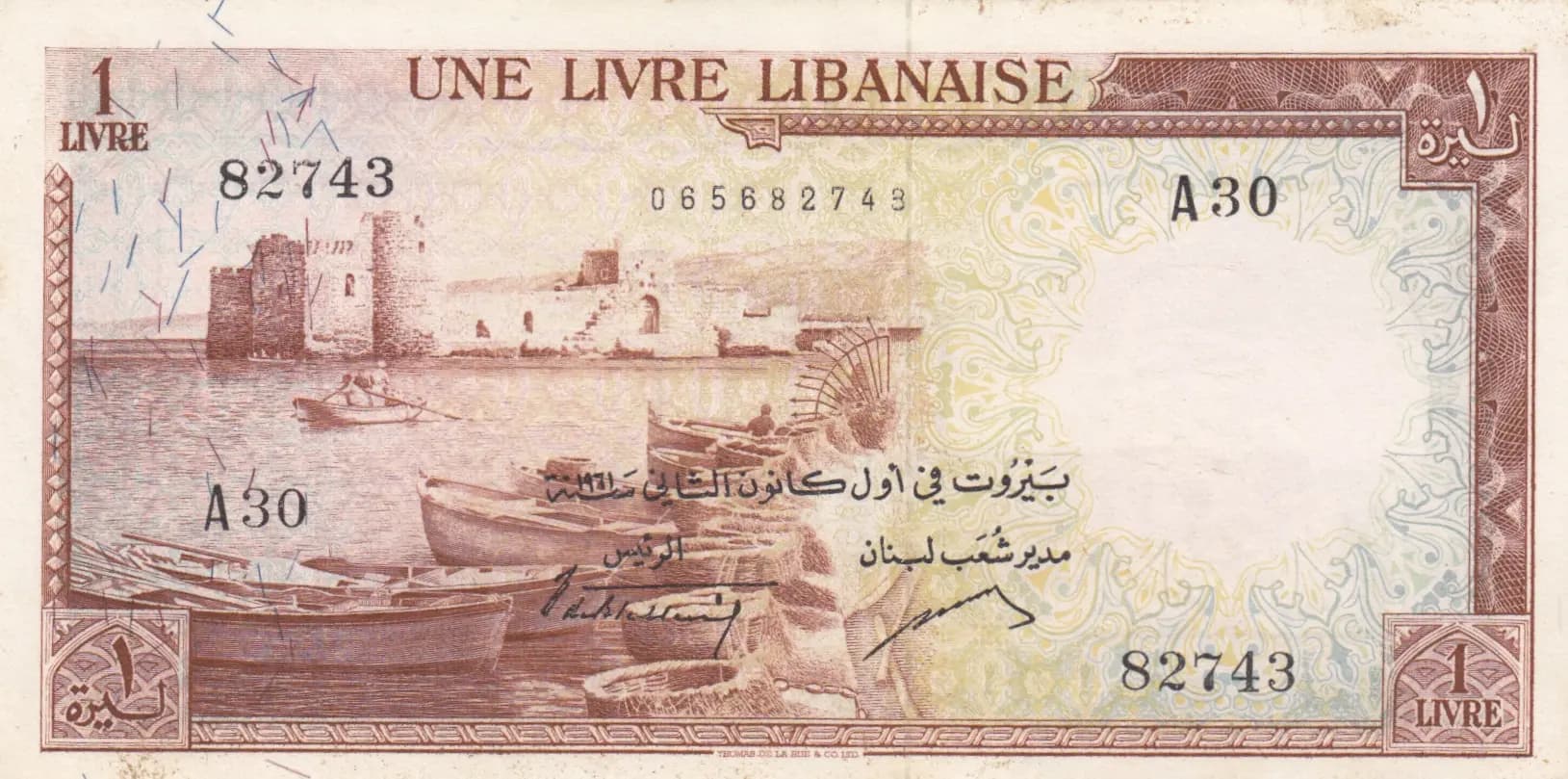
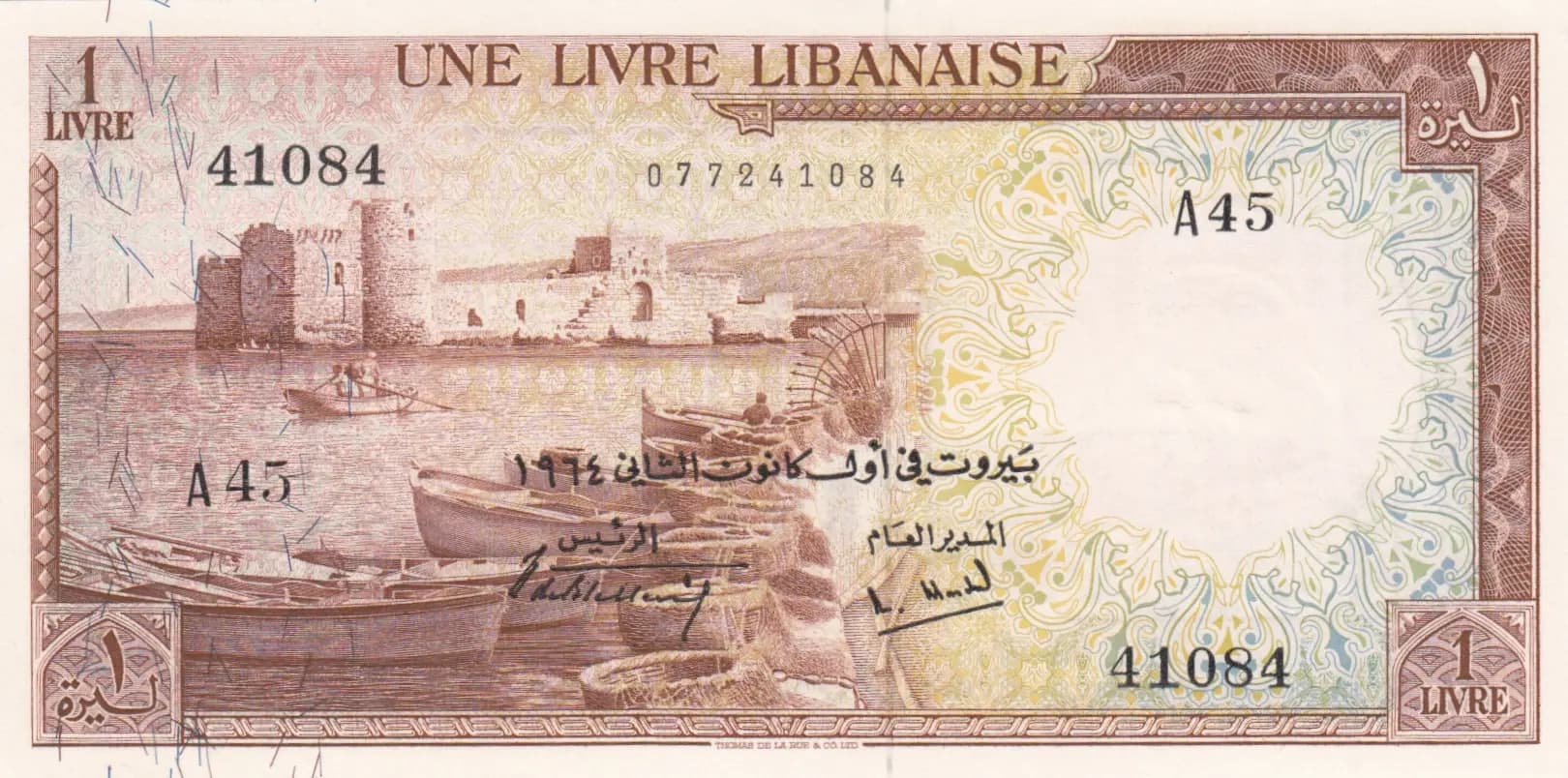
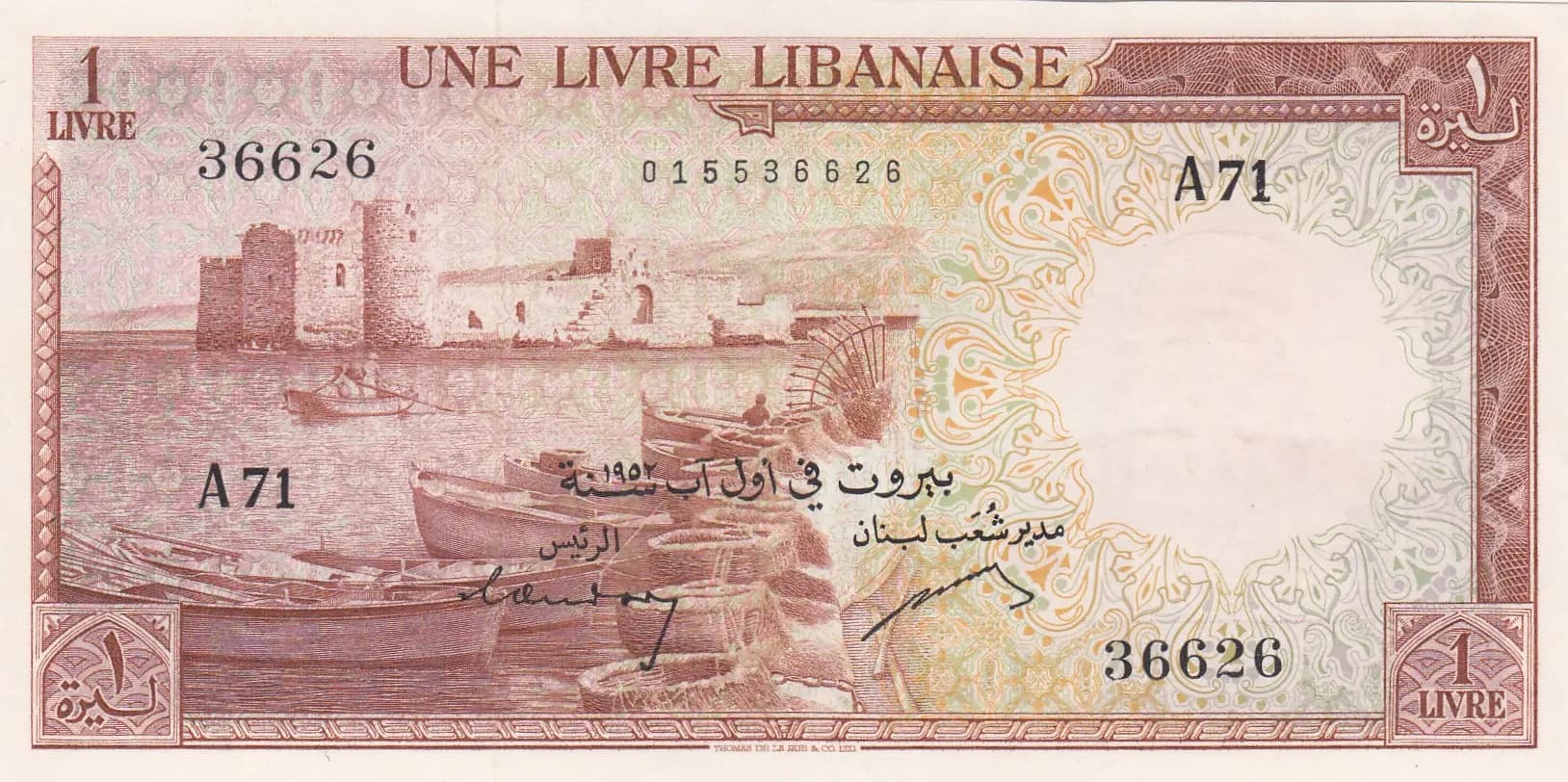
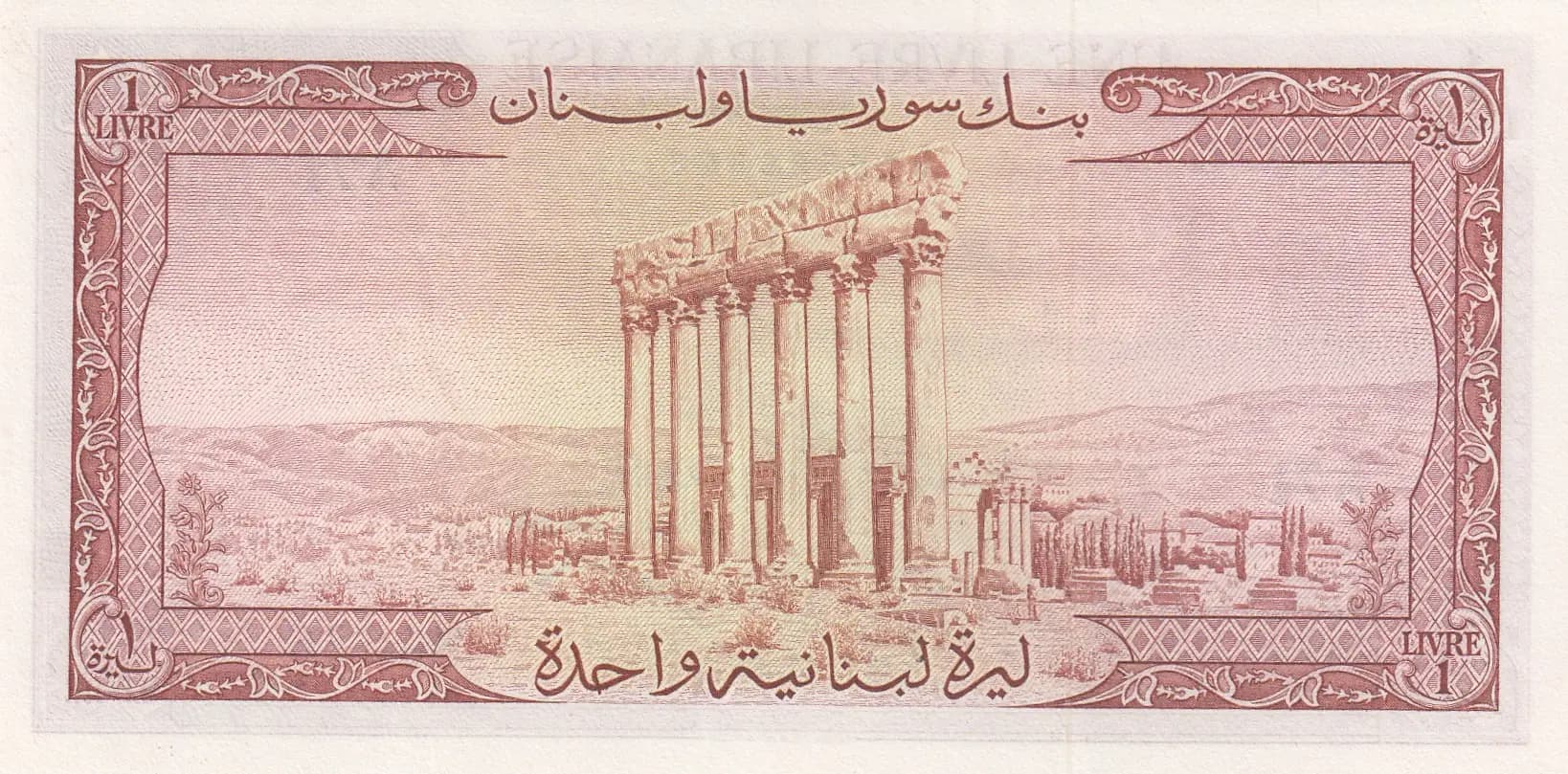
This is a Lebanon 1 livre banknote from 1952, issued by the Banque de Syrie et du Liban and printed by Thomas de la Rue in London. The note features a distinctive reddish-brown color scheme with the Crusader Castle of Saida prominently displayed on the obverse alongside maritime imagery, while the reverse showcases the classical Corinthian columns of the Temple of Jupiter at Baalbek. In UNC condition, this note represents a well-preserved example of early post-independence Lebanese currency, notable for its blend of French colonial design aesthetics and classical architectural symbolism reflecting Lebanon's cultural heritage.
Common. Market evidence from eBay sales spanning 2009-2025 shows consistent availability across all condition grades, with prices ranging from under $1 (VG) to approximately $40 (EF). The 2019 catalog valuation of $60 for UNC reflects moderate collector demand. This was a regular issue with presumably substantial print runs by the Banque de Syrie et du Liban during the 1952-1964 period. The note remains readily obtainable for typical collectors.
Issued in 1952, this banknote reflects Lebanon's early period following independence from French mandate (1943), when the newly sovereign nation sought to establish its monetary identity while honoring its rich historical legacy. The selection of the Crusader fortress at Saida and the ancient Roman temple columns at Baalbek as central design elements demonstrates Lebanon's strategy to appeal to both its Mediterranean maritime heritage and its position as heir to classical Greco-Roman civilization. The Banque de Syrie et du Liban served both Syria and Lebanon during this transitional period, before the eventual establishment of separate central banks.
The obverse features the Crusader Castle (Saida/Sidon) positioned at left-center of a harbor scene, rendered in fine detail to showcase the fortress's towers and crenellations against a seaport landscape with period vessels and maritime activity. The reverse displays the Temple of Jupiter at Baalbek, specifically its iconic row of towering Corinthian columns with ornate capitals, set within a classical landscape complete with cypress trees and distant architectural structures. Both sides employ ornamental Islamic-geometric and floral corner patterns typical of Levantine currency design, with decorative guilloche borders framing the compositions. The color palette—reddish-brown on multicolored underprint—creates visual harmony while distinguishing this denomination. Coat of arms emblems appear in both bottom corners of each side.
FRONT: 'UNE LIVRE LIBANAISE' (French: One Lebanese Pound) / 'LIVRE' (French: Pound) / Serial numbers: '36626' and '01553626' with series designation 'A71' / 'بيروت في أول آيار 1951' (Arabic: Beirut on the first of May 1951) / 'مديرشبك لبنان' (Arabic: Bank of Lebanon Governor) / 'الرئيس' (Arabic: President). BACK: 'LIVRE' appears twice (French: Pound) / 'بنك سورية والسلطان' (Arabic: Bank of Syria and [Lebanon]) / 'لبنة لبنانية واحدة' (Arabic: One Lebanese Pound).
Intaglio (engraved) printing by Thomas de la Rue, London, employing fine line engraving and complex guilloche patterning throughout. The security features evident from visual inspection include multi-layered color printing, intricate border designs, and serial numbers placed in multiple locations. No security strip is present on this issue, consistent with pre-modern security standards of the early 1950s.
This example is identified as Pick P-55a (the primary variety), with visual inspection confirming features consistent with this cataloging. The series designation 'A71' and serial numbers visible in the image suggest mid-range production from the note's run. PMG records indicate P-55a and P-55s (printer variant) exist for this denomination. The note's signature elements and date marking (Beirut, May 1, 1951, though cataloged as 1952 issue) are consistent with standard examples of this Pick number.