1 livre 1957
Market Prices
17 salesAbout This Note
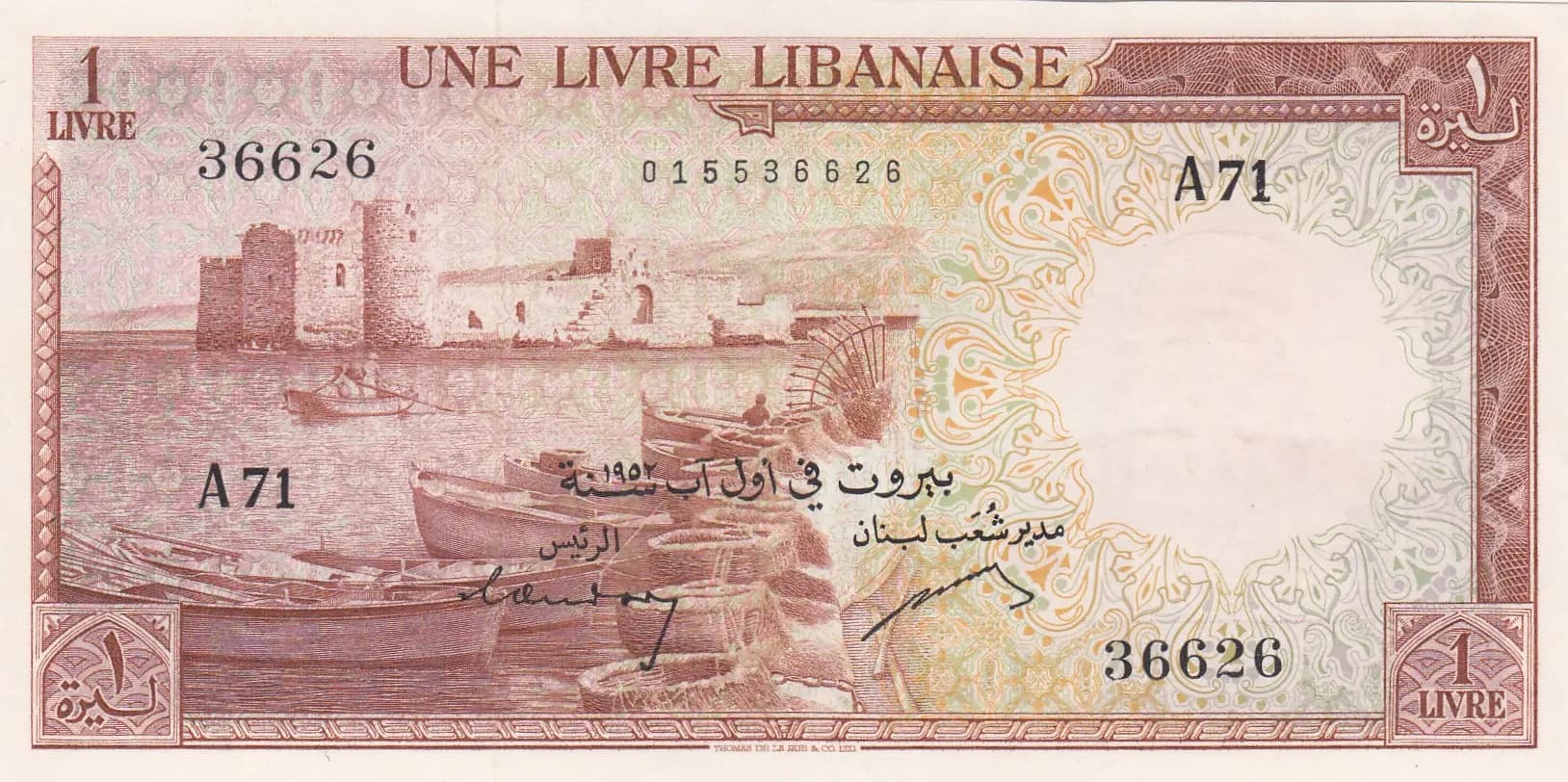
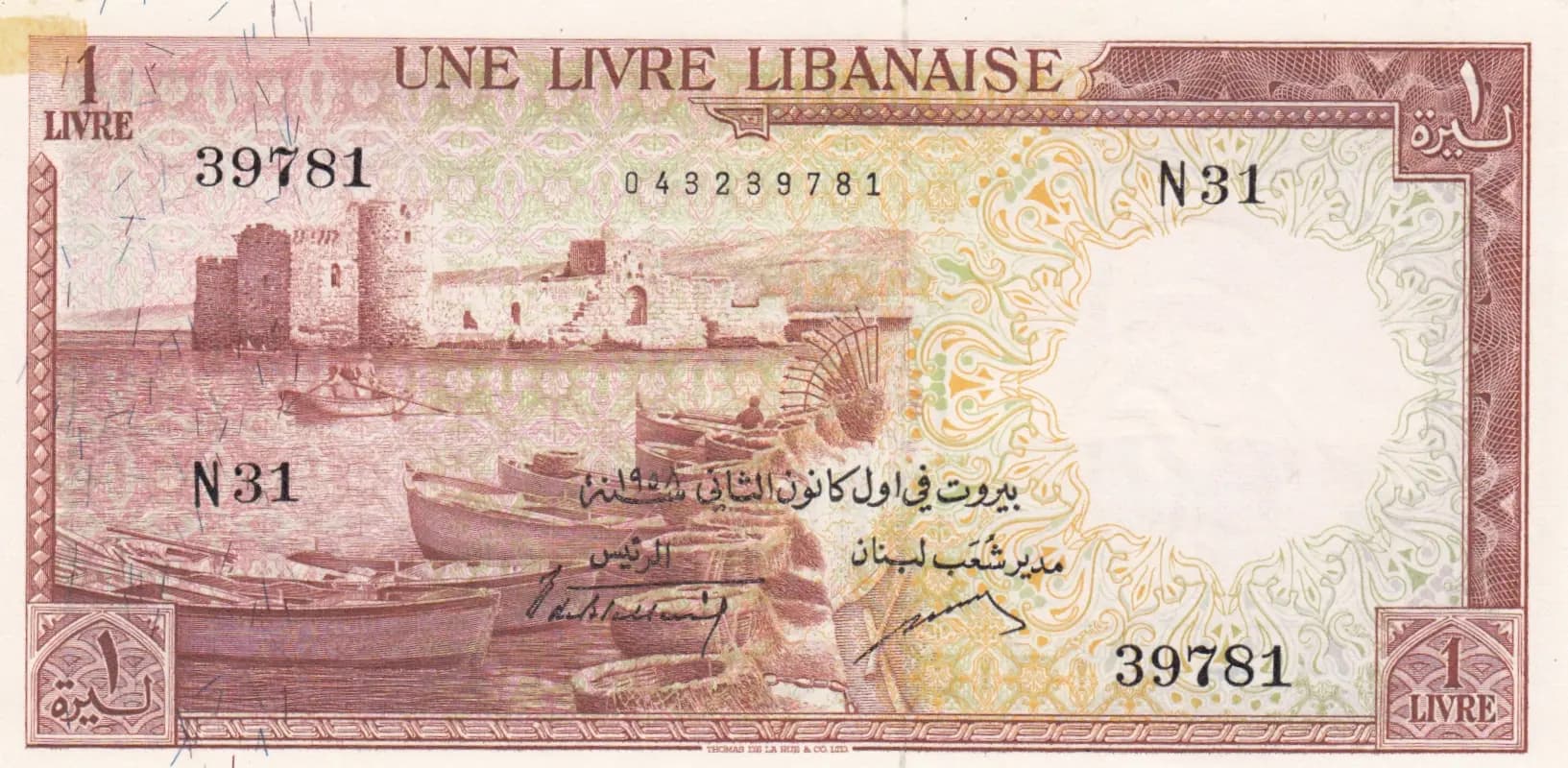
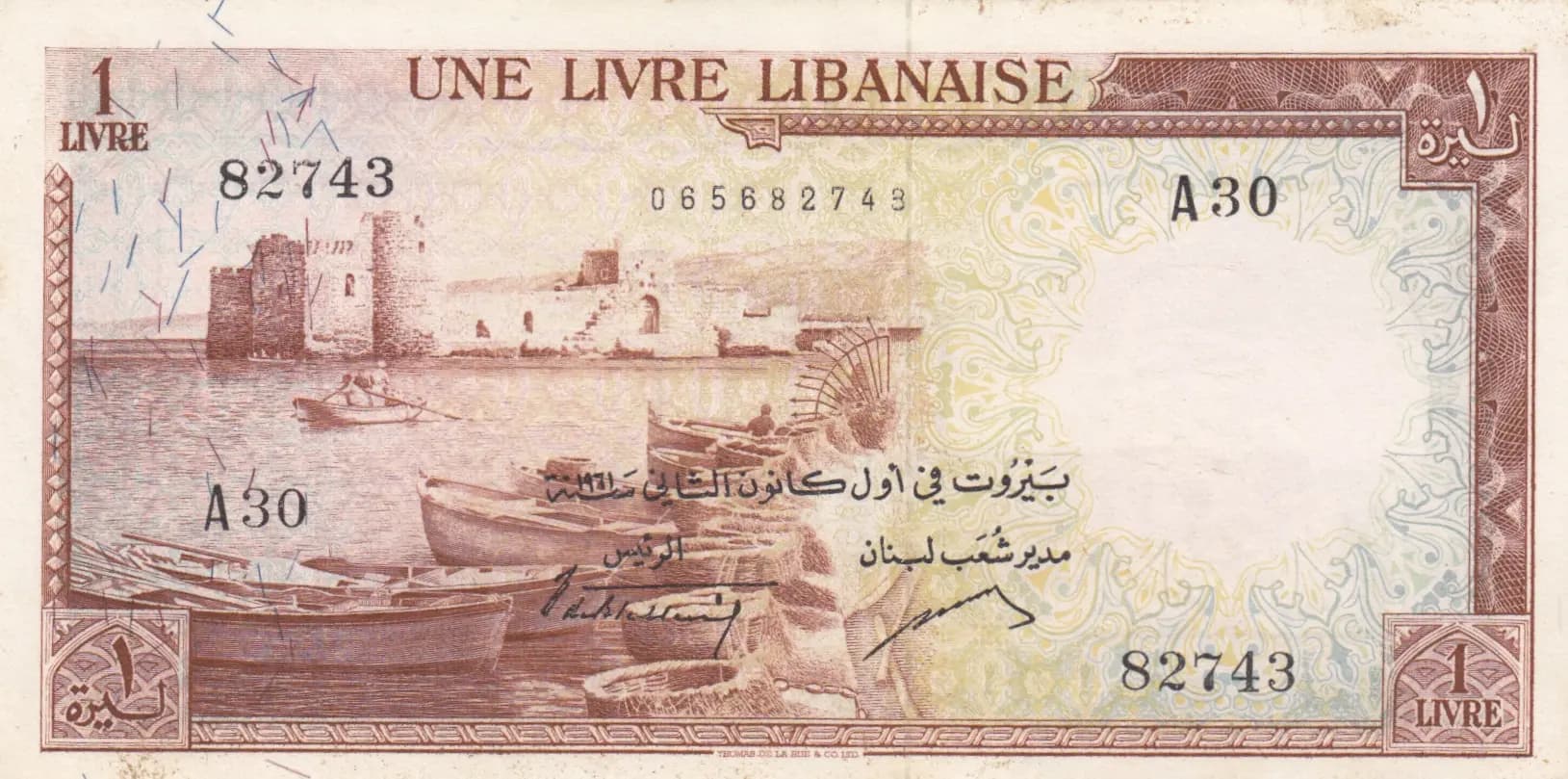
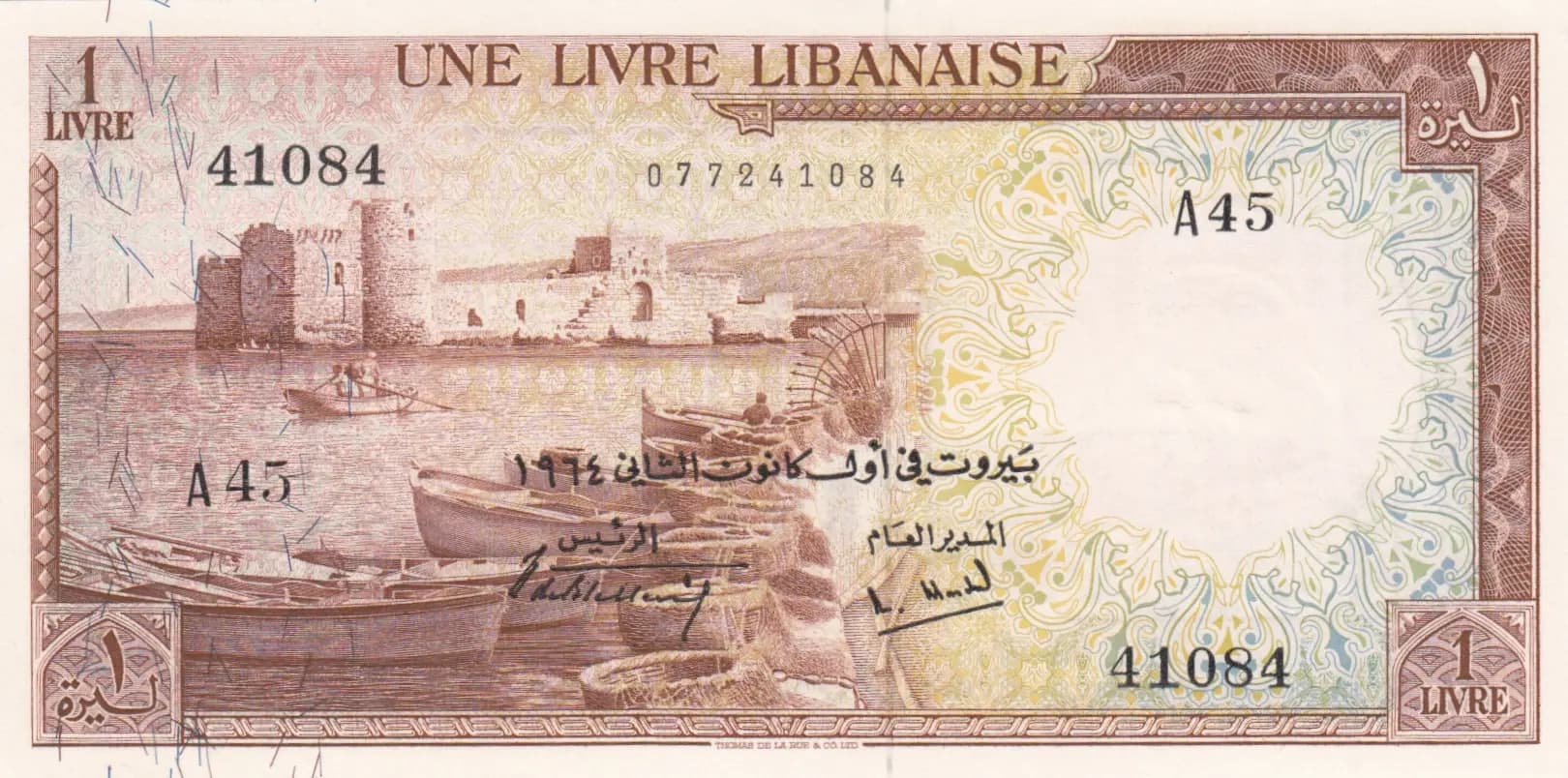
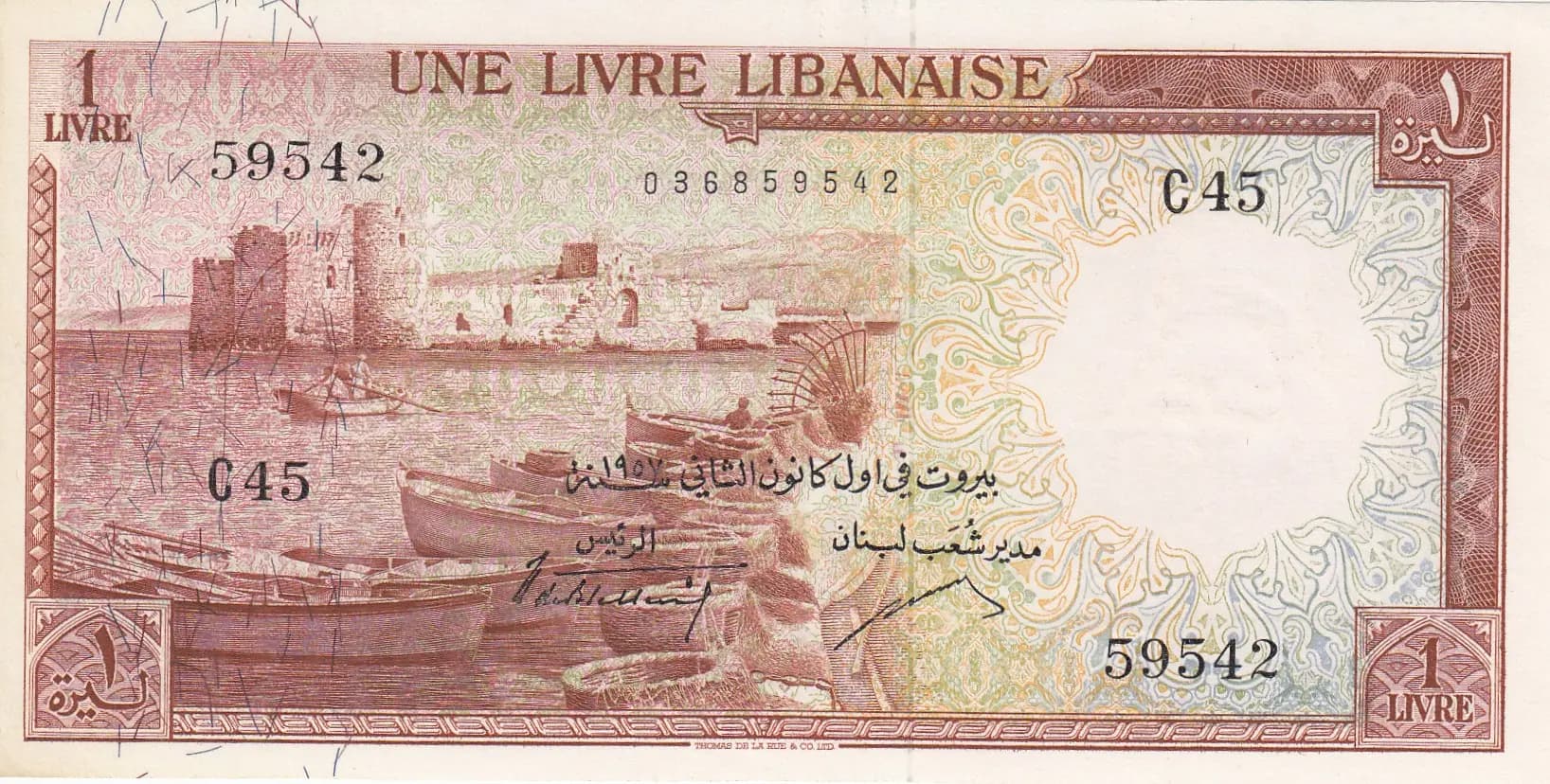
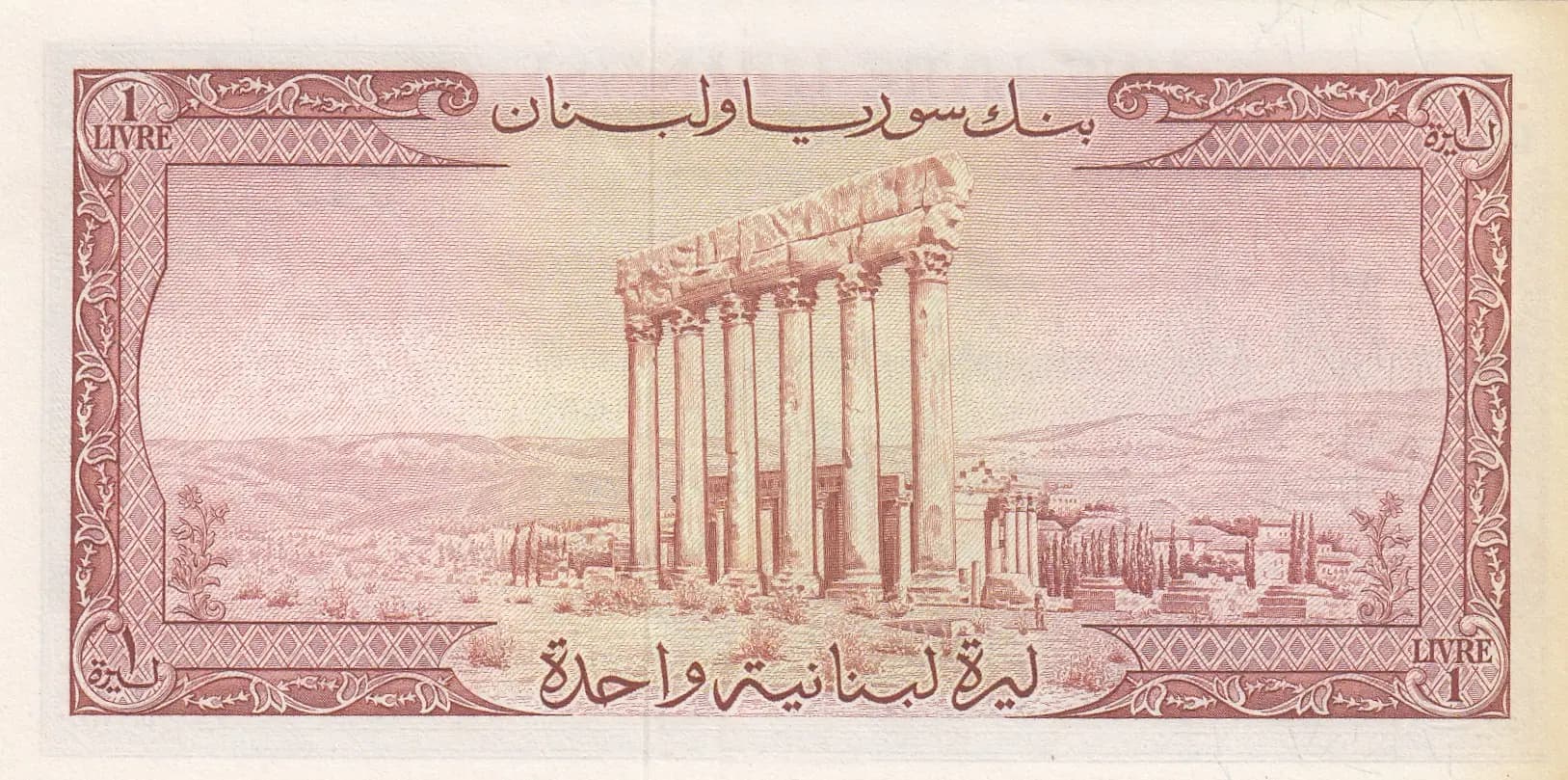
This is a Lebanese 1 Livre banknote from the 1952-1964 series issued by Banque de Syrie et du Liban, printed by Thomas de la Rue of London. The note features the iconic Crusader Castle at Saida (Sidon) on the obverse in rose and brown tones, with the classical Columns of the Jupiter Temple at Baalbek prominently displayed on the reverse. The specimen shown displays moderate circulation wear with visible creases and age-related discoloration, consistent with handling over decades, though the design remains clearly legible and the engraving quality is evident throughout.
Common. The eBay price history provided demonstrates consistent availability at modest valuations, with most sales ranging from $3 to $41, depending on condition grade. The catalog notation of UNC: $60 (2019) indicates this is a regularly traded note with established market pricing rather than a scarce issue. The 1952-1964 series was a substantial regular issue with significant print runs, and Lebanese 1 Livre notes remain readily available to collectors. The P-55a variant represents the standard type without printer attribution marks.
This banknote was issued during a critical period in Lebanese monetary history, following Syria and Lebanon's joint monetary union under the Banque de Syrie et du Liban. The depicted landmarks—the Crusader fortress at Saida and the Roman temple columns at Baalbek—were deliberately chosen to represent Lebanon's multilayered historical identity, spanning medieval Crusader occupation through classical antiquity. The bilingual French-Arabic inscriptions reflect Lebanon's post-colonial status and its position as a francophone nation in the Levant during the mid-20th century.
The obverse features the Crusader Castle of Saida (Sidon), a prominent fortress on the Lebanese coast that served as a medieval stronghold during the Crusades. The castle is depicted with fortified towers and walls rendered in fine engraved detail, accompanied by a maritime harbor scene with sailing vessels to indicate its historical importance as a port city. The reverse showcases the majestic Columns of the Temple of Jupiter at Baalbek, one of the largest and best-preserved Roman temple complexes in the world, depicted with classical Corinthian capitals and mountainous landscape background. Both sides feature ornamental borders with intricate geometric and floral patterns characteristic of Thomas de la Rue's high-security engraving work. The color scheme of rose, brown, cream, and tan provides good visual separation and aesthetic appeal while serving security purposes.
FRONT SIDE: 'UNE LIVRE LIBANAISE' (French: One Lebanese Pound); 'LIVRE' (French: Pound); Serial numbers '59542' and '03685954' with series designation 'C45'; Arabic text references Beirut and the Lebanese monetary authority. BACK SIDE: 'LIVRE' (French: Pound); Arabic inscriptions referring to the Bank of Beirut and the Lebanese pound denomination. All inscriptions maintain bilingual French-Arabic convention typical of Lebanese currency of this era.
This banknote was produced using intaglio (steel engraving) printing by Thomas de la Rue & Company, London, one of the world's premier banknote printers. The fine line engraving visible throughout the design—particularly in the architectural details of the castle and temple columns, the ornamental borders, and the security patterns—is characteristic of intaglio printing. The multicolored effect was achieved through multiple pass printing with different color plates. No security strip is present on this series, relying instead on the complexity of the engraved design and the expertise required to replicate it as the primary anti-counterfeiting measure.
This is cataloged as Pick 55a, representing the base variety of the 1952-1964 issue. PMG recognizes a P-55s variant (with 'TDLR' printer attribution). Serial number prefix 'C45' visible on the examined note indicates this specimen from the mid-range of the print run. No significant overprints, date variations, or signature variants are evident that would constitute a distinct catalogable variety. The absence of a security strip and the consistent design across the series confirm this is a standard issue note without special varieties.