10 Latu 1940
“serie DK”
Market Prices
26 salesAbout This Note
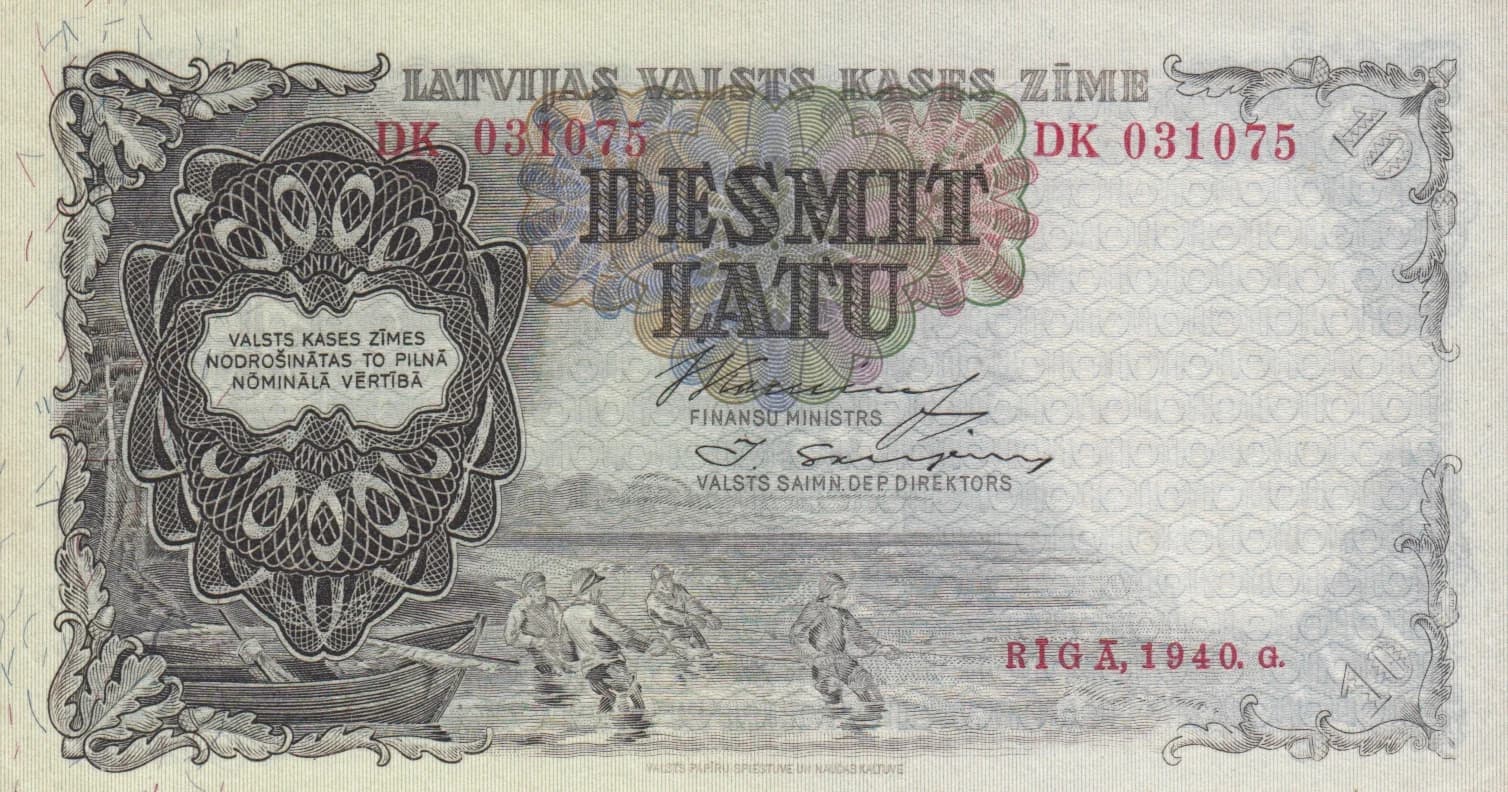
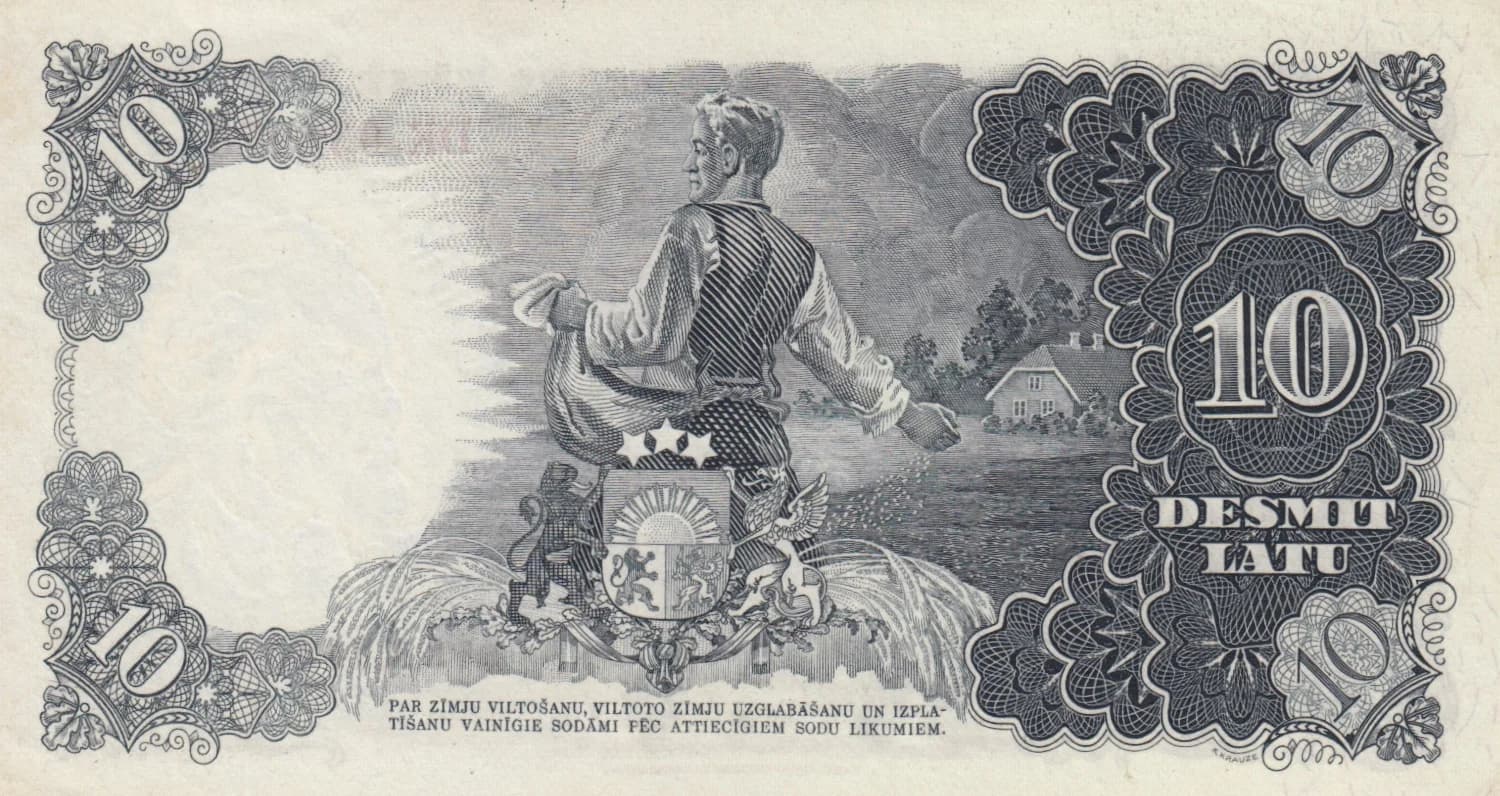
This is an exceptional example of Latvia's 10 Latu note from 1940 (Pick P-29d), featuring the distinctive baroque-influenced design characteristic of interwar Latvian currency. The note displays crisp, well-preserved engraving throughout with vibrant multi-color printing (black, red, and green inks), showcasing the ornate circular medallions, heraldic coat of arms, and classical seated figure that define this issue. In UNC condition with series DK, this note represents a premium specimen of pre-Soviet Latvian state currency, notable for its complex security features and the historical significance of being issued during Latvia's final year of independence before Soviet occupation.
Common. The 10 Latu denomination from 1940 was part of a standard currency circulation issue by the Latvian Government and was produced in sufficient quantities to meet domestic economic needs during that final year of independence. No documented evidence of limited print runs, recalls, or extraordinary scarcity exists for Pick P-29d. While all Latvian banknotes from this period have historical significance due to the nation's occupation and the subsequent Soviet annexation, the 10 Latu denomination itself is not considered rare. The UNC grade and DK series notation enhance the specimen's collector value relative to heavily circulated examples, but the note type itself remains common in the numismatic market.
Issued in 1940 by the Latvian Government during the final months of the independent Latvian state before Soviet annexation in August of that year, this banknote represents one of the last currency issues of the interwar Latvian republic. The heraldic imagery, including the coat of arms with the Lion of Latvia and crossed swords, along with the classical seated figure, reflect Latvia's national identity and sovereignty during this period. The note's inscriptions in Latvian and references to Riga as the seat of government underscore the nation's brief but culturally significant period of independence between World War I and Soviet occupation.
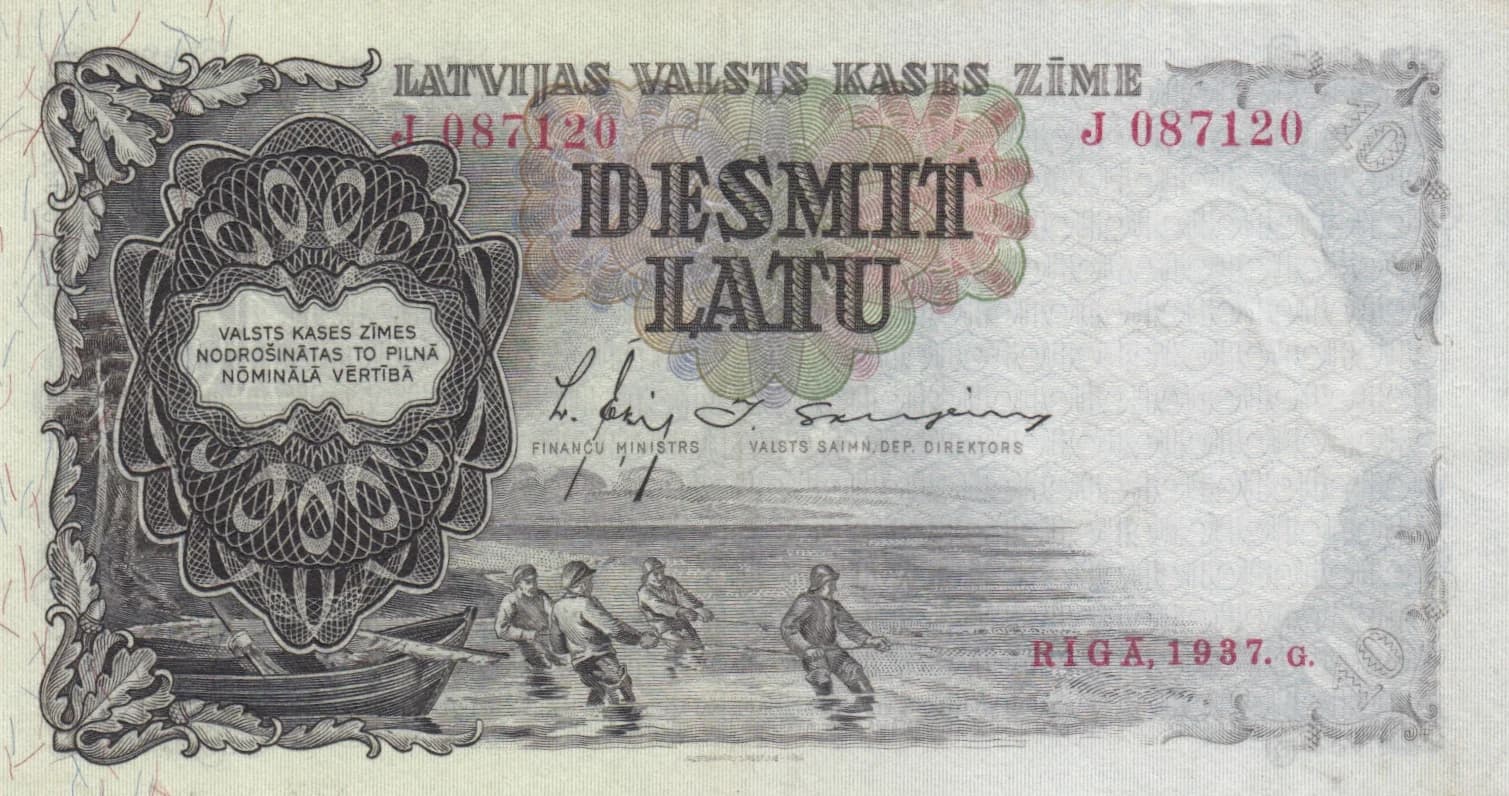
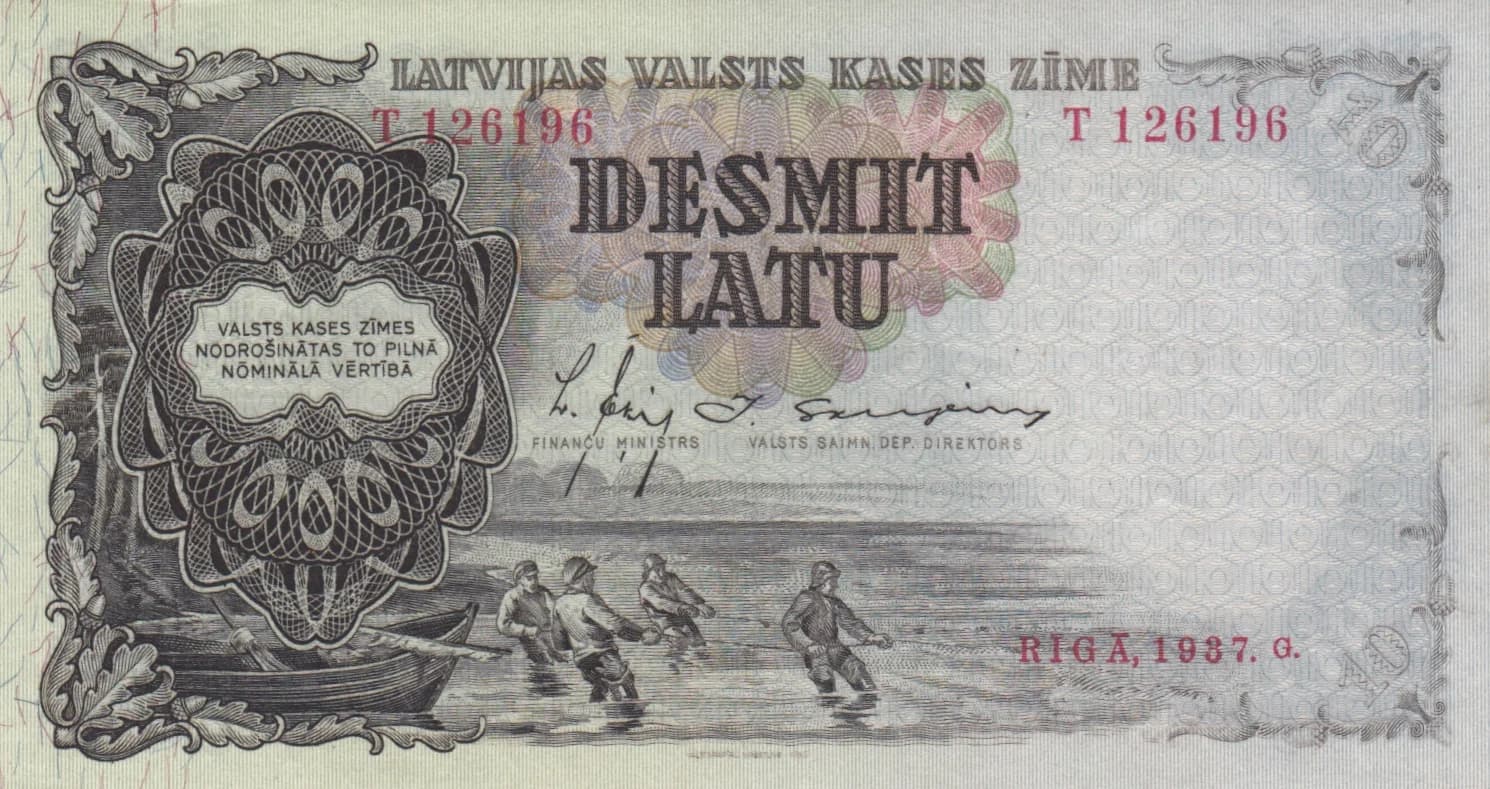
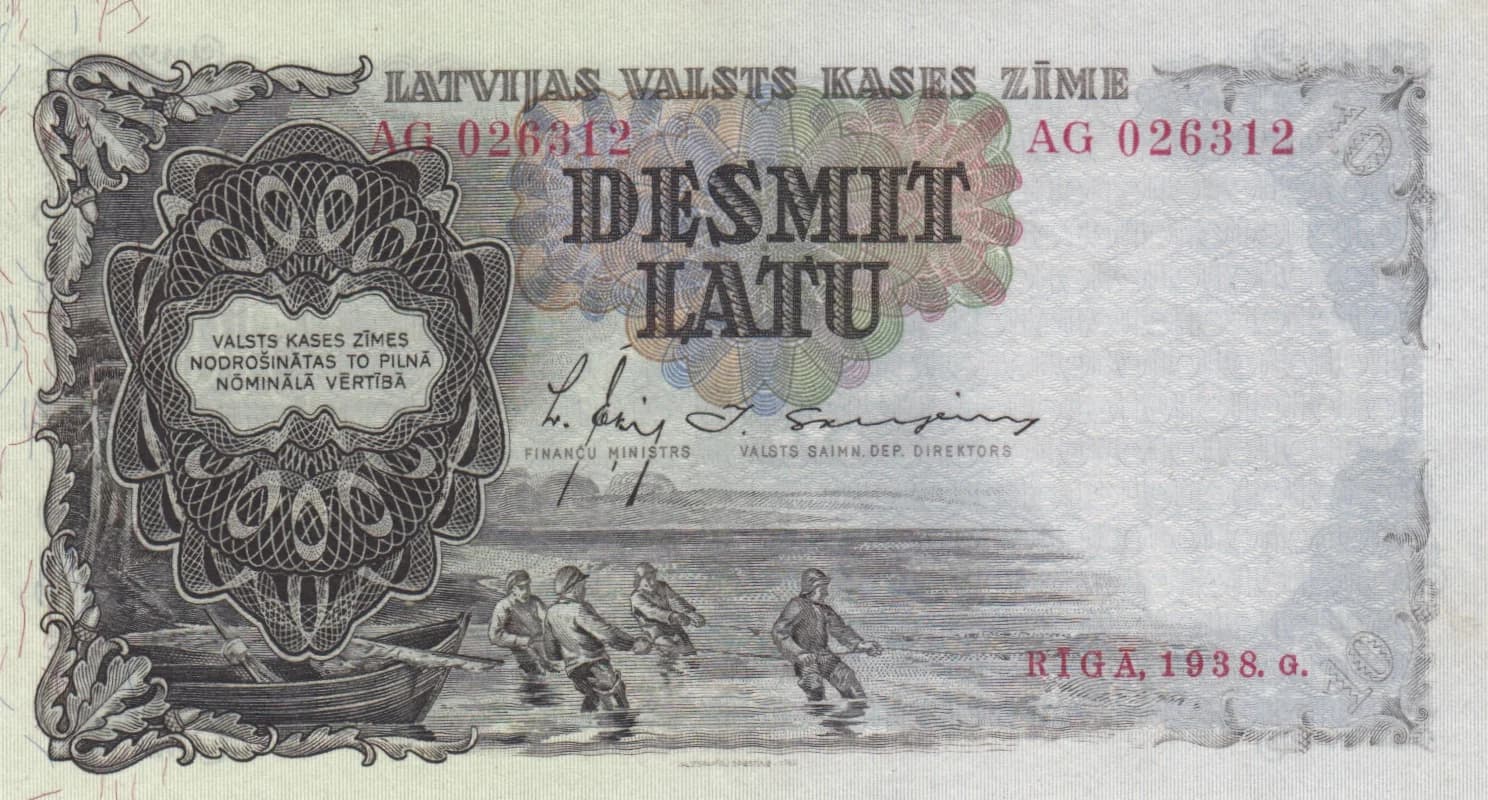
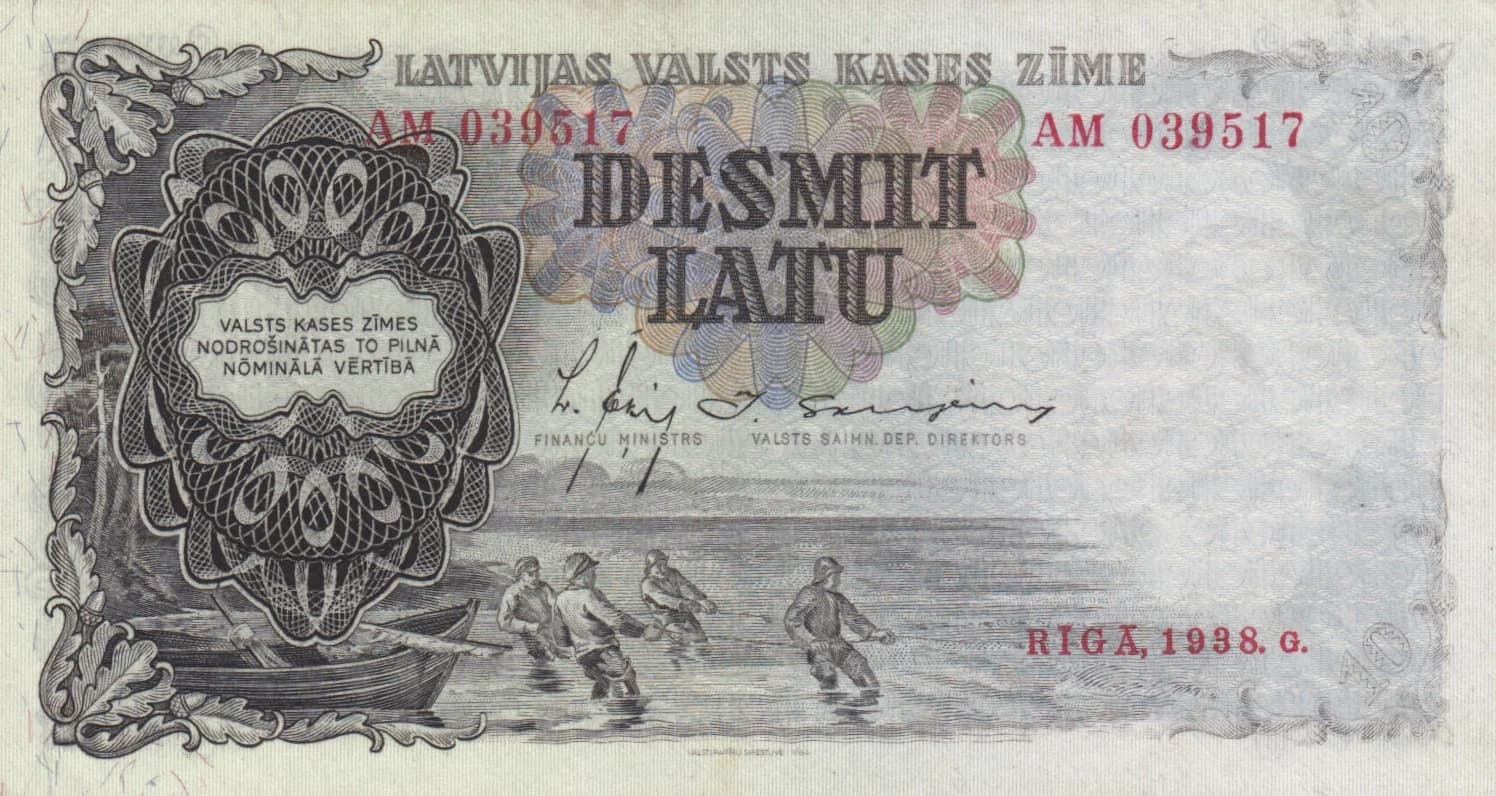
The 10 Latu note features a sophisticated classical design with strong baroque aesthetic elements. The front displays an ornate circular medallion with intricate filigree work on the left side, containing a cartouche with administrative text. The center showcases the denomination 'DESMIT LATU' in large decorative lettering against an ornamental background. Mythical creatures, likely dragons or heraldic beasts, appear in the top corners, while heraldic eagles are integrated into the decorative border framework. The reverse side is dominated by an allegorical seated male figure in classical draped clothing, positioned above the shield of the Latvian coat of arms—featuring the Lion of Latvia with crossed swords at its center. Two spread-winged eagles flank the shield, and stars appear above it. The entire design is framed by elaborate baroque scrollwork, floral patterns, and intricate filigree borders that serve both aesthetic and security purposes. The numeral '10' appears in an ornate oval frame with baroque decorative elements on the left side of the reverse.
FRONT SIDE: 'LATVIJAS VALSTS KASES ZĪME' (State Treasury Note of Latvia) - the primary issuing authority; 'DESMIT LATU' (Ten Latu) - denomination in Latvian; 'FINANSU MINISTRS' (Minister of Finance) - signature line; 'VALSTS SAIMN.DEP DIREKTORS' (Director of State Economy Department) - second signature line; 'RĪGA, 1940. G.' (Riga, 1940) - place and date of issue; 'VALSTS KASES ZĪMES NODROŠINĀTĀS TO PĪNĀ NŌMINĀLA VĒRTĪBA' (State Treasury Note guaranteed at its nominal value) - legal backing statement; Serial number: 'DK 031075'. BACK SIDE: '10' (denomination numeral); 'DESMIT LATU' (Ten Latu); 'PĀR ZIMJU VILTOŠANU, VILTOTO ZIMJU UZGLABAŠANU UN IZPLA-TISANU VAINIGIE SODĀMI FĒC ATTIECIGIEM SODU LIKUMIEM' (For counterfeiting, possession and distribution of counterfeit notes, violators will be punished according to applicable laws) - anti-counterfeiting warning.
This note was produced using the intaglio (engraving) process, evidenced by the fine line work, complex portrait rendering, and intricate filigree patterns visible throughout. The multi-color printing effect (black, red, and green inks on cream background) was achieved through multiple passes of engraved plates. The exceptional detail in the heraldic design, circular medallions, and classical figure indicates work by a skilled security printer specializing in currency production. While specific printer attribution for Pick P-29d is not definitively documented in standard references, Latvian notes of this period were typically produced by established European security printers such as De La Rue or Waterlow & Sons, utilizing state-of-the-art engraving technology of the late 1930s.
This specimen is identified as series DK with serial number 031075, representing one of several known series produced for the 1940 issue. Latvian banknotes from this period exhibited variations in signature combinations (representing different Ministers of Finance and State Economy Department Directors), series letter prefixes, and serial number ranges. The DK series represents a documented variety within the 1940 10 Latu issue. Collectors should note that different series and signature combinations may exist, though all represent the same Pick number P-29d. The specific combination of design, inscriptions, and administrative signatures confirms this as the standard variety for this denomination and year.