10 Latu 1937
“serie T”
Market Prices
12 salesAbout This Note
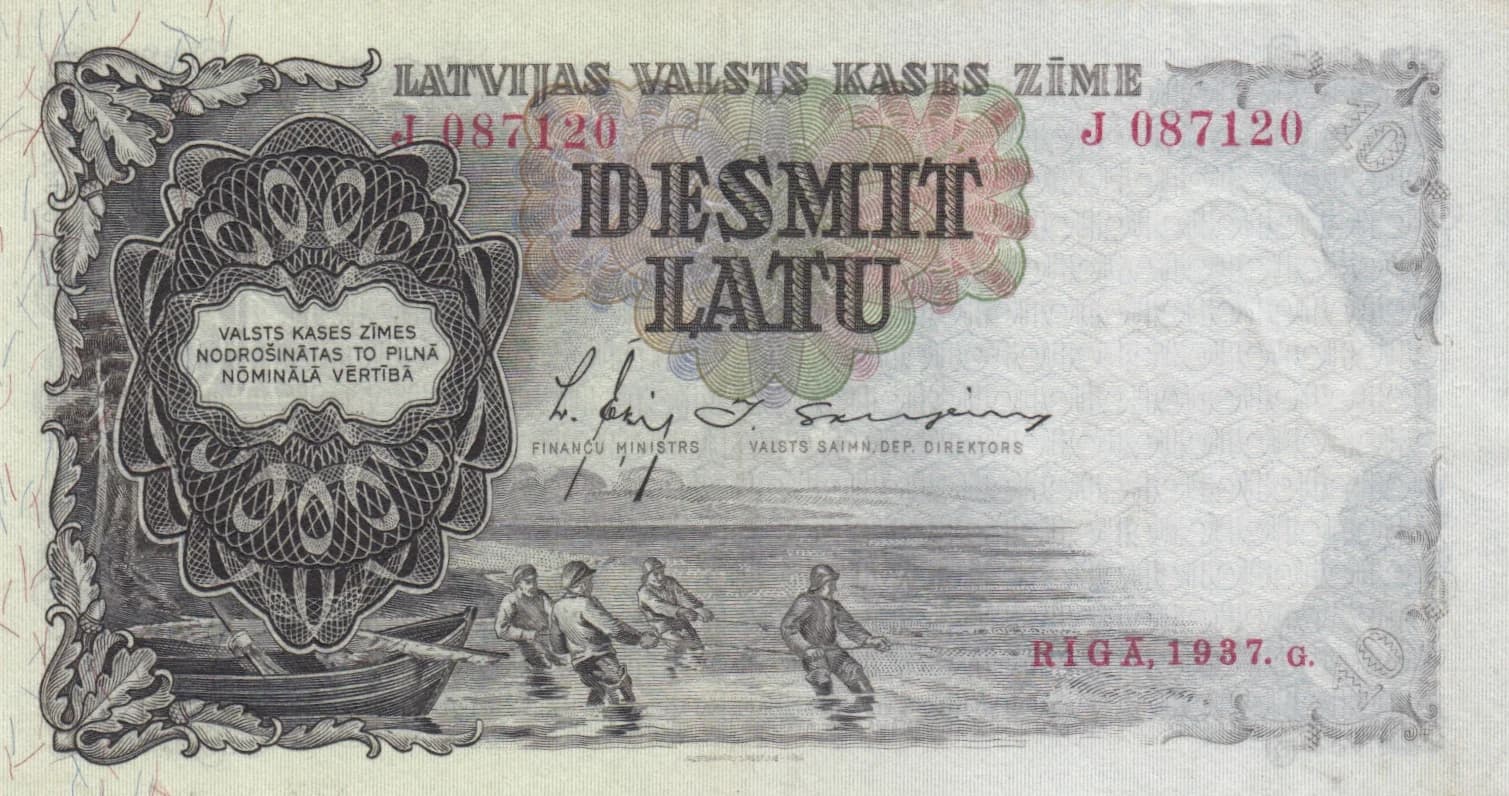
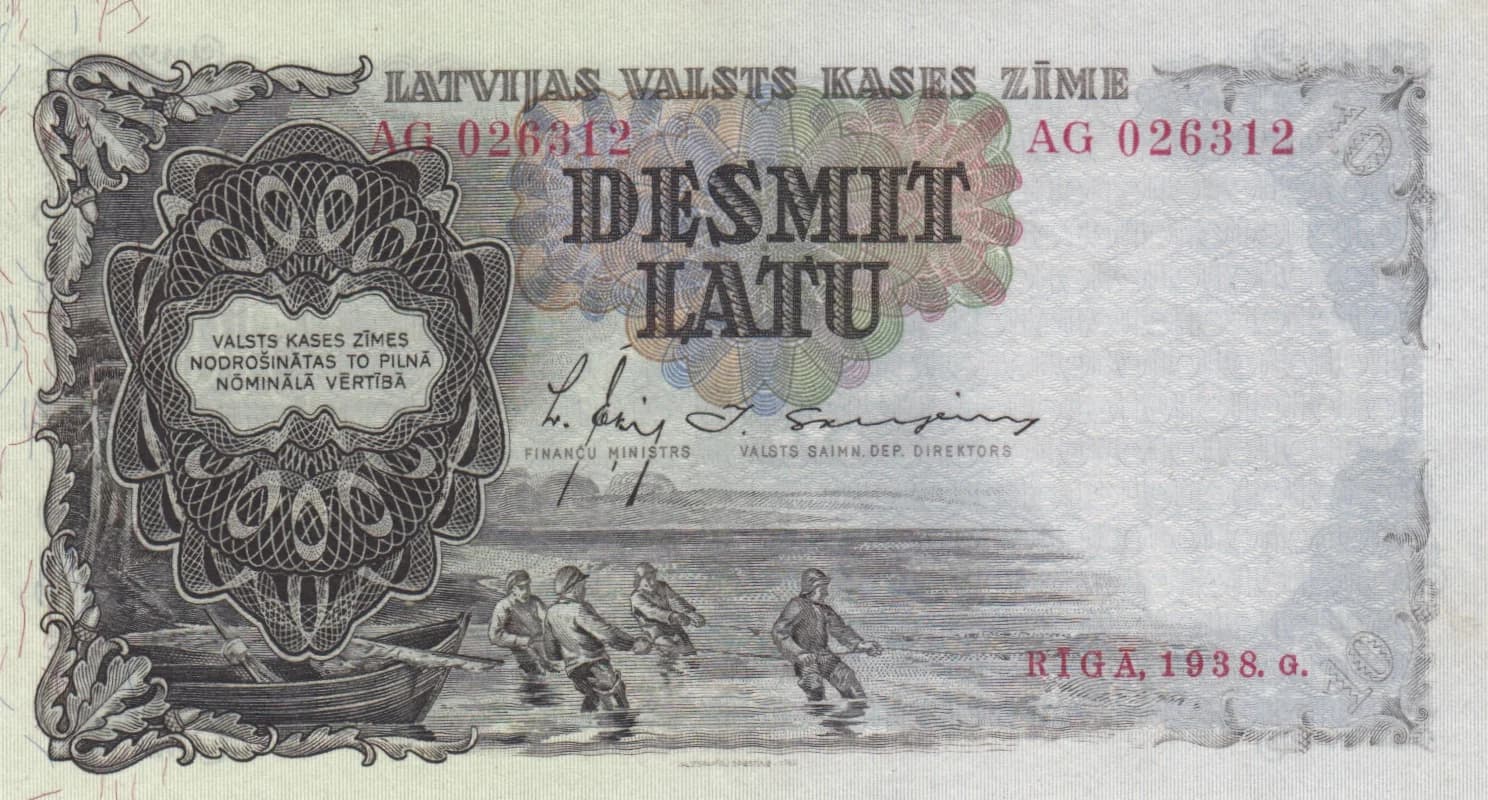
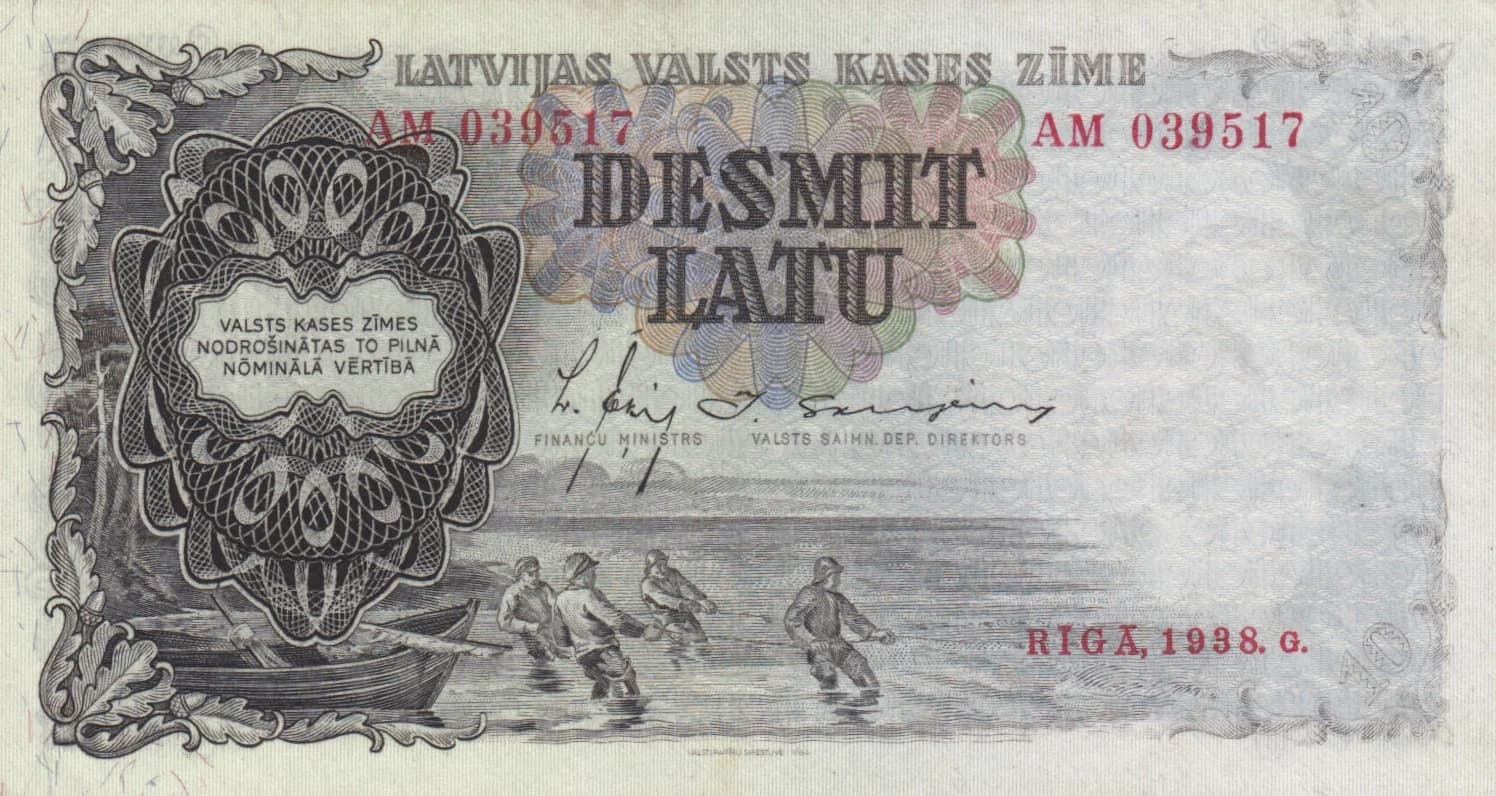
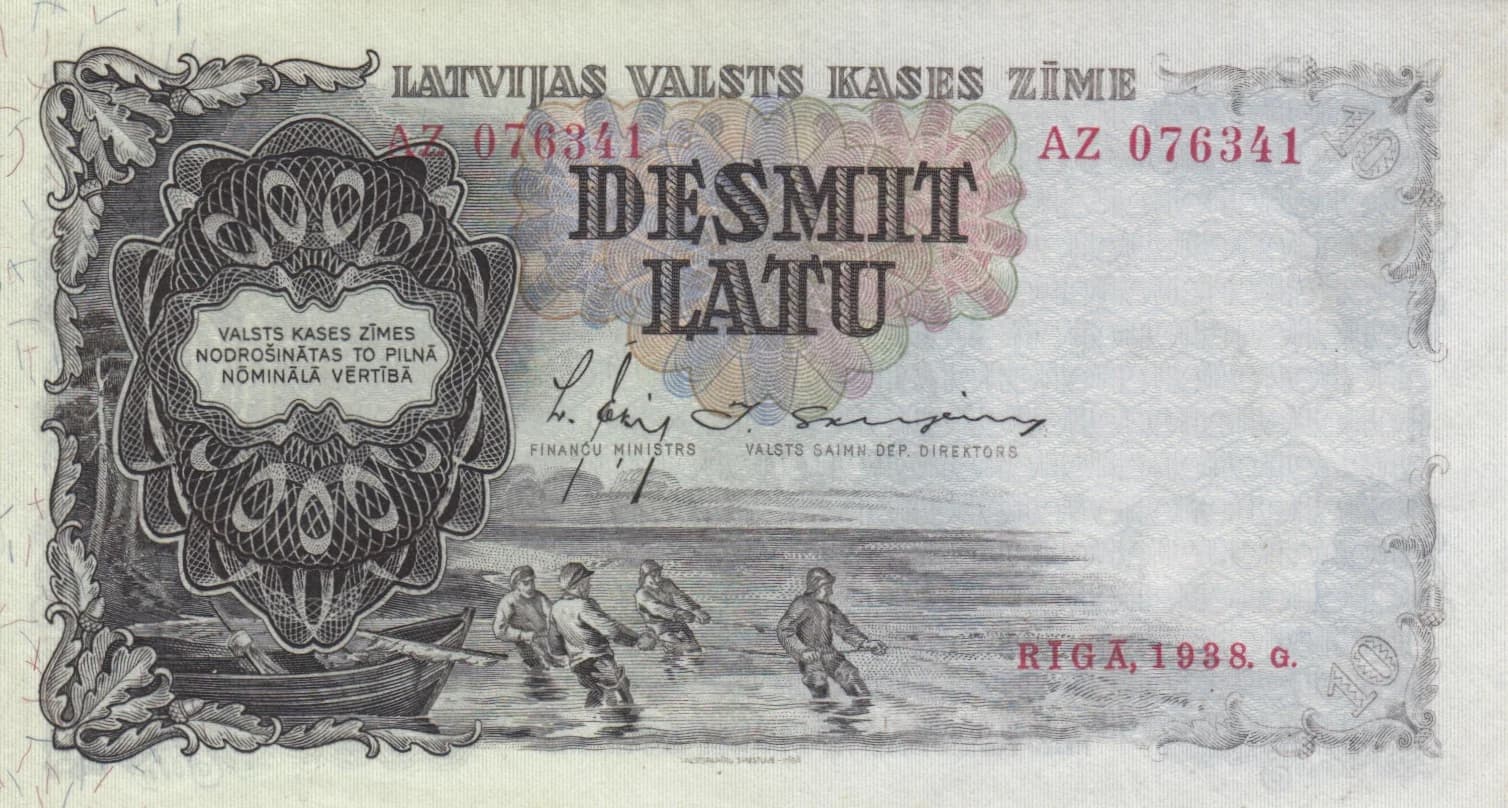
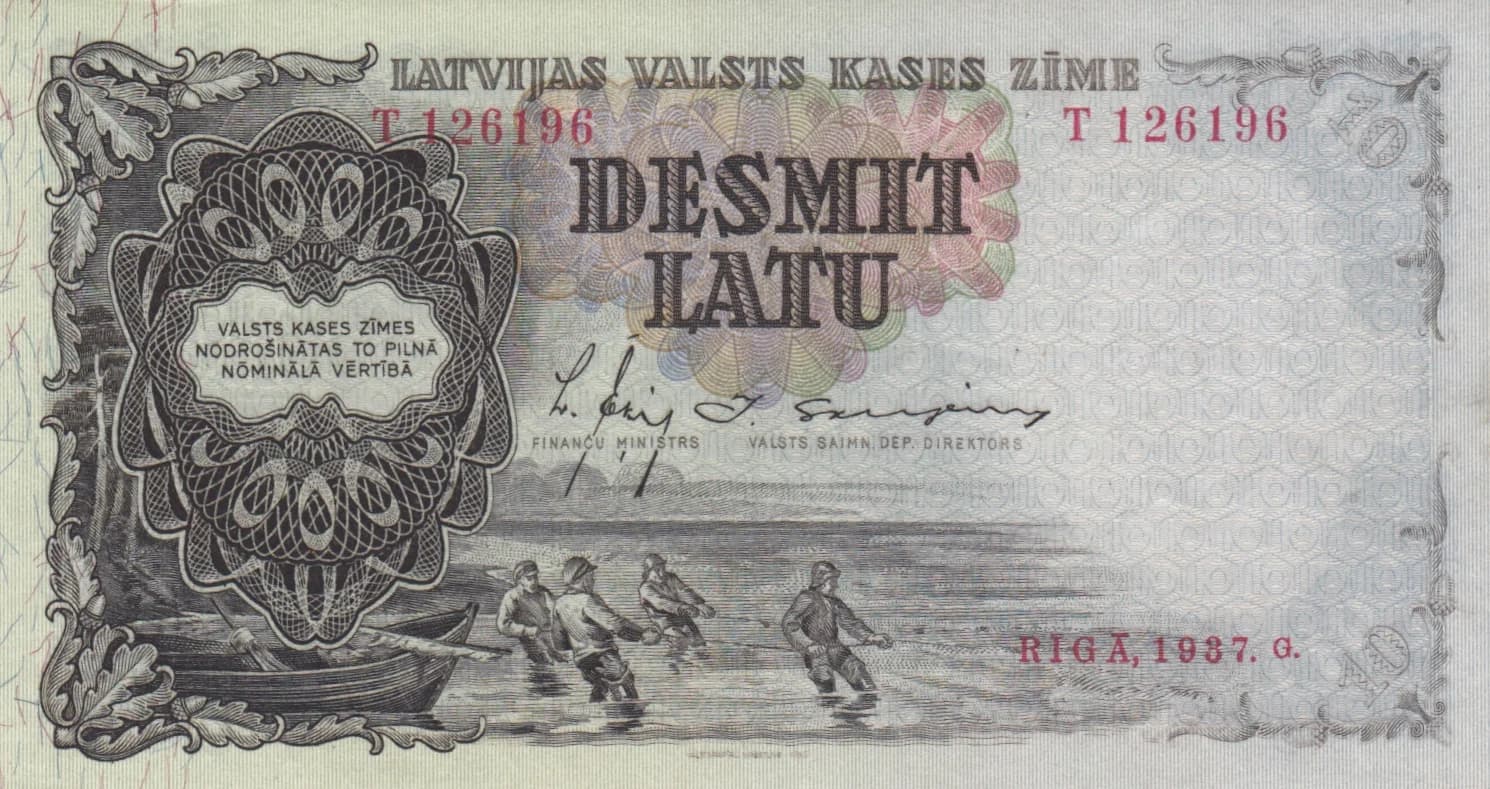
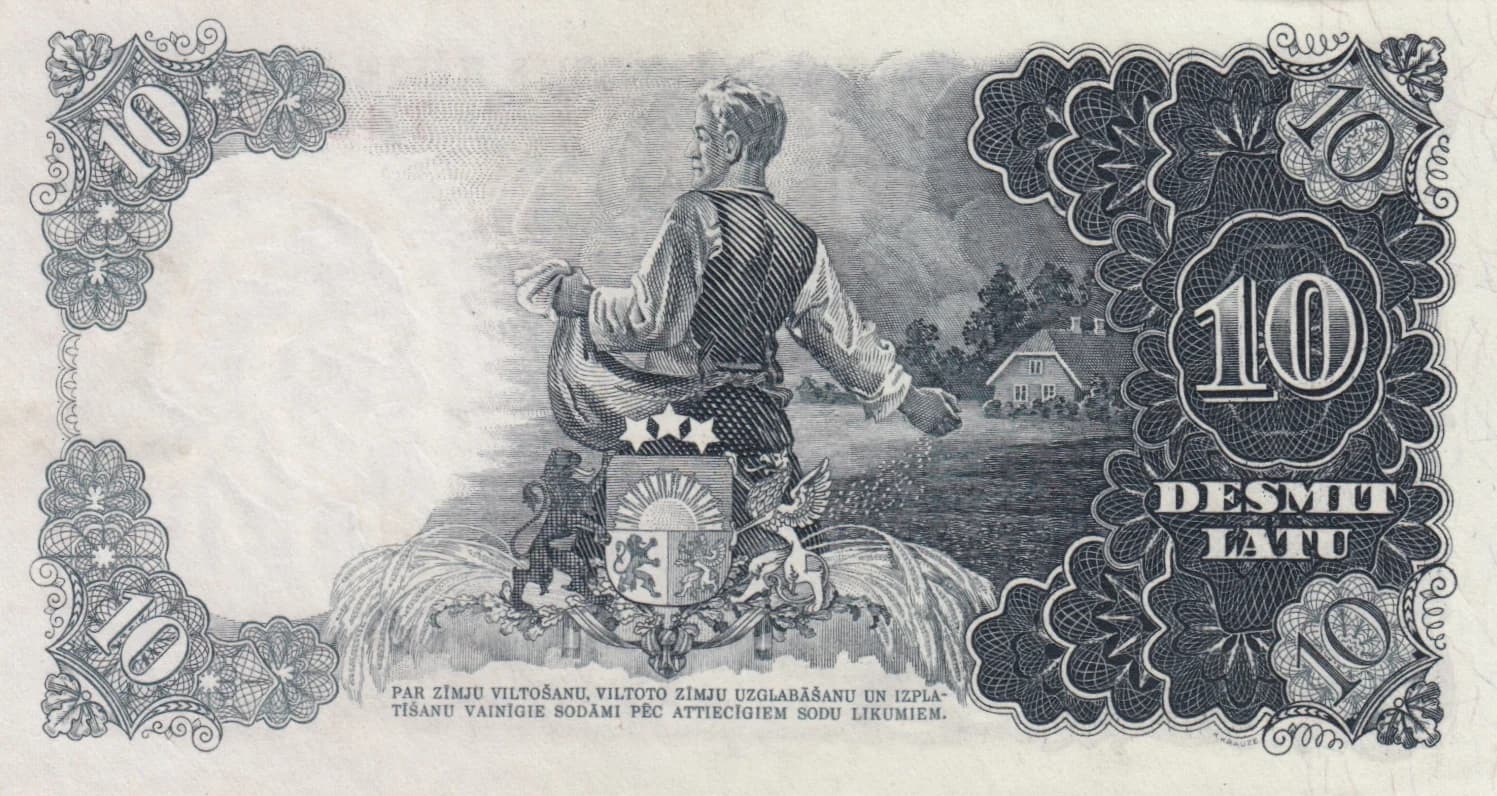
This 10 Latu banknote from 1937 is a fine example of interwar Latvian currency featuring exceptional baroque-style engraving work with ornate decorative borders and historical vignettes. The note displays an AU condition grade with visible signs of age including slight creasing and foxing, yet maintains clear legibility and well-preserved engraved details throughout. The front depicts a water scene with period figures, while the reverse showcases a dignified male figure in formal military dress beside the Latvian coat of arms—both characteristic of the nationalist imagery favored during Latvia's independence period.
Common. The 10 Latu denomination from 1937 was part of a standard currency circulation series for the Latvian state during the final years of independence. While historical interest exists due to Latvia's subsequent occupation and loss of sovereignty, the note was produced in quantities sufficient for general circulation and remains readily available to collectors. Series T notes from this issue appear regularly in the collector market. The AU condition grade is more significant than the rarity of the note itself.
This banknote was issued during Latvia's interwar independence (1918-1940), a period of national consolidation following independence from the Russian Empire. The formal military figure and heraldic imagery on the reverse reflect the patriotic symbolism that pervaded Latvian state finance during this era. The 1937 date marks the final years before Soviet occupation, making these notes historically significant artifacts of an independent Latvian state that would cease to exist within three years.
The 10 Latu note employs a dual-vignette composition typical of interwar European banknote design. The front features an engraved scene depicting fishermen or laborers working in water—representing productive economic activity and the working classes—rendered in fine detail with period-appropriate clothing. The reverse showcases a male dignitary in formal military dress (likely representing a state official or national hero) positioned in three-quarter profile before a rural landscape with a white building. The Latvian coat of arms, featuring quartered lions and heraldic elements with flanking eagle wings, occupies the central heraldic space. Ornate baroque-revival borders frame both sides with intricate floral and geometric patterns characteristic of security printing of the era. The cream/beige paper stock with black and pink/red colored inks creates strong visual contrast and enhances anti-counterfeiting properties.
FRONT SIDE: 'LATVIJAS VALSTS KASES ZĪME' (State Treasury Note of Latvia) — 'DESMIT LATU' (Ten Latu) — 'VALSTS KASES ZĪMES NODROŠINĀTAS TO PILNĀ NOMINĀLĀ VERTĪBA' (State Treasury Notes are secured by their full nominal value) — 'FINANČU MINISTRS' (Minister of Finance) — 'VALSTS SAIMI.DEP. DIREKTORS' (State Property Department Director) — 'RĪGA, 1937. G.' (Riga, 1937) — Serial number 'T 126196'. BACK SIDE: '10' and 'DESMIT LATU' (Ten Latu) — 'PAR ZIMJU VILTOŠANU, VILTOTO ZIMJU UZGLABAŠANIT UN IZPLA-TIŠANU VAINĪGIE SODĀMI PĒC ATTIECĪGIEM SODU LIKUMIEM' (Those guilty of counterfeiting notes, possessing counterfeit notes, and their distribution shall be punished according to the applicable penal laws).
Intaglio engraving (copperplate) printing, the standard security printing method for banknotes of this period. The fine line work, intricate detail in borders, and precise portraiture visible in both vignettes are characteristic of master engraving. The complexity of the decorative cartouches and baroque patterns served both aesthetic and security functions. While specific printer attribution for Pick P-29a would require additional research, Latvian banknotes of this era were typically produced by established European security printers such as Waterlow & Sons or similar firms specializing in currency production.
The note is identified as series T (as per collector notation) with serial number T 126196. Pick catalog P-29a is the standard catalog designation. Varieties of this note may exist based on signature combinations of officials (Minister of Finance and State Property Department Director), printer marks, or minor design variations, though no overprints or significant varieties are evident in this specimen. The series T prefix is noted and should be recorded for collection documentation purposes.