10 Latu 1938
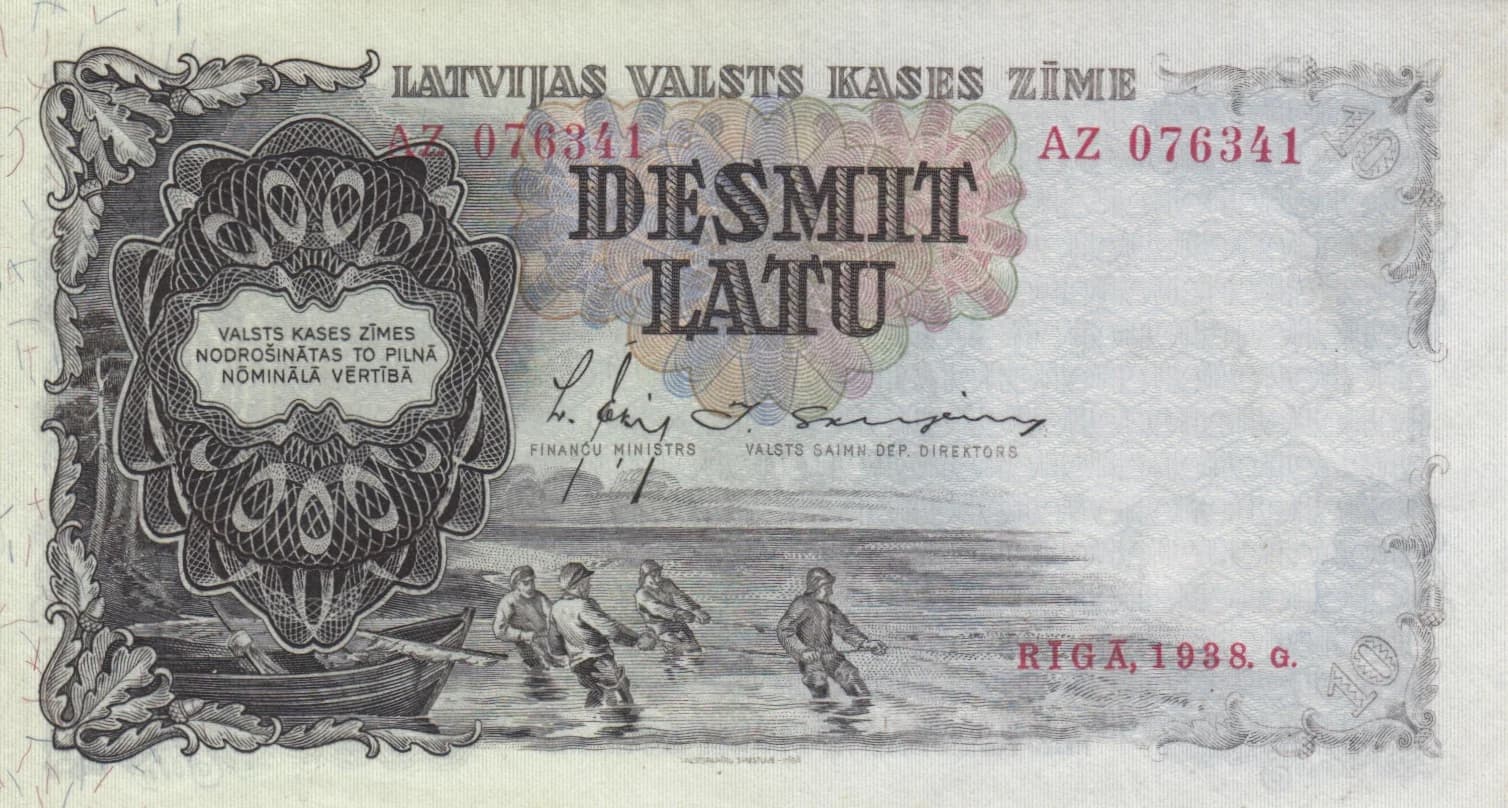
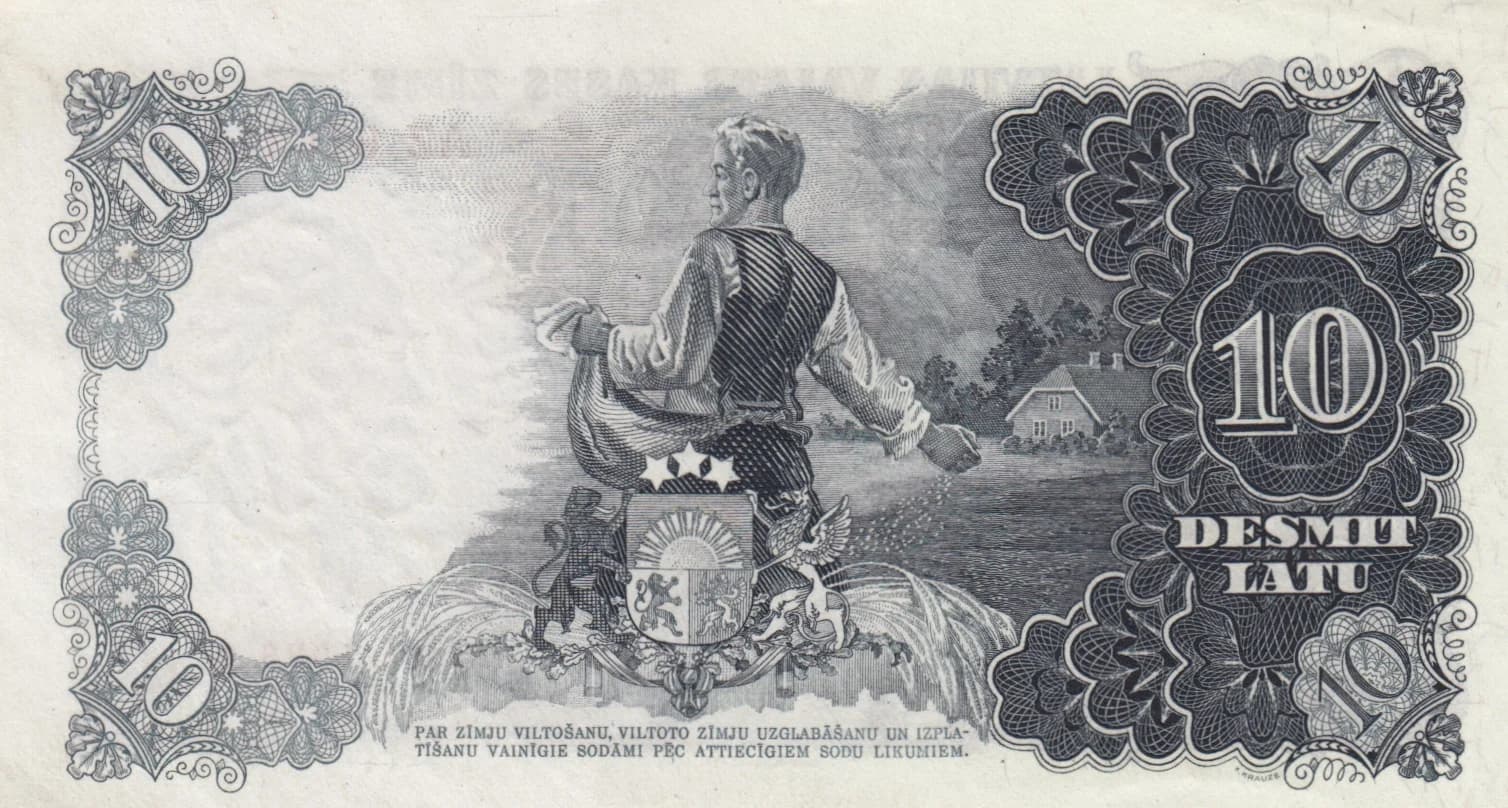
“serie AZ”
Market Prices
21 salesAbout This Note
This is a 1938 Latvian 10 Latu note in AU condition from the series AZ, featuring the iconic fishermen engraving on the front and a farmer figure on the reverse. The note displays excellent preservation with minimal handling wear, cream-colored paper consistent with the period, and crisp impressions of the intricate baroque-style decorative borders and security engraving. As a mid-grade example of this interwar Latvian issue, it represents a significant piece of Baltic numismatic history with strong eye appeal and collector demand reflected in recent eBay realizations in the $30-50 range for similar grades.
Common. The 10 Latu 1938 is a regular-issue note from a moderate print run during Latvia's stable interwar period. eBay market data consistently shows examples in VF-UNC condition selling in the $15-50 range, with even professionally graded examples (PMG 67) achieving only $89.89 at auction in 2019. The abundance of sales data spanning 2009-2022 and the consistent availability of multiple grades indicate this is a widely circulated and readily collectible note. No evidence of rarity constraints such as short print runs, recalls, or extraordinary scarcity exists for Pick-29b.
Issued during Latvia's independent interwar period (1918-1940), this 1938 note represents the nation's monetary sovereignty under the Latvijas Valsts Kases (Latvian State Treasury). The front design depicts fishermen wading in water—a reference to Latvia's Baltic maritime heritage and economy—while the reverse features a farmer sowing, symbolizing the agricultural foundation of the newly independent state. These pastoral, labor-focused compositions reflect the nationalist imagery common to interwar European currency, emphasizing the natural resources and working people that defined Latvia's identity during this brief window of independence before Soviet occupation.
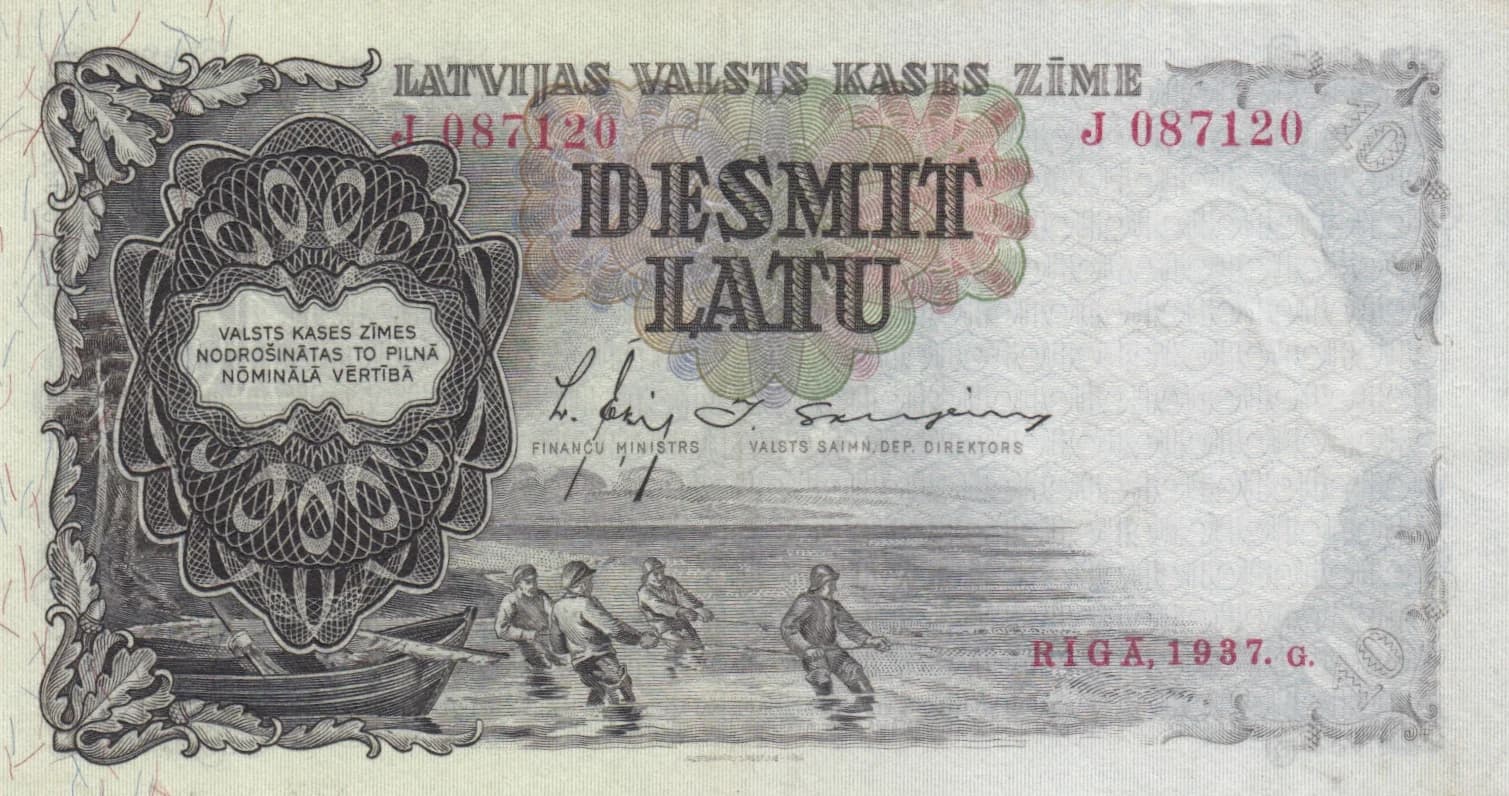
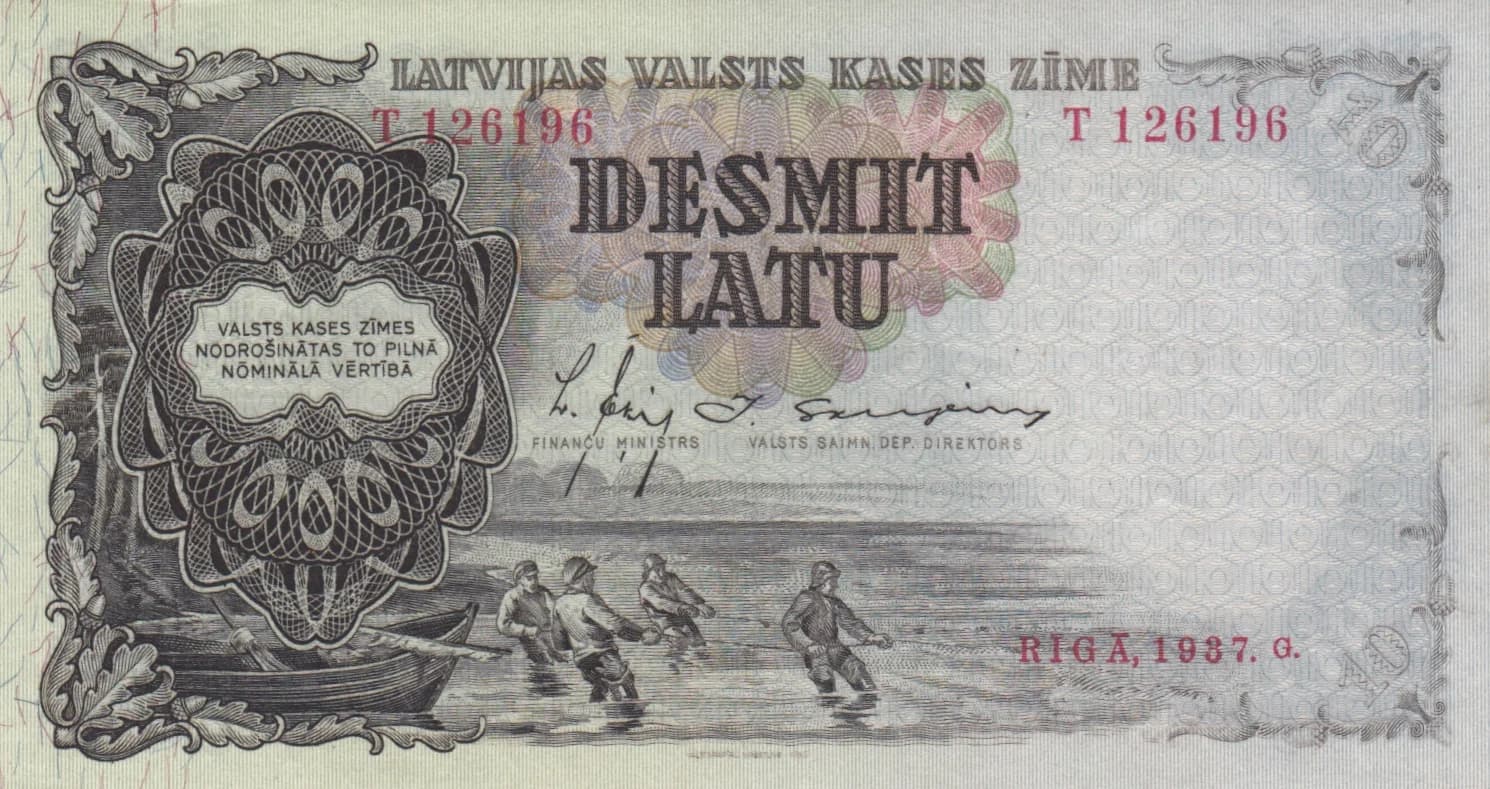
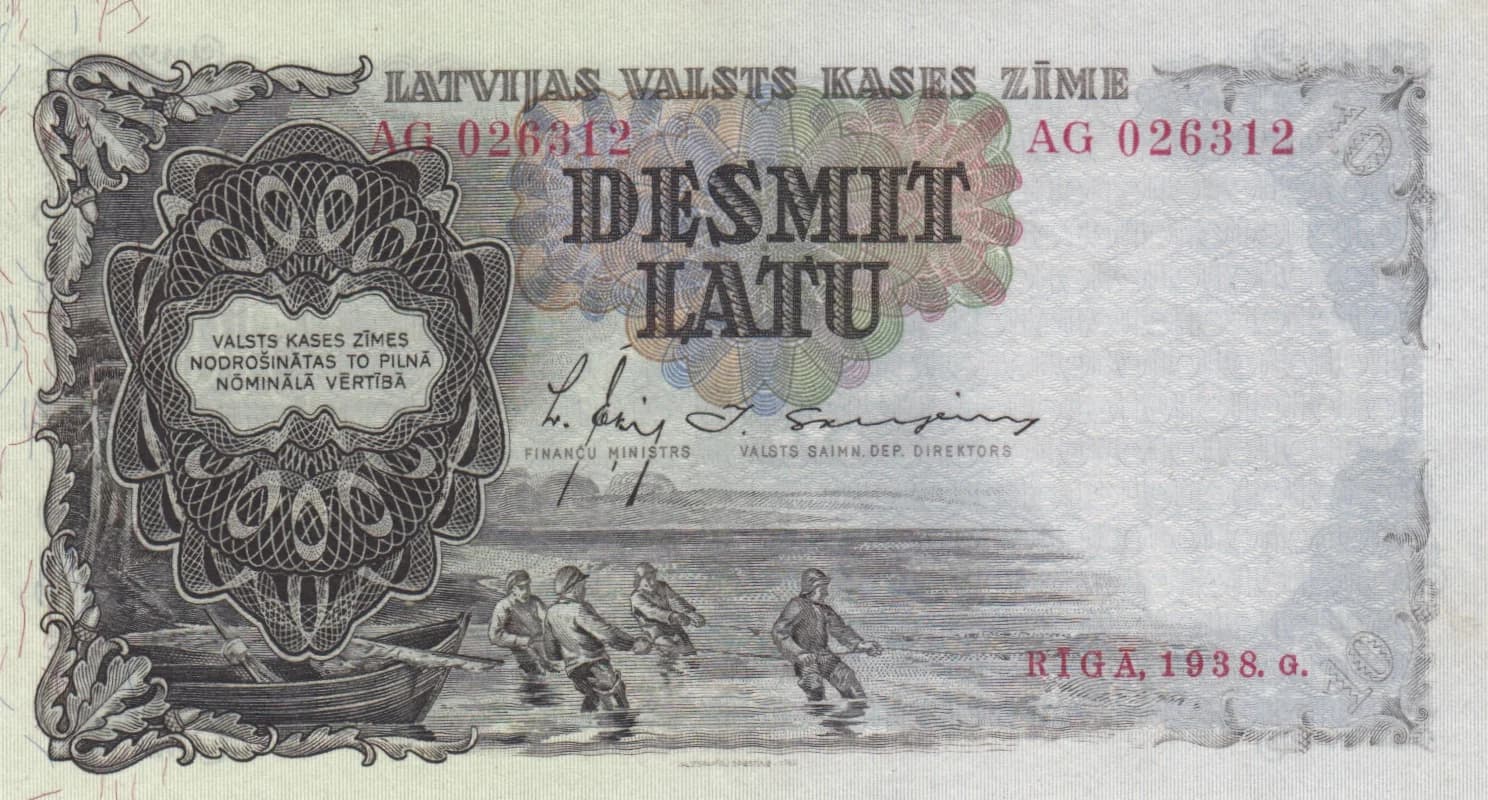
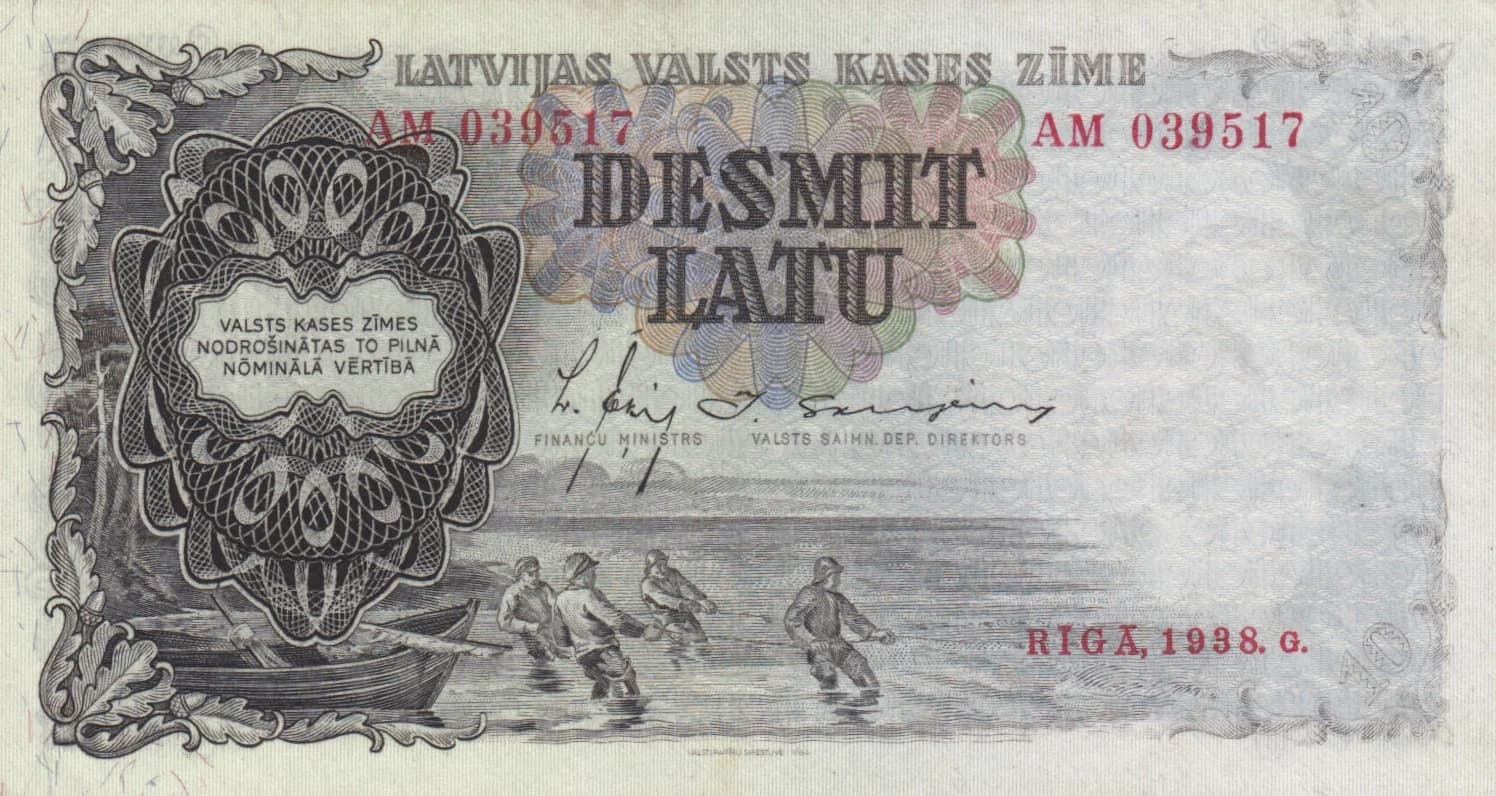
This note features a dual thematic design celebrating Latvian labor and natural resources. The obverse presents an engraved scene of multiple fishermen (appearing to be 4-5 figures) wading in water, representing the nation's maritime and fishing industries with a rural landscape background. The reverse showcases a standing male figure dressed in 19th-century period costume (vest and long-sleeved shirt), depicted as a farmer or agricultural worker, positioned above the Latvian state coat of arms featuring a heraldic shield with lion and winged supporters. Both sides are framed with elaborate baroque-style ornamental borders incorporating scrollwork, floral motifs, and geometric patterns. The denomination '10' appears in decorative corner medallions on the reverse, while the front features centered text 'DESMIT LATTU' in large black lettering. Red serial numbers and date elements add color contrast to the predominantly black, gray, and cream palette.
FRONT: 'LATVIJAS VALSTS KASES ZĪME' (Latvia State Treasury Note) — 'DESMIT LATTU' (Ten Latu) — 'VALSTS KASES ZĪMES NODROSINATAS TO PILNĀ NOMINĀLĀ VĒRTĪBĀ' (State Treasury Notes secured at their full nominal value) — 'FINANČU MINISTRS' (Minister of Finance) — 'VALSTS SAIMN.DEP. DIREKTORS' (State Economy Department Director) — 'RĪGA, 1938. G.' (Riga, 1938) — Serial number 'AZ 076341' (red). BACK: '10' (denomination numeral in decorative medallions) — 'DESMIT LATTU' (Ten Latu) — 'PAR ZIMJU VILTOŠANU, VILTOTO ZIMJU UZGLABAŠANU UN IZPLATISANU VAINIGE SODAMI PEC ATTIECHGIEM SODU LIKUMIEM.' (For counterfeiting, possession and distribution of counterfeit notes, offenders are punished according to applicable criminal laws.)
Intaglio engraving (copperplate), executed by Valsts Papiru Spiestuve (State Printing Works) in Riga. The note exhibits the hallmark characteristics of fine-line intaglio work: intricate baroque decorative borders with complex geometric and floral patterns, finely detailed engraved portraiture, and the crisp impression of security-related fine-line work visible in both the borders and heraldic elements. The multi-color printing (black primary imagery with red serial numbers and date elements) was achieved through successive engraved plate passes, a standard practice for interwar European banknote production.
This note is catalogued as Pick-29b, characterized by the watermark of a man's head. The PMG population report identifies four variants of the base Pick-29 number (P-29a, P-29b, P-29d, P-29e), all sharing the same watermark but differing in other characteristics such as signature varieties or minor design elements. The observed serial number 'AZ 076341' indicates this example belongs to the AZ series prefix noted in the catalog data. The 1938 date is consistent with the note's issue period spanning 1937-1940.