10 Latu 1940
“serie DC”
Market Prices
26 salesAbout This Note
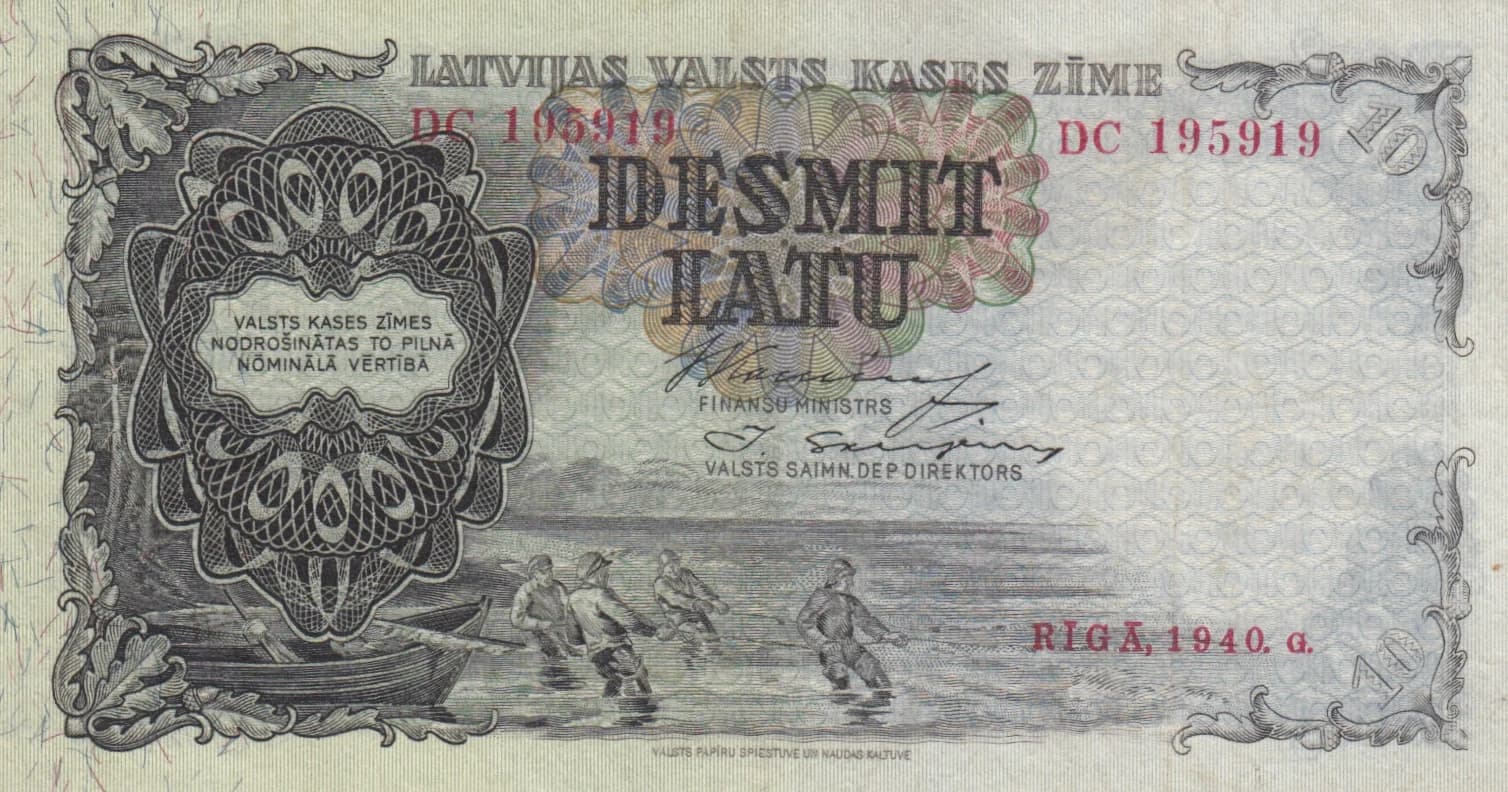
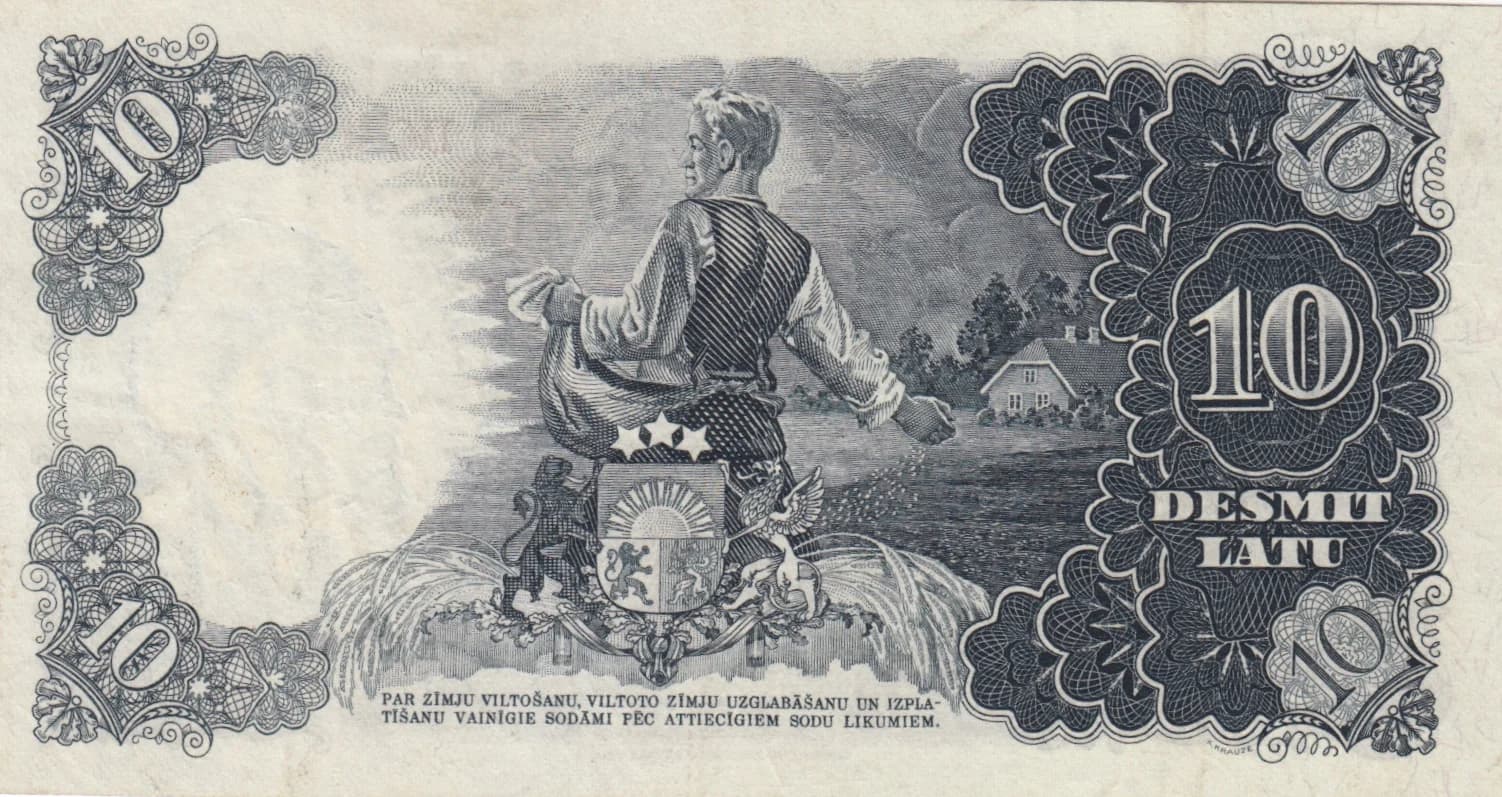
This VF-graded 10 Latu note from 1940 Riga presents an excellent example of interwar Latvian currency during the final year of independence. The note displays the characteristic dual-design aesthetic of this series with fishermen in a water scene on the obverse and a distinguished bearded portrait on the reverse, accompanied by rural landscape imagery. Despite visible creasing and age-related discoloration consistent with circulation use, the note retains sharp legibility and maintains the intricate fine-line engraving characteristic of this issue, with serial number DC 195919 clearly visible.
Common. eBay historical data shows this note type (regardless of variety or grade) selling consistently across a wide price range reflecting condition variation—from $2.27 to $121.38 over the past five years. VF examples specifically sold for $31 (2021) and $4.99 (2020), suggesting moderate but not exceptional demand. Catalog values (2016) of $50 for VF confirm this note was produced in sufficient quantities for normal circulation. No evidence suggests limited print runs, recall status, or scarcity for the P-29d variety. The consistent availability in the secondary market and moderate pricing typical of common interwar issues support a common rating.
Issued in 1940, this note was printed during Latvia's final year of independence before Soviet occupation in June 1940. The imagery reflects the nation's agrarian and maritime heritage—the fishermen depicted on the obverse and the sowing farmer on the reverse (referenced in catalogs) represent the rural economy central to Latvia's identity. The formal state inscriptions 'LATVIJAS VALSTS KASES ZĪME' (State Treasury Note of Latvia) and ministerial signatures underscore the authority of an independent Latvian state that would cease to exist within months of this note's printing.
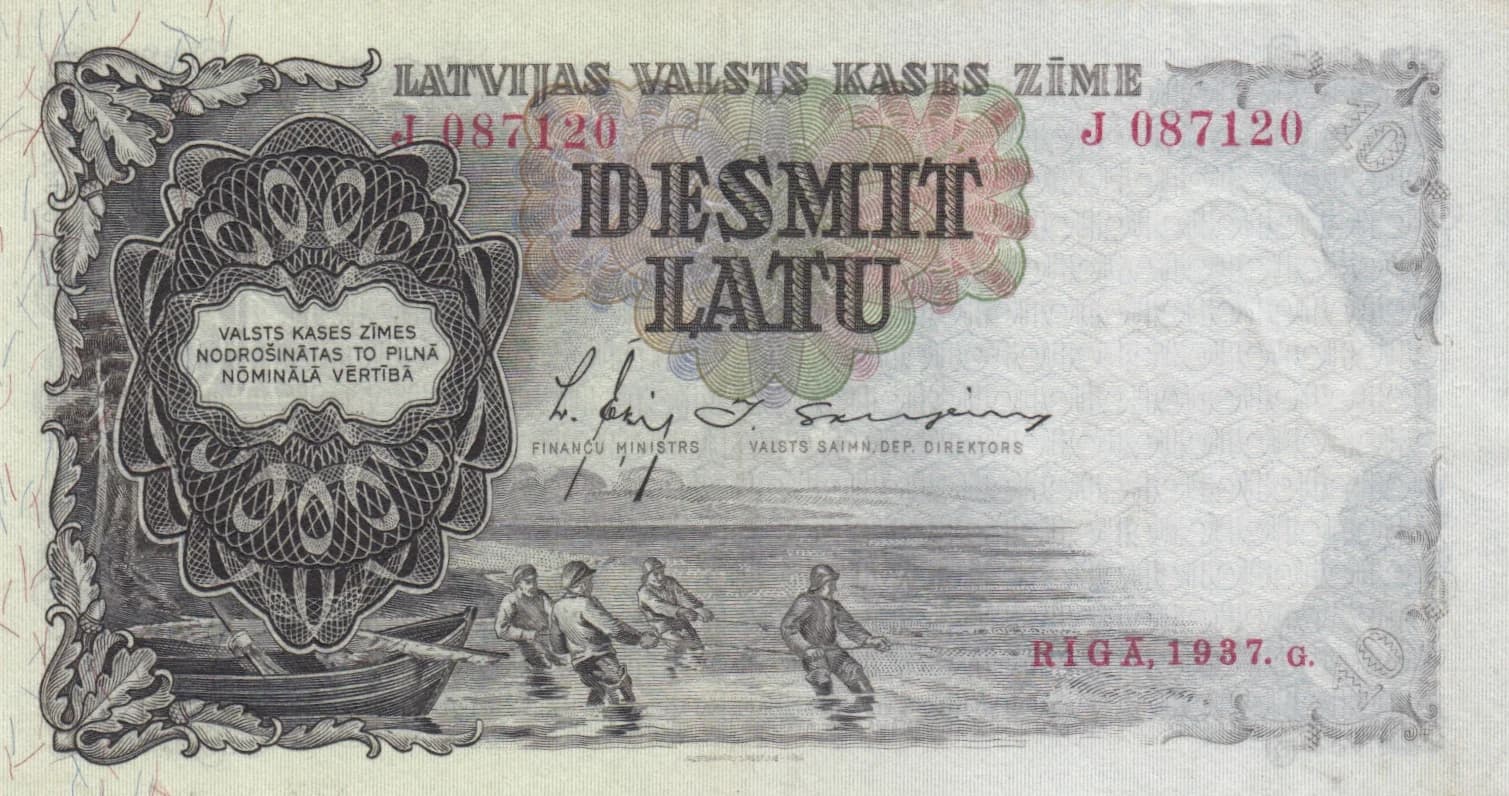
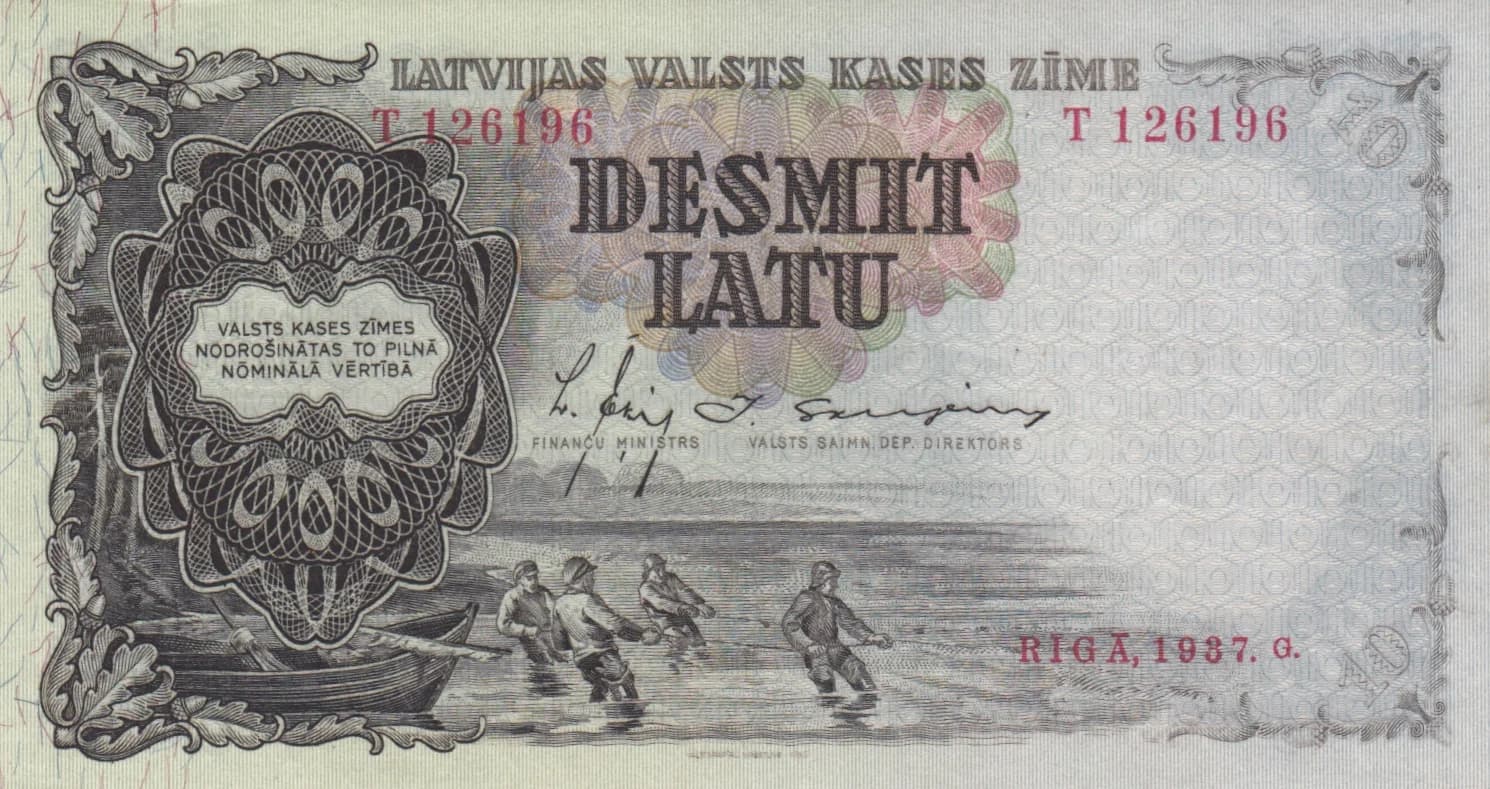
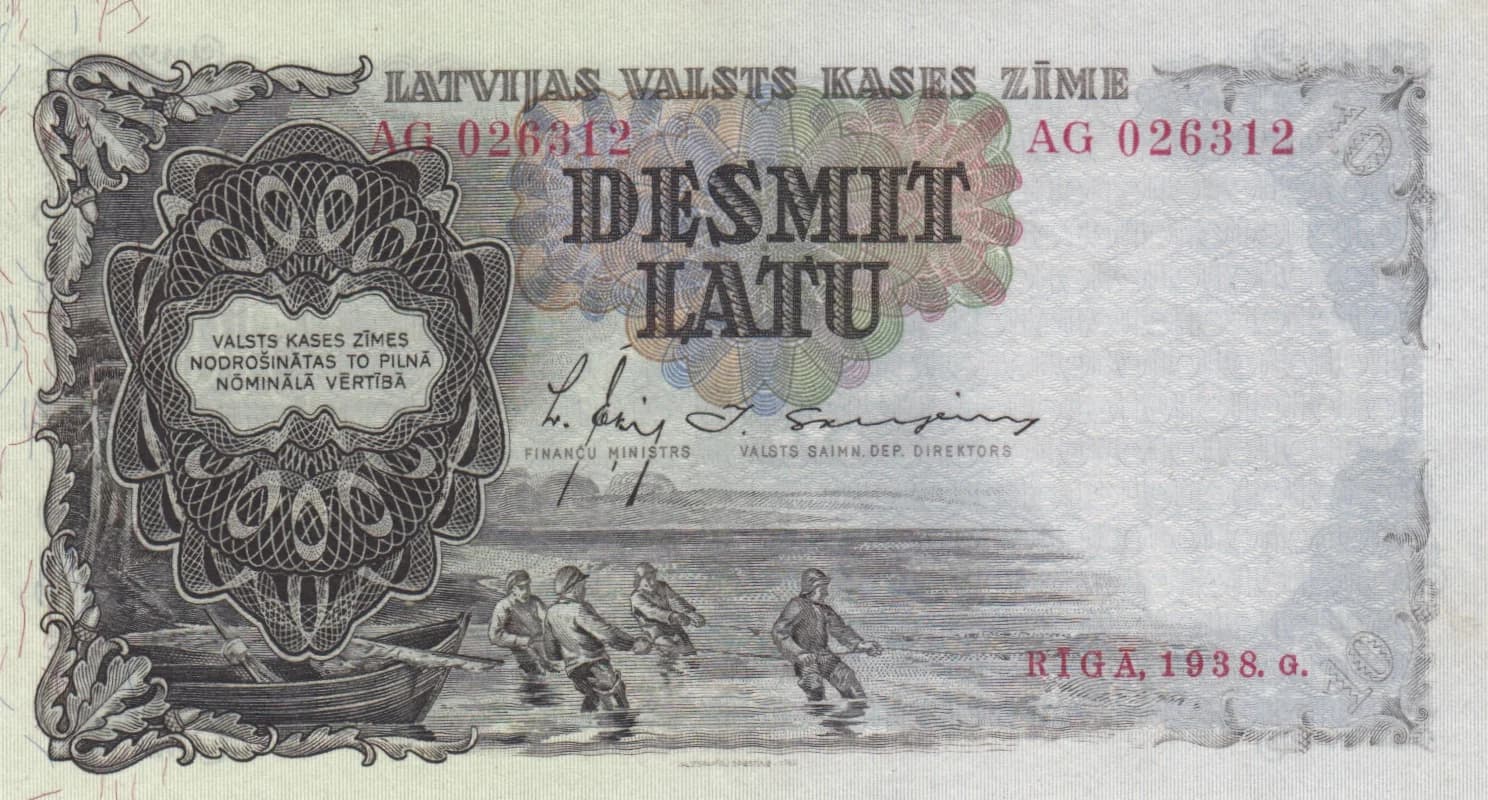
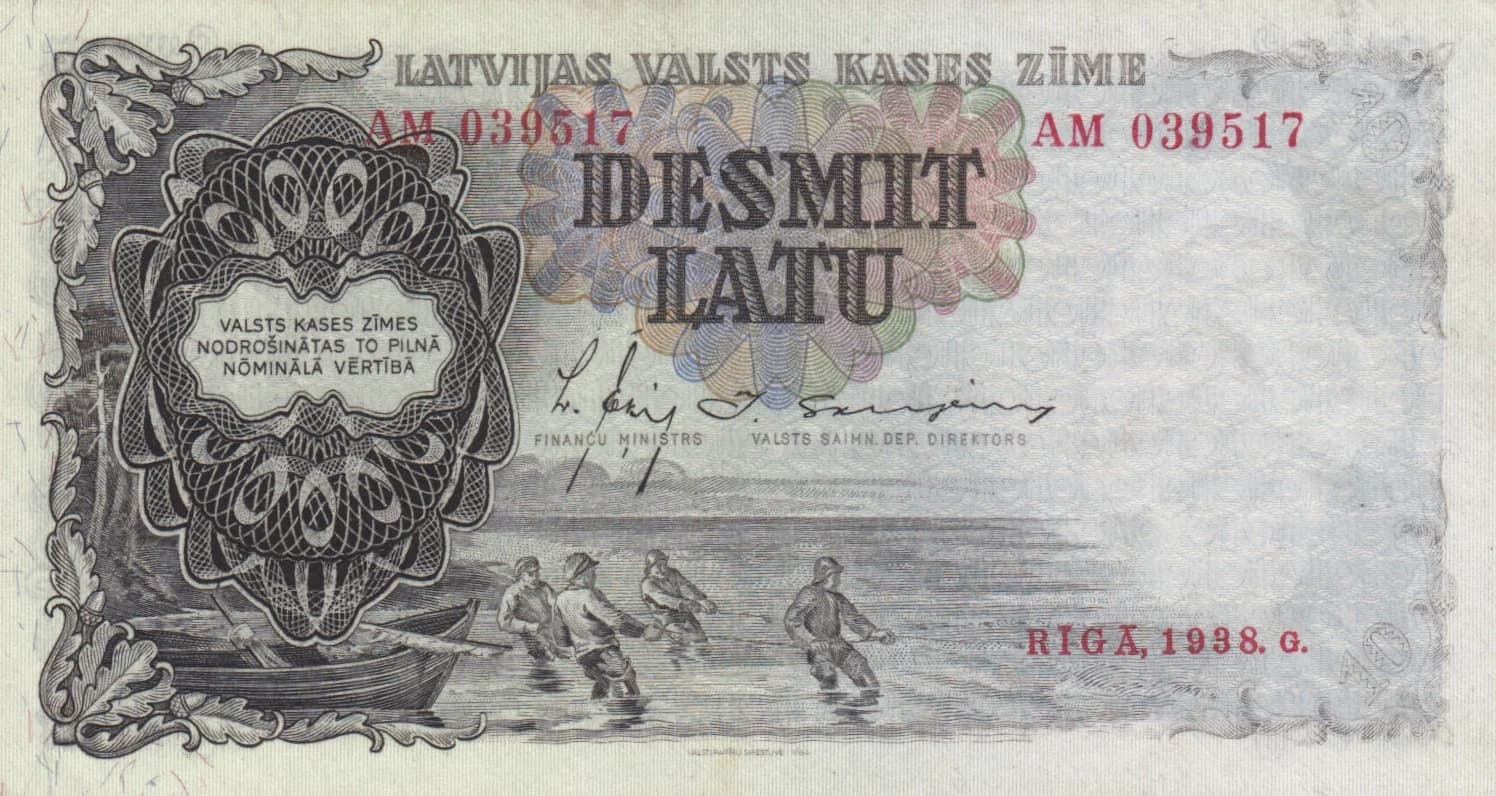
The obverse features a dynamic composition of four fishermen wading or working in water, centered beneath the denomination 'DESMIT LATU,' flanked by an elaborate circular emblem incorporating geometric and floral patterns characteristic of Latvian heraldic design. The reverse displays a formal portrait of a bearded gentleman in 19th-century formal dress with a striped jacket, positioned above an ornate winged coat of arms—likely representing a historical Latvian figure of significance. Behind the portrait, a rural landscape with trees and buildings evokes Latvia's agricultural character. Both sides employ extensive decorative borders with scrollwork, corner flourishes, and the denomination '10' in ornate circles, all executed in fine-line engraving. The color palette emphasizes black, white, gray, brown, and red tones typical of 1930s-1940s currency design.
FRONT: 'LATVIJAS VALSTS KASES ZĪME' = State Treasury Note of Latvia; 'DESMIT LATU' = Ten Latu; 'FINANSU MINISTRS' = Finance Minister; 'VALSTS SAIMN.DE P DIREKTORS' = State Treasury Department Director; 'RĪGA, 1940. G.' = Riga, 1940; Serial number: DC 195919. BACK: '10' = Ten (denomination); 'DESMIT LATU' = Ten Latu; 'PAR ZIMJU VILTOŠANU, VILTOTO ZIMJU UZGLABAŠANU UN IZPLAIŠANU VAINĪGIE SODĀMI PĒC ATTIECĪGIEM SODU LIKUMIEM.' = Those guilty of counterfeiting, possession and circulation of counterfeit notes shall be punished according to applicable penal laws.
Intaglio engraving (line engraving), as evidenced by the fine, crisp line work visible throughout the design, the detailed portrait rendering on the reverse, and the intricate geometric patterns in the heraldic elements. Printed by Valsts Papiru Spiestuve (State Printing House), Riga, using traditional multi-plate intaglio techniques standard for high-security currency of the era. The complexity of the decorative elements and security features typical of interwar European notes confirms professional security printing.
This note is cataloged as Pick P-29d, one of four documented variants (P-29a, P-29b, P-29d, P-29e) within the base Pick number for the 10 Latu 1940 issue. All variants share the 'Man's Head' watermark. The serial number prefix 'DC' and specific issue date of 1940 (inscribed as 'RĪGA, 1940. G.') establish this as part of the final printing series of the 1937-1940 date range. Without additional comparative materials or PMG grading documentation, the specific distinguishing features differentiating P-29d from other variants cannot be definitively identified from visual analysis alone, though differences typically relate to signature combinations, watermark positioning, or minor design modifications.