10 Latu 1939
“serie BS”
Market Prices
26 salesAbout This Note
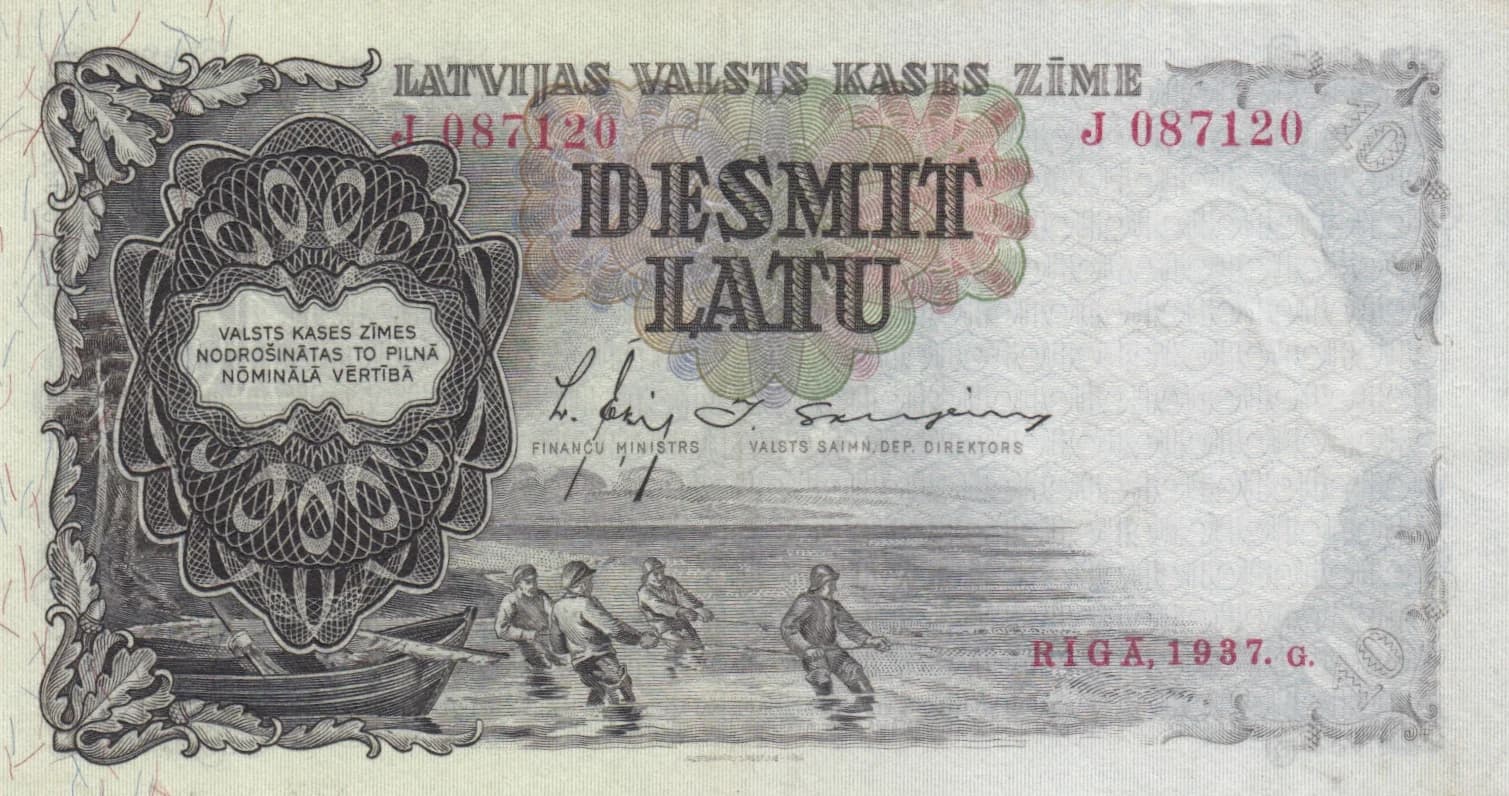
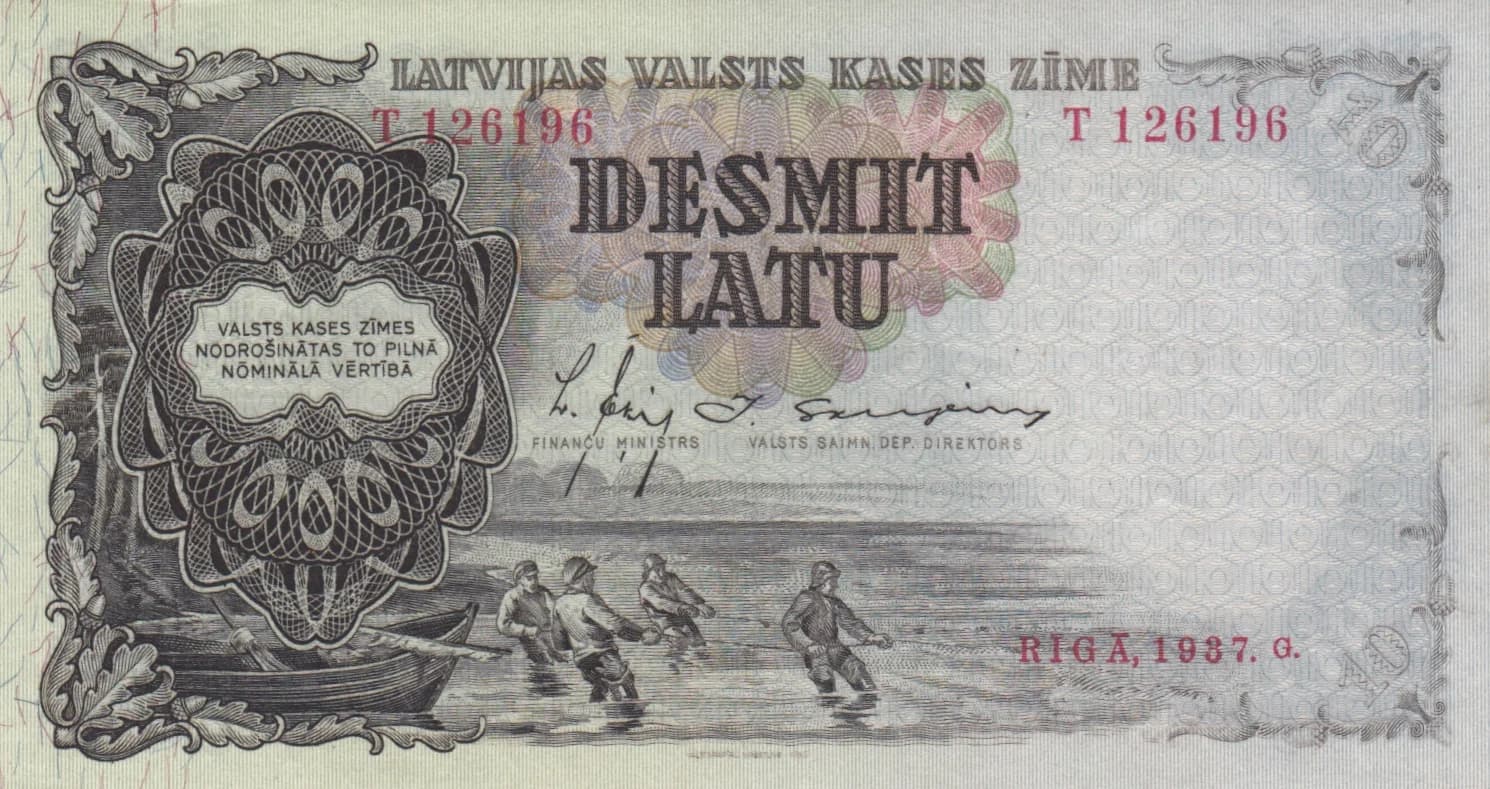
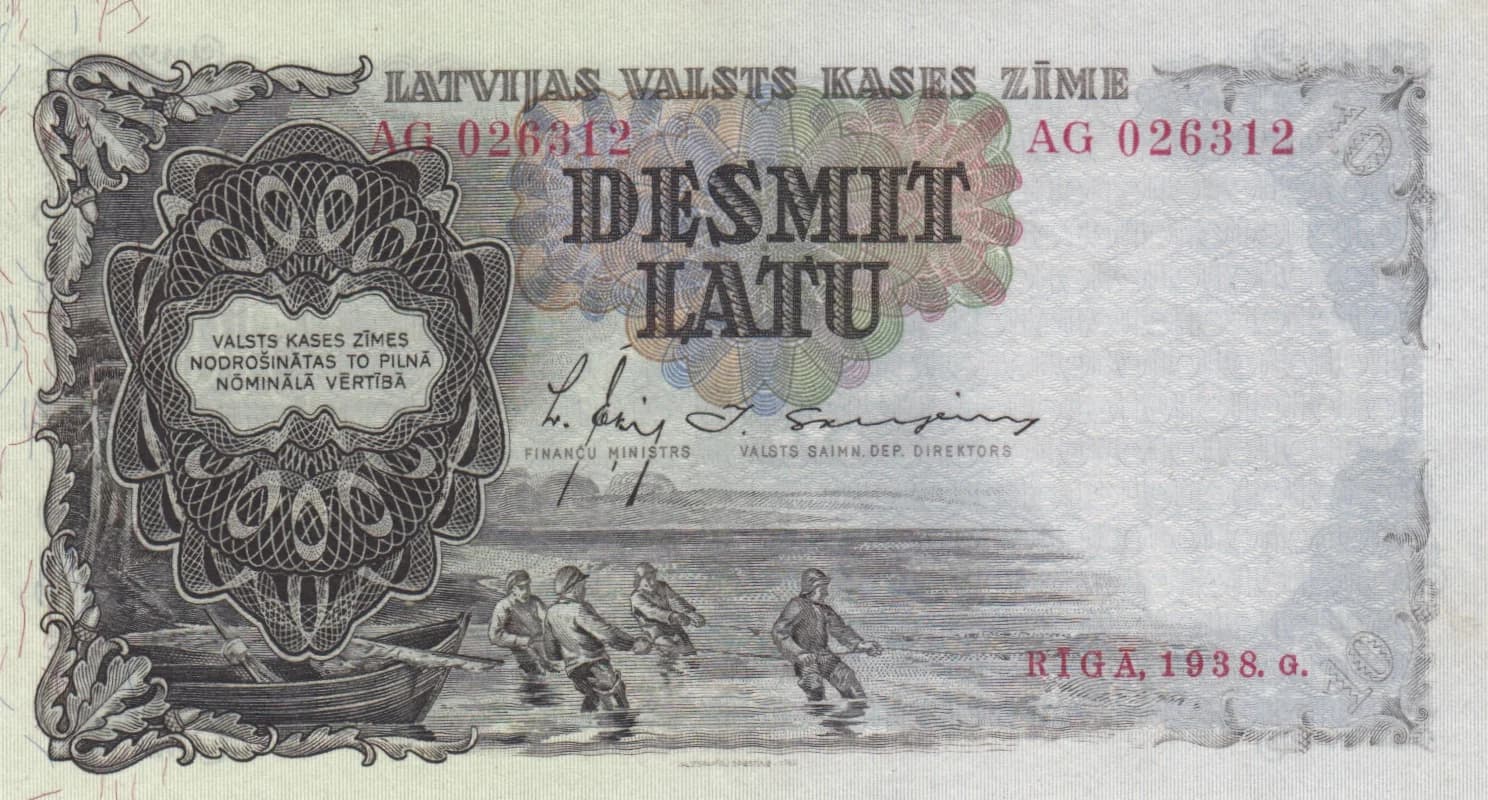
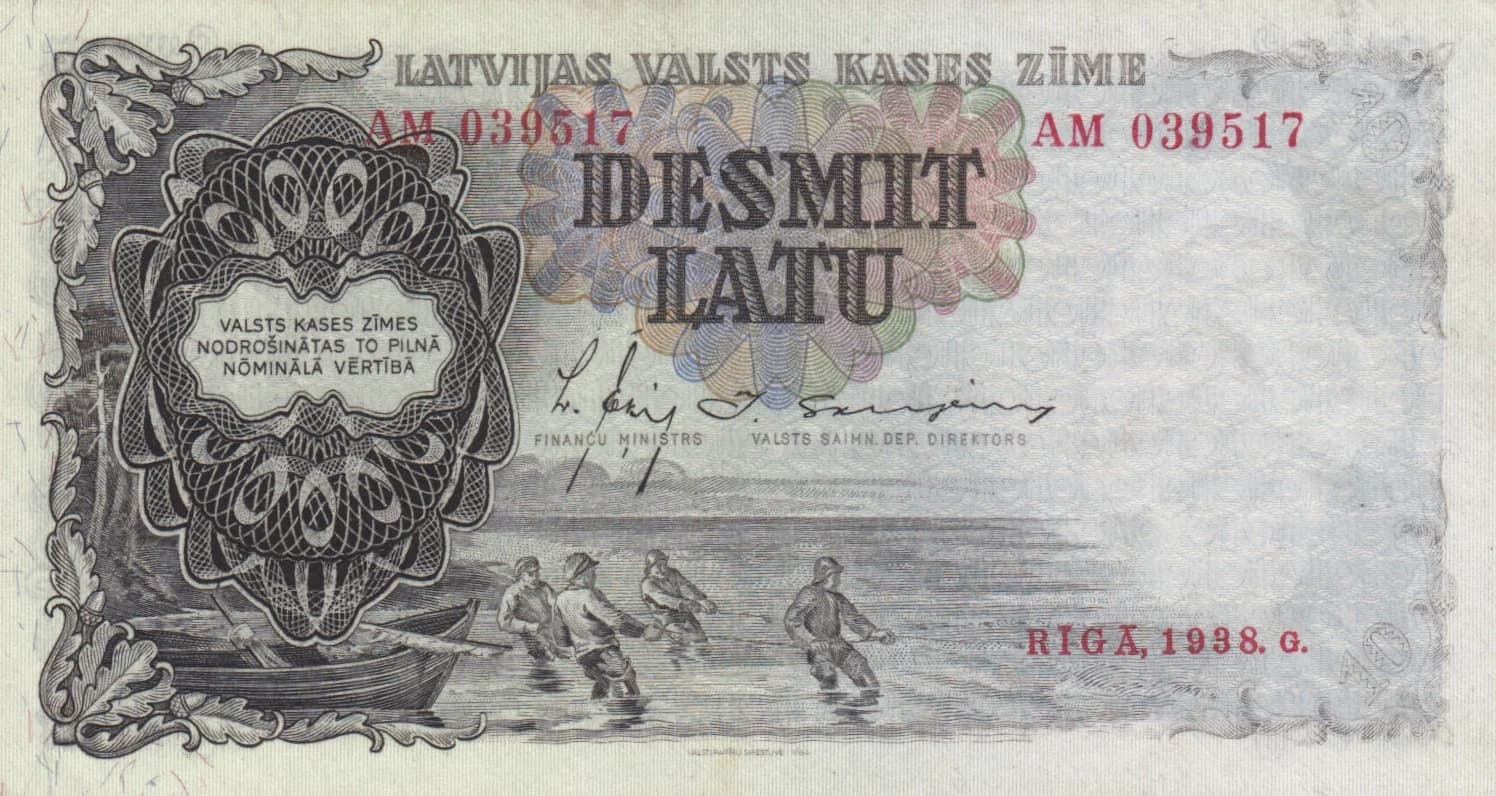
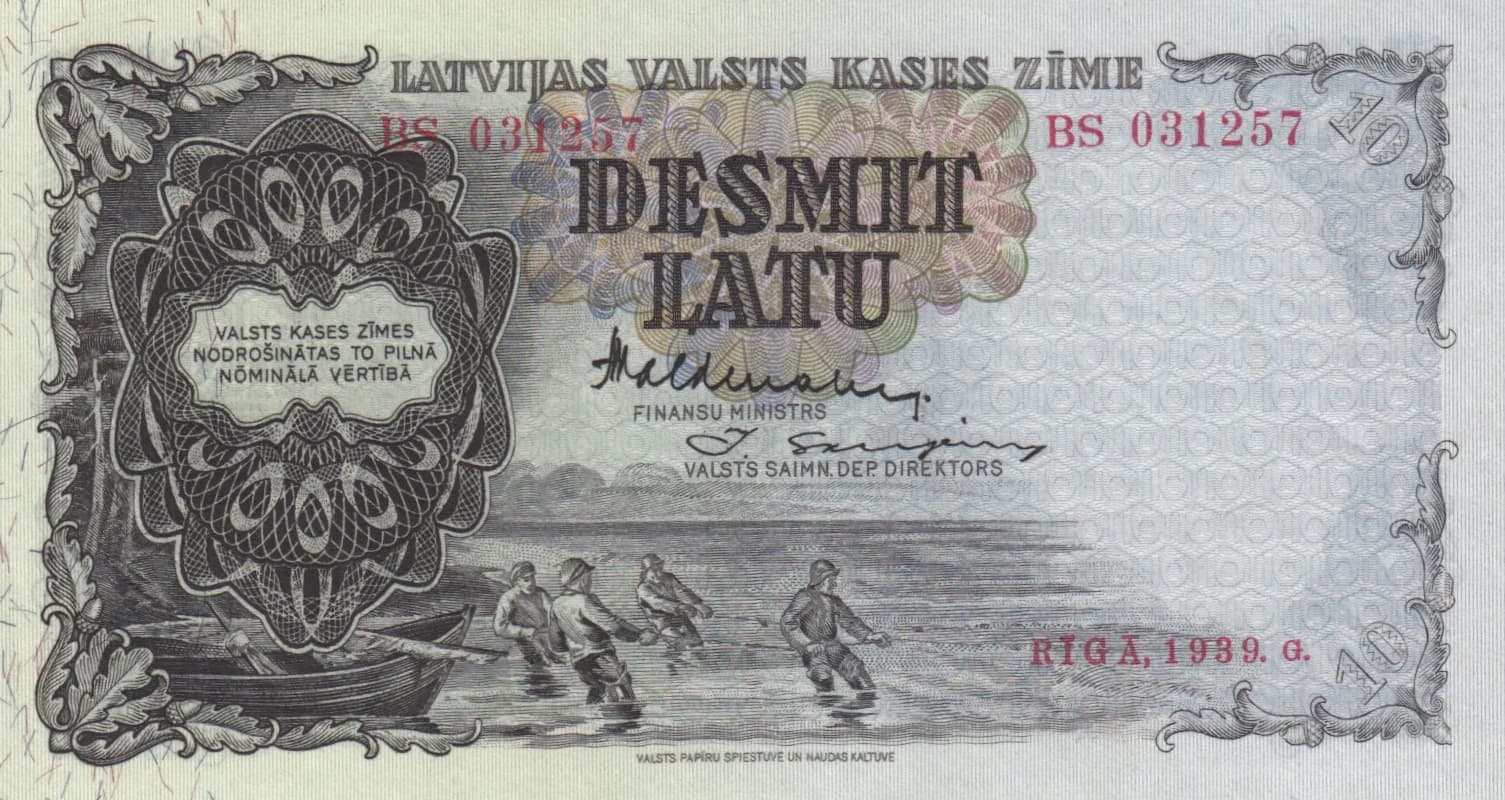
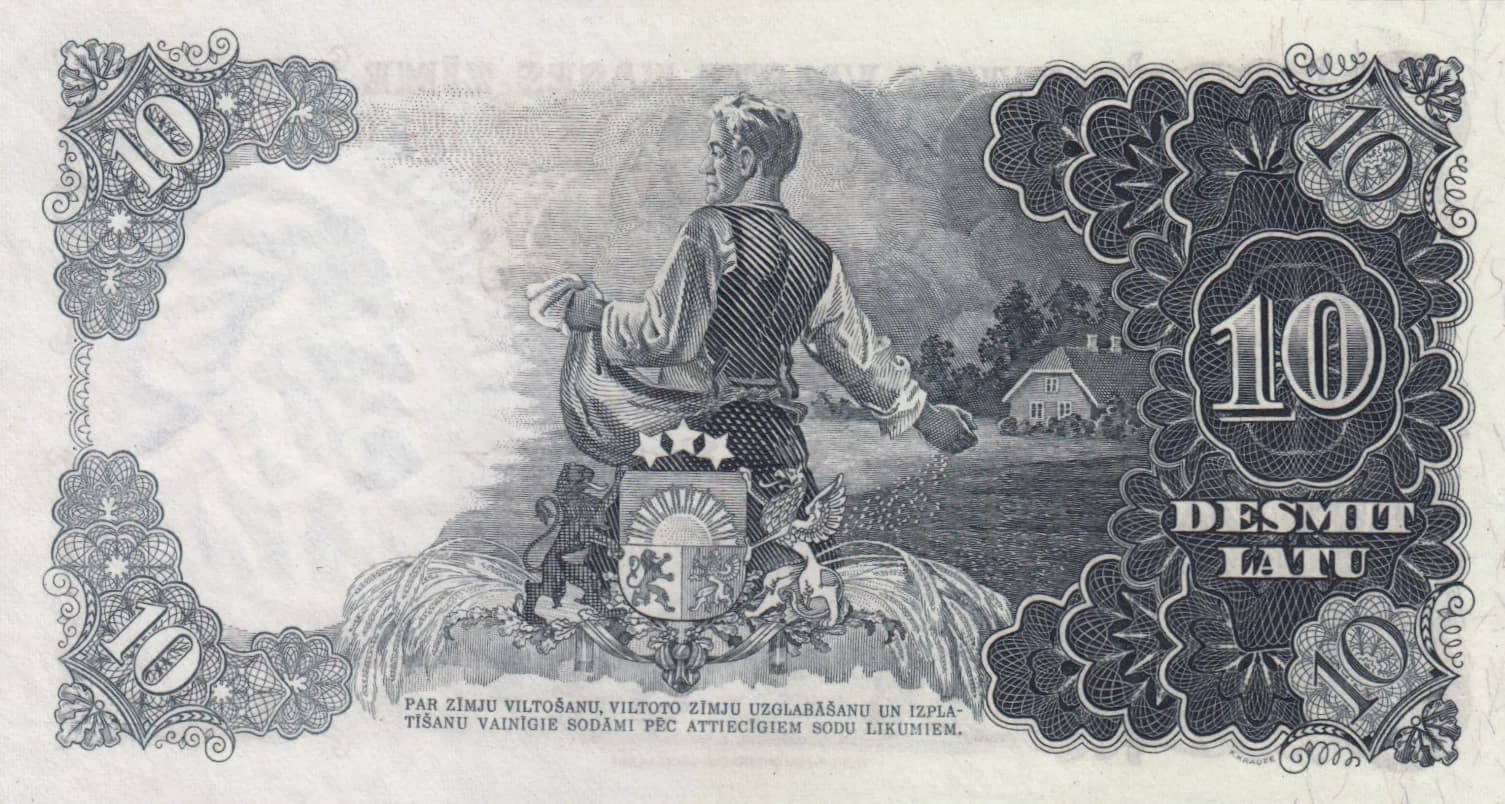
This is an exceptional example of Latvia's 10 Latu banknote from 1939 (Pick P-29d), graded UNC with serial number BS 031257. The note showcases the dual-sided design typical of interwar Latvian currency: an ornate front featuring a water scene with workers and elaborate heraldic symbolism, and a dignified reverse portrait of a man in official attire accompanied by the Latvian coat of arms. Despite cataloging as UNC, the visual analysis reveals moderate aging with light foxing and discoloration consistent with 85+ years of storage, making this a well-preserved example of Latvia's final pre-Soviet banknote issue.
Common. The 10 Latu denomination from 1939 was a standard circulating denomination issued in substantial quantities during the final year of Latvian independence. While the note has historical significance as a pre-Soviet issue, the series BS (and other series from this issue) appear regularly in collector markets and specialized auctions. The UNC grade is noteworthy given the note's age, but does not materially enhance rarity given the large surviving population of this particular issue. No documented print run restrictions or recalls affect this Pick number.
Issued in 1939 from Riga by the Latvian Government just months before the Soviet occupation, this note represents the twilight of Latvian monetary independence. The heraldic imagery—particularly the eagle-winged coat of arms and shield with lion—reflects Latvia's national identity during the authoritarian period of Kārlis Ulmanis's rule (1934-1940). The note's inscription 'LATVIJAS VALSTS KASES ZĪME' (State Treasury Note of Latvia) and printer attribution to 'VALSTS PAPĪRU SPIESTUVES UN NAUDAS KALTUVES' (State Printing and Mint Works) document the final expressions of Latvian state sovereignty in currency before incorporation into the Soviet Union.
The 10 Latu note (1939) employs a sophisticated dual-design philosophy reflecting Latvian national identity. The obverse features an active water scene depicting laborers or fishermen engaged in traditional work, symbolizing the nation's economic vitality and agrarian heritage. Flanking this central vignette are elaborate ornamental borders with fine floral scrollwork and geometric patterns characteristic of early 20th-century bank note artistry. The left margin displays the Latvian state coat of arms—an heraldic emblem featuring a shield and crowned eagle with spread wings—within an ornate decorative frame. The reverse presents a formal portrait of an unidentified government official or dignitary shown in three-quarter profile facing left, dressed in military or official ceremonial attire, suggesting the note's connection to state authority. Below this portrait sits a grand heraldic achievement displaying a shield charged with a lion beneath a two-headed eagle with expansive wings, reinforcing national sovereignty. The entire reverse is bordered by intricate geometric and floral patterns in a style consistent with contemporary European security printing. Large denomination numerals '10' occupy decorative corner frames on both sides.
FRONT SIDE: 'LATVIJAS VALSTS KASES ZĪME' (State Treasury Note of Latvia) / 'DESMIT LATU' (Ten Latu) / 'FINANSU MINISTRS' (Minister of Finance) / 'VALSTS SAIMN.DEP DIREKTORS' (State Economic Department Director) / 'RIGA, 1939. G.' (Riga, 1939) / 'VALSTS PAPĪRU SPIESTUVES UN NAUDAS KALTUVES' (State Printing and Mint Works) / 'VALSTS KASES ZĪMES NODROŠINĀTAS TO PILNĀ NOMINĀLĀ VĒRTĪBĀ' (State treasury notes are secured at their full nominal value) / Serial Number: BS 031257. BACK SIDE: 'DESMIT LATU' (Ten Latu) / '10' (denomination numeral) / 'PAR ZIMU VILTSOSANU, VILTOTO ZIMU UZGLABÂSANU UN IZPLATÎSANU VAINÎGIE SODAMI PÊC ATTIÊCÎGIEM SODU LIKUMIEM' (Those guilty of counterfeiting, possessing or distributing counterfeit notes shall be punished according to the relevant laws).
This note was produced using intaglio (engraved plate) printing, the standard security printing method for Latvian currency of the 1930s. The fine line engraving visible throughout—particularly evident in the cross-hatching patterns, portrait definition, and background geometric designs—is characteristic of intaglio work. The sharp clarity of intricate decorative borders, the heraldic details, and the overall depth and texture observable in the images confirm steel plate engraving rather than lithography. The note was printed by the State Printing and Mint Works (VALSTS PAPĪRU SPIESTUVES UN NAUDAS KALTUVES), Latvia's official state printer, as documented in the banknote's inscription.
Series BS 031257 as cataloged. The 10 Latu (P-29d) exists in multiple series varieties (A through D and beyond), with series BS representing a mid-range production variety. Pick catalog designation P-29d indicates this is variety 'd' of the 10 Latu 1939, distinguishing it from earlier series within the same year and denomination. No overprints or significant variations are evident in the visual analysis. The serial number format (two-letter prefix + six-digit number) is consistent with standard Latvian practice for this period.