10 Latu 1939
“serie BP”
Market Prices
26 salesAbout This Note
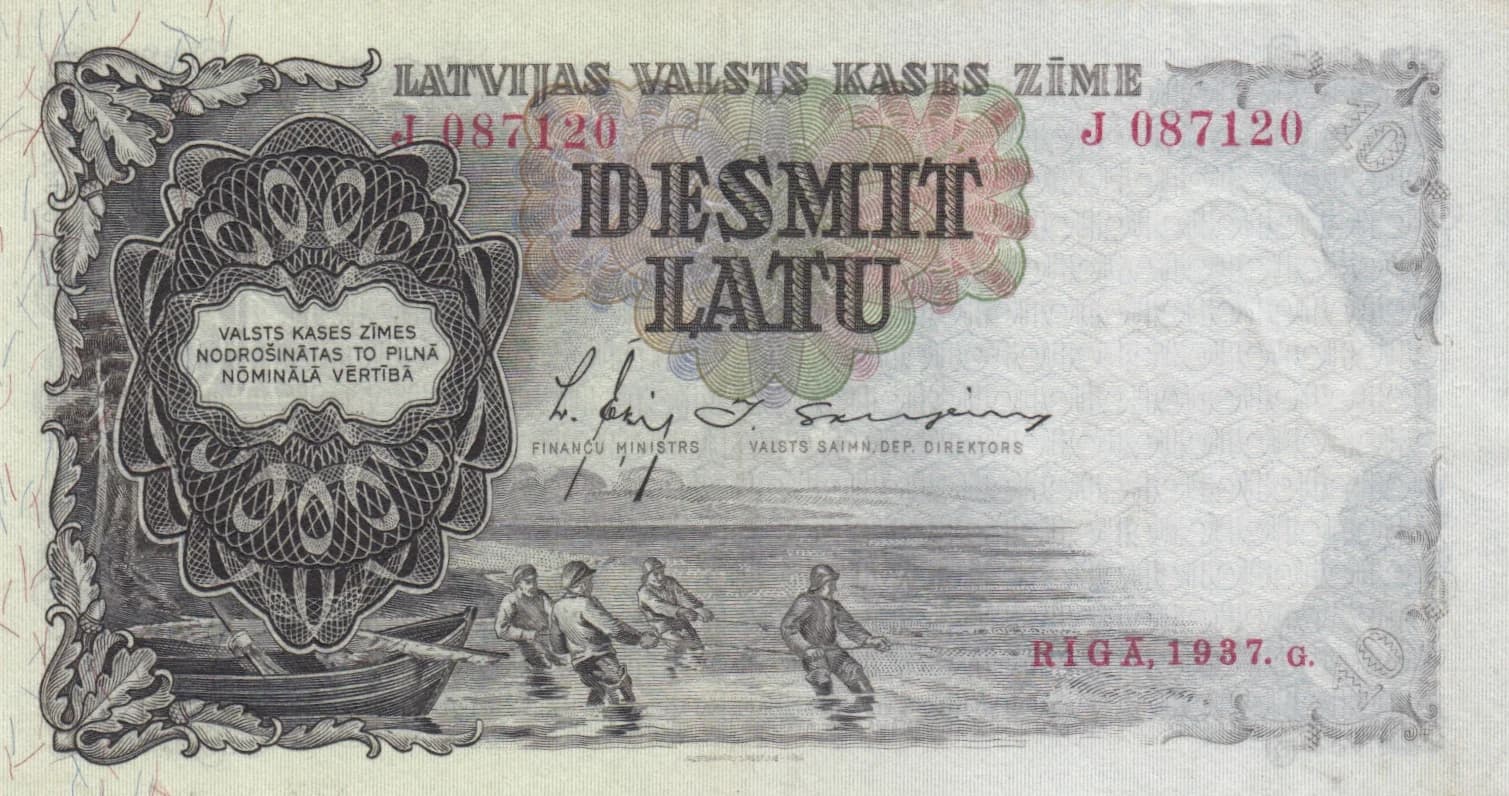
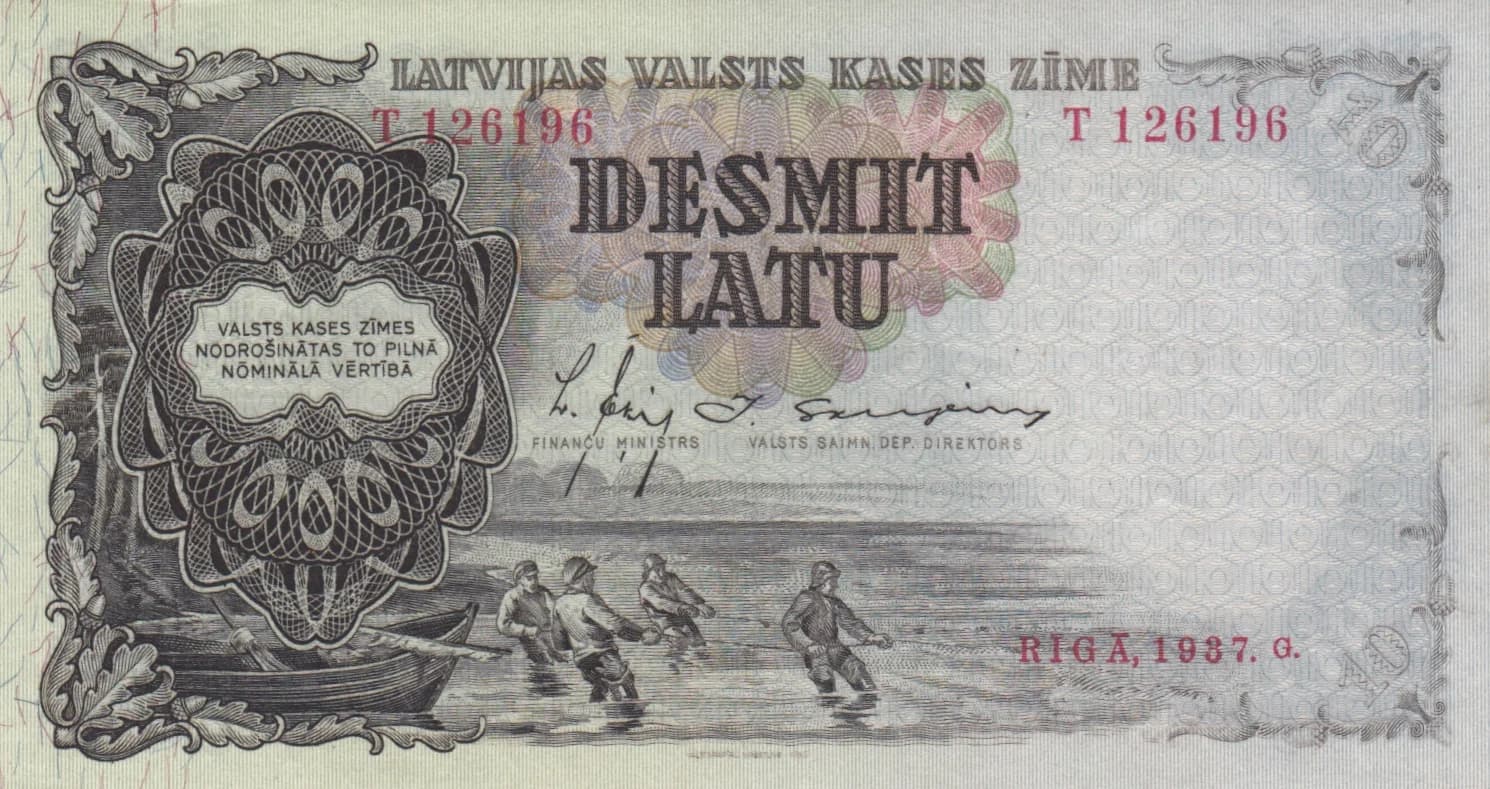
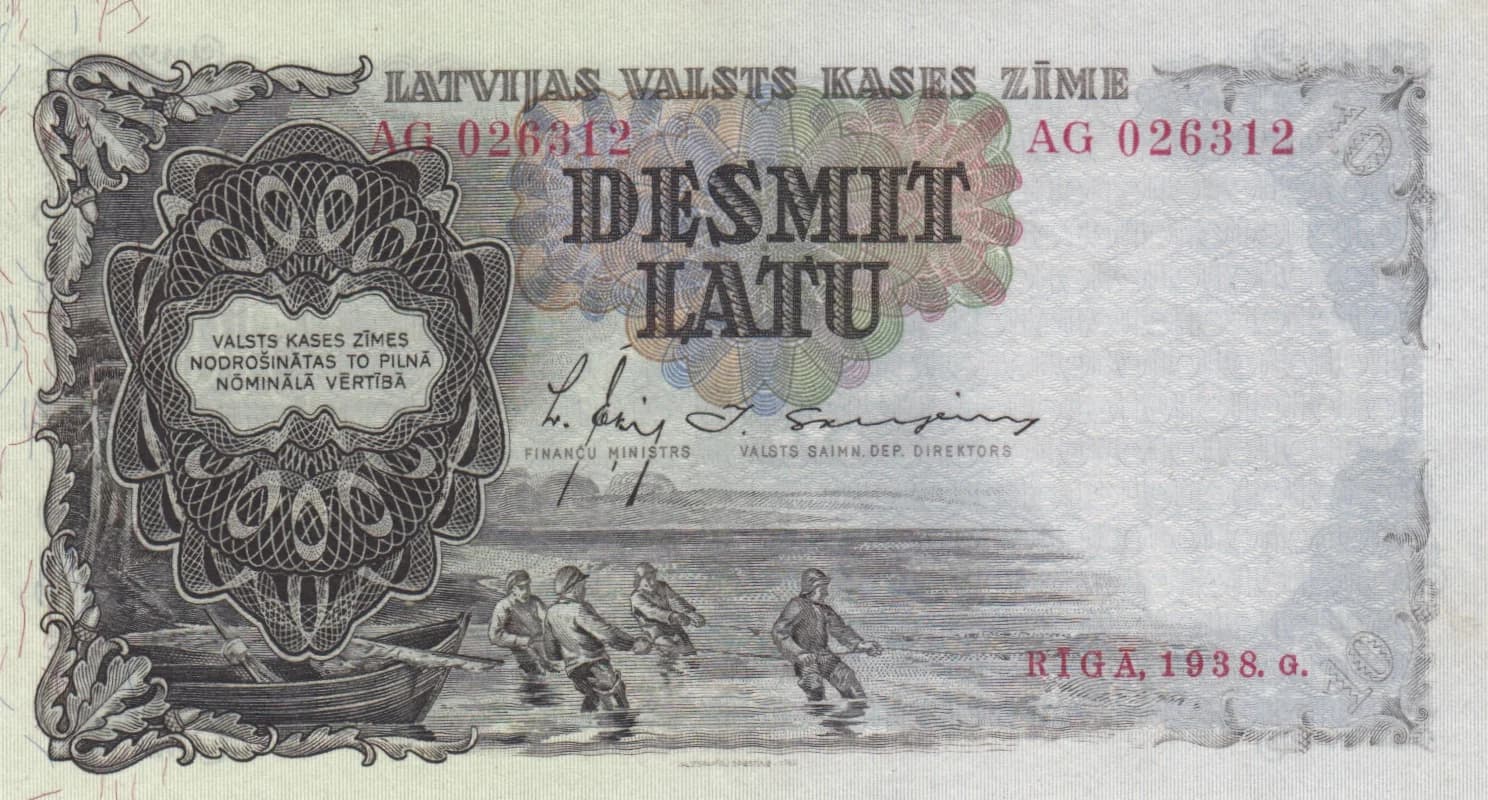
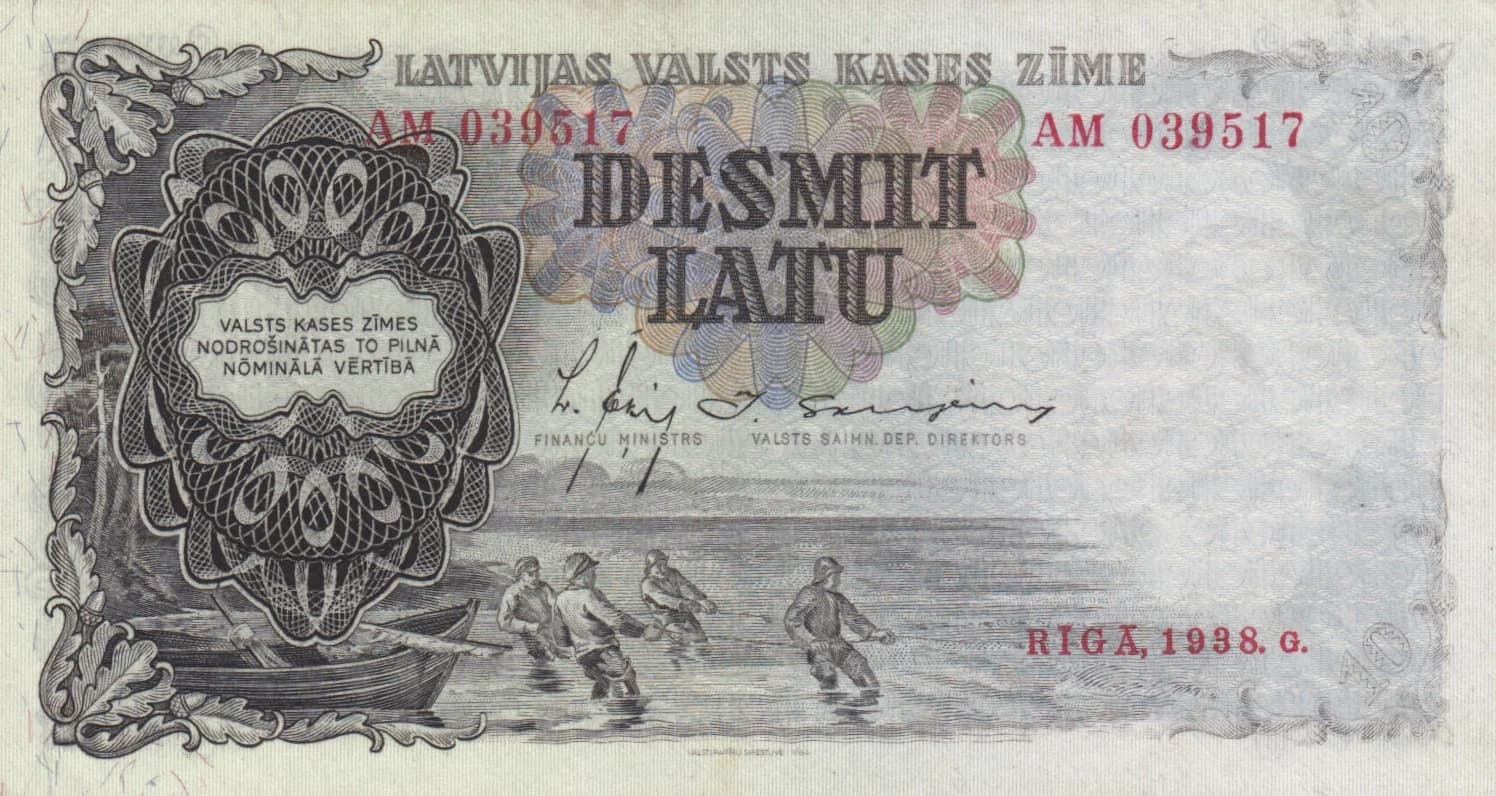
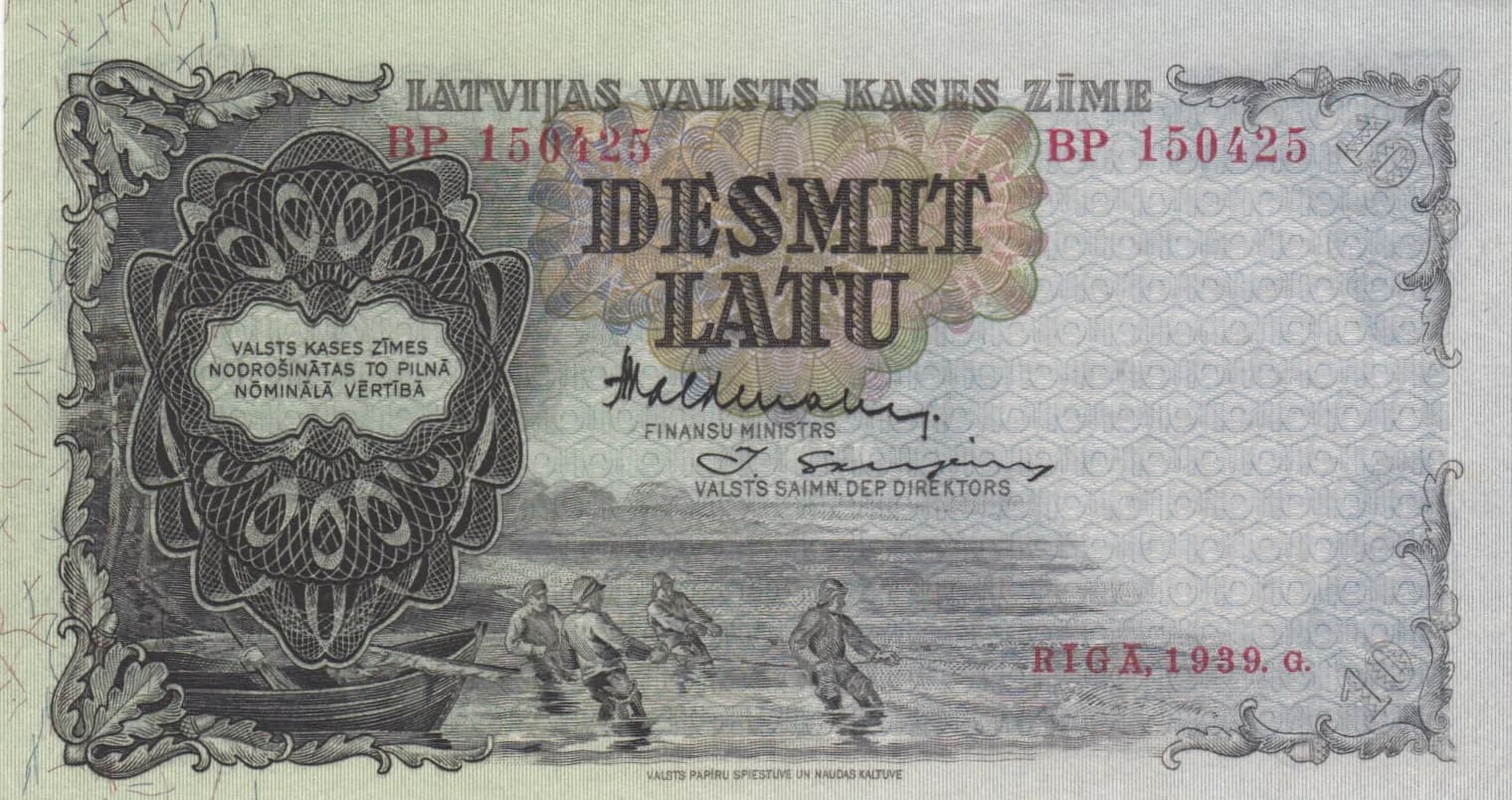
This is a well-preserved example of Latvia's 10 Latu note from 1939 (Pick P-29d), graded UNC with serial number BP 150425. The note exhibits the hallmark baroque design aesthetic of interwar Latvian currency, featuring intricate engraved borders, the Latvian coat of arms, and allegorical scenes representing the nation's economy and heritage. Despite some minor condition observations suggesting light circulation or handling, this specimen represents a significant piece of Latvia's brief independence-era numismatic history.
Common. The eBay price data shows consistent market activity with numerous sales across multiple condition grades and grading services (PMG, raw) spanning from 2013 to 2024, with UNC examples typically realizing $60-$120 at auction. The 2016 catalog value lists UNC at $100, aligning with actual market performance. Print run information suggests this was a standard issue for the 1937-1940 period. The wide availability in secondary markets and regular appearance in sales indicate this is a commonly encountered note among collectors of Baltic currency.
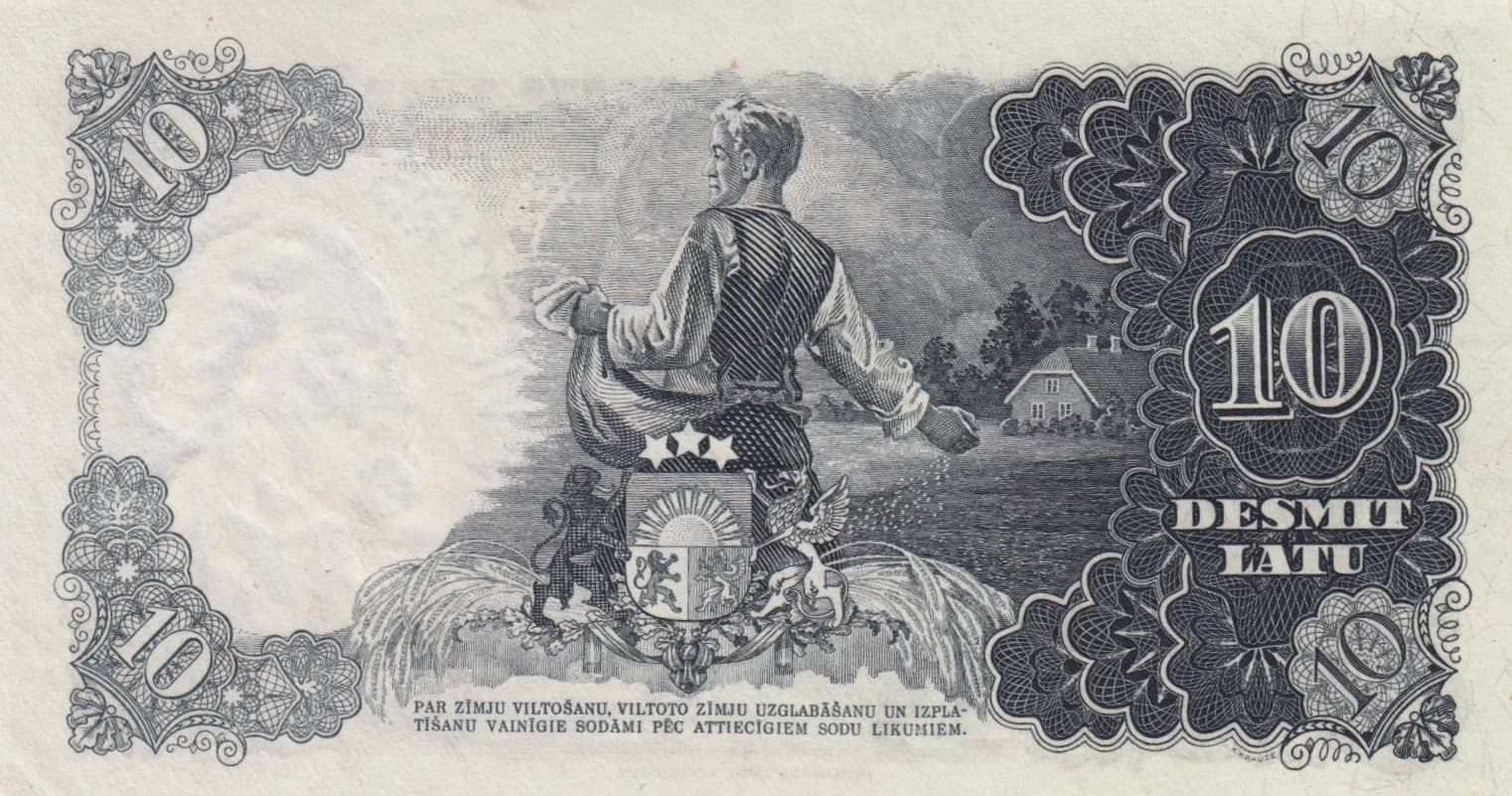
Issued during 1939 by the Latvian Government (Latvijas Valsts Kases), this note predates Latvia's loss of independence by just two years, making it a poignant artifact of the interwar period. The front features fishermen in water, symbolizing Latvia's maritime and fishing heritage, while the reverse depicts a farmer sowing, representing the agricultural foundation of the nation's economy. These thematic choices reflect Latvia's self-image as a young independent state emphasizing productive labor and natural resources during the economically challenging 1930s.
The obverse (front) features the Latvian coat of arms—a crowned shield with heraldic lions—prominently displayed within an ornate baroque frame on the left side. The central allegorical vignette depicts multiple fishermen in shallow water, symbolizing Latvia's maritime economy and fishing industry. The reverse (back) presents a standing male figure in historical or traditional Latvian dress shown in profile, likely representing a national hero or personification of the Latvian people, standing above a heraldic base featuring the coat of arms with lion supporters and flanking wings. A rural landscape with buildings is visible in the background. Both sides employ elaborate baroque-style floral and scrollwork borders characteristic of 1930s European security printing. The denomination '10' appears in ornate oval frames on both sides. Red serial numbers (BP 150425) are prominently displayed on the obverse.
FRONT: 'LATVIJAS VALSTS KASES ZĪME' (Latvia State Treasury Note); 'DESMIT LATU' (Ten Latu); 'FINANSU MINISTRS' (Minister of Finance); 'VALSTS SAIM.DEP.DIREKTORS' (State Treasury Department Director); 'RĪGA, 1939. G.' (Riga, 1939); 'VALSTS PAPĪRU SPIESTUVES UN NAUDA'S KATUVES' (State Paper Printing and Money Minting); 'VALSTS KASES ZĪMES NODROSINATAS TO PILNĀ NŌMINĀLA VĒRTĪBĀ' (State Treasury Note secured at full nominal value). BACK: '10' (denomination); 'DESMIT LATU' (Ten Latu); 'PAR ZINJU VILTOŠANU, VILTOTO ZINJU UZGLABAŠANU UN IZPLATIŠANU VAINIGIE SODAMI PĒC ATTIECHIGIEM SODU LIKUMIEM.' (For counterfeiting, possession and distribution of counterfeit notes, perpetrators are punished according to applicable penal laws.)
Intaglio engraving (copperplate/steel plate printing), executed by Valsts Papīru Spiestuves (State Paper Printing Works) in Riga, as noted in the inscription. The fine detail work visible throughout—including the intricate line work in the borders, the delicate modeling in the figural scenes, and the complex security patterns—is characteristic of high-security intaglio production. The baroque border designs and fine parallel line work serve dual purposes as both aesthetic enhancement and anti-counterfeiting measures, typical of interwar currency security standards.
This specimen is identified as Pick P-29d (series BP), representing one of four cataloged variants for the 10 Latu 1939 (P-29a, P-29b, P-29d, P-29e), all sharing the same Man's Head watermark but distinguished by printing characteristics or serial number series. The BP serial prefix on this example (BP 150425) confirms the P-29d variety. The 1939 date and State Treasury (Kases) issuer designation are consistent with the standard 1937-1940 issue period for this denomination.