1/2 dinar 1968
Market Prices
19 salesAbout This Note
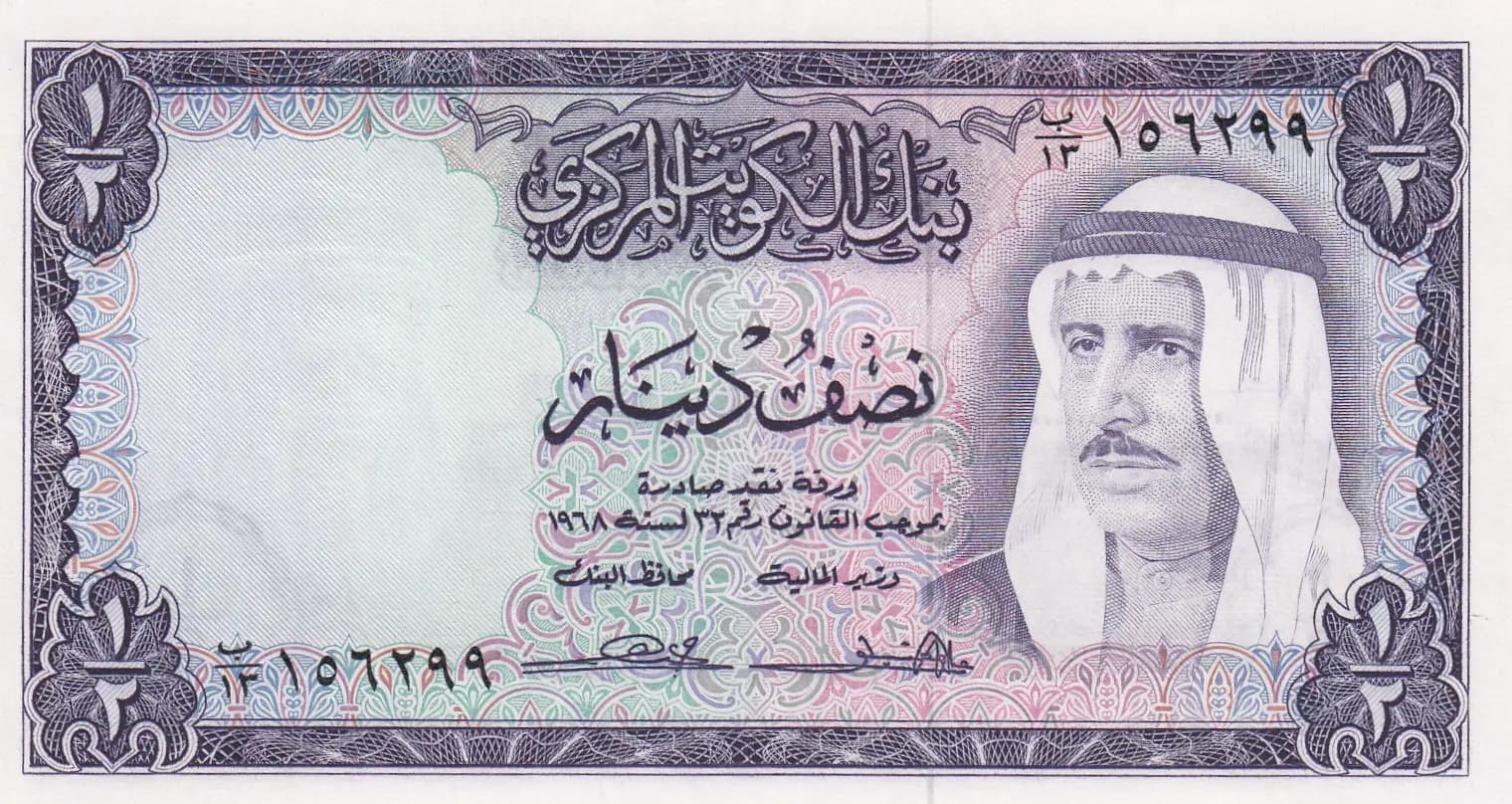
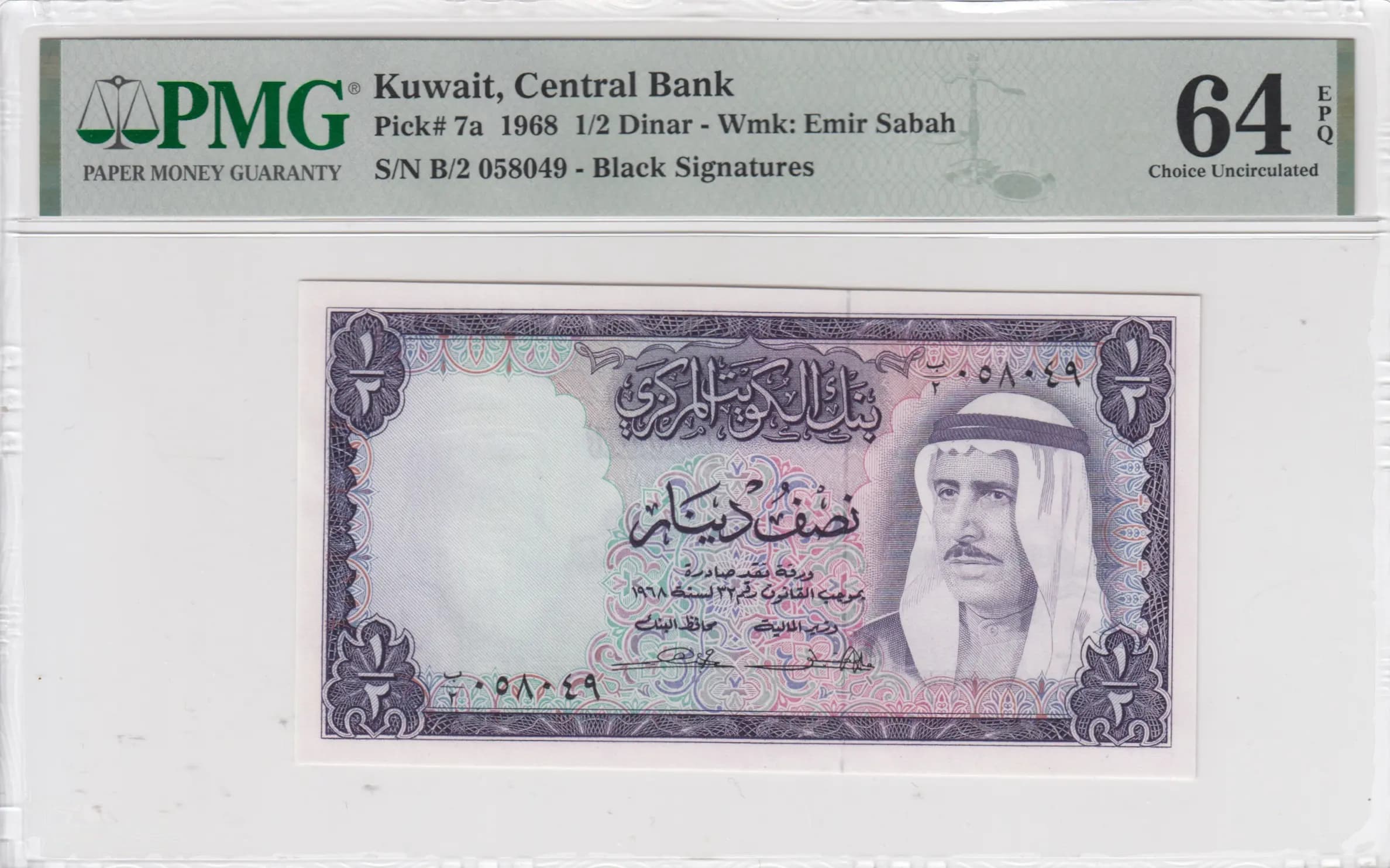
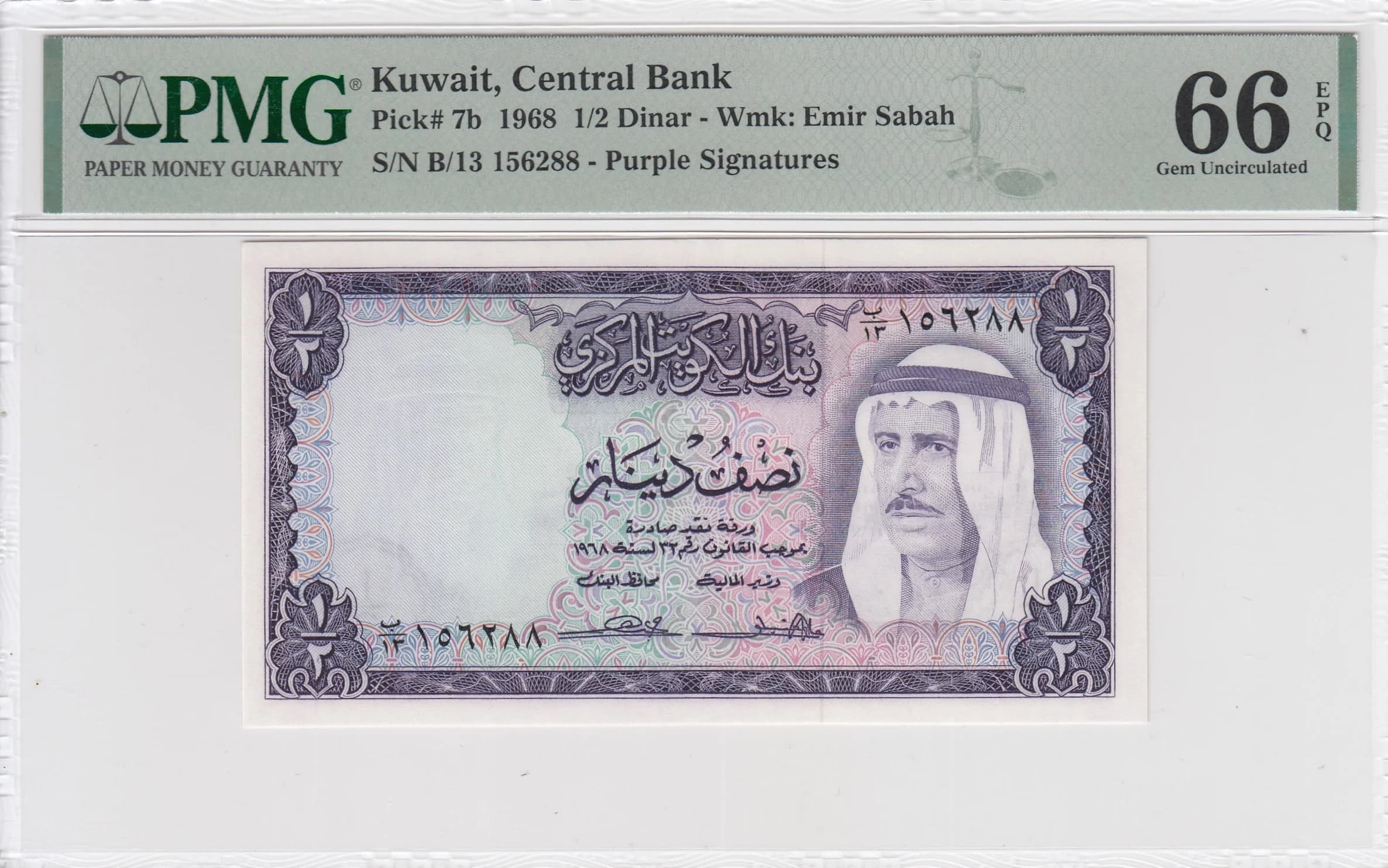
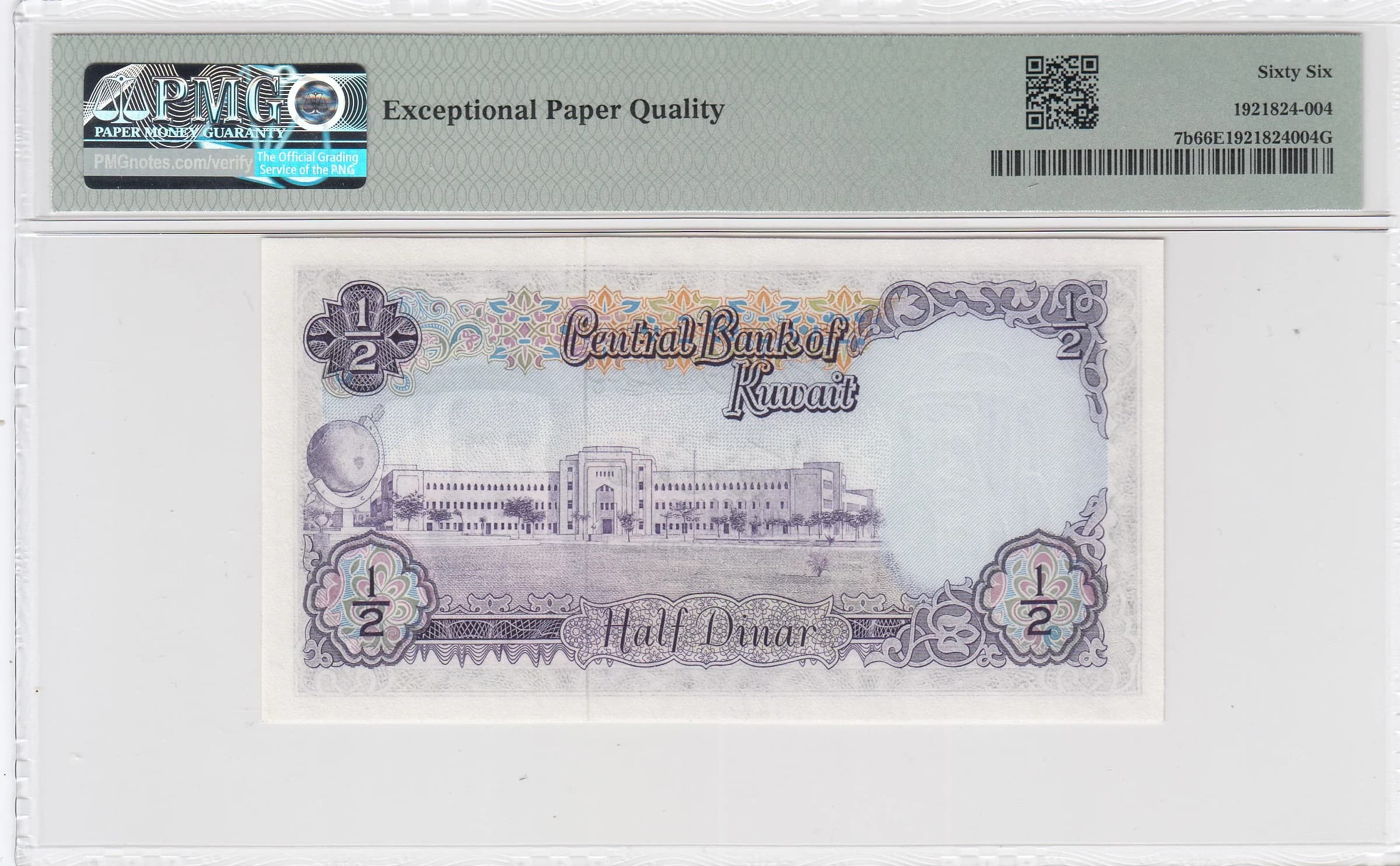
This is a PMG 66 EPQ graded half dinar from Kuwait's first issue of 1968, displaying exceptional gem uncirculated condition with no visible wear or handling. The note features a striking purple and multicolor design with a portrait of Emir Sabah on the obverse and the Central Bank of Kuwait building on the reverse, both rendered with fine security printing and intricate guilloche patterns. This early Central Bank of Kuwait note represents an important transitional period in Kuwait's monetary history and remains highly collectible, with similar grades commanding $80-135 on the secondary market.
Common. The 1968 half dinar (Pick P-7b) is a regular issue with substantial print runs and remains readily available in the numismatic market. Secondary market data shows consistent sales at moderate prices ($17-30 in circulated VF grades, $80-137 for PMG 65-66 graded notes), indicating healthy supply. The denomination itself (half dinar) as a regular issue from Kuwait's first series was produced in large quantities and is not subject to known major print run restrictions or recall status. This is a standard, collectible note but not rare or scarce.
Issued in 1968 by the newly independent Central Bank of Kuwait, this note commemorates Kuwait's early post-independence period and features Emir Sabah ibn Salim al-Sabah, who served as the nation's leader during its formative years. The reverse depicts the Central Bank of Kuwait building itself, reflecting the institution's central role in establishing Kuwait's modern financial infrastructure following the country's independence in 1961. The 1968 dating marks this as one of the earliest regular issues of the Central Bank, making it historically significant in Kuwaiti numismatic tradition.
The obverse features a formal profile portrait of Emir Sabah ibn Salim al-Sabah, shown wearing traditional Arab headdress (ghutra and agal), positioned on the right side of the note with the same portrait appearing as a watermark for security purposes. The note employs an ornate decorative border with floral and geometric patterns in purple, lavender, pink, and blue tones, with decorative oval medallions at all four corners. The reverse showcases an architectural engraving of the Central Bank of Kuwait building in classical institutional style with symmetrical facade, multiple stories, and formal columns, centered on the note face. Both sides incorporate sophisticated security printing with fine guilloche patterns, color security printing elements, and intricate background patterns throughout.
FRONT SIDE: 'بنك الكويت المركزي' (Central Bank of Kuwait), 'نصف دينار' (Half Dinar), Serial number designation 'B/13 156288', Arabic date reference. BACK SIDE: 'Central Bank of Kuwait' (English), '1/2 Dinar' (English), Denomination marker '2' in ornate medallions, PMG grading designation 'Sixty Six' with 'Exceptional Paper Quality (EPQ)' notation, Grading reference '1921824-004', Catalog reference '7b68F1921824004G', Verification reference 'MIGnotes.com/verify - The Official Grading Service of the PMG'.
Intaglio printing (engraved plates) combined with multicolor lithography, as evidenced by the sharp detail in the portraiture, architectural rendering, and the fine line guilloche security patterns visible throughout. The note demonstrates the advanced security printing techniques available to currency printers in 1968, with evidence of fine line work, color separation security printing, and decorative engraving characteristic of high-security banknote production of this era. The specific security printer for this issue is not definitively documented in standard references but represents the Central Bank of Kuwait's early commitment to modern anti-counterfeiting measures.
This note is cataloged as Pick P-7b, with the primary variant distinction from P-7a being the watermark type (both feature Emir Sabah watermark, but P-7b represents a specific printing variant). The observed serial number designation 'B/13 156288' and date reference within the inscription suggest this example is from an early production run. No overprints or unusual serial number prefixes are evident in the visual analysis. The note represents the standard variety of the 1968 issue without documented errors or rare varieties identified in major catalogs.