1/2 dinar 1960
Market Prices
18 salesAbout This Note
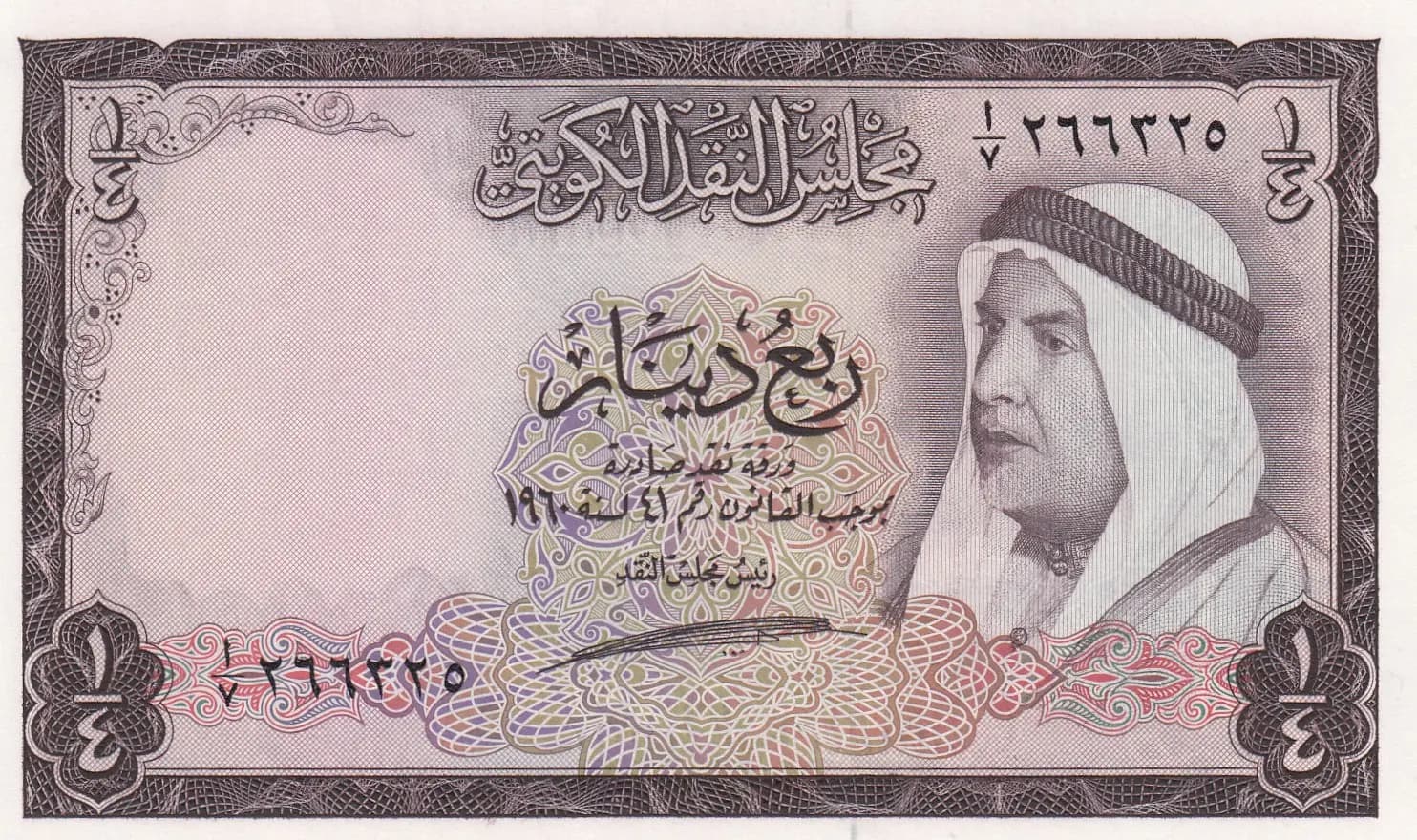
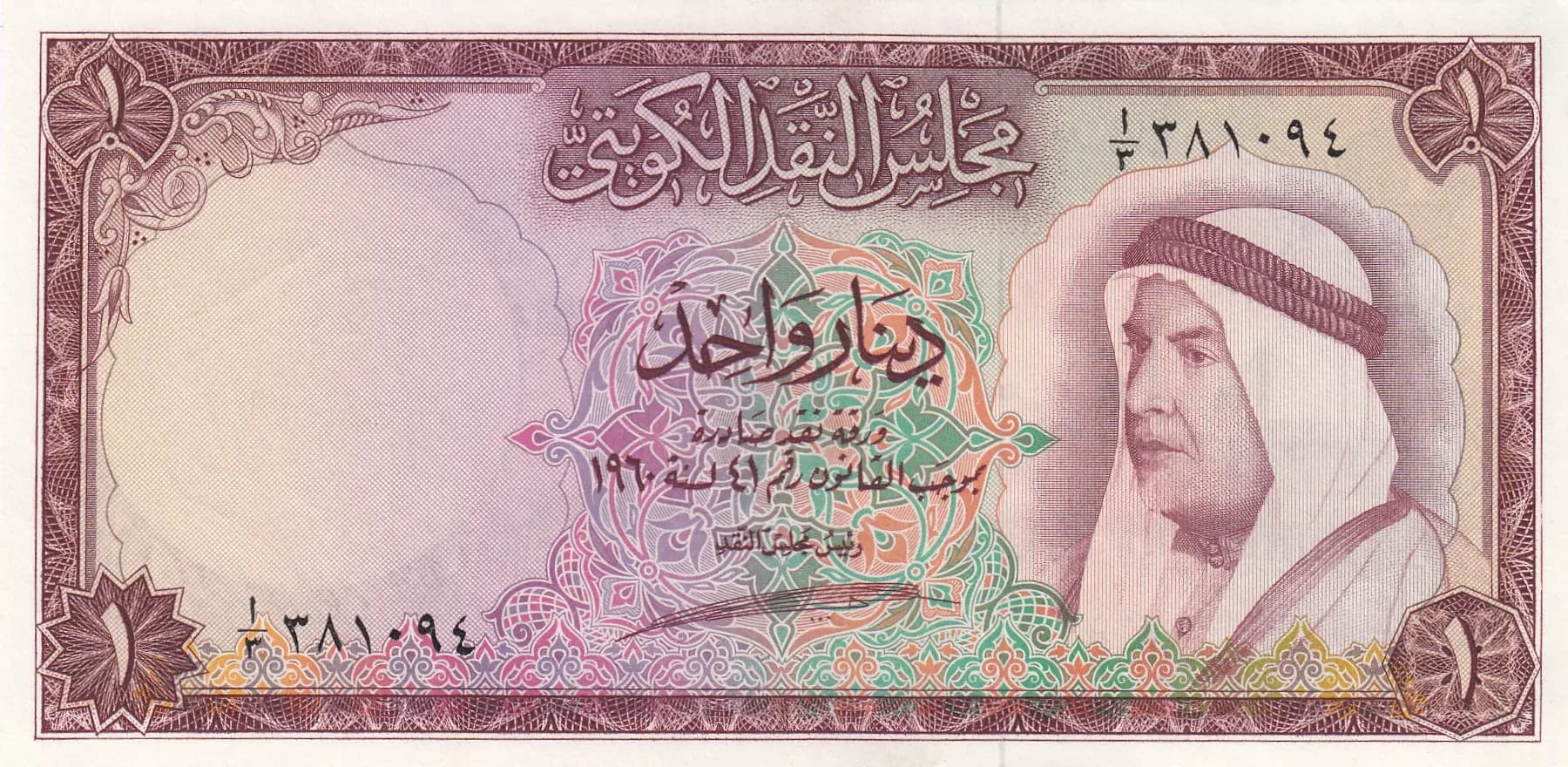
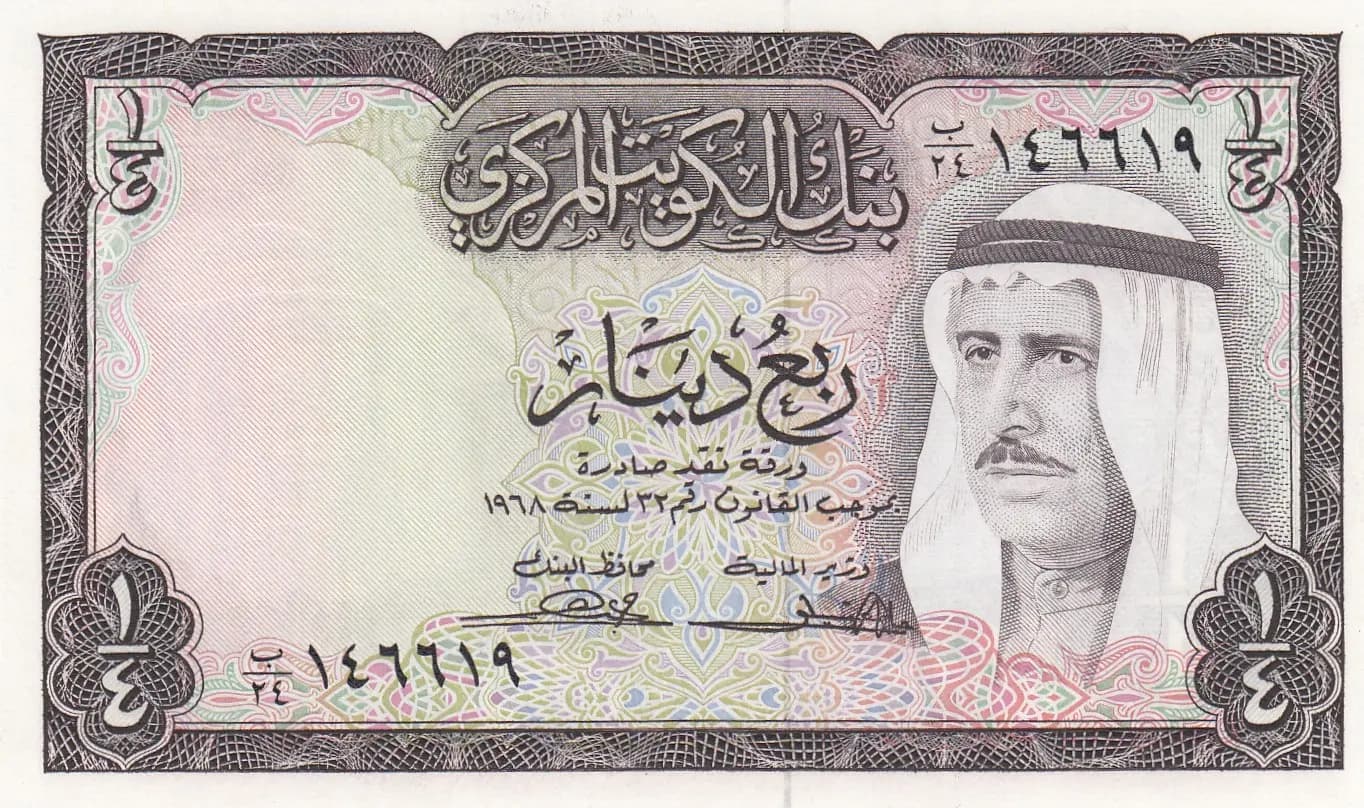
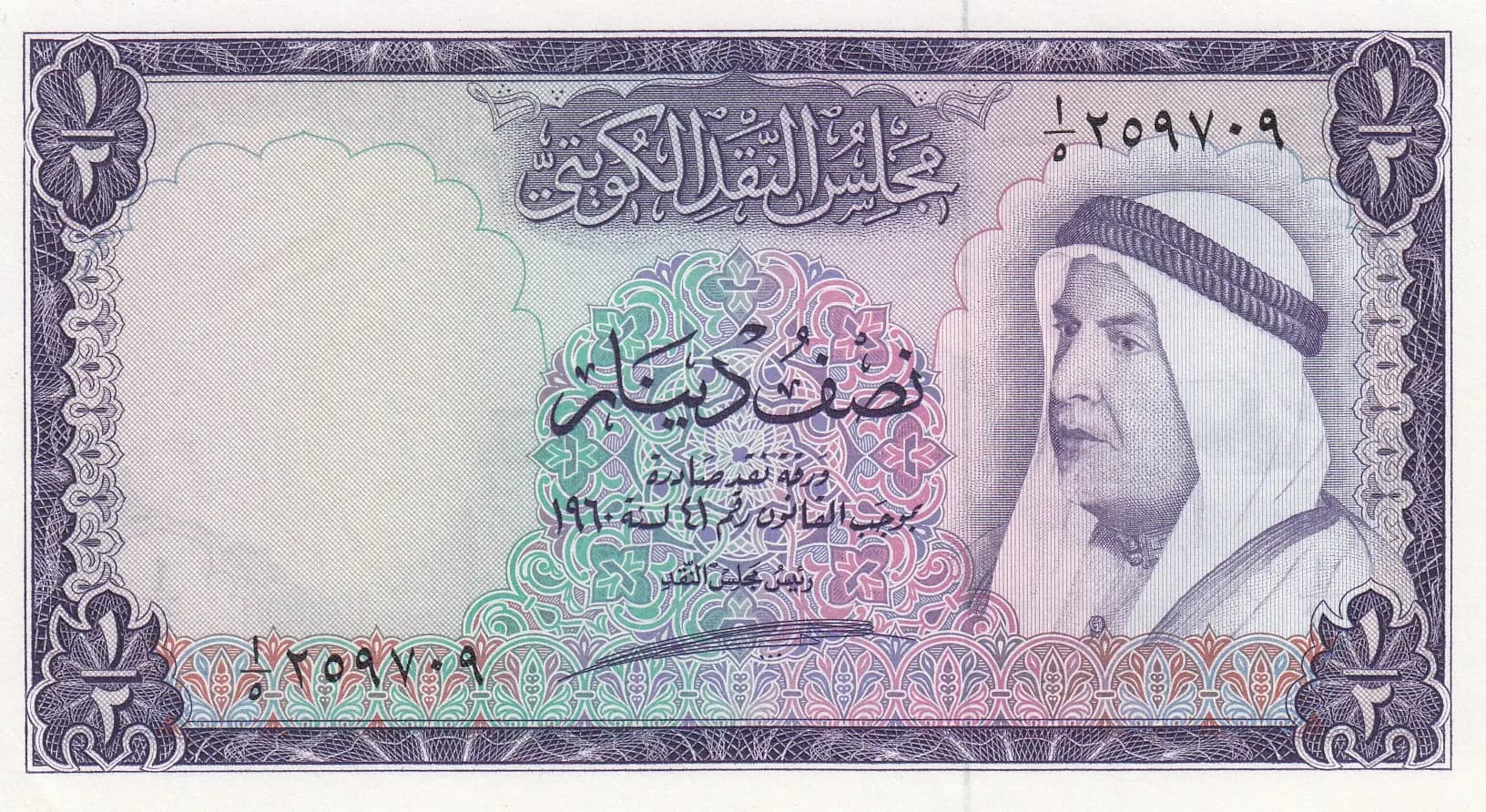
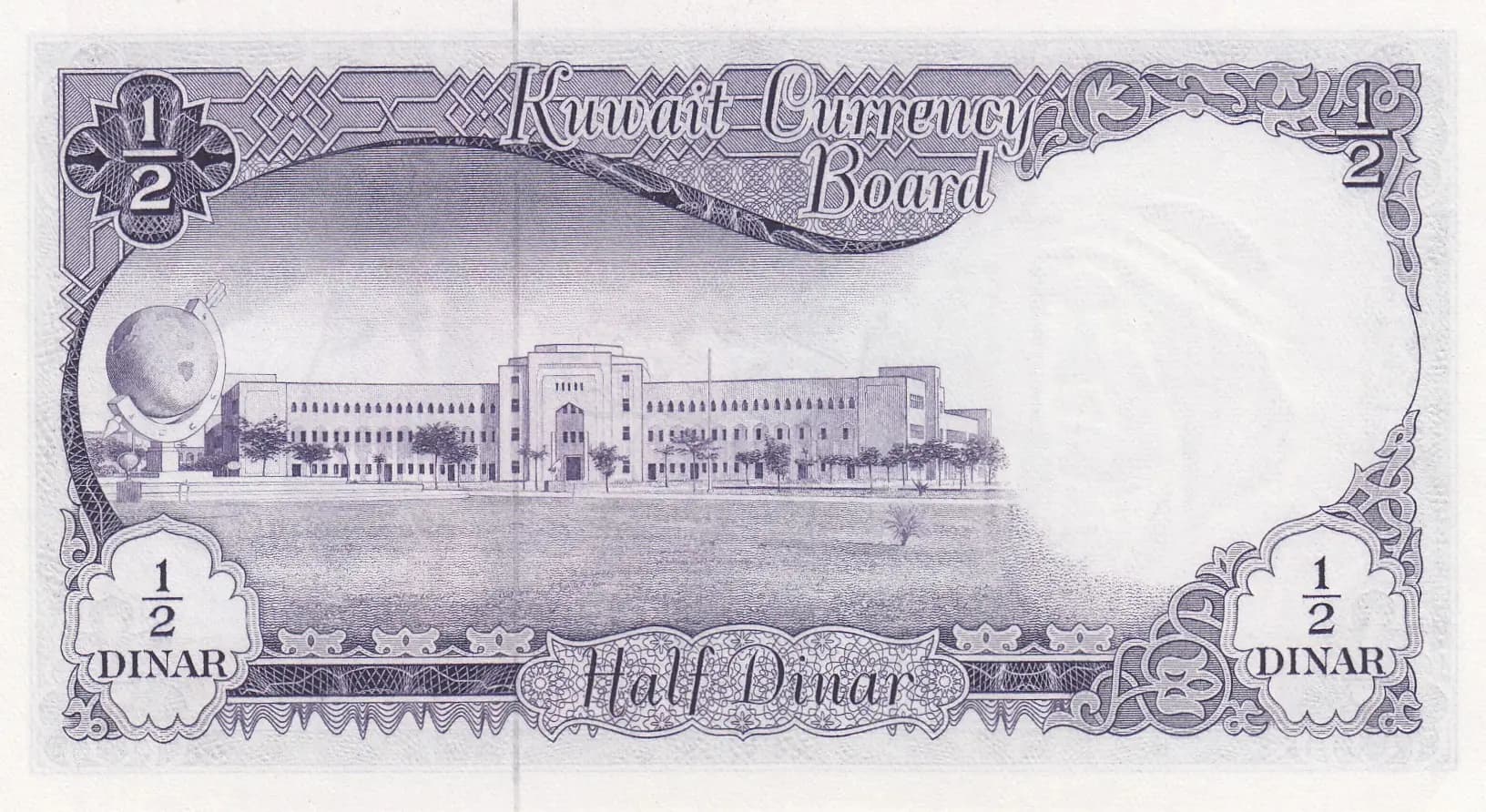
This is a 1960 Kuwait Currency Board ½ Dinar (Pick P-2) featuring a striking portrait of Sheikh Abdullah as-Salim as-Sabah in traditional Arab dress on the obverse, with elaborate purple, green, and pink decorative patterns characteristic of early Kuwaiti currency design. The reverse displays an institutional building (the Kuwait Currency Board headquarters) with a globe symbol. The note shows significant circulation wear with visible creasing, age-related discoloration, and prominent handwritten marks overlaid across the center, indicating heavy historical use despite the stated UNC grade.
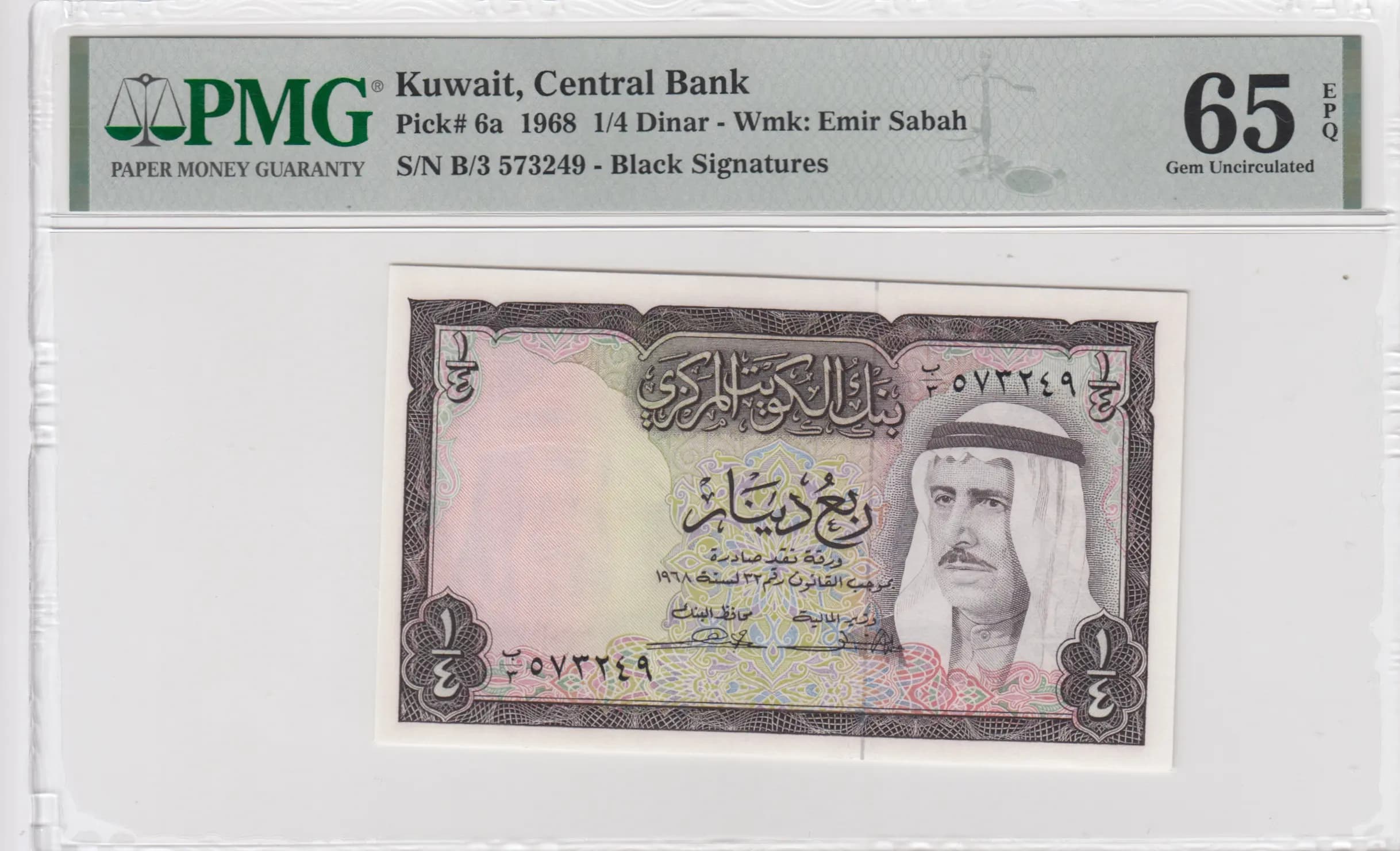
Common. The 1960 Kuwait ½ Dinar (P-2) is a foundational issue from Kuwait's first currency series and was produced in substantial quantities to support the nation's monetary system. Secondary market data shows consistent availability with VF examples selling for $35-65 and UNC specimens trading at $125 (2019 catalog value), with multiple sales recorded annually on eBay spanning from 2009 to 2023. The presence of numerous graded examples (PMG has catalogued 43 variants for this base Pick number) further confirms widespread circulation and availability.
This note represents Kuwait's first independent currency issue following the establishment of the Kuwait Currency Board in 1960-1961, marking the nation's monetary sovereignty in the early post-independence period. The portrait of Sheikh Abdullah as-Salim as-Sabah honors the ruling family's leadership during Kuwait's transition to independence, while the reverse's depiction of the Currency Board building symbolizes the institutional foundation of Kuwait's modern financial system. The Arabic inscriptions and bilingual English design reflect Kuwait's position as an emerging Gulf nation establishing formal financial and diplomatic structures in the early 1960s.
The obverse features Sheikh Abdullah as-Salim as-Sabah, Amir of Kuwait, portrayed in right-facing profile wearing traditional Arab headdress (ghutra and agal), with his image also serving as the watermark for security purposes. His portrait is rendered in fine detail against an ornate background of geometric and floral patterns in green and pink/red tones, framed by decorative corner ornaments with shell-like motifs and an intricate lattice border design. The reverse displays a formal, symmetrical institutional building (Kuwait Currency Board headquarters) in a landscaped setting with grounds and vegetation, complemented by a globe symbol on the left side representing international commerce and financial standing. Both sides employ decorative borders and corner ornaments executed in fine line engraving.
Front side: Arabic text at top includes a name (possibly Muhammad al-Sharqawi or a similar administrative official signature) and what appears to be a Hijri date reference (1409 AH - 9). Handwritten signatures/marks overlay the center in black ink (specific text unclear from visual). Back side: English inscriptions read 'Kuwait Currency Board,' 'Half Dinar,' and '1/2 DINAR' with denomination numerals '1/2' positioned in multiple locations for clarity and security purposes.
Intaglio engraving (fine line engraving) with multi-color offset printing, producing the characteristic gradient effects and intricate detail visible throughout the note. The color scheme—purple/violet base with green, pink/red, and black accents—was achieved through multiple printing passes. This is consistent with 1960-1961 Kuwaiti Currency Board issues, which were typically produced by specialized security printers such as the British American Bank Note Company or similar firms contracted for sovereign currency production during this period.
The visual analysis reveals handwritten signatures and administrative marks overlaid on the obverse, suggesting this may be a specimen or presentation note with authentication markings. The specific variety cannot be definitively determined from the images alone, but the presence of handwritten elements and the stated Hijri date (1409 AH) may indicate this is from an administrative or archival release rather than standard circulation stock. The Pick catalog lists this as P-2 (primary 1960 issue), but subsequent ½ Dinar varieties are catalogued as P-24a through P-24g, suggesting this may represent an earlier or distinct printing variant. Further examination of serial number prefixes and exact signature characteristics would be required for precise variety classification.