1/2 dinar 1968
Market Prices
25 salesAbout This Note
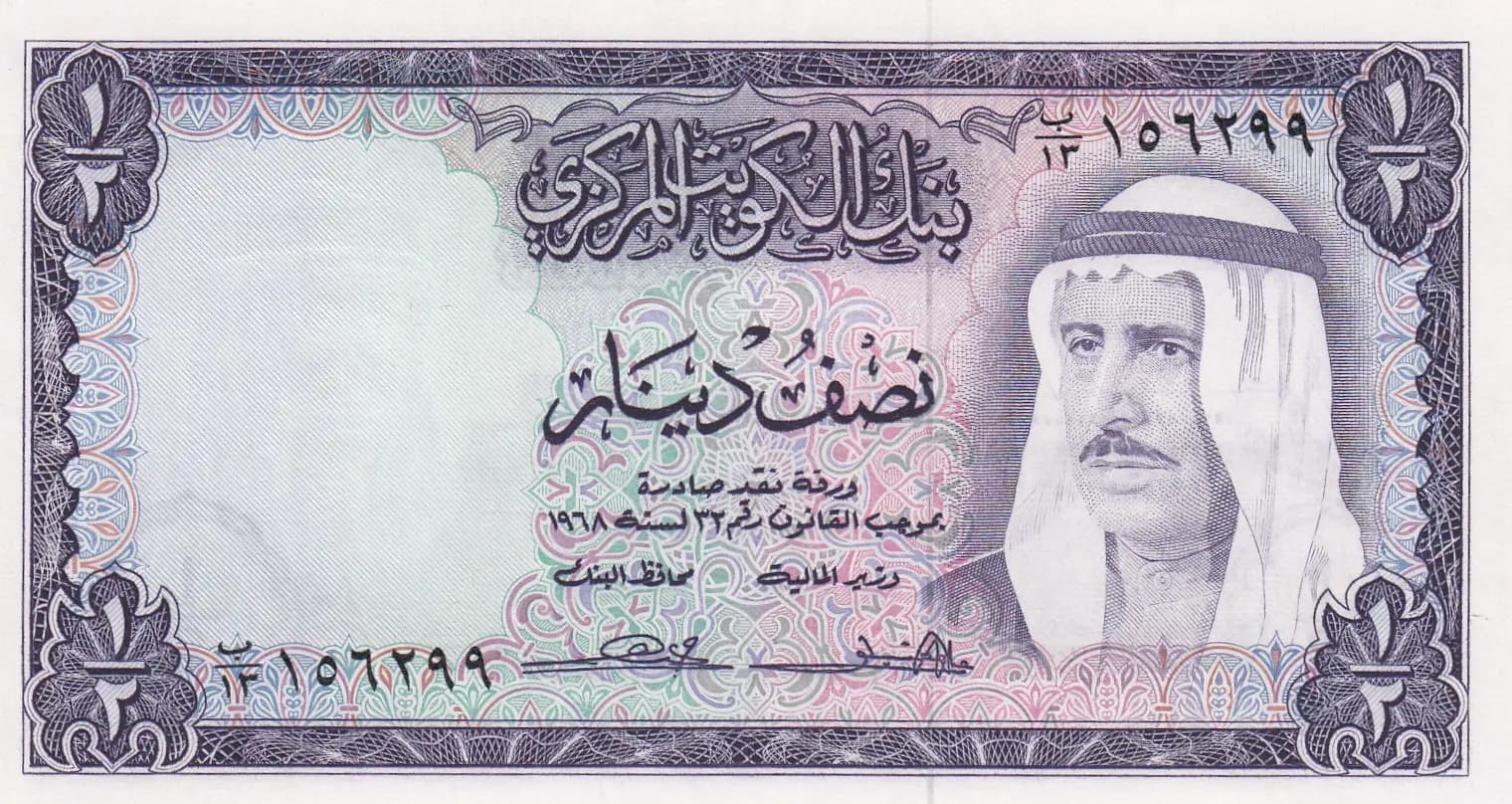
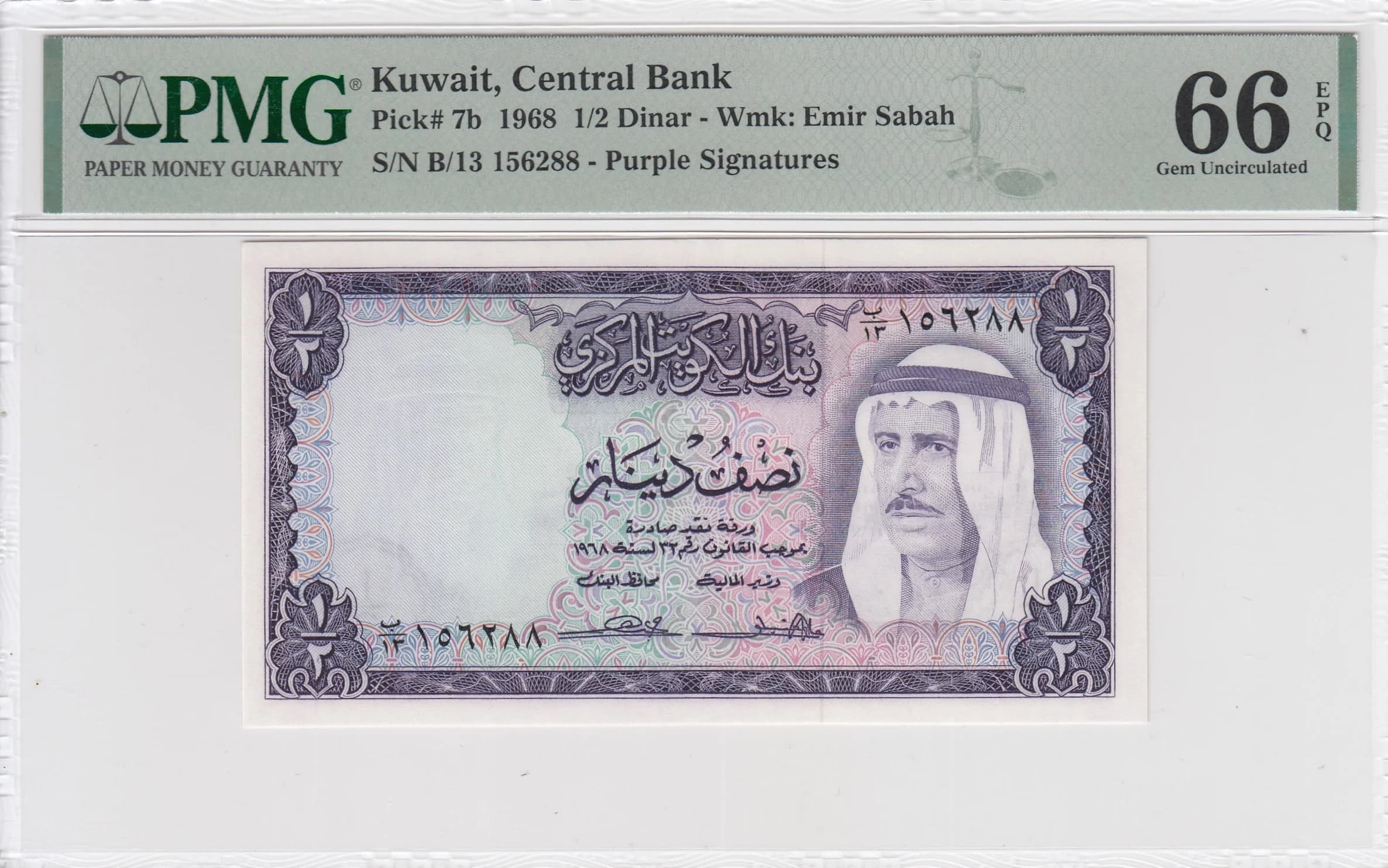
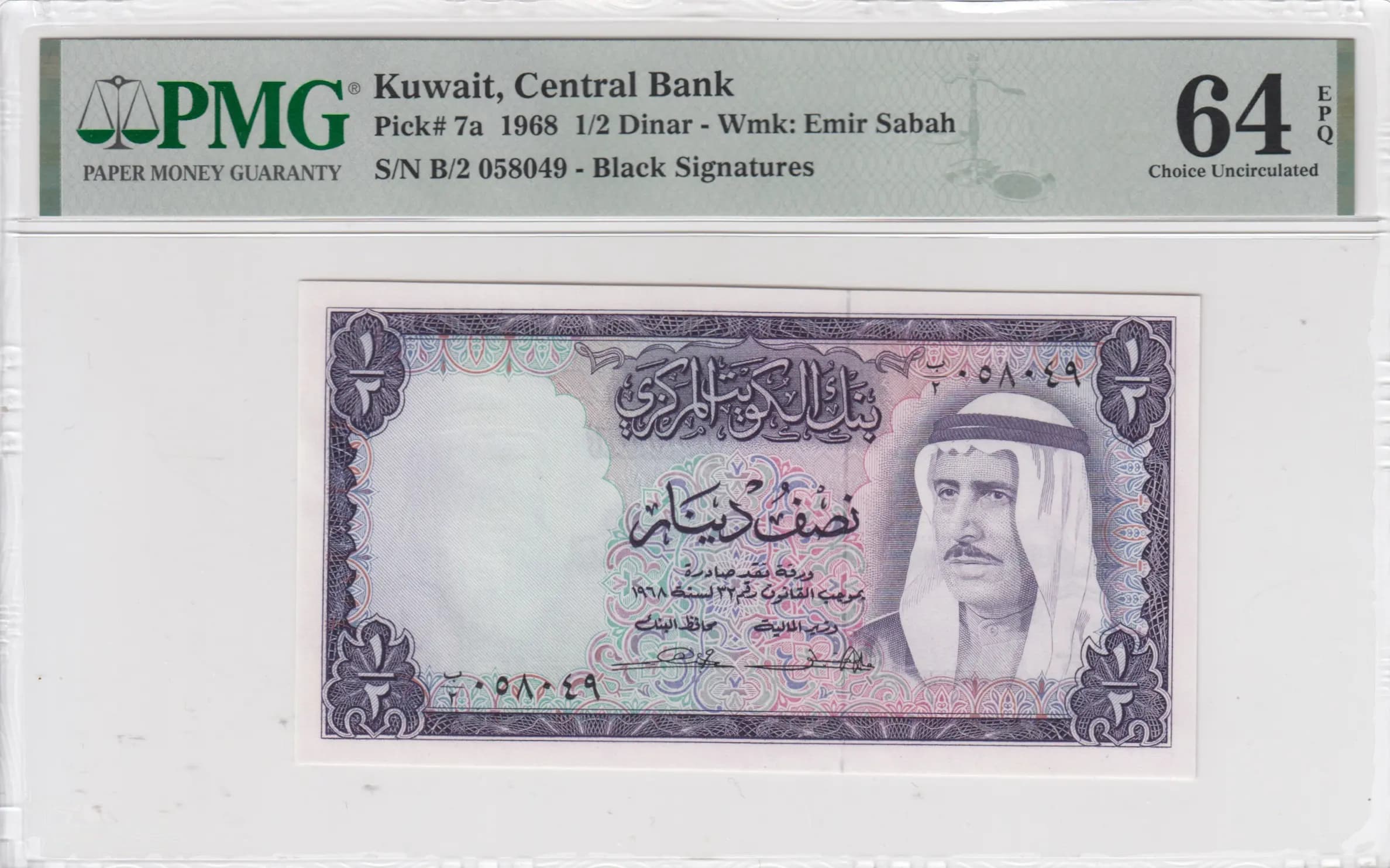
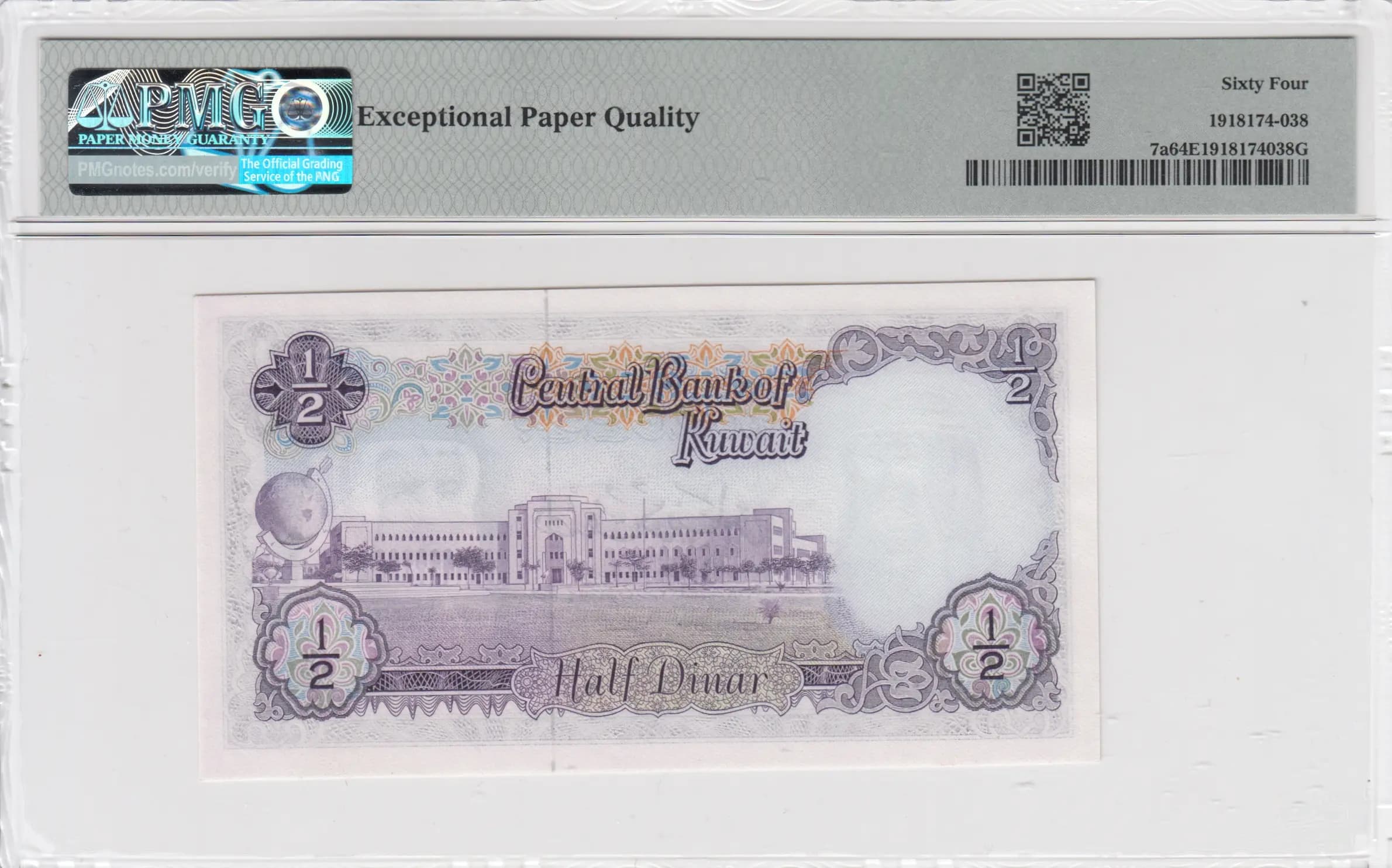
This is a PMG 64 EPQ graded half dinar from Kuwait's inaugural 1968 issue, representing one of the Central Bank of Kuwait's earliest banknote designs. The note displays exceptional preservation with vibrant purple, pink, and green tones, crisp printing, and no signs of circulation. The obverse features a formal portrait of Amir Sheikh Sabah ibn Salim al-Sabah in traditional Arab dress, while the reverse depicts an important institutional building, making this an iconic example of Kuwait's numismatic heritage from the nation's early independence period.
Common. The 1968 half dinar is a regular-issue banknote from Kuwait's first emission and benefits from substantial print runs. Market data from realbanknotes.com shows consistent eBay sales across multiple condition grades from 2009-2025, with PMG-graded examples regularly appearing (PMG 30, 58, 65, 66 sales documented). Even high-grade examples (PMG 66) sell for $80-$105, and VF specimens for under $20, which is typical pricing for common circulating-issue banknotes. The abundance of transaction history and modest price points confirm this is a readily available note in the collector market.
Issued in 1968, this banknote commemorates Kuwait's early years as an independent nation (independence declared 1961) and reflects the country's establishment of modern central banking infrastructure. The prominent depiction of the Amir on the obverse underscores the constitutional monarchy's central role in the new state, while the architectural landmark on the reverse—the Central Bank of Kuwait building or a significant government structure—symbolizes the nation's institutional development and economic modernization during the oil-boom era.
The obverse features a formal engraved portrait of Sheikh Sabah ibn Salim al-Sabah, the Amir of Kuwait, positioned on the right side wearing traditional Arab formal dress including a white ghutra (headdress) and black agal (headband). The portrait is rendered in classical banknote engraving style in black and white against a light background. Ornate Islamic geometric patterns and floral medallions frame the composition in the four corners, with an elaborate guilloche security background providing fine-line anti-counterfeiting protection. The reverse depicts an institutional building with a central dome and symmetrical architectural wings, representative of the Central Bank of Kuwait's main building or another significant government structure, surrounded by similar decorative Islamic geometric borders and denomination markers.
Front: 'دولة الكويت' (State of Kuwait), 'نصف دينار' (Half Dinar), 'البنك المركزي' (Central Bank). Back: 'Central Bank of Kuwait', 'Half Dinar', '1/2' (denomination numeral). The note employs both Arabic and English text, reflecting Kuwait's bilingual official communications.
Intaglio (engraved) printing with multiple color separations, producing the vibrant purple, pink, green, and black tones visible throughout the note. Guilloche patterns were applied via specialized security printing techniques. The multi-layered color register and fine detail preservation suggest printing by a specialized security printer, likely De La Rue or similar firm, though specific printer attribution for this series requires archival confirmation.
This note is catalogued as Pick P-7a, with a variant P-7b also existing in the PMG population report, both featuring the Emir Sabah watermark. The distinction between P-7a and P-7b likely relates to signature combinations, serial number prefixes, or minor design details typical of early Kuwaiti emissions. The examined note's specific signatures and serial number placement should be cross-referenced with published Pick catalogs to confirm final variety assignment, though both variants are treated as standard regular issues from the 1968 law.